
A pattern observed consistently across mid-market sales teams is that Lusha alternatives get evaluated too late — after the credit budget is already burned and bounce rates have quietly killed deliverability scores. The smarter move is to compare options before you're locked in. The best Lusha alternatives in 2026 are Apollo.io (for volume and sequencing), Cognism (for GDPR-compliant EMEA coverage), Hunter.io (for budget-conscious teams doing email-only outreach), Clay (for enrichment-heavy RevOps workflows), and ZoomInfo (for enterprise teams with the budget to match). Each outperforms Lusha in a specific dimension — the right choice depends on team size, geography, and how seriously you treat cost per verified contact as a KPI.
- Who this is for: Sales teams, SDRs, RevOps leaders, and founders evaluating B2B contact data tools after hitting Lusha's pricing or accuracy ceiling
- What you'll learn: Head-to-head accuracy benchmarks, compliance postures, real cost-per-contact math, and a decision framework by team size
- Why it matters: Lusha data accuracy problems — bounce rates in the 78–83% deliverability range — directly damage sender reputation and pipeline confidence
- Most counterintuitive finding: The cheapest B2B email finder is almost never the lowest cost option once you factor in bounce rate waste and SDR time spent re-verifying records
- Compliance alert: GDPR and CCPA compliance now drives tool selection for any team touching EU or California data — Cognism is the clear leader here
- The missing layer: No contact data tool builds your LinkedIn presence — pairing any data tool with a visibility platform like HyperClapper is what separates warm outbound from cold email blasts
- Why Sales Teams Are Leaving Lusha in 2026
- How We Evaluated the Best Lusha Alternatives
- Lusha vs Apollo vs ZoomInfo: Head-to-Head Data Accuracy Benchmarks
- The 6 Best Lusha Alternatives Ranked by ROI in 2026
- GDPR, CCPA, and Compliance: How Lusha Alternatives Stack Up
- LinkedIn Prospecting and Social Selling: Where Lusha Alternatives Miss
- Common Mistakes When Switching Away From Lusha
- Choosing the Right Alternative: A Decision Framework by Team Size
- Frequently Asked Questions: Lusha Alternatives and B2B Prospecting Tools
| Tool | Best For | Email Accuracy | Starting Price | Free Tier |
|---|---|---|---|---|
| Apollo.io | SMB & mid-market volume | 85–91% | $49/mo | ✅ Yes |
| Cognism | EMEA compliance-first teams | 87–92% (phone-verified) | Custom (from ~$1,500/mo) | ❌ No |
| ZoomInfo | Enterprise with budget | 92%+ | $15,000+/yr | ❌ No |
| Hunter.io | Small business, email-only | 80–87% | $34/mo | ✅ Yes (25 searches) |
| Clay | RevOps enrichment workflows | Varies (multi-source) | $149/mo | ✅ Yes (limited) |
| Lusha | Simple solo prospecting | 78–83% | $37/mo | ✅ Yes (5 credits) |
Why Sales Teams Are Leaving Lusha in 2026
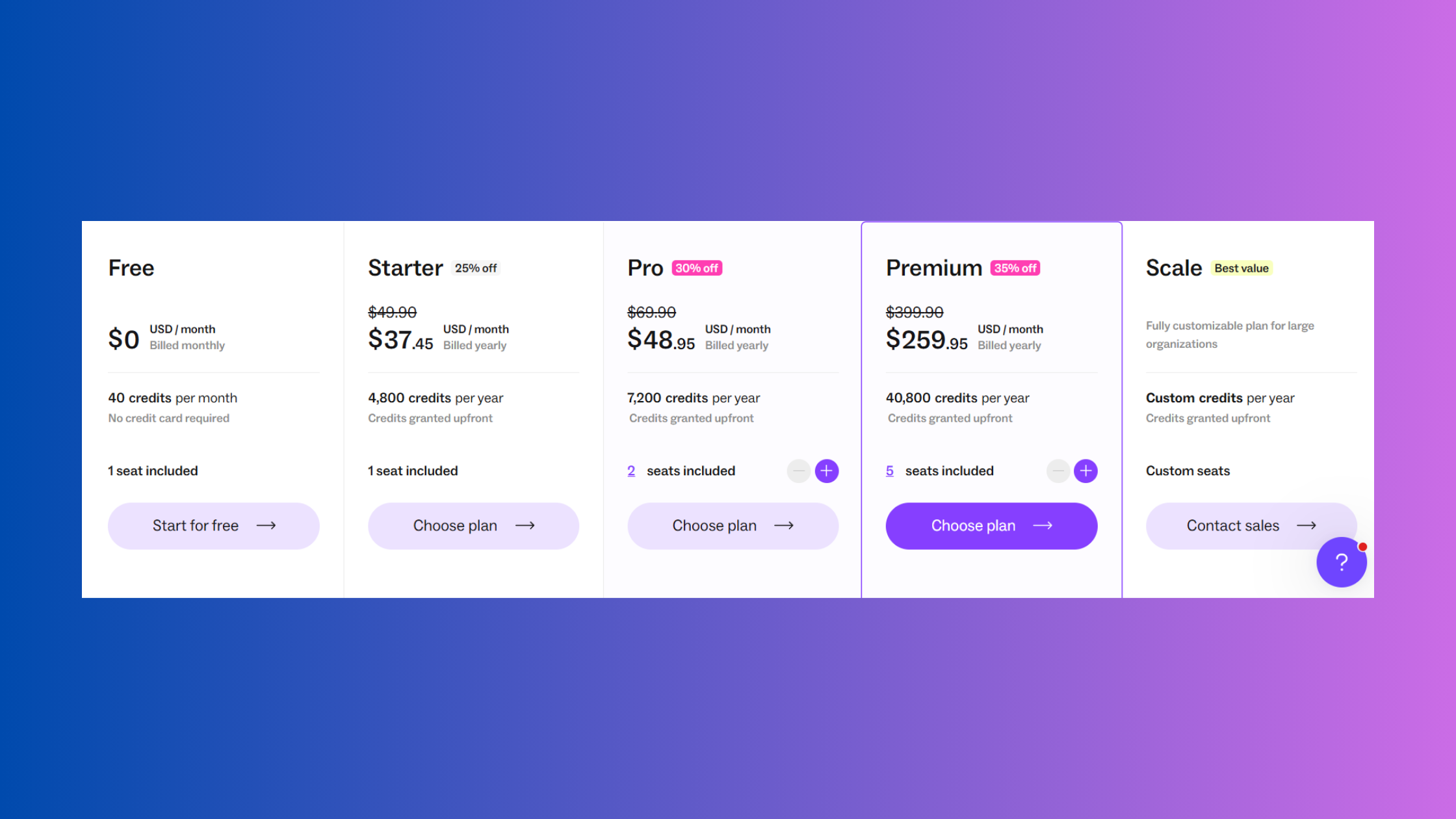
Three friction points show up in nearly every conversation with teams that have moved off Lusha: cost, accuracy, and scale. The credit-based pricing model — which charges per contact reveal rather than per seat — burns budget fast for high-volume outbound teams. An SDR running 200-contact sequences daily can exhaust a monthly credit allotment inside a week. That's Lusha pricing too expensive territory for any team doing serious volume.
The accuracy issue is quieter but more damaging. According to independent testing cited by Oppora.ai (2026), some sales reps report accuracy rates in the 60–80% range for Lusha data, which translates directly into wasted SDR hours re-verifying records and bounce events that erode email sender reputation. A single domain with a reputation hit can suppress deliverability across an entire sequence — not just one email.
According to LinkedIn Marketing Solutions (2026), 89% of B2B marketers use LinkedIn for lead generation, and 62% say it generates leads at more than twice the rate of the next-highest social channel. In practice, this means that even the most accurate contact data tool is solving only half the prospecting equation.
What Lusha Gets Right (And Where It Falls Short)
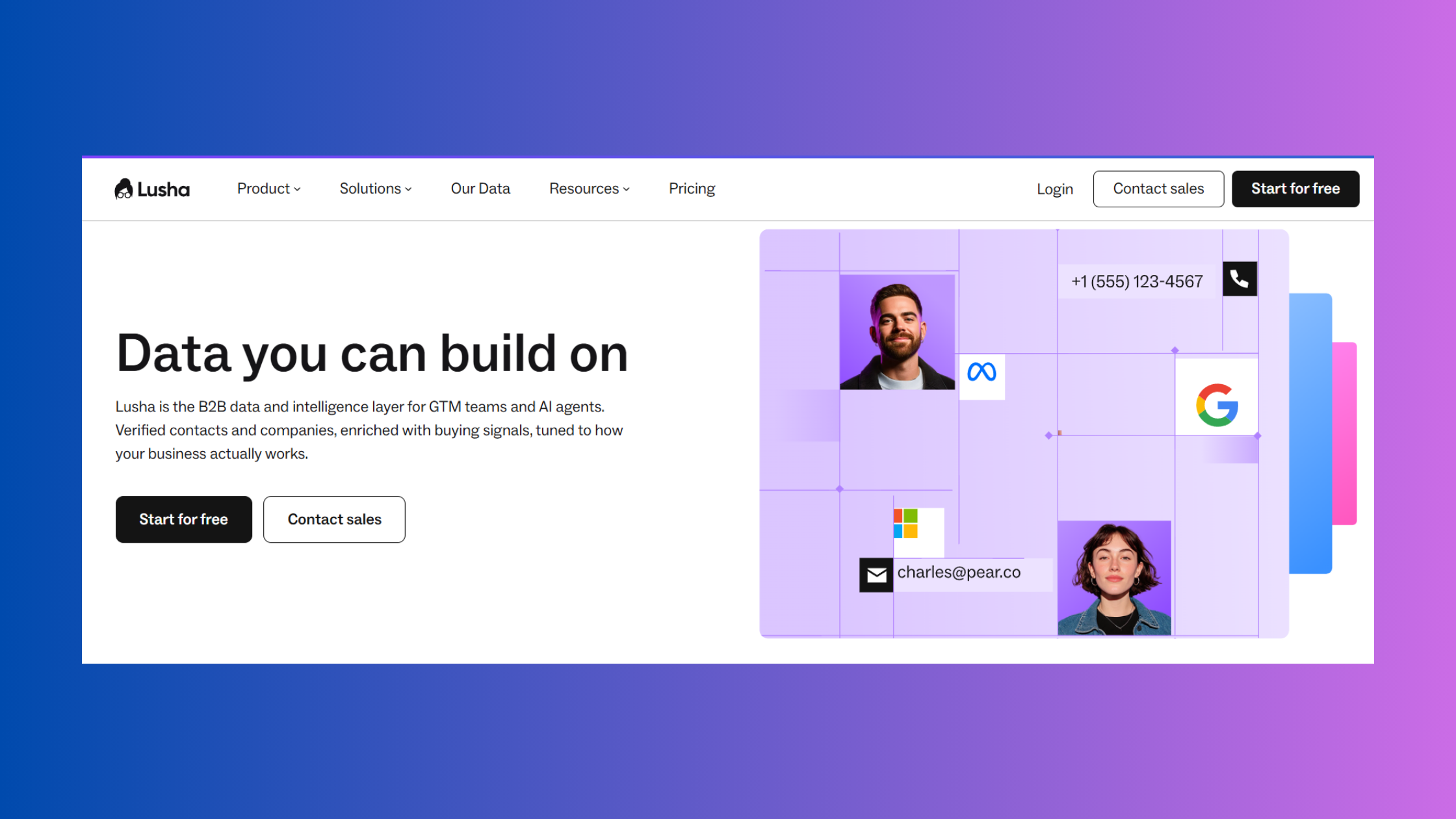
Lusha earns its user base through genuine strengths: a clean browser extension, fast LinkedIn profile data pulls, and a low barrier to entry that makes it accessible to solo founders and early-stage SDRs. The UI is among the least intimidating in the category. For someone running fewer than 50 outreach attempts per week, the free tier with 5 credits can stretch meaningfully.
Where it falls short is precisely where teams grow. Seat-based pricing jumps are steep. Data coverage outside the United States and Western Europe drops noticeably. And the platform lacks built-in sequencing — meaning Lusha is always one tool in a stack, never a full workflow. Teams that need B2B prospecting tools with better ROI at scale inevitably hit all three ceilings simultaneously.
How We Evaluated the Best Lusha Alternatives for B2B Prospecting
Five criteria drove this evaluation — because feature marketing is cheap, and the only thing that survives budget review is the cost per verified contact actually delivered to a CRM ready for outreach.
- Contact data accuracy and verification rates — independently tested deliverability, not vendor claims
- Pricing transparency — whether real costs are visible before a sales call
- CRM integration depth — native connectors to Salesforce and HubSpot, not just CSV exports
- Compliance posture — GDPR and CCPA readiness for teams touching EU or California contacts
- Free trial and freemium availability — whether teams can run a proof-of-concept without contract risk
Tools reviewed: Apollo.io, ZoomInfo, Hunter.io, Cognism, Clay, Seamless.ai, and UpLead — plus HyperClapper for LinkedIn-specific prospecting visibility, which is a fundamentally different (and underused) layer of the outbound stack.
The ROI Framework: Cost Per Verified Contact at Scale
Cost per verified contact is the unit economics metric that matters: take the monthly tool cost, divide by the number of contacts that actually clear verification (pass bounce testing and reach an inbox), and that number tells you what you're really paying per usable lead. A tool priced at $99/month delivering 500 verified contacts costs $0.20 per contact. A tool priced at $49/month delivering 150 verified contacts costs $0.33 per contact — and looks cheaper on a pricing page.
The most common failure mode in this evaluation process is teams comparing sticker prices without running a sample dataset through each tool first. Run 100 contacts from your ICP through each shortlisted tool, bounce-test the output, and calculate verified contact yield. That single exercise makes the right choice obvious.
Lusha vs Apollo vs ZoomInfo: Head-to-Head Data Accuracy Benchmarks
ZoomInfo leads the category on raw accuracy — consistently hitting 92%+ email deliverability in third-party tests — but at a cost structure that eliminates it from consideration for most SMB and mid-market teams. Apollo sits in the practical sweet spot: 85–91% deliverability, a 275M+ contact database, and pricing that doesn't require an enterprise budget. Lusha trails at 78–83% in independent tests, which is serviceable for low-volume prospecting but damaging at scale.
The accuracy gap between the best and worst tools in this category isn't 5% — it's often 15–20 percentage points. At 10,000 contacts per quarter, that difference is 1,500–2,000 bounced emails and a sender reputation that takes months to repair.
According to LinkedOtter (2026), Apollo is the top recommendation for volume and sequencing, while Clay takes the lead for enrichment depth and custom workflows — a split that tracks with what high-volume teams report across G2 and TrustRadius reviews.
Which Contact Enrichment Tool Has the Most Accurate Data by Region and Industry
Data coverage varies dramatically by geography — and most vendor accuracy claims are built on US-centric datasets. Teams targeting EMEA buyers see coverage gaps open up fast with tools optimised for North American markets. Cognism is the standout exception: phone-verified mobile numbers with explicit GDPR-compliance sourcing give it a structural coverage advantage in the UK, Germany, France, and the Nordics. ZoomInfo has made EMEA investments but remains stronger in North America. Apollo's EMEA coverage has improved but still lags Cognism for mobile numbers specifically.
By industry, technology and SaaS companies are best-served across all major tools. Manufacturing, healthcare, and regional professional services see accuracy drop by 10–20 percentage points even in leading platforms. The practical implication: if your ICP sits outside major business hubs, validate coverage explicitly before committing to any annual contract.
Hunter.io vs Lusha for Lead Generation
The Hunter.io vs Lusha for lead generation comparison is fundamentally a scope question, not an accuracy one. Hunter.io is an email-finding tool built around domain-level verification — it excels at finding the right email format for a given company and verifying deliverability before contact. Lusha is broader: it pulls direct-dial phone numbers and LinkedIn profile data alongside email. If your outreach is email-only, Hunter.io is the cheaper, cleaner choice. If you need phone numbers and direct enrichment from LinkedIn profiles, Lusha's breadth justifies its cost — though Apollo still beats both on database size at comparable price points.
The 6 Best Lusha Alternatives Ranked by ROI in 2026
Ranked on the cost-per-verified-contact framework above, with data depth, compliance posture, and sequencing capability factored in. This ranking reflects SMB-to-mid-market use cases — enterprise buyers should weight ZoomInfo more heavily.
1. Apollo.io — Best All-Around Lusha Alternative
Apollo delivers 275M+ contacts, built-in email sequencing, a generous free tier (unlimited email credits at the basic level), and native CRM sync with HubSpot and Salesforce. For teams asking whether is Apollo better than Lusha for outbound sales — yes, for the majority of SMB and mid-market use cases. The database is larger, the built-in sequencing removes the need for a separate outreach tool, and the accuracy is consistently higher in independent tests. The main limitation: phone number coverage lags ZoomInfo and Cognism, and the interface takes time to learn.
2. Cognism — Best for EMEA Compliance-First Teams
Cognism is built around GDPR-first data collection from the ground up — not retrofitted compliance, but structural data sourcing that starts with consent signals. Phone-verified mobile numbers, an explicit opt-out suppression list, and CCPA-aligned data handling make it the default recommendation for any team that touches EU contacts at scale. Pricing is custom and starts significantly higher than Apollo, but for teams where one GDPR enforcement action would cost more than a year of Cognism fees, the calculus is clear.
3. ZoomInfo — Best for Enterprise Teams With Budget
ZoomInfo is the category leader on data depth, buyer intent signals (technographic data, job change triggers, funding round alerts), and enterprise CRM integration. The entry cost — typically $15,000+ annually — eliminates it for small teams, but for enterprise RevOps with a meaningful outbound budget, the intent data layer alone can justify the investment. Intent data is real-time behavioral signal showing which companies are actively researching solutions in your category. Teams using intent signals for trigger-based outreach see pipeline conversion rates 2–4x higher than cold list blasts.
4. Hunter.io — Best Lusha Alternative for Small Business
The best Lusha alternative for small business doing email-only outreach is Hunter.io — and it's not particularly close. A free tier with 25 monthly searches, transparent pricing, domain-level email pattern detection, and a clean verification API make it the obvious choice for founders and solo SDRs validating their ICP before investing in a paid platform. It won't replace Lusha if you need phone numbers or LinkedIn enrichment, but for pure email prospecting at minimal cost, it's the right starting point.
5. Clay — Best for Enrichment-Heavy RevOps Workflows
Clay operates differently from every other tool on this list: instead of being a single data source, it's a waterfall enrichment platform that pulls from 50+ data providers simultaneously and keeps the highest-quality result for each field. Think of Clay as an enrichment orchestrator rather than a database — it asks "what's the most accurate email for this contact across all sources?" rather than "what's our database's answer?" This approach consistently delivers higher verified accuracy than any single-source tool, but it requires more technical setup and a RevOps team comfortable building enrichment workflows.
6. Seamless.ai — Best for High-Volume Real-Time Verification Claims
Seamless.ai markets aggressive real-time verification and unlimited contact access on paid tiers. In practice, accuracy is inconsistent outside Tier-1 industries and major US markets. Teams that have run parallel tests against Apollo typically find Apollo's verified accuracy higher despite Seamless's real-time claims. Worth testing as part of a proof-of-concept, but validate your specific ICP before committing.
Free Trial and Freemium Tier Comparison Across All Alternatives
| Tool | Free Tier | Trial Available | Credit Card Required |
|---|---|---|---|
| Apollo.io | Yes — generous email credits | 14-day paid trial | No (free tier) |
| Cognism | No | Demo only | N/A |
| ZoomInfo | No | Demo only | N/A |
| Hunter.io | Yes — 25 searches/mo | Built into free tier | No |
| Clay | Yes — limited credits | Yes | No |
| Lusha | Yes — 5 credits/mo | No paid trial | No (free tier) |
CRM Integration Depth Comparison: Salesforce, HubSpot, and Beyond
CRM integration quality matters as much as the data itself — a contact that doesn't sync cleanly into your pipeline is a contact that gets lost. ZoomInfo has the deepest native Salesforce and HubSpot integrations in the category, with bi-directional sync, field mapping, and deduplication logic built in. Apollo's CRM integration is strong and well-documented, particularly for HubSpot. Hunter.io offers basic CRM push functionality but lacks the field-level sophistication of Apollo or ZoomInfo. Clay's integrations are workflow-driven — you define what goes where — which is powerful but requires setup time. Cognism's CRM integration has improved significantly and now handles most standard Salesforce and HubSpot workflows cleanly.
Building an outbound stack is only half the equation
Contact data tools fill your pipeline — LinkedIn visibility tools make sure prospects already know your name before your first message arrives.
See How HyperClapper Works →GDPR, CCPA, and Compliance: How Lusha Alternatives Stack Up
Compliance is no longer optional. One enforcement action from a European data protection authority can cost more than years of tooling spend — and regulators have been actively pursuing B2B data companies since 2022. The question isn't whether your contact data tool has a GDPR policy page; it's whether the data it sources was collected with consent signals that would survive regulatory scrutiny.
Cognism is the clear compliance leader in the category. Its data collection methodology is built around GDPR-first principles: contacts are sourced with consent signals tracked, a global opt-out suppression list is maintained and checked before any record is exported, and phone-verified numbers are tied to reachability consent where applicable. For teams targeting EMEA buyers — particularly in Germany, France, and the UK where enforcement is most active — Cognism is the lowest-risk default.
Apollo and ZoomInfo have both made meaningful compliance investments, but they carry more regulatory ambiguity for EU data. Neither was built GDPR-first the way Cognism was, and both have faced scrutiny in European markets. This doesn't make them non-compliant, but it means teams using them for EU outreach should conduct explicit data sourcing audits and maintain their own suppression lists.
Lusha's compliance posture has improved since 2022 but lags Cognism meaningfully. Teams handling EU contacts at volume should audit Lusha's data sourcing documentation before scaling outreach — the sales intelligence software comparison on compliance posture alone often tips EMEA-facing teams toward Cognism regardless of price.
How These Tools Handle Data Freshness and Record Update Cycles
Data freshness — how recently a contact record was verified and updated — matters as much as raw accuracy. A 95%-accurate email that was verified 18 months ago may now be dead. B2B contact data decays at roughly 22–30% annually due to job changes, company restructurings, and domain migrations. ZoomInfo and Cognism re-verify contact records most frequently among major platforms, with verification cycles measured in weeks rather than months for high-demand contacts. Apollo's re-verification cadence is solid but less frequently published. Lusha and Seamless.ai have faced more community-reported complaints about stale records — particularly for contacts outside their core US markets. According to Clodura.ai (2026), Gartner predicts that by 2026, 65% of B2B sales organizations will transition from intuition-based to data-driven sales processes — making data freshness infrastructure a strategic investment, not a tooling detail.
LinkedIn Prospecting and Social Selling: Where Lusha Alternatives Miss and HyperClapper Fills the Gap
Every tool on this list solves the same problem: finding contact information for a prospect you've already identified. None of them solve the harder problem — making sure that prospect already knows who you are before your email lands. This is the visibility gap that LinkedIn prospecting visibility and social selling exists to close.
The data on this is consistent: according to Sprout Social (2026), 40% of B2B marketers rate LinkedIn as the most effective channel for driving high-quality leads. A prospect who has seen your content, engaged with your posts, or recognizes your company from their LinkedIn feed converts at a meaningfully higher rate than an identical prospect receiving a cold email with zero prior exposure. In practice, that delta is real enough to shift your cost-per-opportunity calculation in favor of any visibility investment that generates it.
Contact data tools find the who. LinkedIn visibility determines whether the who already knows you — and that recognition gap is what separates a 2% reply rate from a 12% reply rate on identical sequences.
Most Lusha alternatives are pure data tools: they export a spreadsheet and stop there. None of them build the LinkedIn presence that makes outbound warm before sequences start.
How HyperClapper Works Inside a B2B Prospecting Workflow
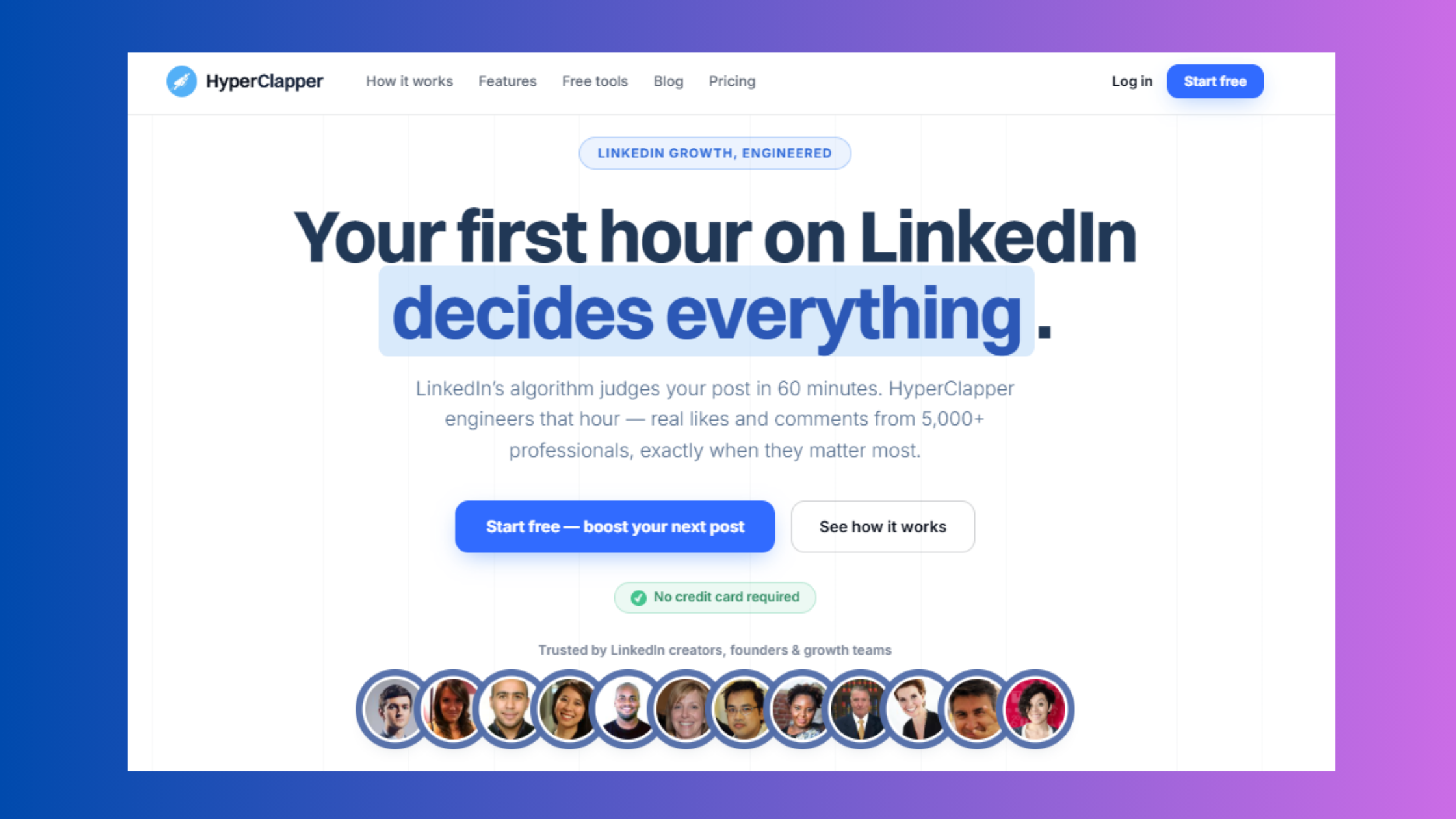
Tools like HyperClapper solve the visibility problem that data tools ignore. The platform connects users with real engagement channels — groups of professionals who engage with LinkedIn posts — to amplify post reach before the first outreach touchpoint. AI-powered replies sustain conversation depth on posts, company page boosting builds brand recognition at scale, and analytics track which content is generating the profile visibility that warms your outbound audience.
The winning 2026 outbound stack looks like this:
- Contact data layer (Apollo, Cognism, or Hunter.io) — identifies and verifies your ICP contacts
- CRM (HubSpot or Salesforce) — stores, segments, and sequences those contacts
- LinkedIn visibility layer (HyperClapper) — builds brand recognition and post reach so prospects already know your name when sequences arrive
The LinkedIn automation and lead generation layer is the piece most outbound stacks skip — and it's consistently the piece that separates warm outbound from cold email blasts that generate 1–2% reply rates.
Common Mistakes When Switching Away From Lusha (And How to Avoid Them)
Switching contact data tools is one of the highest-leverage decisions a RevOps team makes — and also one of the most frequently botched. The most common failure mode isn't choosing the wrong tool; it's evaluating tools wrong and then discovering the mistake six months into a contract.
- Mistake 1: Choosing the cheapest B2B email finder without running accuracy tests. Low sticker price plus 30% bounce rate is more expensive than a higher-priced tool with 90% deliverability — the SDR time and sender reputation damage add costs that never appear on the invoice. The cheapest B2B email finder with good data isn't the one with the lowest monthly fee; it's the one with the lowest cost per contact that actually reaches an inbox.
- Mistake 2: Migrating contact exports without deduplicating against your CRM first. Switching tools is the correct time to clean your database. Importing 50,000 dirty records from Lusha into a new platform propagates the problem — you now have stale data in two systems instead of one.
- Mistake 3: Evaluating tools only on US-headquartered use cases. If your ICP includes EMEA or APAC buyers, data coverage drops sharply for most tools and needs explicit validation. A tool that delivers 91% accuracy for San Francisco SaaS companies may deliver 65% for Munich manufacturing companies.
- Mistake 4: Ignoring the intent data layer. Outbound pipeline conversion benchmarks consistently show that trigger-based outreach — job changes, funding rounds, tech installs — outperforms cold list blasts by 2–4x. If your current tool (Lusha included) offers no intent signals, adding that layer should be part of your switching criteria.
How to Run a Proper Proof-of-Concept Before Committing to a New Tool
A proper proof-of-concept for a contact data tool takes roughly 5–7 business days and follows a consistent pattern across teams that do it well:
- Define your ICP sample — 100–200 contacts matching your exact target: specific industry, company size, geography, and job title (30 minutes)
- Request sample data from each shortlisted vendor for that ICP segment (1–2 days to receive)
- Run bounce testing on all email outputs using NeverBounce or ZeroBounce (1 hour)
- Calculate verified yield — what percentage of contacts pass verification (30 minutes)
- Compare cost per verified contact using the formula: monthly plan cost ÷ verified yield at your typical monthly volume (30 minutes)
Teams that run this process consistently select better tools and negotiate better contracts — vendors with genuine accuracy confidence will expedite sample delivery; vendors with accuracy concerns will stall.
For a broader review of how prospecting database tools stack up under this kind of scrutiny, the prospecting database tools reviewed guide covers the full category in depth.
Choosing the Right Alternative: A Decision Framework by Team Size and Use Case
What separates teams that get this decision right from teams that don't is matching the tool to the actual workflow — not the tool with the longest feature list or the loudest marketing. Here's the framework applied by team size:
- Solo founder / early-stage startup → Hunter.io free tier or Apollo free plan — zero budget risk, enough data to validate ICP before investing in paid tiers
- SMB sales team (5–20 reps), North America focus → Apollo paid — volume, sequencing, and CRM sync in one platform
- SMB/mid-market team with EMEA exposure → Cognism — compliance posture and EMEA phone coverage justify the price premium
- Enterprise RevOps with intent data need → ZoomInfo — unmatched data depth and buyer signals for teams with the budget
- RevOps team with complex enrichment workflow → Clay — waterfall enrichment across 50+ providers beats any single-source tool for accuracy
- LinkedIn-first team building personal brand alongside outbound → Any data tool + HyperClapper — contact data finds the who; LinkedIn visibility makes you known before you reach out
✓ The Lusha Migration Checklist
- ☐Define ICP sample (100–200 contacts) matching your exact industry, geography, and job title
- ☐Request sample datasets from at least 2 shortlisted alternatives before signing anything
- ☐Run bounce testing on all sample outputs and calculate verified contact yield per tool
- ☐Deduplicate and clean your existing CRM database before importing any new contacts
- ☐Confirm GDPR/CCPA compliance posture if any contacts are in EU or California
- ☐Validate CRM integration (Salesforce / HubSpot) with a 10-record sync test before full migration
- ☐Plan LinkedIn visibility strategy alongside data tool migration to warm your ICP audience
Sales Intelligence Enrichment Workflow: Putting It All Together
A sales intelligence enrichment workflow is the operational sequence that takes a prospect from raw ICP definition to a verified, sequenced contact in your pipeline. The most effective workflows follow a consistent architecture regardless of which tools power them:
- ICP definition — firmographics (industry, size, geography) and persona (title, seniority, function)
- Initial list build — Apollo, ZoomInfo, or Cognism to generate a raw contact universe
- Enrichment and verification — Clay waterfall or NeverBounce/ZeroBounce to validate output
- CRM import with deduplication — HubSpot or Salesforce with field mapping confirmed
- Sequence trigger — intent signals (job changes, funding) or cadence-based outreach
- LinkedIn visibility warm-up — HyperClapper running parallel to sequences to build name recognition
Teams that incorporate LinkedIn visibility into step 6 — running it in parallel with sequences rather than before or after — see the warmth compound over time. By the time a sequence reaches the 3rd or 4th touch, a prospect who has seen your content on LinkedIn responds at a materially higher rate than one receiving cold email in isolation. For teams building this full stack, the LinkedIn marketing tools for small business guide and the sales automation outreach tools comparison cover the sequencing and outreach layers in detail.
Add the LinkedIn visibility layer your data tool doesn't include
HyperClapper's real engagement channels boost post reach, warm your ICP audience, and make your outbound sequences land in a context where prospects already recognize your name.
Start Free on HyperClapper →Frequently Asked Questions About Lusha Alternatives and B2B Prospecting Tools
What are the best Lusha alternatives that offer better data quality and ROI in 2026?
The best Lusha alternatives in 2026 are Apollo.io (best for SMB and mid-market volume), Cognism (best for EMEA compliance), ZoomInfo (best for enterprise intent data), Hunter.io (best for budget email-only prospecting), and Clay (best for multi-source enrichment workflows). Each consistently outperforms Lusha on either data accuracy, pricing transparency, or ROI at scale — depending on team size and geography.
Which sales intelligence tool gives the highest return on investment compared to Lusha?
Apollo.io delivers the highest ROI for most SMB and mid-market teams — a larger database (275M+ contacts), built-in sequencing, and verified email accuracy of 85–91% combine to lower cost per pipeline opportunity versus Lusha's more limited credit model. For enterprise teams, ZoomInfo's intent data layer drives pipeline conversion rates that can justify its higher cost on deal value alone.
Is there a cheaper alternative to Lusha that still has accurate contact data?
Yes. Hunter.io starts at $34/month and offers 80–87% email deliverability for domain-level prospecting — reliable enough for email-only outreach at a fraction of Lusha's cost at scale. Apollo's free tier also provides meaningful access to its 275M-contact database with solid accuracy for teams not yet ready to invest in paid plans.
What do sales teams switch to after leaving Lusha?
The most common destinations are Apollo.io (for teams wanting a full outbound platform with sequencing), Cognism (for EMEA-focused or compliance-sensitive teams), and Hunter.io (for small teams doing email-only prospecting). According to community discussions and G2 review patterns, Apollo is the single most frequent switch destination for SMB and mid-market teams leaving Lusha.
Is Apollo better than Lusha for outbound sales?
For most outbound sales teams, yes. Apollo has a larger database, higher verified email accuracy in independent tests (85–91% vs Lusha's 78–83%), built-in email sequencing, and a far more generous free tier. The main exception: teams that rely heavily on direct-dial phone numbers may find Lusha's phone data quality competitive for specific North American use cases.
What is the actual cost per verified contact when comparing all alternatives at scale?
Cost per verified contact varies significantly by tool and ICP. A rough benchmark at 1,000 contacts/month: Apollo paid (~$99/mo) at 88% verified accuracy yields roughly $0.11 per verified contact. Lusha at comparable credits costs $0.15–$0.22 per verified contact after accounting for bounce waste. Hunter.io at $34/month yields the lowest cost for email-only outreach at roughly $0.05–$0.08 per verified domain-level contact.
Lusha vs Apollo vs ZoomInfo: which should I choose?
Choose Apollo if you're SMB or mid-market and want volume, sequencing, and good accuracy without enterprise pricing. Choose ZoomInfo if you're enterprise with a meaningful data budget and need intent signals. Choose Lusha only if simplicity and browser-extension speed matter more than accuracy or scale — it's the easiest tool to start with, not the strongest tool to grow with.



