
A pattern observed across hundreds of B2B sales teams is that the biggest bottleneck in cold outreach isn't the sequencer, the list, or even the offer — it's the message itself. Autobound AI is an outreach personalization platform that ingests live sales signals — job changes, funding rounds, LinkedIn posts, tech stack data — and auto-generates hyper-personalized cold email and LinkedIn messages in seconds. For this Autobound review 2026, the core question is whether it genuinely solves the personalization problem at scale, or whether a well-crafted ChatGPT prompt can get you most of the way there for free. The short answer: Autobound wins on signal depth and workflow integration, but it requires realistic expectations about where human judgment still belongs in the loop.
- Who it's for: SDRs, AEs, BDRs, and GTM teams at B2B SaaS and services companies running high-volume personalized outreach.
- What you'll learn: How Autobound's signal engine works, what it actually costs, how it compares to Lavender AI and Clay, and whether the reply rate claims hold up.
- The ROI case: According to Autobound's own benchmarks, teams using signal-timed personalization see 20–40% higher reply rates and a 50% boost in meeting velocity.
- The catch: Autobound is not a standalone tool — it requires a separate sequencer (Outreach, Salesloft, Apollo, etc.), which adds to the total cost of ownership.
- Most counterintuitive finding: Reps who treat Autobound as a fire-and-forget autopilot get worse results than those who use it as a co-pilot and review outputs before sending.
- Competitor gap: Most reviews skip deliverability benchmarks, compliance considerations, and honest ChatGPT comparisons — this one covers all three.
- What Is Autobound AI and Who Is It Built For?
- How Does Autobound Personalize Outreach Messages?
- Key Features of Autobound: What You Actually Get
- Autobound Pricing: Plans, Free Tier, and True Cost of Ownership
- LinkedIn ROI and Performance Benchmarks: Does Autobound Actually Deliver?
- Honest Pros, Cons, and Limitations of Autobound
- Autobound vs. Lavender AI and Top Alternatives in 2026
- What Real Users Say: Autobound Reviews and Customer Sentiment
- Frequently Asked Questions About Autobound
What Is Autobound AI and Who Is It Built For?
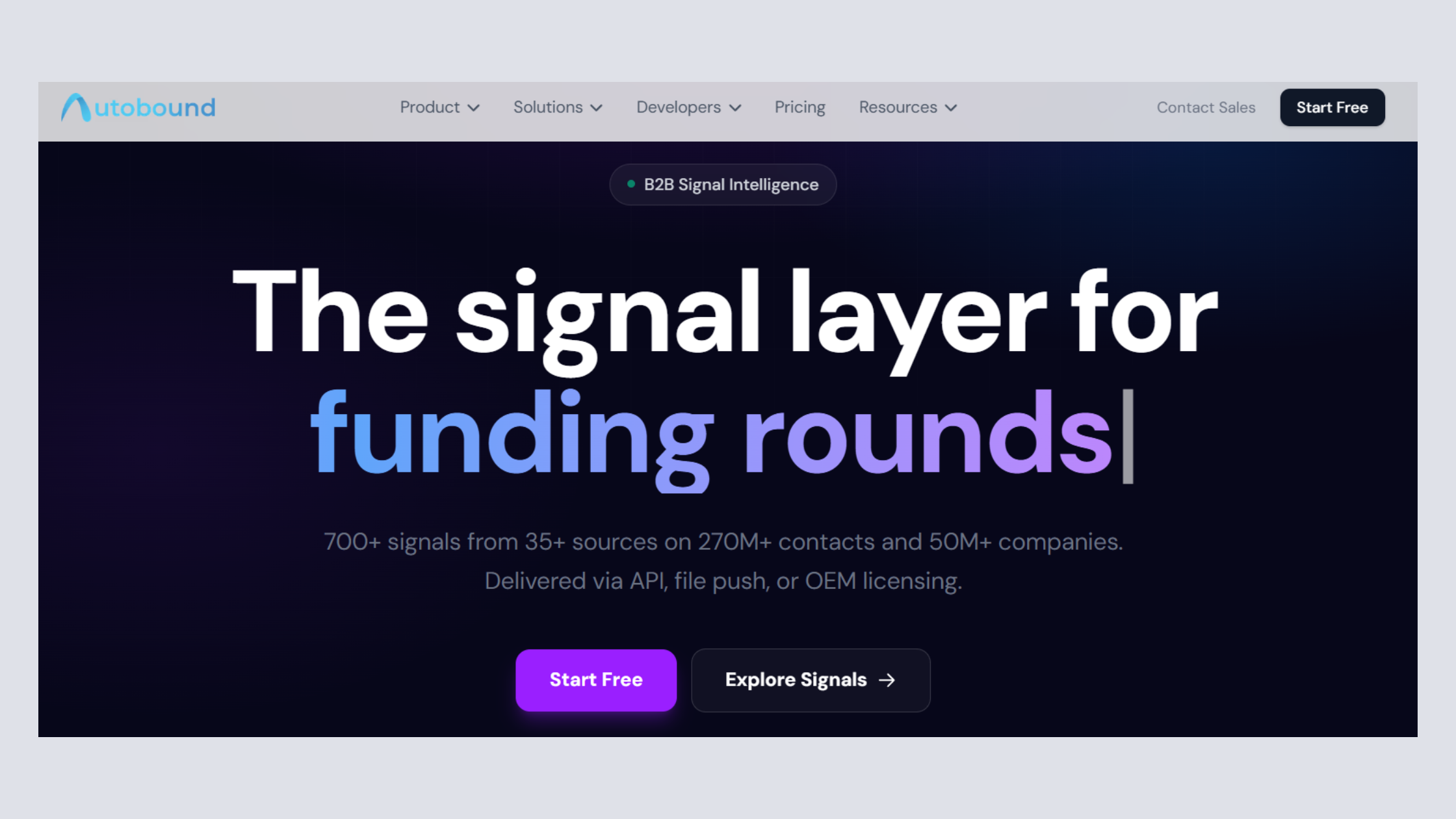
Autobound AI is an AI-powered outreach personalization platform that ingests live sales signals — job changes, funding announcements, LinkedIn activity, tech stack data, and news mentions — and generates contextually relevant, personalized cold email and LinkedIn messages in seconds. It is purpose-built for B2B sales teams, not general marketing copywriting, and that distinction matters.
The Core Problem Autobound Is Solving
The average SDR spends 15–20 minutes researching and writing a single personalized email before Autobound. Multiply that by 30–50 prospects a day and you've consumed most of a working day on message prep alone — leaving little time for actual selling. Autobound compresses that research-and-write cycle to under 2 minutes without sacrificing the personalization that drives replies.
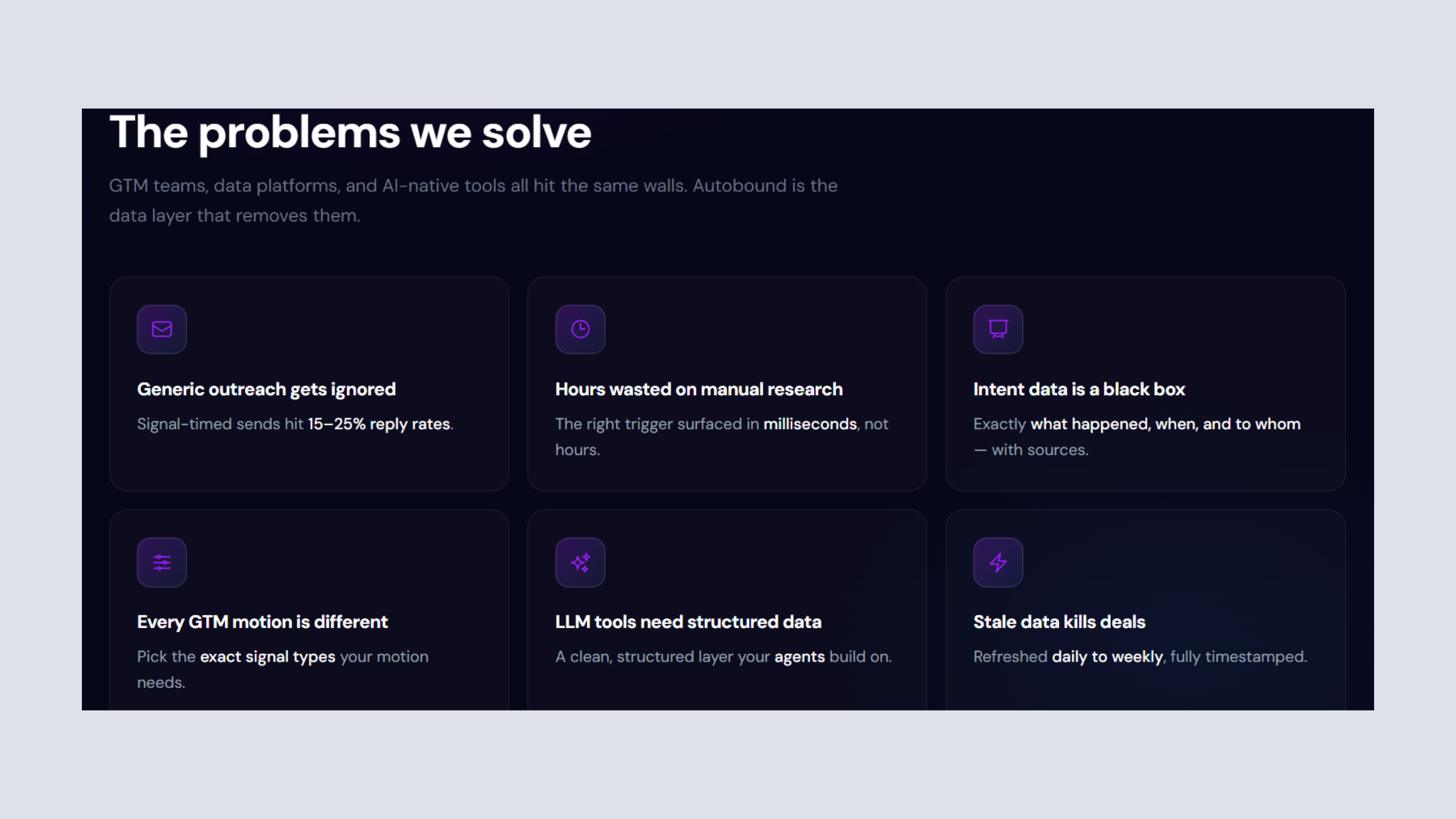
Unlike a generic AI writing tool like ChatGPT, Autobound is structured around proven cold-email frameworks: problem-agitate-solve, relevance hooks tied to specific prospect signals, social proof insertion, and call-to-action optimization. The AI doesn't just write — it reasons about which signal from a prospect's profile is most likely to resonate as a conversation opener.
Primary users are:
- SDRs and BDRs at B2B SaaS companies running high-volume outbound sequences
- AEs handling strategic accounts who need deep personalization without the research overhead
- GTM teams and sales managers standardizing outreach quality across a rep team
- Agencies managing outbound for multiple clients simultaneously
It is not designed for e-commerce, B2C, or low-volume relationship sales where a manual, bespoke approach outperforms any automation.
The fundamental promise of Autobound is that a 30-second AI workflow can replace 15 minutes of manual research and writing — without the output sounding like it came from a template.
How Does Autobound Personalize Outreach Messages?
Autobound works by first enriching a prospect's profile with layered data signals, then selecting the single most compelling signal as the message hook, and finally structuring the message around a proven cold-outreach framework. The result is a draft that opens with a specific, timely reference — not a generic "I noticed you're in [industry]" line.
The workflow is straightforward:
- Paste a prospect's LinkedIn URL directly, or upload a bulk CSV for team-scale personalization.
- Autobound scrapes and enriches the prospect's profile across its signal network — covering recent LinkedIn posts, company hiring patterns, funding rounds, tech stack, role changes, and industry news.
- The AI selects the highest-relevance signal for that specific prospect at that specific moment in time.
- A structured message draft is output in the user's chosen tone, length, framework, and call-to-action style.
Users control tone (conversational vs. formal), message length (short LinkedIn note vs. full cold email), CTA style (book a call, ask a question, share a resource), and the underlying messaging framework. Over time, the platform learns preferred output styles across a team.
Autobound vs. DIY ChatGPT Prompting: Output Quality Compared
This is the question most buyers are actually asking — and most reviews dodge it. The honest comparison: a well-engineered ChatGPT prompt with manually pasted prospect research can produce comparable single-message quality. The gap opens dramatically at scale.
What ChatGPT cannot do that Autobound can:
- Automatically pull real-time signals (last week's LinkedIn post, yesterday's funding announcement) without manual input
- Process a 200-row CSV and output 200 individually personalized messages in minutes
- Apply a consistent framework and brand voice across an entire SDR team without prompt engineering overhead
- Integrate directly into the rep's Gmail, Outreach, or Salesloft workflow via a Chrome extension
For a solo rep sending 5 personalized messages a day, DIY ChatGPT prompting is a viable alternative. For a team of 8 SDRs each targeting 40+ prospects daily, Autobound's signal engine and bulk generation become the clear winner. The ROI inflection point lands somewhere around 20+ personalized messages per rep per day.
What Happens When a LinkedIn Profile Is Sparse or Incomplete?
Output quality degrades noticeably when a prospect's LinkedIn profile is thin — no recent posts, no clear role history, no public company news. Autobound falls back to weaker signals like industry category or job title, which produces messages that read closer to a template than a genuinely personalized note. This is an honest limitation. Teams targeting early-career prospects, niche industries, or markets where LinkedIn adoption is low will encounter this more frequently. The practical workaround is enriching your CSV with additional data points before uploading — company size, tech stack from Apollo or ZoomInfo — to give Autobound more signal to work with.
Key Features of Autobound: What You Actually Get
Teams that invest time understanding Autobound's full feature set consistently see better outcomes than those who use it as a simple message generator. Here's what the platform actually offers beyond the headline personalization feature.
Signal Intelligence Engine — the core differentiator. According to Autobound's platform page, this covers 700+ data sources including funding events, hiring signals, LinkedIn posts, news mentions, and intent data. This is what separates Autobound's output from generic AI writing: every message is grounded in something real happening at that company or with that person right now.
Bulk personalization via CSV upload — upload a list of prospects and receive a fully drafted, individualized message for each row. This is the feature that makes Autobound viable for SDR teams running high-volume outbound sequences. A team member spending 2 minutes reviewing and refining 50 AI-generated drafts is still 10x faster than writing them manually.
Chrome Extension — surfaces Autobound's personalization layer directly inside LinkedIn, Gmail, Outreach, and Salesloft. Reps never need to leave their current workflow to generate a personalized message. This in-workflow experience consistently earns high usability scores in reviews.
Content library and messaging templates — teams can store approved value propositions, objection-handling sequences, and CTAs so that AI output stays on-brand and consistent with the sales playbook. This is particularly important for compliance-heavy industries.
Does Autobound Support Native Multi-Channel Sequences?
Autobound does not natively execute multi-channel sequences. It generates the message content — email copy, LinkedIn messages, follow-up variants — but the actual sending, scheduling, and sequencing is handled by third-party tools like Outreach, Salesloft, Apollo, or Instantly. Think of Autobound as the personalization brain; you still need a sequencing body to deliver the messages. This is the most frequently cited cost surprise in user reviews, and it's worth being explicit about: Autobound is a content generation and enrichment layer, not an all-in-one outreach platform.
What Integrations Does Autobound Support?
Autobound's native integrations include:
- CRM: Salesforce, HubSpot
- Sequencers: Outreach, Salesloft, Apollo
- Email clients: Gmail (via Chrome Extension)
- LinkedIn: Chrome Extension surfaces inside LinkedIn's interface directly
- API: Available on higher-tier plans for custom workflow integrations and data enrichment pipelines
Teams using non-standard sequencers or niche CRMs will need to rely on the API or CSV export workflows, which adds friction. The API tier is particularly useful for RevOps teams embedding Autobound's signal layer into a custom GTM stack.
Autobound Pricing: Plans, Free Tier, and True Cost of Ownership
Autobound offers a free plan — enough to test output quality, but not sufficient for SDR-level volume. The free tier typically allows a limited number of AI-generated messages per month, which is useful for individual evaluation but hits its ceiling fast for anyone running real sequences.
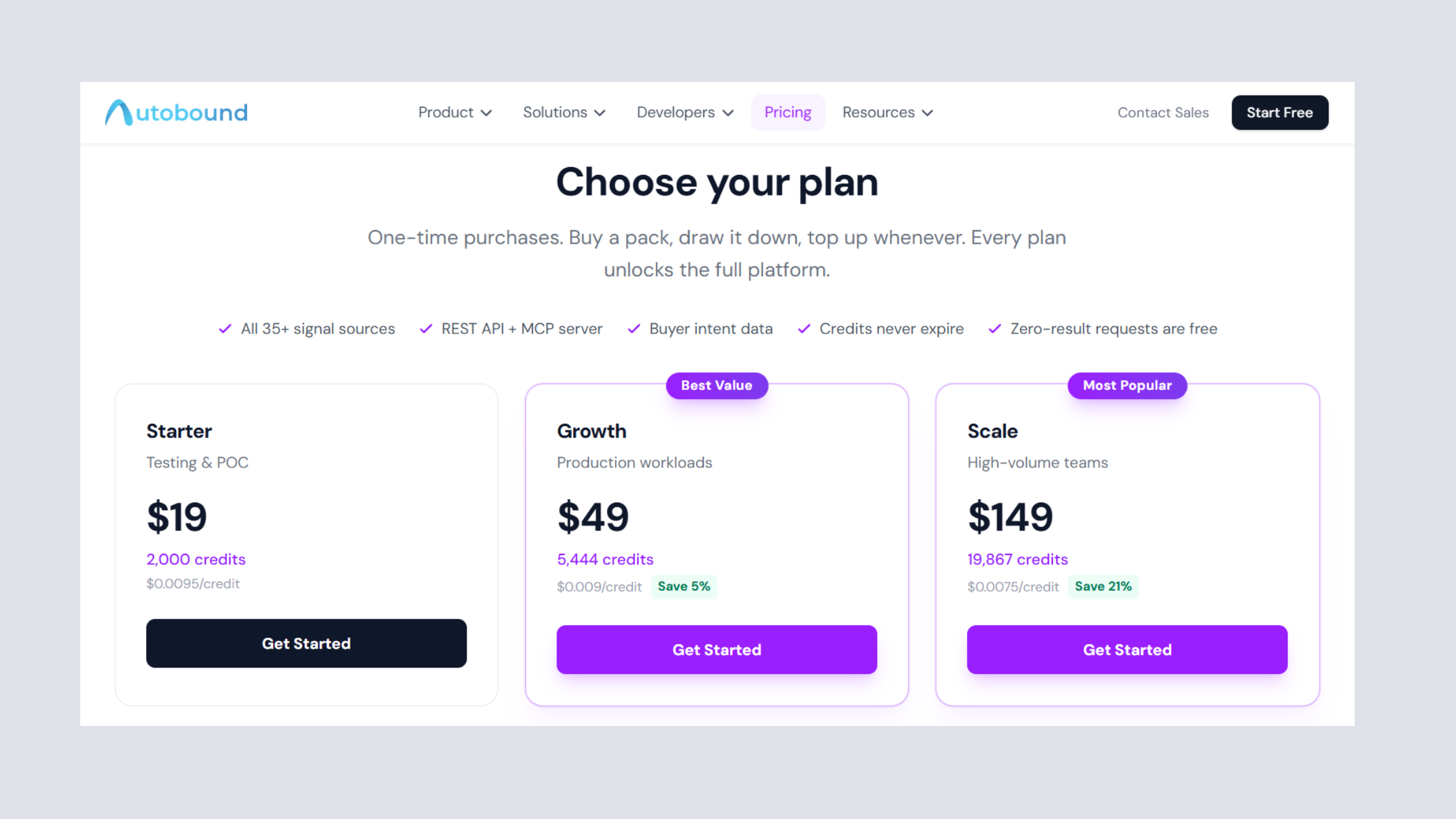
Paid plans are tiered by:
- Message volume: number of AI-generated messages per month
- Feature access: bulk generation, API, team management, content library
- Seat count: pricing is per-seat on annual contracts for teams
According to ConnectSafely's 2026 Autobound analysis, the combined cost of Autobound plus a data provider runs approximately $59–89/month for the tool itself, plus $49–149/month for a data source — putting the realistic all-in cost between $108 and $238 per seat per month depending on plan tier and data provider choice.
According to Autobound's platform data, signal-timed sends hit 15–25% reply rates — compared to industry average cold email reply rates of 5–9% reported by Outly's 2026 benchmark review. This means the reply rate improvement is real, but it must be weighed against the combined tool cost.
The true cost-of-ownership calculation must always include the sequencing platform Autobound requires. For teams already paying for Outreach or Salesloft, Autobound is an incremental cost that typically pays for itself through time savings and reply rate gains. For teams without an existing sequencer, the effective cost is two tools — and that changes the ROI math significantly. Solo reps or small teams are often better served by Autobound's free tier paired with a low-cost sequencer like Instantly or Lemlist.
Want more LinkedIn reach alongside your outbound effort?
HyperClapper boosts your LinkedIn posts with real engagement, so your outbound prospects see an active, credible profile when they check you out before replying.
Explore HyperClapper FreeLinkedIn ROI and Performance Benchmarks: Does Autobound Actually Deliver?
The most significant performance gains from AI personalized cold outreach occur at the first-message open-to-reply step — the exact point where generic templates fail and specific, signal-backed hooks succeed. Autobound's signal engine directly attacks this drop-off point in the cold outreach funnel.
According to Autobound's AI Studio launch data, teams using the platform report 20–40% higher reply rates and a 50% boost in meeting velocity compared to their pre-Autobound baseline. In practice, this means a team booking 20 meetings per month from outbound might reach 28–30 meetings using the same list quality and ICP targeting — purely from better message relevance.
SDR workflow automation gains are equally compelling: teams report cutting research-and-write time per prospect from 15+ minutes to under 2 minutes. For a 10-person SDR team, that's the equivalent of recovering 2–3 full-time employees' worth of prospecting capacity per week.
Important caveat: these gains depend on list quality, ICP precision, and sequence design. What separates top performers here is that they use Autobound to improve message quality, not to compensate for a poorly defined target market. Sending better messages to the wrong people still doesn't convert.
LinkedIn Outreach Automation: Where Autobound Fits the Sales Stack
Autobound occupies the message content layer of a LinkedIn outreach automation stack — not the delivery or connection request layer. For teams running LinkedIn prospecting alongside email outreach, the full stack typically looks like this:
- Prospecting & list building: LinkedIn Sales Navigator, Apollo, ZoomInfo
- Signal enrichment & message generation: Autobound
- Sequence execution: Outreach, Salesloft, Lemlist, Apollo sequences
- Profile & content visibility: HyperClapper for LinkedIn post engagement — so that when an outreach prospect looks up your profile, they land on an active, credible creator with visible engagement, not a ghost profile
This dual-channel approach — Autobound for 1:1 outbound messages, HyperClapper for inbound visibility through boosted organic content — creates a compounding presence effect. Prospects who receive an Autobound-personalized message and then see your LinkedIn posts performing well are significantly more likely to respond. For a deeper look at the LinkedIn tools automation landscape, the LinkedIn tools and automation overview is a useful starting point.
Honest Pros, Cons, and Limitations of Autobound
Most reviews list pros and cons without addressing the context in which each matters. Here's the honest breakdown:
Top pros:
- Signal breadth at 700+ sources is best-in-class for a purpose-built sales tool
- Chrome Extension integrates directly into LinkedIn, Gmail, Outreach, and Salesloft — zero context switching for reps
- Bulk CSV generation is a genuine time-multiplier for high-volume SDR teams
- Measurably better output than raw ChatGPT for signal-rich prospects with active LinkedIn profiles
- Content library and team management features allow consistent brand voice across a rep team
Top cons:
- Not a standalone outreach tool — always requires a separate sequencer to actually send messages
- Output quality degrades significantly for prospects with sparse or inactive LinkedIn profiles
- Combined tool cost ($108–238/seat/month) can stack up for small teams or individual contributors
- Non-English-speaking markets and niche industries produce less reliable personalization hooks
Compliance consideration: Autobound provides the infrastructure for data-driven prospecting, but teams must self-manage GDPR and CCPA compliance for prospect data. Legal accountability for how you store and use prospect information sits with your organization, not with Autobound. This is standard across B2B data tools but worth stating explicitly for compliance-conscious teams in regulated industries.
Common Mistakes to Avoid When Using Autobound
The recurring community pain point is clear: reps who treat Autobound as a fully autonomous autopilot consistently underperform compared to those who treat it as a skilled writing assistant that still needs a human editor. The most common failure modes are:
- Sending drafts unreviewed at scale — AI-generated messages for sparse profiles or unusual job titles can read as off-target and damage sender reputation
- Ignoring the content library setup — without approved value props and CTAs loaded, AI output drifts away from the sales playbook over time
- Using Autobound without a defined ICP — personalization quality is only as good as the targeting behind it; broad lists produce broad results even with excellent message hooks
- Not testing message variants — teams that run A/B tests on framework (PAS vs. AIDA) and CTA style consistently see better optimization than those who stick with default settings
Autobound vs. Lavender AI and Top Alternatives in 2026
What separates top performers when choosing between these tools is understanding that most are not direct competitors — they occupy different layers of the outreach stack. Choosing between them isn't an either/or decision; it's a question of which combination fits your workflow and budget.
Head-to-Head Feature Comparison: Autobound vs. Key Competitors
| Tool | Best For | Signal Depth | Standalone Sequencer? | Starting Cost |
|---|---|---|---|---|
| Autobound | Signal-based message generation at scale | ⭐⭐⭐⭐⭐ (700+ sources) | No — requires integration | Free + paid from ~$59/mo |
| Lavender AI | Email coaching & draft optimization | ⭐⭐ (scores existing copy) | No — writing assistant only | Free + paid from ~$29/mo |
| Apollo.io | All-in-one prospecting + sequencing | ⭐⭐⭐ (built-in AI writing) | Yes — fully standalone | Free + paid from ~$49/mo |
| Clay | Custom enrichment + workflow automation | ⭐⭐⭐⭐ (custom logic) | No — requires sequencer | From ~$149/mo |
| HyperClapper | LinkedIn post engagement & profile visibility | N/A (engagement, not outreach) | N/A — complements outreach tools | See hyperclapper.com |
Autobound vs. Lavender AI: These two are often compared, but they solve different problems. Lavender AI is a writing coach — it scores existing email drafts and suggests improvements. Autobound generates from scratch using prospect research. They are complementary, not competing. A rep could use Autobound to generate a first draft and Lavender to score and refine it before sending.
Autobound vs. Apollo: Apollo is a full prospecting and sequencing suite with built-in AI writing. Autobound wins on personalization depth and signal breadth; Apollo wins on being a single, self-contained tool. For teams without an existing sequencer, Apollo may deliver better ROI per dollar. For teams already on Outreach or Salesloft who need richer personalization, Autobound is the stronger add-on.
Autobound vs. Clay: Clay offers more flexibility for custom enrichment logic and complex GTM workflows, but it has a steeper learning curve and higher setup cost. Clay is the right choice for RevOps-heavy teams building sophisticated data workflows; Autobound is faster to deploy for SDR teams focused purely on personalization output quality.
For teams building a complete LinkedIn presence strategy — not just outbound messaging — pairing Autobound with LinkedIn engagement tools like HyperClapper creates a dual-channel presence. Autobound handles 1:1 outbound; HyperClapper amplifies organic content visibility so that inbound and outbound reinforce each other. When a prospect receives your personalized message and then sees your LinkedIn posts generating real engagement, credibility compounds.
The best AI tools for LinkedIn prospecting in 2026 aren't single platforms — they're combinations: a signal-based personalizer for outbound messages and an engagement amplifier for organic visibility. Each layer makes the other more effective.
 autobound.ai
What Real Users Say: Autobound Reviews and Customer Sentiment
According to TechReviewer's aggregated G2 data, Autobound has accumulated 263 reviews spanning March 2023 through June 2026 — a meaningful dataset for a tool in this category. The sentiment pattern is consistent across platforms.
What reviewers consistently praise:
- Signal-based hook quality — specifically that messages reference something real about the prospect that generic templates never would
- Chrome Extension's in-workflow experience — reps can generate personalized messages without leaving LinkedIn or Gmail
- Time savings for high-volume SDR teams — the bulk generation feature is the most frequently cited productivity win
What reviewers consistently criticize:
- The dependency on a third-party sequencer catches many buyers off guard — they expected Autobound to handle sending as well
- Output inconsistency for niche industries or non-English-speaking markets
- Sparse profile degradation — when LinkedIn data is thin, output quality drops visibly
After seeing this across a wide range of user feedback, the pattern is that Autobound satisfaction correlates directly with SDR volume and ICP clarity. Power users deploying Autobound as part of a structured workflow — with messaging templates, ICP guardrails, and a lightweight QA review step — report the highest satisfaction. Those expecting a fully autonomous, fire-and-forget system are consistently disappointed.
Verdict from the community: Autobound is worth the investment for SDR teams sending 30+ personalized outreach messages per day. For solo reps or low-volume senders, the free plan or a lighter tool like Lavender AI may deliver better ROI per dollar spent. For a broader look at alternatives, the Mailshake alternatives guide covers the full landscape of sales automation and outreach tools worth evaluating alongside Autobound.
✓ The Autobound Deployment Checklist
- ☐Define your ICP clearly before generating any messages — Autobound improves quality, it doesn't compensate for poor targeting.
- ☐Load your content library with approved value props, objection handles, and CTA variants before your team starts generating.
- ☐Pre-enrich CSVs for niche or LinkedIn-sparse audiences with tech stack and company data from Apollo or ZoomInfo.
- ☐Establish a lightweight QA step — 30-second review per draft before sending to top-tier accounts.
- ☐Run A/B tests on messaging frameworks (PAS vs. AIDA) and CTA styles in the first 30 days to calibrate output for your audience.
- ☐Confirm your sequencer integration (Outreach, Salesloft, Apollo, Lemlist) before subscribing — Autobound requires one to send.
- ☐Review GDPR/CCPA obligations for your prospect data — compliance accountability sits with your team, not Autobound.
Your outbound is only as strong as your LinkedIn presence
Prospects check your profile before they reply. HyperClapper helps you build real LinkedIn visibility with genuine engagement — so your profile backs up every message Autobound sends.
Boost Your LinkedIn PresenceFrequently Asked Questions About Autobound
What is Autobound and how does it improve LinkedIn outreach results?
Autobound is an AI-powered sales personalization platform that pulls real-time signals — LinkedIn activity, funding news, hiring patterns, tech stack data — to auto-generate personalized cold email and LinkedIn messages. It improves outreach results by replacing generic templates with signal-backed hooks, which directly increases open-to-reply rates at the first-message stage of cold outreach funnels.
Is Autobound better than writing LinkedIn messages manually?
For high-volume outreach (20+ messages per day), yes — Autobound is significantly faster and maintains personalization quality that manual writing can't sustain at scale. For low-volume, high-value accounts, a skilled writer with thorough research can match Autobound's quality. The break-even point is roughly 15–20 personalized messages per day, where manual effort becomes the bottleneck.
How much does Autobound cost and is there a free plan?
Autobound offers a free plan for testing, with limited monthly message generation. Paid plans start at approximately $59–89/month per seat. The real total cost of ownership includes a required third-party sequencer and optionally a data provider — bringing the all-in monthly cost to roughly $108–238 per seat depending on plan tier and tool combination.
Can Autobound help increase LinkedIn connection reply rates?
Yes. Autobound's signal-timed personalization targets 15–25% reply rates according to Autobound's own platform benchmarks, versus the industry average of 5–9% for generic cold outreach. The improvement is most pronounced when Autobound is used on prospects with active LinkedIn profiles and clear, scrape-able signals — the hook quality drops for sparse or inactive profiles.
Does Autobound work with LinkedIn Sales Navigator?
Yes. Autobound's Chrome Extension surfaces directly within the LinkedIn interface, including Sales Navigator, allowing reps to generate personalized messages from a prospect's profile without leaving the platform. For teams using Sales Navigator for prospecting, it pairs naturally as the signal enrichment and message generation layer. See our LinkedIn Sales Navigator pricing guide for full stack cost analysis.
What are the best AI tools for LinkedIn prospecting in 2026?
The strongest combination for LinkedIn prospecting in 2026 is: Sales Navigator for list building, Autobound for signal-based message personalization, a sequencer like Apollo or Outreach for delivery, and a LinkedIn engagement platform like HyperClapper for organic visibility. Each layer solves a distinct problem — no single tool handles everything optimally. For a full comparison of LinkedIn automation options, the LinkBoost review offers useful contrast on the engagement side.
What are the main Autobound alternatives worth considering?
The strongest Autobound alternatives in 2026 are Apollo (all-in-one with weaker personalization depth), Clay (maximum flexibility with steeper learning curve), and Lavender AI (writing assistant rather than generator). For teams specifically focused on LinkedIn engagement rather than cold email generation, HyperClapper addresses a different but complementary layer — post visibility and organic reach rather than outbound message quality.



