Most comparisons of Typefully vs HyperClapper miss the most important point: these two tools don't compete with each other — they operate at completely different stages of content creation. Typefully is a Twitter/X drafting and scheduling tool. HyperClapper is a LinkedIn post amplification platform. A pattern observed consistently across creators who switch between them is that they were solving the wrong problem — scheduling more content when their real bottleneck was reach, or chasing engagement before they had publishing consistency. Understanding which problem you actually have determines which tool belongs in your stack — and whether you need both.
- Different tools, different stages: Typefully solves a creation/scheduling problem (upstream); HyperClapper solves a distribution/reach problem (downstream, after publishing).
- Platform matters: Typefully is built for Twitter/X. HyperClapper is built exclusively for LinkedIn. They don't overlap.
- Solopreneurs under 5,000 followers on X should start with Typefully; LinkedIn-focused founders and B2B creators should use HyperClapper.
- Engagement pods aren't all equal: HyperClapper uses real community channels, not bot networks — this is a meaningful distinction for account safety.
- The most counterintuitive finding: Scheduling tools create an illusion of productivity — a perfectly timed post still reaches nobody if the account's early engagement signal is weak.
- Best stack for cross-platform solopreneurs: Typefully for X + HyperClapper for LinkedIn — no redundancy, full coverage.
- What Typefully and HyperClapper Actually Are
- Typefully Review: Honest Pros, Real Limitations
- HyperClapper Review: Does It Actually Work?
- Hidden Downsides, Safety Risks, and Common Mistakes
- Which Tool Is Better for Solopreneurs, Creators, and Small Teams?
- How to Build the Right LinkedIn Scheduling and Engagement Stack in 2026
- Frequently Asked Questions: Typefully vs HyperClapper
| Tool | Best For | Primary Platform | Core Function | Starting Price |
|---|---|---|---|---|
| Typefully | X/Twitter creators, thread writers | Twitter/X (+ LinkedIn) | Drafting, scheduling, analytics | ~$15/mo |
| HyperClapper | LinkedIn founders, B2B creators, coaches | Engagement amplification, AI replies, post boosting | See hyperclapper.com |
What Typefully and HyperClapper Actually Are (And Why People Confuse Them)
The confusion between these two tools is understandable — both are marketed under the broad umbrella of "LinkedIn growth tools" and "social media growth." But what is the difference between Typefully and HyperClapper? The answer is that they solve fundamentally different problems at different points in the content lifecycle.
Typefully is a content creation and scheduling platform, built originally for Twitter/X and later expanded to include LinkedIn. Its core value proposition is a distraction-free writing environment for drafting threads, queuing posts, and publishing at optimal times. It does not touch what happens to content after it goes live.
HyperClapper is a LinkedIn post visibility and engagement platform. Its core value proposition is amplifying content that's already published — using real community channels (groups of active LinkedIn users) to deliver genuine likes, comments, and AI-powered replies in the critical first hour after a post goes live.
Scheduling a post nobody sees is still a post nobody sees. The tools that solve the scheduling problem and the tools that solve the reach problem are not the same tools.
How Typefully Works: Scheduling, Drafts, and the Writing-First Approach
Typefully's workflow is built around the writer. You draft content in a clean editor, organise it into a queue, and let the scheduler handle timing. For thread-heavy Twitter/X creators, this is genuinely useful — it removes the friction between having an idea and publishing it consistently. The analytics layer shows impressions, profile clicks, and engagement rates post-publish. What it doesn't do is influence those numbers through any amplification mechanism.
How HyperClapper Works: Channels, AI Replies, and Post Boosting
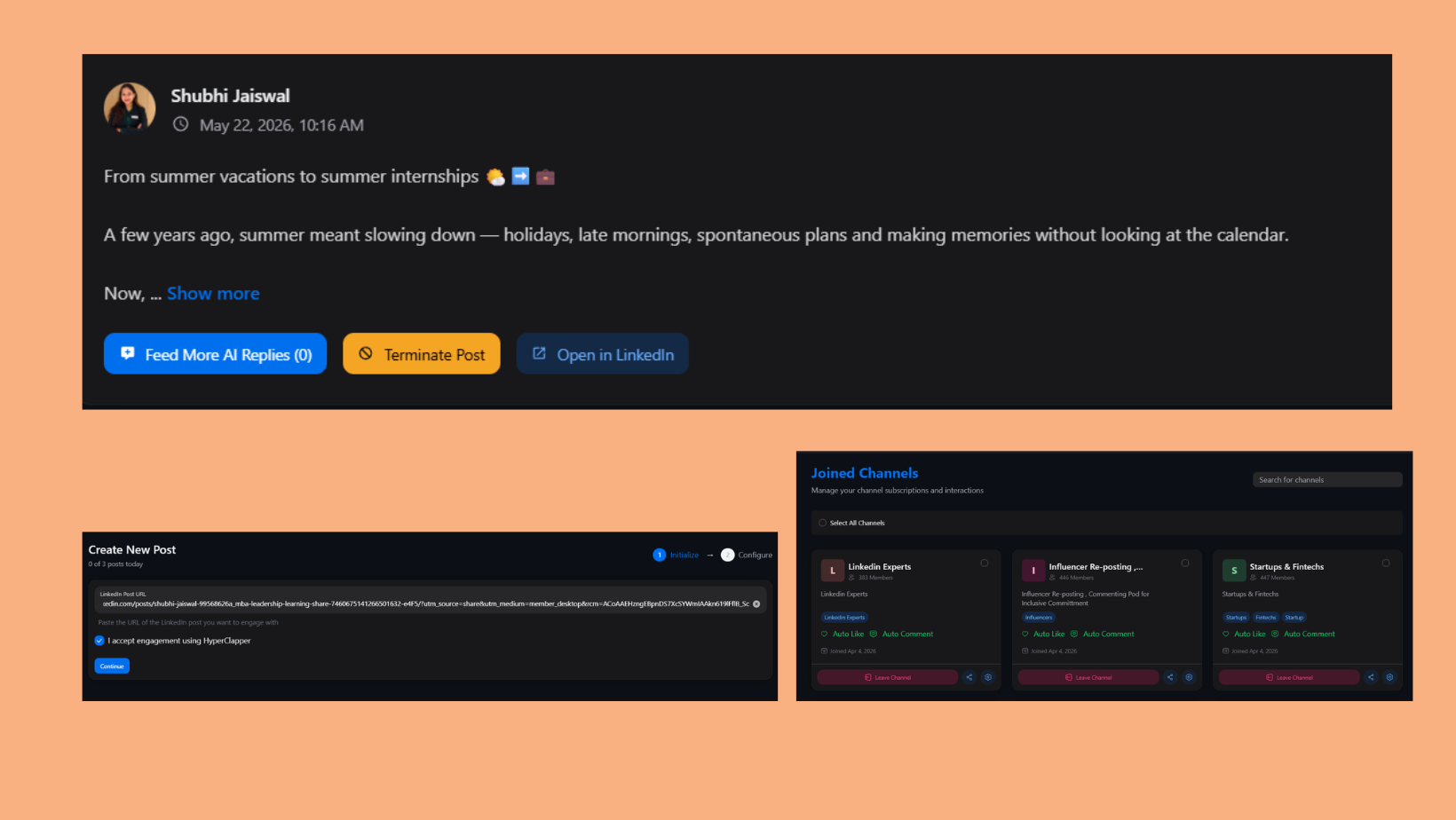
HyperClapper's workflow starts after you hit publish on LinkedIn. You add your live post URL, select one or more channels, and the platform distributes your post to real LinkedIn users within those channels who engage with it. One channel delivers roughly 50 possible engagements; three channels open up approximately 150. The AI Replies feature generates and posts contextually relevant comments to sustain conversation depth — which matters because LinkedIn's algorithm weights comment quality and thread length, not just raw like counts. You can learn exactly how AI credits and post interactions work on the HyperClapper platform directly.
Understanding this creation-vs-distribution distinction is the starting point for every tool decision that follows.
Typefully Review: Honest Pros, Real Limitations, and Who It's Actually For
A Typefully review honest assessment starts with what the tool genuinely does well — and the list is real. For solo creators and solopreneurs who struggle with publishing consistency on Twitter/X, Typefully is one of the cleaner solutions available. The distraction-free editor, thread formatting tools, and content queue genuinely reduce the friction between intention and execution.
Teams that adopt Typefully as their primary X drafting tool consistently see improvements in publishing frequency within the first two to three weeks — not because the tool is magical, but because reducing publishing friction compounds over time. That consistency matters: according to Hootsuite's 2026 LinkedIn algorithm analysis, posting weekly leads to a 2x lift in engagement — a principle that applies across platforms, including X.
But here's what most Typefully reviews skip over: Is Typefully worth it for Twitter growth depends entirely on what's limiting your growth. If you're publishing inconsistently — yes, Typefully solves that. If your posts are going out regularly and still getting low reach — no amount of scheduling polish fixes that. A well-timed post to an audience that doesn't see it is a scheduling success and a growth failure.
Typefully Pricing vs HyperClapper Pricing: What You're Really Paying For
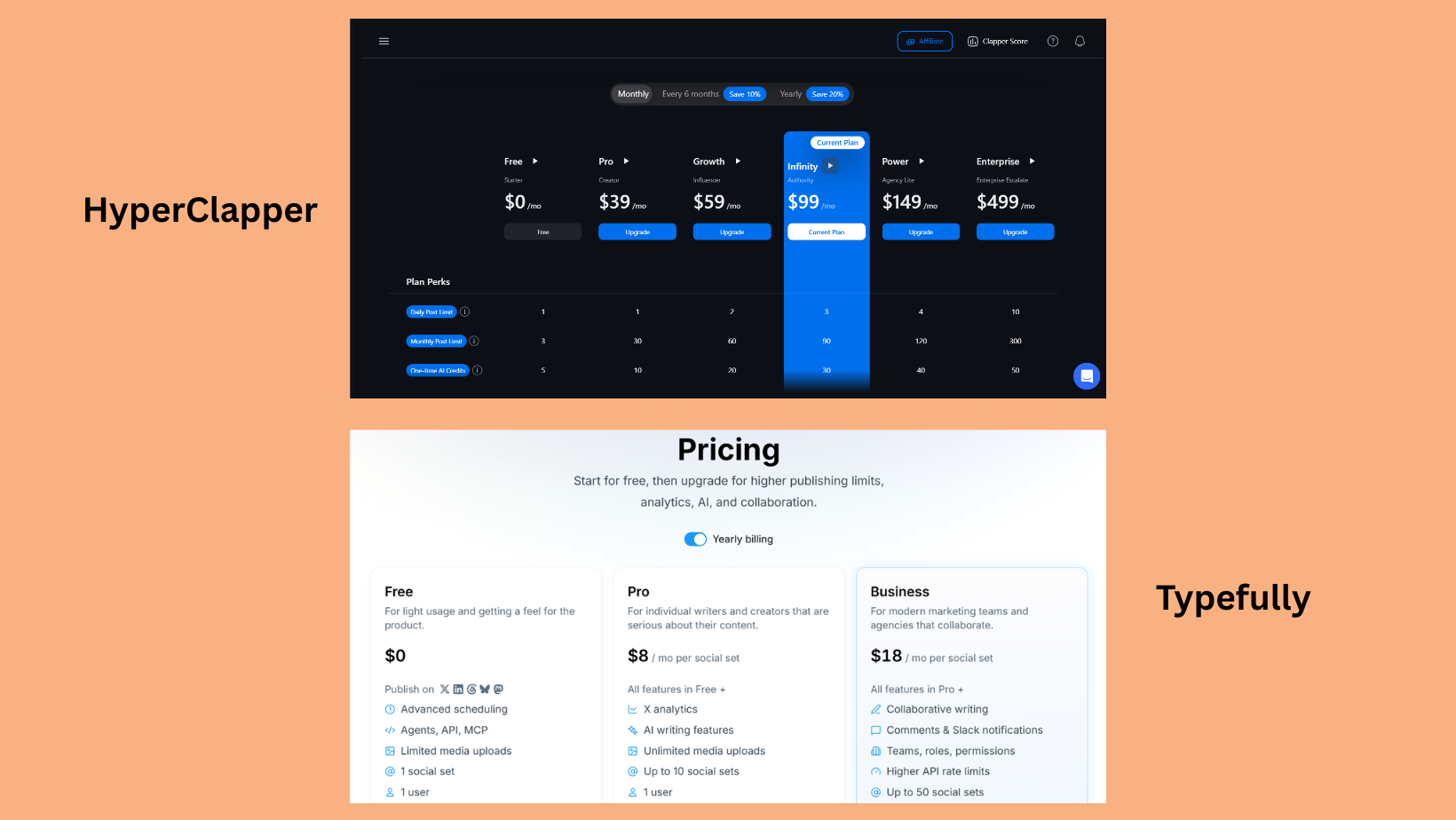
According to LinkedIn Tool Reviews 2026, Typefully starts at approximately $15/month for its core scheduling and analytics tier. What you're paying for is the writing experience, scheduling reliability, and basic analytics. There's no engagement amplification in any Typefully tier — that's simply not what the product does.
Typefully pricing vs HyperClapper pricing is not a direct apples-to-apples comparison because the products don't substitute for each other. HyperClapper's value is tied to engagement volume per post — pricing is structured around channel access and AI reply credits. For creators who post frequently on LinkedIn, the ROI calculation is about reach multiplied by post frequency, not a flat monthly fee comparison.
Typefully Alternatives in 2026: When You've Outgrown a Pure Scheduler
If you've been using Typefully for six months, posting consistently, and still not seeing audience growth, the answer isn't a better scheduler — it's a different kind of tool entirely. Typefully alternatives 2025 and 2026 worth considering include Buffer (for multi-platform management with team collaboration), Taplio (for LinkedIn-specific content intelligence), and for the distribution problem specifically, HyperClapper for LinkedIn-side amplification. The right alternative depends on whether you've outgrown scheduling or whether you need something fundamentally different.
HyperClapper Review: Does It Actually Work and What Experts Aren't Saying
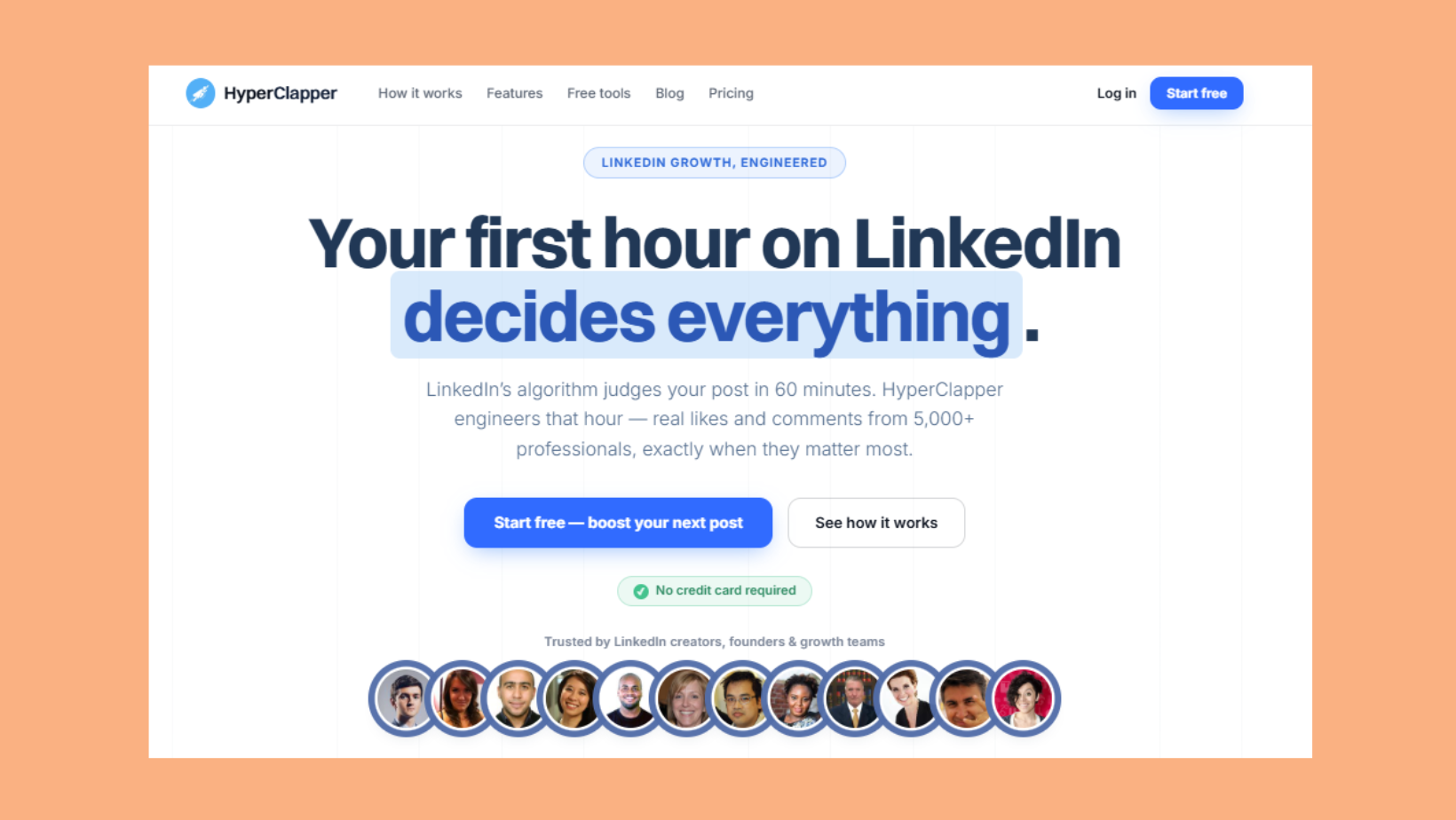
The most honest HyperClapper review starts with the engagement velocity mechanism. Engagement velocity is the speed at which a post receives likes and comments after publishing — and it's the primary signal LinkedIn's algorithm uses to decide whether to push a post into broader feeds. HyperClapper is built specifically to engineer that early signal.
According to HyperClapper's own engagement benchmark data, the average LinkedIn personal profile sits at a 3.85% engagement rate — and HyperClapper is designed to help users beat that benchmark through real community engagement, not inflated metrics. In practice, this means a post that would otherwise receive 3–5 interactions in its first hour can receive 30–50 through channel amplification, which meaningfully changes the algorithm's distribution decision.
Does HyperClapper actually work? It works consistently for one specific use case: amplifying content that's already good. What separates top performers using HyperClapper from those who feel disappointed is whether the underlying content has genuine value. The platform engineers the signal — but the signal still needs to lead somewhere worth following.
HyperClapper Engagement Pods Explained: Real Community vs. Old-School Pod Risks
HyperClapper engagement pods explained: the platform operates through channels — structured groups of real LinkedIn users who agree to engage with posts submitted to their channel. This is architecturally different from legacy pod tools like Lempod and Podawaa, which used scripted bot accounts or reciprocal engagement rings that LinkedIn's systems have become increasingly effective at detecting.
The real-user model matters for two reasons. First, LinkedIn's feed algorithm has learned to differentiate between authentic community engagement and coordinated inauthentic activity. Second, real users leave real comments — which means the conversation signals (comment length, reply chains, dwell time on post) are genuine, not manufactured. LinkedIn storytelling that beats the 2026 algorithm depends precisely on these deeper signals, not just raw like counts.
HyperClapper as a LinkedIn Scheduling and Engagement Stack
A recurring pattern among LinkedIn creators trying to build visibility is treating scheduling and engagement as a single problem when they're actually two separate ones. HyperClapper handles the engagement half of the LinkedIn scheduling and engagement stack — you still need to publish the post through LinkedIn natively or via a separate scheduler. What HyperClapper adds is the post-publish amplification layer that scheduling tools are structurally incapable of providing.
Hidden Downsides, Safety Risks, and Common Mistakes to Avoid
The most common failure mode in tool selection is choosing based on brand familiarity rather than problem-solution fit. Both Typefully and HyperClapper have genuine downsides — and understanding them prevents the kind of disappointed review that comes from using a tool for the wrong job.
Platform Mismatch: Why Comparing These Two Tools Can Lead You Astray
A direct question that comes up constantly: Is HyperClapper safe to use or will it get my Twitter account flagged? This is the clearest example of the platform mismatch confusion. HyperClapper operates exclusively on LinkedIn, not Twitter/X. Twitter/X ban risk is simply not a relevant consideration for HyperClapper users. The platform's safety architecture — Content Guard moderation, real-user channels, and engagement pacing — is designed around LinkedIn's guidelines specifically.
Can engagement pods get your Twitter account banned? Yes — on X, coordinated inauthentic engagement violates the platform's Terms of Service, and X's enforcement has tightened meaningfully since 2023. This is precisely why HyperClapper deliberately focuses on LinkedIn, where community engagement signals are built into the platform's own distribution design. LinkedIn's algorithm expects and rewards early community engagement — it's how the platform works, not a workaround of it.
As for Twitter growth tool hidden downsides more broadly: the hidden downside of any scheduling or engagement tool is substituting tool activity for content quality. A creator who spends more time configuring their stack than improving their content will plateau regardless of which tools they use. The fundamentals of carousel storytelling, hooks, and CTAs still determine whether amplified content actually converts reach into followers.
Want real LinkedIn engagement — without bots or fake activity?
HyperClapper connects your posts to real community channels and AI-powered replies so your content gets the early signal it needs to reach more people.
Explore HyperClapper →Which Tool Is Better for Solopreneurs, Creators, and Small Teams?
Three distinct audience profiles, three distinct answers. No tool is universally better — the question is always better for whom and for what.
Which Twitter tool is better for solopreneurs building an audience on X from scratch? Typefully wins on interface clarity and writing focus. Its queue system and best-time recommendations address the consistency problem that derails most early-stage creators before reach ever becomes the constraint. For a solopreneur under 5,000 followers on X, publishing consistency compounds over months — and Typefully genuinely helps build that habit.
For LinkedIn-focused founders, coaches, and B2B marketers, HyperClapper delivers measurable reach gains from the first post. The mechanism is direct: early engagement → algorithmic distribution boost → more impressions from non-followers → profile views and connection requests. The downstream effect on profile visibility and activity tracking is real and measurable within the first few posts.
- Building consistency on X/Twitter → Typefully — its drafting queue solves the publishing frequency problem before reach becomes the constraint.
- Growing LinkedIn reach as a founder or B2B creator → HyperClapper — real channel engagement amplifies the early signal LinkedIn's algorithm needs.
- Running a cross-platform solopreneur stack → Typefully (X) + HyperClapper (LinkedIn) — complementary, no overlap, full coverage.
- Team with multi-platform needs and CRM integration → Buffer or Taplio alongside HyperClapper for LinkedIn-side amplification.
Real Use Cases: When HyperClapper Outperforms a Scheduler Alone
Consider a B2B consultant posting three times a week on LinkedIn. Their content is solid — they post case studies, frameworks, and industry takes. But their reach has plateaued at roughly the same 200–300 impressions per post despite six months of consistent effort. The bottleneck isn't consistency or content quality — it's the cold-start engagement problem. Their posts aren't getting enough early signal for LinkedIn to push them beyond their existing first-degree network.
Adding HyperClapper to that workflow — submitting each post to two or three channels — delivers the early engagement burst that resets the distribution ceiling. In practice, this type of scenario plays out consistently among LinkedIn creators who have already solved their content and consistency problems but remain stuck on reach.
The truth about LinkedIn read receipts and content visibility reveals how LinkedIn's engagement signals work downstream of publishing — understanding this makes it clear why post-publish amplification matters as much as pre-publish scheduling.
How to Build the Right LinkedIn Scheduling and Engagement Stack in 2026
After seeing content distribution workflows across hundreds of LinkedIn accounts, the pattern is clear: most creators over-invest in creation tools and under-invest in distribution tools. The right content distribution workflow in 2026 is stage-aware — different tools for different stages, no redundancy, no tool doing a job it wasn't designed for.
✓ The 2026 Content Stack Setup Checklist
- ☐Identify your primary platform (LinkedIn vs X/Twitter) — this determines which tool category you need first.
- ☐If LinkedIn is primary: ensure you have a publishing method (native or scheduler) plus an engagement amplifier (HyperClapper).
- ☐If X/Twitter is primary: add Typefully for drafting and queue management; evaluate engagement tools separately.
- ☐Submit each LinkedIn post to HyperClapper channels within 15 minutes of publishing — before the algorithm's first distribution window closes.
- ☐Use "Feed More AI Replies" on posts with active conversation threads 24–48 hours after publishing to sustain algorithmic distribution.
- ☐Track LinkedIn post visibility and dwell signals in HyperClapper analytics — not just likes, but reach and profile click growth.
- ☐Audit your stack quarterly: if you're paying for a tool you haven't opened in 30 days, cut it — stack bloat is a real problem.
The four-step framework for building this stack deliberately:
- Define your primary platform. If it's LinkedIn, you need a publisher plus HyperClapper for post visibility amplification. If it's X, Typefully handles both creation and scheduling natively.
- Match tools to content stages. Scheduling tools solve upstream consistency problems; engagement tools like HyperClapper solve downstream distribution problems. Never use a scheduling tool to try to solve a reach problem — they're structurally incapable of it.
- Avoid redundant stacking. Typefully and HyperClapper do not overlap. Adding both to a LinkedIn-only workflow adds cost without adding value. Adding both to a cross-platform workflow is a deliberate, complementary choice with clear ROI on each side.
- Measure the right metrics per tool. For LinkedIn: post visibility, dwell time, and profile views (HyperClapper analytics). For X: publishing frequency, engagement rate per post, and follower growth rate (Typefully analytics).
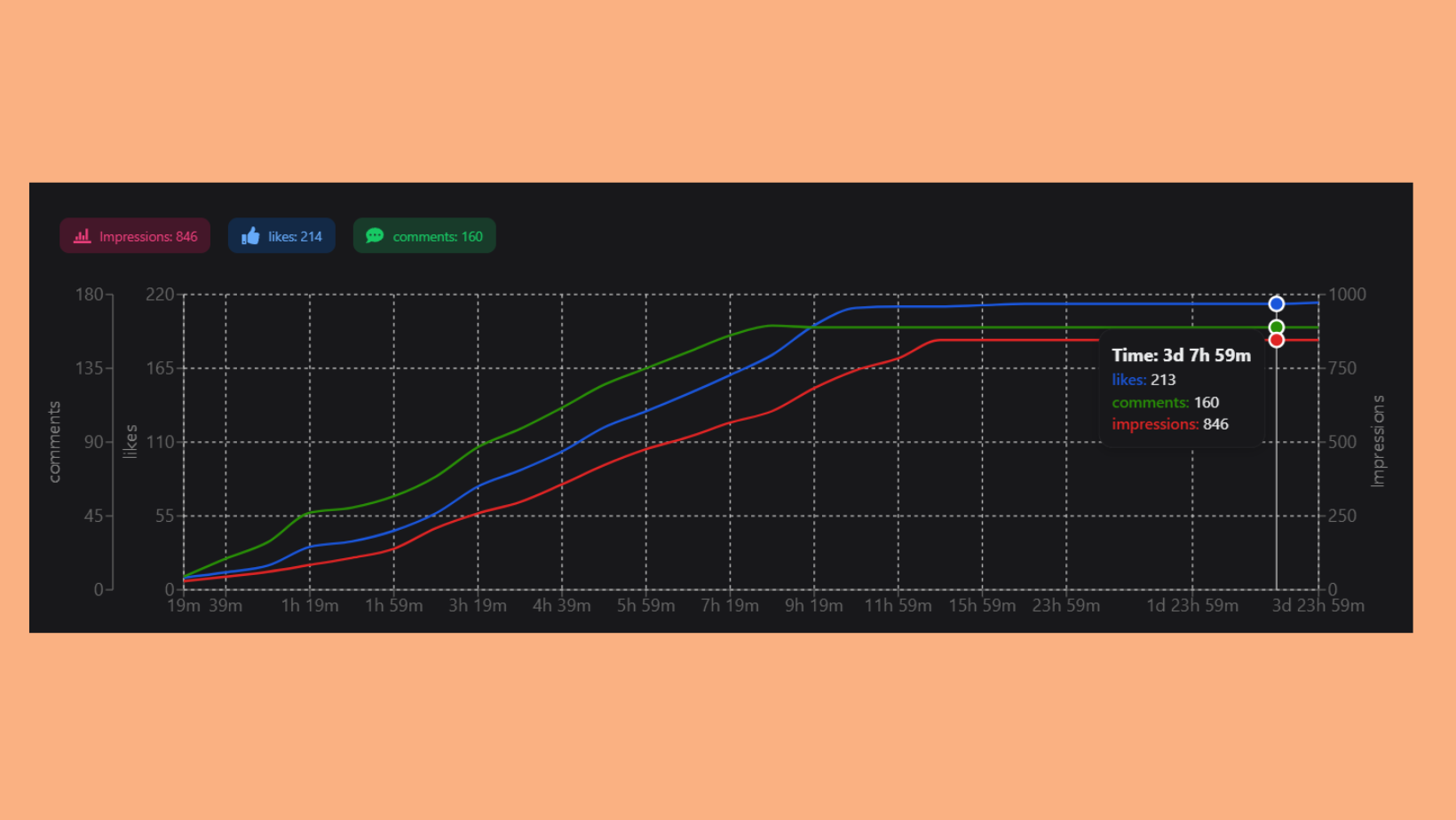
Measure the right metrics with HyperClapper
HyperClapper Alternative for Twitter Scheduling: What to Use Instead
If you're specifically looking for a HyperClapper alternative for Twitter scheduling, the framing of the question reveals the platform mismatch: HyperClapper doesn't do Twitter scheduling — it does LinkedIn engagement amplification. For Twitter/X scheduling, Typefully, Buffer, and Hootsuite are the relevant comparison set. For LinkedIn engagement amplification, HyperClapper's closest alternatives are Lempod and Podawaa — though both differ meaningfully in their engagement model (legacy pod structures vs. HyperClapper's real-channel approach).
The best tool for the job is not the most popular tool in the category — it's the tool that operates at the exact stage in the content lifecycle where your growth is actually stalling.
Ready to solve your LinkedIn reach problem — not just your scheduling problem?
HyperClapper amplifies your LinkedIn posts with real community engagement and AI-powered replies — from your first post onward.
Start with HyperClapper →Frequently Asked Questions: Typefully vs HyperClapper
What are the real pros and cons of Typefully versus HyperClapper for growing on X in 2025?
Typefully's pros: clean drafting interface, reliable scheduling, solid analytics for X growth. Its con: zero amplification — scheduling alone can't grow a low-reach account. HyperClapper's pros: measurable early engagement on LinkedIn, real community channels, AI replies. Its con: LinkedIn-only — it has no X functionality. For X growth specifically, Typefully is the relevant tool; HyperClapper serves LinkedIn exclusively.
Is HyperClapper safe to use, or will it get my LinkedIn account flagged?
HyperClapper is designed to operate within LinkedIn's engagement model using real users, not bots. Its Content Guard system filters out risky content, and engagement pacing mimics natural activity patterns. No tool carries zero risk, but HyperClapper's real-channel model is meaningfully safer than legacy bot-based pod tools. LinkedIn's algorithm rewards early community engagement — HyperClapper works with that design, not against it.
Which is better for a creator with under 5,000 followers — Typefully or HyperClapper?
Platform determines the answer. Under 5,000 followers on X/Twitter: start with Typefully — consistency builds the foundation that compounds over time. Under 5,000 followers on LinkedIn: HyperClapper delivers measurable reach gains from day one by engineering the early engagement signal LinkedIn's algorithm requires to push posts beyond your existing first-degree network.
Do experts recommend HyperClapper, or is it just hype?
HyperClapper works within a defined use case: amplifying content that's already well-crafted. It reliably increases early post engagement velocity on LinkedIn, which demonstrably affects algorithmic distribution. It does not rescue weak content or substitute for a content strategy. Experts who have tested it recommend it specifically for LinkedIn-focused creators with a consistent publishing cadence who need to break through reach plateaus.
How do Typefully and HyperClapper differ in their approach to engagement?
Typefully takes a passive approach: it optimises when content goes out but does nothing to influence engagement after publishing. HyperClapper takes an active approach: it engineers the engagement signal that determines whether LinkedIn distributes a post widely. Think of Typefully as the launchpad and HyperClapper as the engine — they're different parts of the same flight.
Can engagement pods get your Twitter account banned, and does HyperClapper pose that risk?
Yes — coordinated engagement pods on Twitter/X violate X's Terms of Service, and accounts have been suspended for it. HyperClapper poses no Twitter/X ban risk because it doesn't operate on Twitter/X at all — it's a LinkedIn-only platform. The concern conflates two separate platforms. On LinkedIn, community engagement amplification is aligned with how the platform's distribution model is designed to work.
What is the best Twitter scheduling tool in 2025 for a solo creator?
Typefully is the strongest choice for solo creators who prioritise a clean writing experience and reliable X scheduling. Its distraction-free editor, thread formatting, and content queue handle the full creation-to-publish workflow without unnecessary complexity. For creators who also need multi-platform management or CRM integration, Buffer or Hootsuite add those capabilities at a higher price point.
What consistently separates LinkedIn accounts that build genuine reach from those that plateau at impressive post counts is not any single tool — it's the combination of content quality, publishing consistency, and early engagement amplification. Accounts that solve all three compound their visibility over time. Accounts that solve only one or two typically hit a ceiling, regardless of how polished their scheduling workflow looks.



