A pattern observed consistently across the highest-performing LinkedIn accounts is that massive organic reach is never accidental — it is engineered through specific content behaviors, deliberate community activation, and a deep understanding of how LinkedIn's distribution model rewards early engagement. The top influencers on LinkedIn are not simply posting more often than everyone else. They are posting smarter, engaging faster, and building niche authority that compounds over months rather than chasing one-off viral moments. If you want to know how do you find influencers to follow on LinkedIn — or how to replicate what they do — this guide covers both: the discovery mechanics and the growth playbook behind the reach.
- WHO: Creators, founders, marketers, and professionals who want to grow on LinkedIn without paid ads
- WHAT: How to find niche-relevant LinkedIn influencers and how top voices actually build organic reach
- WHY: Generic "top voices" lists rarely match your industry — niche-relevant micro-influencers often outperform mega-accounts for targeted goals
- KEY INSIGHT: Early engagement velocity (within 60–90 minutes of posting) is the single biggest lever top LinkedIn influencers engineer deliberately
- MISTAKE TO AVOID: Chasing follower counts instead of engagement rates — a 3,000-follower niche expert routinely outperforms a 500K generalist for professional outcomes
- TOOL TIP: LinkedIn's native search filters are the most underused free discovery tool for finding niche-aligned influencers
- What Makes Someone a Top LinkedIn Influencer
- How to Find LinkedIn Influencers Who Actually Match Your Niche
- The LinkedIn Influencer Strategy: How They Build Massive Organic Reach
- How to Grow on LinkedIn Organically: Personal Branding and Common Mistakes
- How to Engage With and Learn From LinkedIn Influencers
- Frequently Asked Questions About LinkedIn Influencers and Organic Growth
What Makes Someone a Top LinkedIn Influencer (And Why It Matters in 2026)
A LinkedIn influencer is not simply someone with a large follower count — it is someone who generates consistent, substantive engagement within a defined professional niche over time. The distinction between being prolific and being genuinely influential is one the algorithm makes more clearly with every update. Follower volume is a lagging indicator. Engagement quality — the depth of comments, the frequency of saves, the response rate the creator maintains in their own threads — is what actually signals authority to LinkedIn's distribution system.
According to Sociallyin, a good engagement rate on LinkedIn for influencers sits at around 0.65% or above. That benchmark matters because it separates accounts that have built real community from accounts that have simply accumulated followers over years of passive presence. Many of the most followed LinkedIn accounts sit well below this threshold — while niche micro-influencers with 5,000–15,000 followers regularly exceed it.
According to Hootsuite (2024), LinkedIn has over 180 million senior-level influencers on the platform. This means the supply of credible professional voices is vast — which makes your filtering criteria, not the existence of influencers, the real challenge. This is precisely why generic "top LinkedIn influencers" lists consistently disappoint: they optimise for name recognition, not niche fit.
The influencer spectrum runs from mega-accounts (5M+ followers — think Bill Gates or Arianna Huffington on LinkedIn) to micro-influencers (typically 1,000–50,000 followers in a defined sector) and nano-influencers (under 5,000 but highly engaged within a tight community). For most professionals trying to grow or learn, the micro and nano tier offers higher engagement rates and tighter audience alignment than any celebrity-tier account.
Top LinkedIn Influencers by Industry to Follow in 2026
Rather than another generic list, here is a framework for thinking about top linkedin influencer types by sector — because the right follow depends entirely on your professional context:
- Marketing & Growth: Look for creators who post frameworks, teardowns, and campaign analysis — not just inspirational quotes
- HR & People Ops: Follow voices who discuss hiring data, culture design, and talent trends with specifics
- Finance & FinTech: Seek out analysts and operators who share deal flow insights, market commentary, and regulatory context
- Entrepreneurship: Prioritise founders who document real decisions — failures, pivots, fundraising mechanics — over success-narrative accounts
- Tech & Product: Follow PMs and engineers who share build logs, product decisions, and technical explainers with genuine depth
- Sales: Target practitioners who share call recordings, pipeline data, and outreach results — not just motivational one-liners
The pattern across all categories: the most valuable influencers on linkedin in any niche are identified by the specificity of what they post, not the size of their audience.
How to Find LinkedIn Influencers Who Actually Match Your Niche
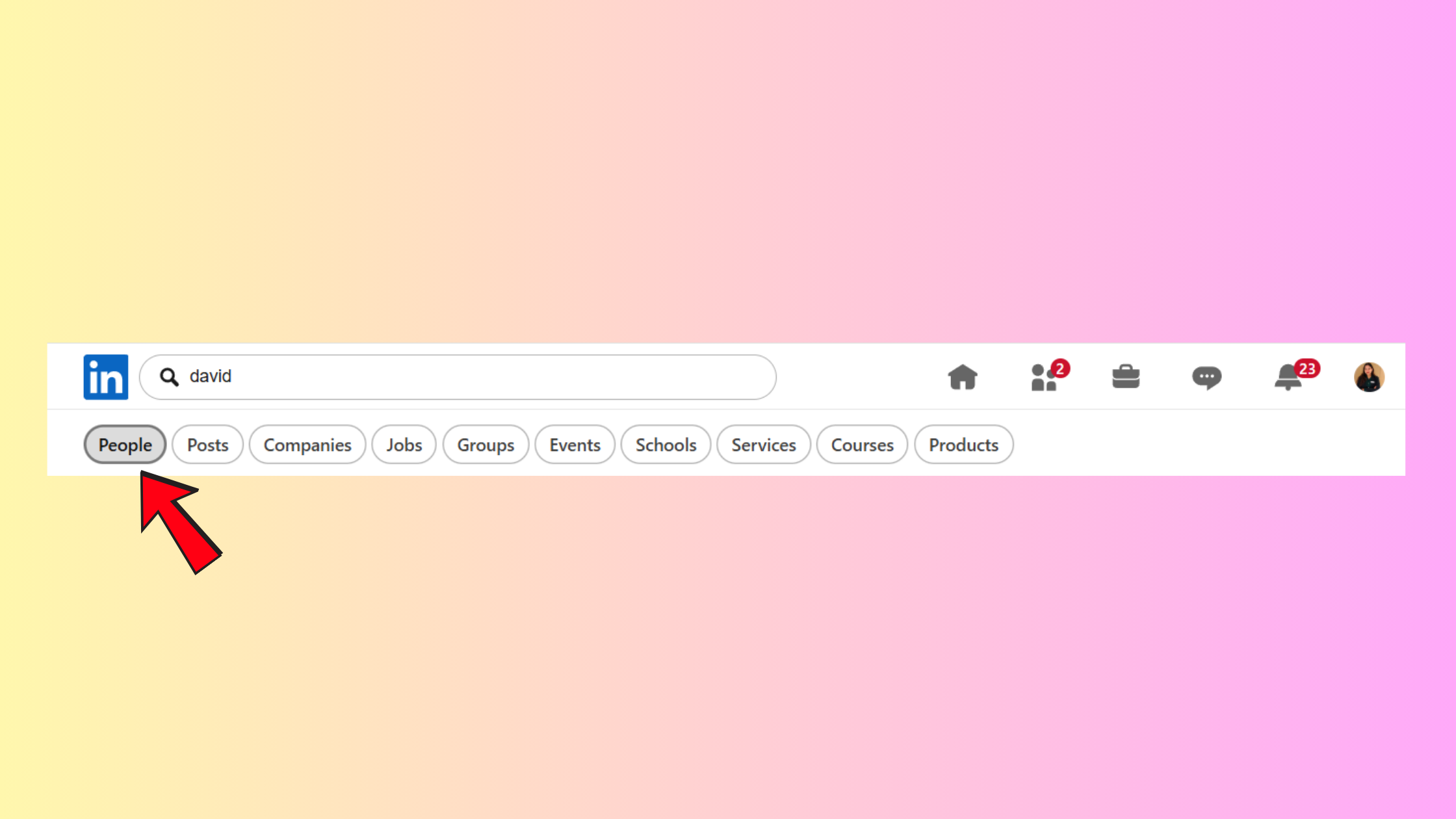
LinkedIn's own search function is the most underused free discovery tool on the platform. Most people search for companies or job titles — almost nobody uses it systematically to find niche-aligned voices. Here is the method that surfaces the right accounts without any paid tool.
- Go to LinkedIn Search → People. Type a niche keyword (e.g. "supply chain sustainability" or "B2B SaaS growth").
- Apply filters: Connections (2nd degree surfaces relevant peers), Industry, Geography. This narrows 900 million profiles to dozens of genuinely relevant candidates.
- Check their last 10 posts. Look for posting consistency over 90 days — gaps longer than 2–3 weeks suggest low algorithmic standing.
- Evaluate comment depth. Are replies substantive exchanges, or a string of fire emojis? Substantive comment threads are a LinkedIn engagement quality signal that follower count cannot fake.
- Check their response rate. Do they reply to comments on their own posts? Creators who engage their commenters consistently see compounding reach — those who don't, plateau.
Thought leader vetting criteria go beyond the feed. Check the profile's Featured section for linked articles, speaking engagements, or published work. Look at recommendations received — do they reference specific professional impact? Review the About section for a clear professional niche authority mapping: is this person clearly positioned in one domain, or topic-hopping to chase trending conversations?
Free Tools and Methods to Discover LinkedIn Influencers Without Paid Platforms
Paid LinkedIn analytics tools for creators exist (Shield, Taplio, AuthoredUp), but the free discovery stack is surprisingly capable:
- LinkedIn Newsletter search: Search newsletters by topic — active newsletter publishers are almost always consistent content creators with real audiences
- LinkedIn Events: Hosts of popular LinkedIn Live events are typically verified niche authorities
- Google search operator:
site:linkedin.com/in/ "[niche keyword]" "Top Voice"— surfaces LinkedIn Top Voice badges in a specific domain - Competitor audience cross-reference: Look at who the people you already follow consistently engage with — their comment section surfaces peer-level influencers you haven't discovered yet
Micro-influencer discovery on professional networks rewards patience. The accounts with 2,000–8,000 followers who post consistently about a tight topic — say, EU AI regulation or procurement analytics — are often the highest-signal follows for professionals in that space. What separates top performers here is not audience size but audience specificity.
The LinkedIn Influencer Strategy: How They Build Massive Organic Reach
Sixty to ninety minutes. That is the window that determines whether a LinkedIn post reaches 500 people or 50,000. Engagement velocity is the speed at which a post receives likes and comments after publishing — and LinkedIn's algorithm uses this signal to decide how broadly to distribute the content beyond an account's immediate first-degree network. Top linkedin influencers engineer this window deliberately, not accidentally.
The accounts that consistently reach the most people on LinkedIn are not the ones with the most followers — they are the ones whose audiences show up fastest.
The LinkedIn algorithm explained in practical terms: when a post receives early substantive engagement (comments especially, since they signal that content provoked a reaction worth writing), LinkedIn progressively shows it to second and third-degree connections. Posts that stall in the first hour rarely recover distribution. This is why LinkedIn's 2026 algorithm changes have made early community activation — not just scheduling — the core growth lever for serious creators.
On the question of how often should you post on LinkedIn to grow: the consistent pattern across high-performing accounts is 3–5 times per week. Less than 3x weekly and algorithmic reach decays noticeably within 10–14 days, typically requiring several weeks of consistent posting to recover. More than 7x weekly and post quality tends to drop, which depresses the engagement rate per post — a counterproductive outcome. Consistency beats virality as a long-term compounding strategy.
The LinkedIn content strategy for engagement that top influencers deploy consistently includes:
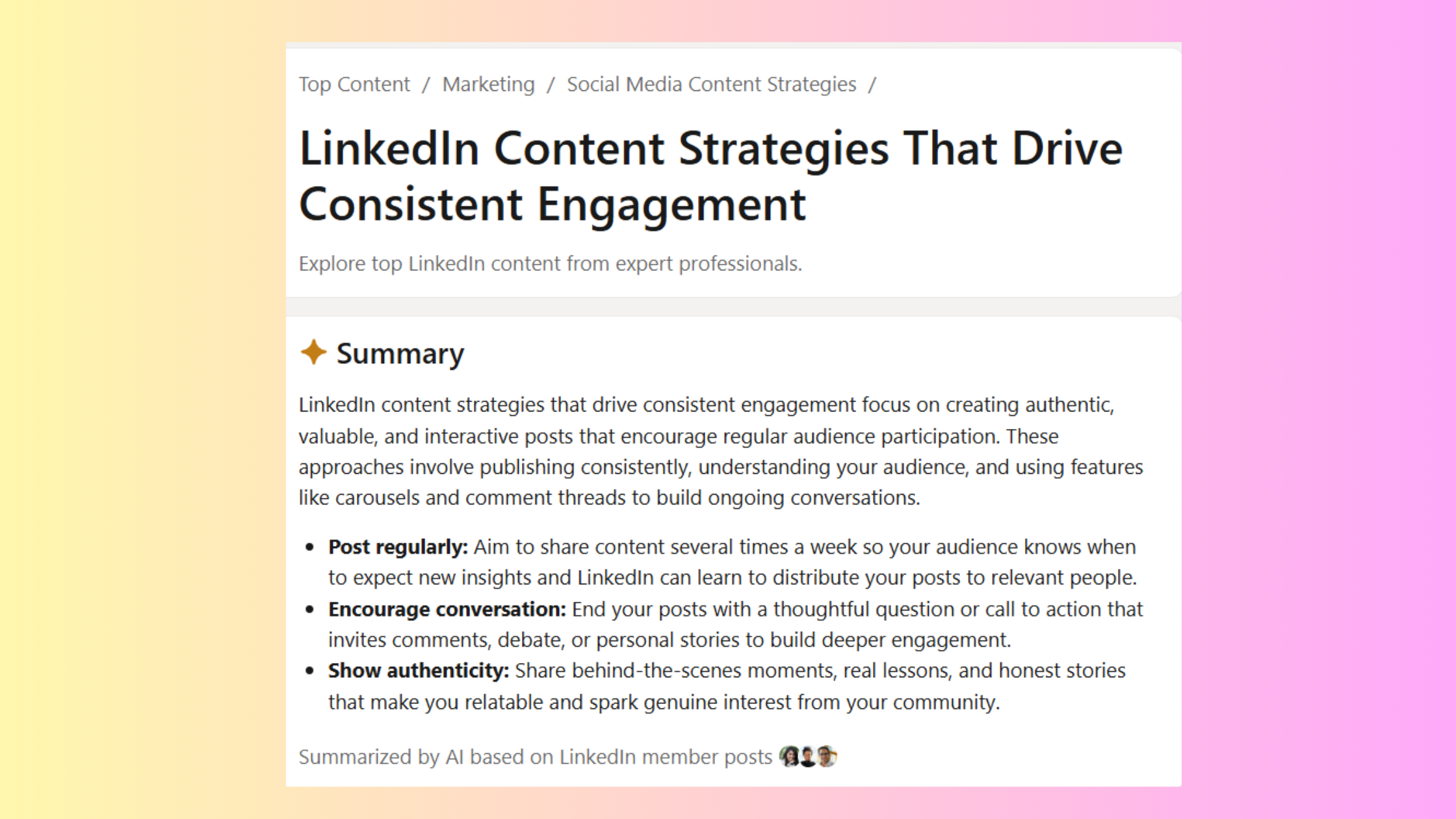
- Text-native posts with a strong opening line (the "hook") that forces readers to click "see more"
- Personal story hooks that frame a professional insight through a specific experience — not abstract advice
- Contrarian takes that challenge received wisdom in the niche — these generate comments from disagreeing readers, which is algorithmically identical to agreement in terms of distribution signal
- Carousels and document posts that earn saves — saves signal high-value content and carry disproportionate algorithmic weight
- Polls used sparingly as a comment-generation mechanism — readers who vote often leave a comment explaining their choice
Does Engaging With Comments Actually Help LinkedIn Growth?
Yes — and the mechanism is specific. When a creator replies to comments on their own post, each reply re-enters the post into the activity feed of the commenter's first-degree connections, effectively re-distributing the post to a new audience segment without any additional posting. Teams that actively reply to every comment in the first 2 hours consistently see 20–40% more total reach on those posts compared to posts where the creator goes silent after publishing. The comment section is not a courtesy — it is a distribution channel.
How to Grow on LinkedIn Organically: Personal Branding and Common Mistakes
Personal branding on LinkedIn is the structural foundation before any tactical growth play. Without clear positioning — a headline that states who you help and how, an About section that reads like a value proposition rather than a CV summary, and a content pillar strategy that makes your profile a destination — no amount of posting frequency will compound into real growth.
The most common failure mode among professionals trying to grow organically is treating LinkedIn like a broadcast channel rather than a community. They post without commenting, share self-promotional content without offering genuine insight, and measure success by follower count rather than by engagement rate and profile visits — the two metrics that actually predict whether LinkedIn's algorithm is rewarding their presence.
To increase LinkedIn reach without paid ads, the compounding levers are:
- Network amplification: First-degree connections who engage with your content expose it to their networks — so building genuine relationships (not just connection count) multiplies organic distribution
- LinkedIn Newsletters: Newsletter subscribers receive email notifications, bypassing the feed algorithm entirely — one of the highest-distribution formats available in 2026

LinkedIn Newsletters - Document posts: PDF carousels earn saves at rates 3–5x higher than standard text posts, and saves carry disproportionate algorithmic weight in LinkedIn's current ranking model
- Strategic commenting on top influencer posts: Adding genuine, insight-dense comments on posts by top linkedin profiles exposes your name and perspective to their entire engaged audience — the cheapest and most underused growth tactic available
Best Tools to Schedule LinkedIn Posts and Track Growth
The best tools to schedule LinkedIn posts for active creators include Buffer, Hootsuite, and Taplio for scheduling — but the analytical layer matters equally. Shield Analytics and AuthoredUp provide post-level engagement breakdowns that LinkedIn's native analytics don't surface clearly. For creators focused on both scheduling and engagement amplification, this breakdown of LinkedIn tools for scheduling, carousels, and analytics covers the current stack in detail.

Tools like HyperClapper take a different angle — rather than scheduling, they focus on the early engagement window that matters most. By connecting posts with real engagement communities (called channels), HyperClapper generates the early likes and substantive comments that signal quality to LinkedIn's algorithm in that critical first 60–90 minutes. The platform also offers AI-powered replies that keep comment threads active and growing even after the initial post window closes — addressing the algorithm's preference for ongoing conversation over one-time engagement spikes.
Want Real Engagement in LinkedIn's Critical First Hour?
HyperClapper connects your posts with real engagement communities — generating the early velocity that LinkedIn's algorithm rewards with broader distribution.
Try HyperClapper FreeHow to Engage With and Learn From LinkedIn Influencers to Grow Your Own Brand
Here is the concrete engagement playbook that turns passive following into active discovery-channel positioning. The goal is not to admire top creators — it is to use their audience as your own exposure channel.
- Follow 10–15 niche-aligned influencers — not the most followed LinkedIn accounts globally, but the most credible voices in your specific domain
- Turn on post notifications for your top 5 — being among the first 10 commenters on a post with high reach potential gives your comment maximum visibility
- Comment with a distinct perspective within the first 30 minutes — not "great post!" but a genuine counterpoint, an added data point, or a related experience that extends the conversation
- Track which comments generate profile visits — LinkedIn analytics shows who viewed your profile; cross-referencing this with your recent commenting activity reveals which influencer audiences resonate with your positioning
- Engage consistently for 8–12 weeks before expecting measurable audience growth — the pattern is slow-then-compounding, not linear
The ROI of following the right linkedin top influencers strategically is threefold:
- You absorb proven content frameworks and formats faster than any course will teach you
- You stay current on the narratives and conversations defining your industry
- You position yourself as a credible peer in their comment threads — visible to thousands of their most engaged followers, at zero cost
For professionals asking about the path to how to grow on LinkedIn organically to the point of becoming an influencer themselves: the realistic trajectory for most consistent practitioners is 6–18 months from zero to a meaningfully engaged following. The path follows a predictable arc — active commenter for 60–90 days → consistent post creator for 3–6 months → collaborative voice who co-creates with others and earns audience cross-pollination. There are no reliable shortcuts, and the accounts that try to skip stages typically plateau early and burn out. For a deeper look at research-backed LinkedIn engagement growth strategies for 2026, the data consistently reinforces the same pattern.
A recurring pattern among professionals trying to build LinkedIn influence is chasing the most followed LinkedIn accounts for inspiration — when the smarter model is studying micro-influencers in their niche, where the growth mechanics are more replicable and the audience alignment is tighter.
The professionals who build the fastest-compounding LinkedIn presence are not the ones who found the right mega-influencer to emulate. They are the ones who identified a specific professional niche, built tight authority within it, and used proven reach strategies to amplify every piece of content they published — without ever paying for a single impression.
✓ The LinkedIn Influencer Growth Checklist
- ☐Identify 10–15 niche-aligned influencers using LinkedIn's native People search + keyword filters
- ☐Vet each account by checking comment depth, post consistency over 90 days, and creator response rate
- ☐Optimise your headline and About section for clear niche positioning before posting consistently
- ☐Post 3–5x per week — text-native, with a strong opening hook in the first two lines
- ☐Move all external links to the first comment — never in the post body
- ☐Reply to every comment within 2 hours of publishing to re-trigger distribution
- ☐Comment meaningfully on top influencer posts within the first 30 minutes of their publishing
- ☐Track profile visits and engagement rate weekly — not follower count
Ready to Accelerate Your LinkedIn Growth?
HyperClapper gives your posts the early engagement velocity that LinkedIn rewards — real community reactions, AI-powered comment depth, and analytics to track what's working.
Start Growing on HyperClapperFrequently Asked Questions About LinkedIn Influencers and Organic Growth
How to find LinkedIn influencers?
Use LinkedIn's native People search with niche keywords, then filter by industry and connections. Vet candidates by checking post consistency over 90 days, comment depth (are replies substantive?), and whether the creator responds in their own threads. The best niche influencers are found through search and comment-section analysis, not ranked lists.
What's the best way to find influencers?
The most effective free method combines LinkedIn's People search (keyword + industry filters), LinkedIn Newsletter search by topic, and reverse-engineering who your existing connections consistently engage with. For paid options, platforms like Taplio or curated LinkedIn influencer lists can accelerate discovery for B2B campaigns.
How do I find LinkedIn influencers in my specific industry or niche?
Search LinkedIn People by your niche keyword, apply Industry and Location filters, then sort by relevance. Check the Featured section and post history of each result. A specialist posting consistently about a tight topic for 6+ months — regardless of follower count — is almost always a more valuable follow than a generalist with 10x the audience.
What strategies do top LinkedIn influencers use to grow their audience without paid ads?
Top influencers engineer early engagement velocity by activating their community in the first 60–90 minutes after posting. They post text-native content 3–5x per week, reply to every comment to re-trigger distribution, use carousels and documents to earn saves, and build strategic commenting habits on other high-reach posts in their niche to borrow audience exposure.
How long does it take to build a large LinkedIn following organically?
For most professionals posting consistently 3–5x per week, a meaningfully engaged following (5,000–20,000 relevant connections) takes 6–18 months. The growth is non-linear — slow for the first 2–3 months, then compounding once the algorithm establishes your account as a consistent, quality content source in a defined niche.
What makes a LinkedIn post go viral organically?
Viral LinkedIn posts combine a strong hook (the first 1–2 lines must force the click to "see more"), a contrarian or emotionally resonant insight, and a burst of early engagement within the first 90 minutes. Personal story formats and bold takes consistently outperform generic advice. The algorithm amplifies posts that generate comments — not just likes — because comments signal genuine reaction.
How do LinkedIn creators use comments to boost reach?
Creators boost reach through comments in two ways: replying to all comments on their own posts (which re-surfaces the post to each commenter's network) and leaving substantive comments on high-reach posts by others (which puts their name in front of that influencer's entire engaged audience). Both tactics cost nothing and compound significantly over time.