The Twitter X symbol logo — officially the double-struck 𝕏 (Unicode U+1D54F) — has become one of the most debated rebranding decisions in social media history. A pattern observed across major platform transitions is that name recognition and visual identity carry more equity than most brands estimate — and destroying a 17-year-old symbol in 48 hours is among the most aggressive ways to test that theory. Whether you're a marketer weighing X Twitter advertising ROI after the rebrand, or simply trying to figure out how to actually write the X unicode symbol without copy-pasting it, this article covers both: the platform-level impact and the practical typing solutions.
- The 𝕏 character is a mathematical double-struck capital X (U+1D54F), not a custom logo — it predates Twitter by decades
- The Twitter rebrand to X triggered measurable engagement drops and advertiser pullback in 2023–2024
- X platform brand recognition vs Twitter remains lopsided — most users still say "Twitter" in conversation
- Marketers report mixed X Twitter advertising ROI after rebrand, with LinkedIn outperforming X for B2B engagement in 2026
- You can type 𝕏 on Windows (Alt + 120143), Mac (Character Viewer), iOS/Android (copy-paste or text replacement), and in HTML (
𝕏) - Using the 𝕏 symbol in usernames or brand names carries real trademark and display-compatibility risks
- Twitter's Rebrand to X: Engagement Impact and Brand Recognition
- Is X Better Than Twitter for Marketing and Advertising ROI in 2026
- Understanding the 𝕏 Unicode Symbol: How to Type and Use the X Logo
- Will X Survive as a Brand Long Term
- Best Practices and Risks When Using the Twitter X Symbol
- Frequently Asked Questions About the X Symbol and Platform Rebrand
Twitter's Rebrand to X: Engagement Impact and Brand Recognition in 2026
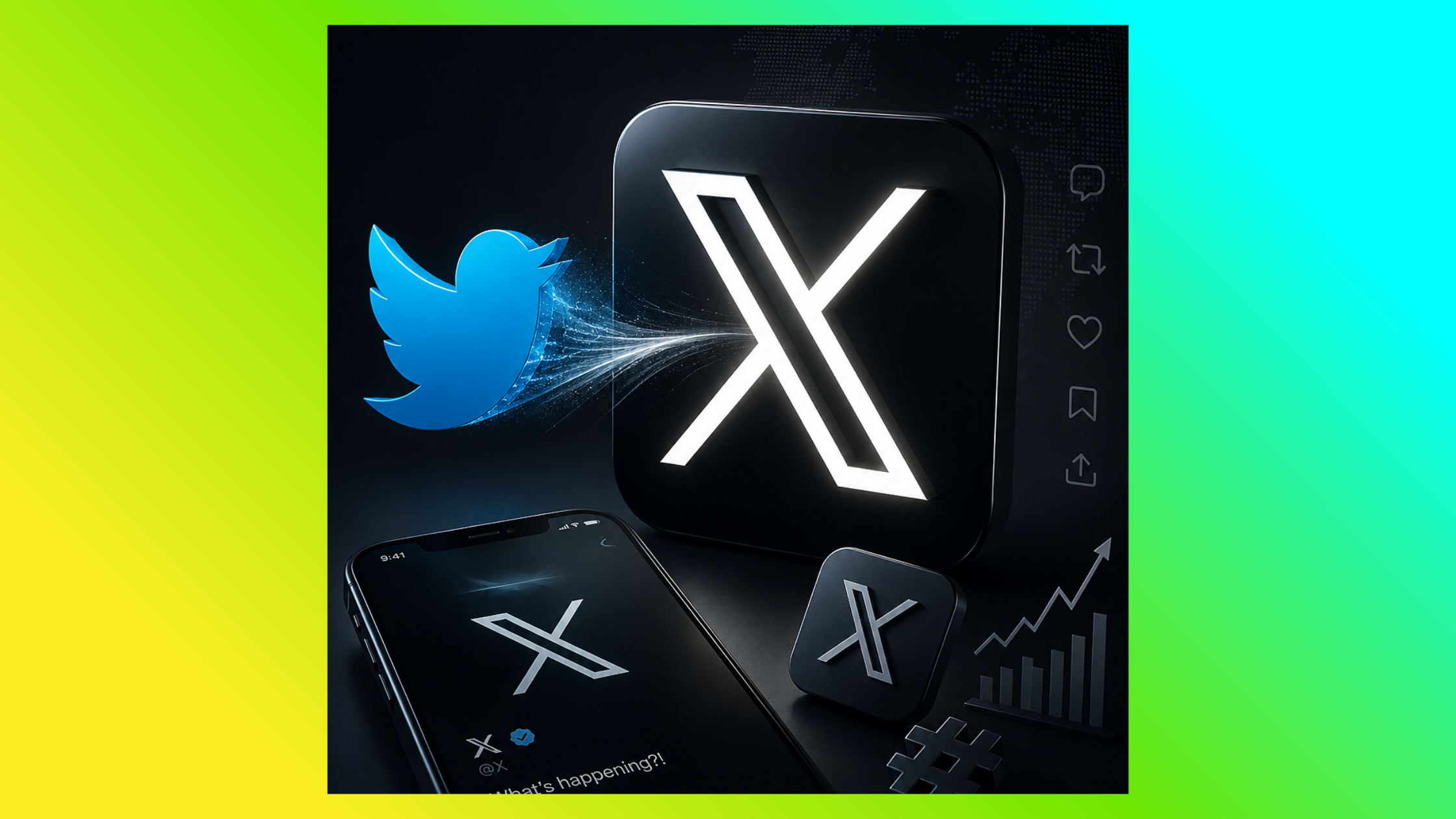
The social media rebranding engagement drop that followed Twitter's July 2023 transition was neither small nor temporary. Within weeks of removing the bird logo, app store ratings fell, several major advertisers paused spend, and platform traffic metrics declined. What separates this rebrand from others is the speed of execution — a globally recognised symbol swapped overnight, with no phased transition and no user preparation.
Why Did Twitter Change Its Logo to X and What Does the X Symbol Mean for the Brand
Why did Twitter change its logo to X? Elon Musk has been explicit: X is the foundation of an "everything app" — a super-app vision modelled loosely on WeChat, combining payments, messaging, content, and commerce under one roof. The X branding predates this acquisition; Musk's original internet company was called X.com before it became PayPal, and he reacquired the X.com domain from PayPal in 2017. The letter carries personal and strategic significance. What does the X symbol mean for the brand, then, is less about the character itself and more about the product ambition it signals.
The 𝕏 symbol chosen — a mathematical double-struck capital X — was not designed for this purpose. According to Popular Mechanics, the character has been part of the Unicode standard since 2001, where it was created for mathematical notation. Using it as a platform logo is technically creative, practically complicated — the character does not render identically across all fonts and systems.
X Twitter User Decline After Rebrand: The Numbers
Quantifying the X Twitter user decline after rebrand requires separating several overlapping signals. Daily active user counts reported by X internally have fluctuated, but third-party traffic tracking tools consistently showed significant drops in web traffic through late 2023 and into 2024. Advertiser revenue fell sharply, with several enterprise brands publicly citing brand-safety concerns as the primary reason — not audience size.
For context on scale: according to Wikipedia's List of Unicode Characters, Unicode 17.0 defines 297,334 assigned characters across 172 scripts. The 𝕏 symbol is a minor entry in a vast mathematical set — not a purpose-built brand asset. That distinction matters when it fails to display on legacy systems.
The most common failure mode in platform rebranding is underestimating how much of a user's identity is tied to the old name — not just the logo, but the verb. Nobody says "I'll X that." They still say "I'll tweet it."
X platform brand recognition vs Twitter remains decisively skewed toward Twitter in common language. Surveys of casual users consistently show the majority still refer to the platform as Twitter in conversation, regardless of what the app icon says. This is the core brand equity problem: the X rebrand affected engagement rates not just through confusion, but through a loss of the cultural shorthand that made the platform uniquely powerful.
Understanding the drop in engagement is only half the equation — the other half is whether X can still deliver marketing ROI.
Is X Better Than Twitter for Marketing and Advertising ROI in 2026
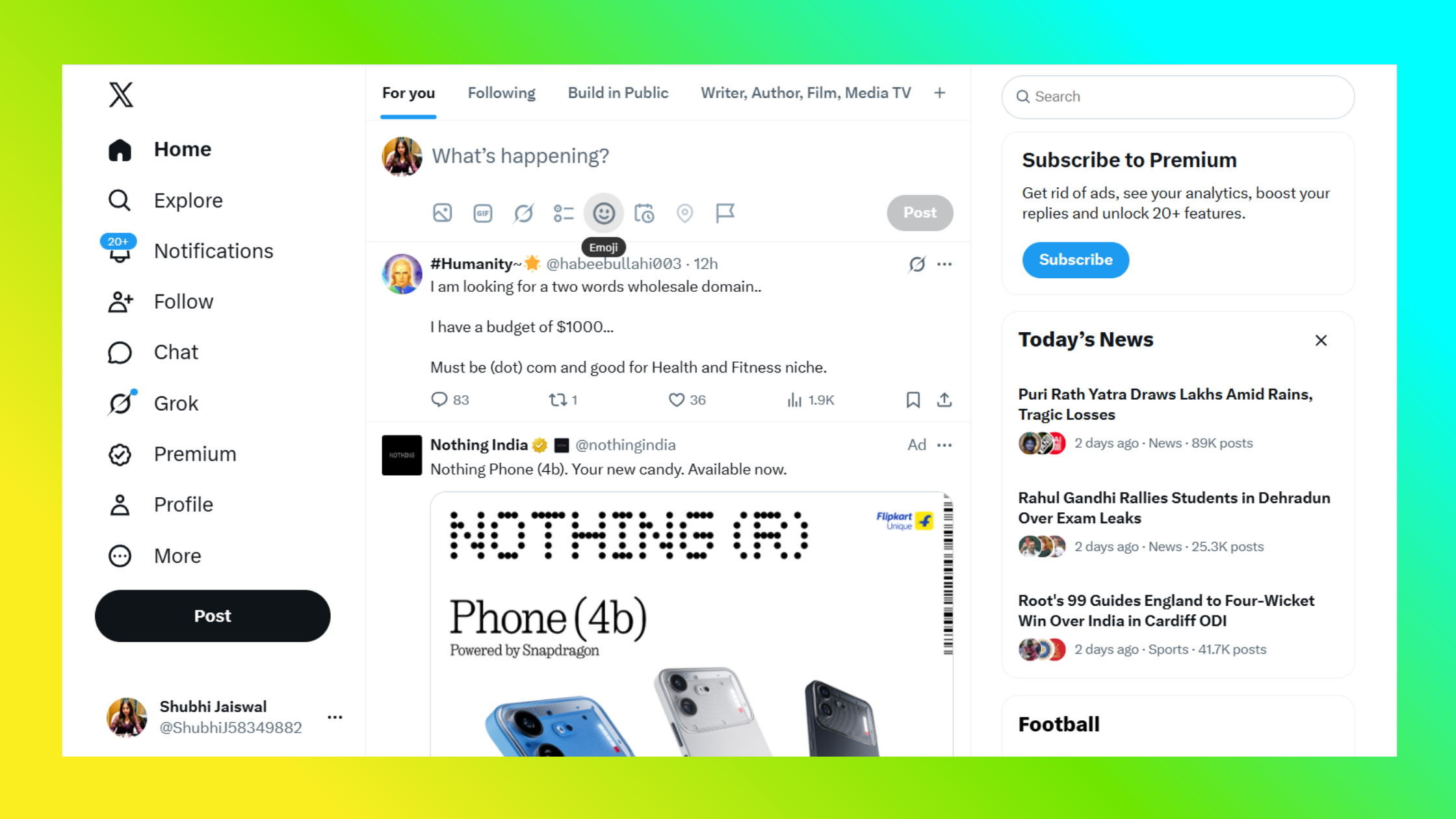
The honest answer for most B2B marketers in 2026: is X better than Twitter for marketing? Not meaningfully, and in several measurable categories, worse. X Twitter advertising ROI after the rebrand has been the subject of sustained scrutiny. Cost-per-engagement metrics shifted as major advertisers reduced or paused spend, which paradoxically made CPMs cheaper for remaining advertisers — but at lower-quality audience composition.
When comparing X against the best social media platforms for brand engagement 2026, LinkedIn consistently outperforms for professional audiences. Teams that shifted budget from X to LinkedIn through 2024–2025 typically report stronger lead quality and more measurable conversion pipelines. For B2B content specifically, platforms built around professional identity — where posts appear alongside career updates and business content — generate higher-intent engagement than a general-interest feed.
Common Marketing Mistakes to Avoid on X Platform
- Assuming Twitter-era audience behaviour persists — the platform's algorithmic and moderation changes post-rebrand altered what content surfaces
- Neglecting LinkedIn as an alternative — for founder-led or B2B content, LinkedIn's engagement model rewards professional credibility in ways X currently does not
- Treating X advertising like pre-2023 Twitter ads — audience targeting quality and brand-safe inventory have both degraded
- Ignoring the 𝕏 symbol in brand assets — using the wrong Unicode variant or a symbol that fails to render damages professional appearance
For a deeper comparison of where B2B social media effort pays off in 2026, see this breakdown of B2B social media marketing strategies that are working now.
Once the platform decision is made, the next practical question is how to actually use the 𝕏 symbol correctly — because most people who try to type it get stuck.
Understanding the 𝕏 Unicode Symbol: How to Type and Use the X Logo
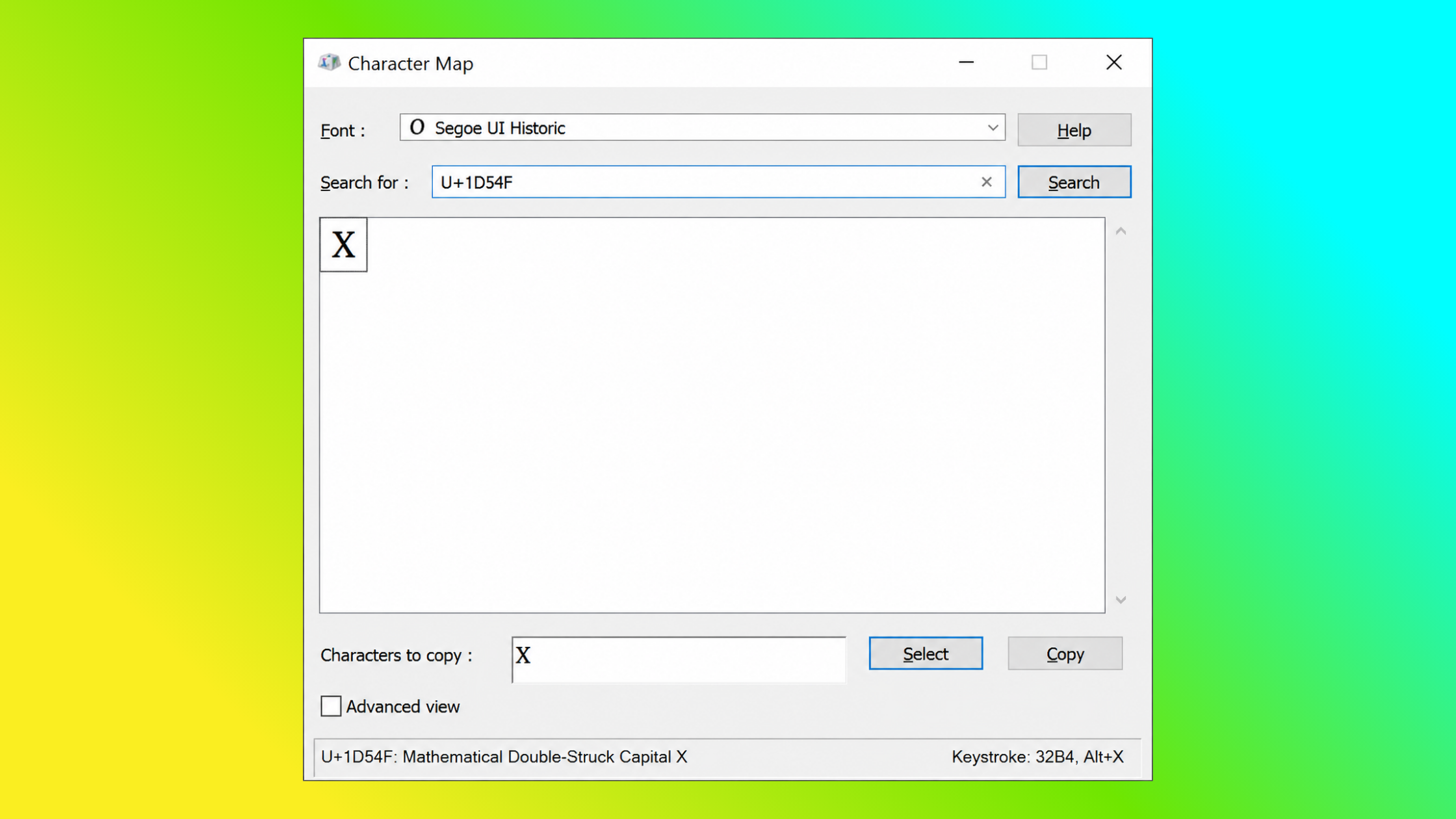
The 𝕏 character is a mathematical double-struck capital X, Unicode code point U+1D54F. It belongs to the Mathematical Alphanumeric Symbols block and was created for academic typesetting — specifically for representing sets in advanced mathematics. It is visually distinct from a regular capital X, a bold X, and the ❌ emoji (U+274C, a cross mark emoji used to signal errors or negation).
A recurring pattern among users trying to use this symbol is that they copy it once from a website and never figure out how to reproduce it independently. Here are the real input methods by platform.
Desktop Methods: Windows Character Map and Mac Special Character Insertion
Windows: The most reliable method for special character insertion on Windows is the Alt code approach. According to Typefully's guide to the X Unicode symbol, hold Alt and type 120143 on the numeric keypad (with Num Lock on). In Microsoft Word specifically, you can also type the hex code 1D54F and then press Alt + X to convert it — per Microsoft's official Unicode insertion documentation. The Windows Character Map (search "Character Map" in Start) also lets you search by Unicode code point.
Mac: Press Command + Control + Space to open the Character Viewer. Search "mathematical" or paste the code point U+1D54F in the search field. You can also add it to your Favourites panel for faster access.
Linux: In most GTK applications, press Ctrl + Shift + U, type 1D54F, then press Enter. In terminal environments, you can use Unicode escape sequences directly.
Mobile Device Input Methods: iOS and Android Keyboards
Neither iOS nor Android includes 𝕏 in the standard emoji or special character keyboard. The most practical mobile solution is a text replacement shortcut: save 𝕏 as a phrase with a trigger like ;xlogo, and your keyboard will autocomplete it. On iOS, go to Settings → General → Keyboard → Text Replacement. On Android, the path varies by manufacturer but is typically Settings → General Management → Keyboard → Text Shortcuts.
Alternatively, copy the character once from a reliable source, save it in a notes app, and paste as needed. It is unglamorous but reliable across all mobile platforms.
Developer and Web Solutions: HTML Entities, CSS, and Code Editors
For developers, the cross-platform typing solutions live in markup, not keyboard shortcuts.
- HTML entity (decimal):
𝕏 - HTML entity (hex):
𝕏 - CSS content property:
content: "\1D54F"; - JavaScript / string literal:
"\uD835\uDD4F"(surrogate pair for non-BMP characters)
Most modern code editors support Unicode search. In VS Code, open the command palette and search for the character by name ("mathematical double-struck capital x"). IDE-specific plugins for character input, such as Unicode character search extensions, remove the need to memorise code points entirely.
✓ The 𝕏 Symbol Input Checklist
- ☐Confirm you need U+1D54F (𝕏), not a regular X or ❌ (U+274C)
- ☐Windows: test Alt + 120143 on numeric keypad (Num Lock on)
- ☐Mac: add character to Favourites in Character Viewer for repeated use
- ☐Mobile: set up a text replacement shortcut (e.g. ;xlogo → 𝕏)
- ☐Web/HTML: use
𝕏for universal compatibility - ☐Test rendering across target devices before publishing — fallback to plain X if unsupported
Will X Survive as a Brand Long Term?
Whether X will survive as a brand long term depends on which version of "survive" is being measured. As a functional platform, X continues to operate with hundreds of millions of accounts. As a brand — in the sense of distinct identity, positive emotional association, and cultural relevance — the trajectory is less certain.
The challenge of displacing "Twitter" from common vocabulary is not cosmetic. Brand vocabulary becomes embedded in language over years of habitual use — "tweet", "retweet", and "Twitter" entered dictionaries and style guides. Elon Musk's track record with disruptive changes suggests high tolerance for short-term disruption in pursuit of long-term repositioning, but the everything-app vision requires sustained user trust and advertiser confidence — both of which took measurable hits during the rebrand period.
What would constitute success for X as a brand involves more than recovering pre-rebrand user numbers. It requires demonstrating that the platform can attract and retain users for new use cases — payments, long-form content, professional networking — where it currently competes against more established products. Creators who shifted their primary platform after the rebrand typically found that LinkedIn offered more stable algorithmic reach and better-quality professional engagement for their content. For professionals and founders building audience in 2026, the LinkedIn engagement growth strategy has become a more predictable path than rebuilding on X.
Best Practices and Risks When Using the Twitter X Symbol
Using 𝕏 in your brand materials signals platform awareness — but it carries real risks that most guides skip entirely.
Benefits:
- Signals current platform alignment to X-native audiences
- Visually distinct in usernames and bios where standard X is ambiguous
- Can appear more intentional and brand-aware than a plain letter
Risks and limitations:
- The symbol does not render correctly in all email clients — older Outlook versions and some enterprise mail systems display a fallback box or generic character
- Some operating systems and font stacks lack the mathematical Unicode range entirely, causing display issues on legacy devices
- Does using the X symbol affect account discoverability? Yes, potentially negatively — search engines and platform search functions index Unicode characters inconsistently, and a username containing 𝕏 may not surface in standard text searches
- You cannot use 𝕏 in a URL or domain name — domain names are restricted to ASCII characters and a limited set of internationalised domain extensions; U+1D54F is not supported
Accessibility Concerns: How Screen Readers Handle the Double-Struck X
Screen readers handle the double-struck X inconsistently. Most will read it as "mathematical double-struck capital x" — a phrase that communicates nothing meaningful to a visually impaired user in a branding context. Some older assistive technology skips non-standard Unicode characters entirely, creating a gap in content accessibility.
<span aria-label="X, formerly Twitter">𝕏</span>.Legal and trademark considerations: X Corp holds trademark registrations on the X branding in the context of social media and communication services. Using 𝕏 in a brand name, product, or company that could be confused with X Corp's services carries real legal exposure. The character itself is not owned — it is part of the Unicode standard — but its commercial use in contexts that imply affiliation with the platform could constitute trademark infringement. Consult a trademark attorney before using 𝕏 in any commercial brand context.
The difference between a symbol and a brand is that a brand carries meaning. 𝕏 is technically free to type — but what it communicates is inseparable from X Corp's trajectory, for better or worse.
If engagement and visibility are the goal, the most durable approach in 2026 is building on platforms with stable mechanics. For professionals and B2B creators, that means investing in LinkedIn — where tools like effective LinkedIn social media management strategies are delivering measurable, compounding results. What consistently separates accounts with sustainable reach from those chasing platform volatility is choosing distribution channels where the rules are stable and the audience is qualified.

Build LinkedIn Engagement That Doesn't Depend on Platform Volatility
HyperClapper connects your posts with real engagement channels — real people, AI-powered replies, and analytics built for consistent LinkedIn growth.
Try HyperClapper FreeFrequently Asked Questions About the X Symbol and Platform Rebrand
How do I type the X symbol on different devices?
On Windows, hold Alt and type 120143 on the numeric keypad. On Mac, press Command + Control + Space to open Character Viewer and search "1D54F". On mobile (iOS/Android), set up a text replacement shortcut. In HTML, use 𝕏. There is no single-key shortcut on any platform — the character requires a specific input method per device.
What is the Unicode for the X logo and how is it different from ❌?
The X logo used by the platform is U+1D54F (𝕏), a mathematical double-struck capital X from the Unicode Mathematical Alphanumeric Symbols block. The ❌ character is U+274C, a cross mark emoji used to indicate negation or error. They are entirely different characters — different code points, different visual styles, different intended uses.
Has Twitter's rebranding to X hurt its engagement compared to before?
Yes. Third-party traffic data and advertiser reports from 2023–2025 consistently show engagement and revenue declines following the rebrand. Advertiser pullback was the most acute impact, with brand-safety concerns cited more often than audience loss. Daily active user numbers have been contested, but independent monitoring showed significant web traffic drops in the rebrand's first year.
Should marketers still invest in X after the rebrand from Twitter?
It depends on audience and format. B2C and entertainment brands with large existing X followings may still find value. For B2B marketers, LinkedIn delivers stronger lead quality and more stable engagement mechanics in 2026. X Twitter advertising ROI after the rebrand is lower for most professional segments — most evidence points to better returns on platforms with clearer professional context.
Does using the 𝕏 symbol affect account discoverability or SEO?
Yes, and mostly negatively. Search engines and platform search functions index non-standard Unicode characters inconsistently. A username or page title containing 𝕏 may not match standard text searches for "X" or the platform name. For SEO purposes, using the plain letter X with surrounding descriptive text outperforms the Unicode symbol in most cases.
What happens if the 𝕏 symbol doesn't display correctly?
The character will typically render as a blank box or generic placeholder on systems lacking the mathematical Unicode font range. This affects older email clients, some enterprise software, and legacy mobile OS versions. Always provide a plain-text fallback — either the letter X or descriptive text — in any context where display compatibility is uncertain.
What is the Unicode for ❌?
The ❌ red cross mark emoji is Unicode U+274C. It is part of the Dingbats Unicode block and is widely supported across all modern platforms. It is unrelated to the 𝕏 platform logo (U+1D54F) — using ❌ where 𝕏 is intended is one of the most common mistakes seen when users rely on emoji keyboards to find the X symbol.
What impact did Elon Musk's X rebrand have on Twitter user engagement?
The rebrand coincided with platform policy changes, moderation shifts, and advertiser uncertainty — making it difficult to isolate logo impact from operational changes. Combined, these factors produced measurable engagement declines and revenue losses. The brand recognition gap — where users still refer to the platform as "Twitter" — remains the most persistent long-term challenge the rebrand created.



