Twitter post templates save time — but the wrong ones get accounts flagged within days. A pattern observed across high-volume posting accounts is that flags rarely come from what someone posts, but from the structural repetition pattern behind it: identical phrasing, copy-paste CTAs, and rigid posting intervals that X's systems read as coordinated inauthentic behavior. The templates that work long-term share three traits: a distinct hook, a varied value body, and a CTA that shifts with your goal. The ones that don't share one: they were copied verbatim from a public list that thousands of other accounts are running simultaneously.
- Safe twitter post templates use varied phrasing, not fixed copy — the structure is reusable, the exact words are not
- X flags accounts for repetition patterns, not just prohibited content — identical CTAs across posts are a top trigger
- Thread templates consistently outperform single tweets for reach and saves — most template lists ignore them entirely
- 3–5 posts per day is the safe ceiling before spam signals accumulate; spacing matters as much as volume
- Shadowbanning and full suspension have different signals and different recovery paths — knowing which you're facing changes everything
- Every template here is designed as a structural skeleton — you supply the specific detail that makes it authentic and safe
- Why Most Tweet Templates Get People Flagged
- The Anatomy of a High-Performing Tweet
- 10 Copy-and-Paste Twitter Post Templates
- Posting Safely at Scale
- Common Mistakes That Turn Good Templates Into Account Risks
- Frequently Asked Questions About Twitter Post Templates
Why Most Tweet Templates Get People Flagged (And What Actually Works)
Most generic twitter template lists skip the single most important detail: the structural patterns that trigger X's spam filters. Repetitive phrasing, mass-copy CTAs, and perfectly timed identical post cadence are the three biggest culprits behind flagged accounts — not the content topic itself.
X's Twitter spam policy treats identical or near-identical posts across accounts as coordinated inauthentic behavior. Even if your intent is completely legitimate, the pattern is what gets flagged. This is a critical distinction most template guides miss entirely.
What Words and Patterns Get Your Twitter Account Flagged
The question what words get your Twitter account flagged comes up constantly — and the answer surprises most people. It's rarely a single prohibited word. What X's systems actually detect:
- Repetitive link placement — the same URL appearing in the same structural position across multiple posts in a short window
- Identical CTA phrasing — "Click here to learn more" or "Check this out 👇" used verbatim across posts
- High-frequency hashtag clusters — posting the same 3-hashtag combination on every tweet
- Exact-match copy from widely shared template lists — if you found it in a blog post, so did thousands of other accounts running the same text
- Engagement-bait patterns — "RT if you agree", "Like if you've experienced this" used repeatedly
Can Tweet Templates Get Your Account Suspended?
Yes — but the mechanism matters. Can tweet templates get your account suspended is less about the template content and more about the usage pattern. Two distinct outcomes to understand:
- Shadowban — your tweets stop appearing in search results and hashtag feeds, but your account stays active. You won't be notified. Signs: sudden engagement drop, your replies not visible to others, disappearing from search.
- Full suspension — account access removed, usually after repeated policy violations or bot-like activity signals.
To check if your account has been shadowbanned: search your own username in an incognito browser or use a third-party shadowban checker. Recovery from a shadowban typically takes 7–14 days of normal, non-templated posting. Full suspension requires an appeal through X's official process.
The accounts that stay safe long-term aren't the ones using the fewest templates — they're the ones that treat every template as a structure to customize, not a sentence to copy.
The Anatomy of a High-Performing Tweet: Hook, Body, and CTA Patterns
Every high-engagement tweet follows a three-part tweet copywriting structure: a pattern-interrupt hook, a value body, and a goal-matched CTA. What separates top-performing posts isn't creativity alone — it's applying the right hook type to the right audience goal.
Four hook types that consistently outperform across niches:
- Contrarian statement — "Most [advice] is wrong. Here's what actually works:"
- Specific number — "I analyzed 200 posts in 30 days. Here's what I found:"
- Open loop — "Nobody talks about this part of [topic]..."
- Direct question — "Why do [common things] never work for [audience]?"
Character limit optimization by template type matters more than most guides acknowledge. Awareness posts perform best at 140–180 characters — short enough to read in a scroll. Engagement posts benefit from the 220–260 range, giving just enough room to establish context. Conversion posts should stay under 200 characters with a clean link at the end, not mid-sentence.
Single-Tweet Templates vs. Thread Templates: When to Use Each
Threads consistently rank among the highest-reach formats on X — yet most twitter post template lists ignore them entirely. The practical rule: use a single tweet when your insight fits in one frame; use a thread when the value requires context or steps. Threads earn more saves and profile visits. Single tweets earn more immediate retweets when the hook is strong.
Viral Post Anatomy: What Data Says About Template Engagement Rates
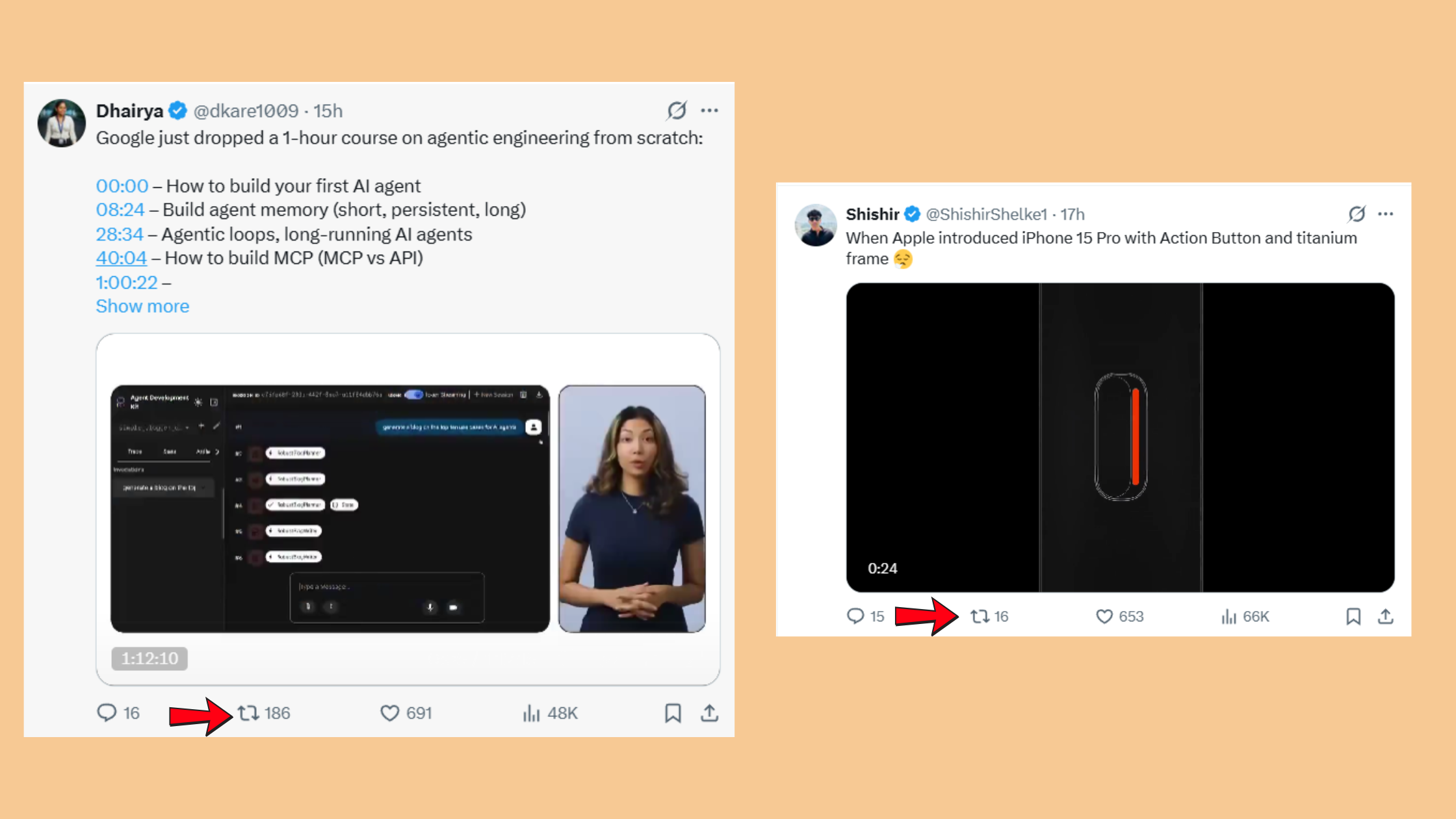
According to data cited by AdWeek, tweets with images receive 150% more retweets than text-only posts. This means visual tweet templates — even a simple branded text card — are structurally more shareable than plain text, regardless of the copy quality.
According to Buffer, tweets with hashtags get 2x more engagement — but only when limited to 1–2 per post. In practice, accounts that use 3+ hashtags per post consistently see diminishing returns and higher spam signal risk. This means: pick one relevant hashtag per template and rotate it, rather than stacking the same cluster on every post.
10 Copy-and-Paste Twitter Post Templates (Safe, Proven, and Ready to Customize)
Each template below is a structural skeleton. The bracket placeholders are where your specific detail goes — that specificity is what keeps it safe and what makes it perform. Never post any of these verbatim; the structure is reusable, the exact words are not.
Awareness and Reach Templates (Get Discovered)
Template 1 — The Specific Number Hook
I [did X] for [time period]. Here's what I learned: [insight 1] [insight 2] [insight 3] The one that surprised me most: [specific observation].
Why it works: Numbers stop scrolls. The "surprised me" closer invites replies. Safety note: Change the number and timeframe each use — never repeat this with identical figures.
Template 2 — The Contrarian Take
Hot take: [common belief] is actually [opposite]. Here's the real reason [outcome happens]: [your 1-sentence explanation].
Why it works: Disagreement drives quote-tweets and replies. Safety note: Vary "Hot take" opener — "Unpopular opinion:", "Most people think:" are direct swaps.
Template 3 — The Visual Tweet (tweet visual export for Instagram)
[Bold one-line statement] [2–3 sentence explanation] [Single hashtag]
Pair with a branded text card image for the 150% retweet lift noted above. This format exports cleanly as a tweet visual for Instagram repurposing — square crop the image and the copy holds its structure on both platforms.
Engagement and Community Templates (Start Conversations)
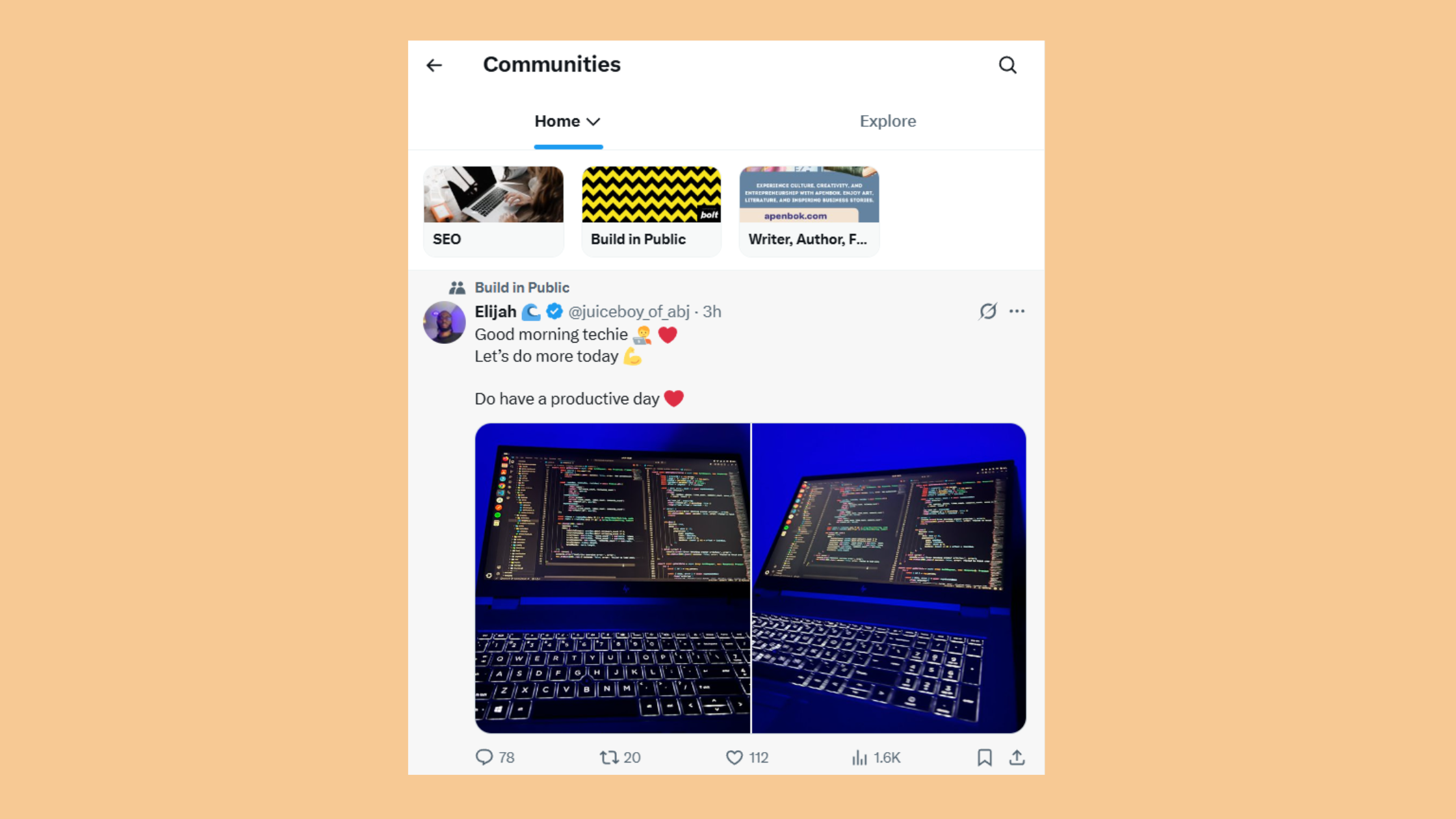
Template 4 — The Open Question
What's the [topic] advice you wish someone gave you earlier? I'll share mine in the replies.
Why it works: Creates a thread of replies. The "I'll share mine" line builds reciprocity. Safety note: This is a safe Twitter engagement post idea precisely because it invites genuine responses — rotate the topic each week.
Template 5 — The Experience Share
A year ago I [situation]. Today [outcome]. The turning point was [specific moment or decision]. If you're in the [situation] phase right now: [1-sentence actionable advice].
Template 6 — The Mini Thread Starter
[Hook tweet — 1 sentence contrarian or specific claim] 🧵 [Tweet 2: context] [Tweet 3: the nuance] [Tweet 4: the practical takeaway] [Tweet 5: CTA or question]
Thread templates earn 3–4x more profile visits per impression than single tweets in most account categories observed. The key variable: the hook tweet must work as a standalone — it carries the entire thread's reach.
Conversion and CTA Templates (Drive Action Without Sounding Spammy)
Template 7 — The Problem-Solution CTA
[State the problem your audience has] [One sentence on why standard solutions fail] Here's what works instead: [your resource/link] [Specific outcome they'll get]
Safety note: This is a tweet template for brands without violations — the link is justified by the problem setup, not dropped cold.
Template 8 — The Social Proof Post
"[Short paraphrased client/reader result]" — [first name, role] This happened because [1-sentence mechanism]. If you want [same result]: [link or CTA]
Template 9 — The Industry Observation
[Industry] is changing. What most people haven't noticed yet: [specific observation]. What this means for [audience]: [1-sentence implication].
Template 10 — The Checklist Tweet
Before you [common action], do this: ✅ [Step 1] ✅ [Step 2] ✅ [Step 3] ✅ [Step 4] Saved me [specific outcome]. Which one are you skipping?
Why it works: Checklist formatting is highly save-able. The closing question drives replies. Use as a x post template for product launches, content drops, or service promotions.
✓ The Safe Template Rotation Checklist
- ☐No two posts in the same 14-day window use identical phrasing
- ☐CTA phrase rotated across at least 5 variants
- ☐Hashtag cluster varied — not the same 2–3 tags on every post
- ☐Posting times varied within a 30-minute window, not fixed intervals
- ☐At least 1 personal specific detail (stat, story, observation) inserted per template
- ☐No more than 2–3 posts per week using the same structural template type
- ☐Scheduling tool uses official X API — not browser automation or scraping
The same safe-rotation principles that apply here mirror what works on LinkedIn — if you're building a multi-platform content strategy, the LinkedIn post ideas that boost engagement guide covers the parallel approach for that platform.
Posting Safely at Scale: Scheduling, Frequency, and Automation Tools
Teams that post at scale without flags share one habit: they treat frequency and interval variation as a technical discipline, not an afterthought. How often should you post on Twitter safely using templates? The functional ceiling for most accounts is 3–5 posts per day before reach-per-post drops and spam signals accumulate. Quality spacing matters more than volume — five posts jammed into two hours perform worse than five posts spread across a day.
The scheduling behavior that most triggers flags:
- Posting at perfectly identical intervals (e.g., exactly every 4 hours, every day)
- Using the same hashtag cluster on every post
- Cross-posting the exact same text to multiple accounts simultaneously
- Linking to the same URL more than twice in a 24-hour period
Twitter automation tools safe from bans operate within the official X API and never simulate human scrolling, fake engagement, or browser-level interactions. Tools that cross that line — third-party browser extensions that auto-like or auto-follow outside API access — are behind most template-related suspensions. The twitter post template generator tools worth using are the ones built on official API access: Buffer, Hypefury, and Typefully all operate within approved parameters.
Exporting Tweet Visuals for Instagram and Cross-Platform Repurposing
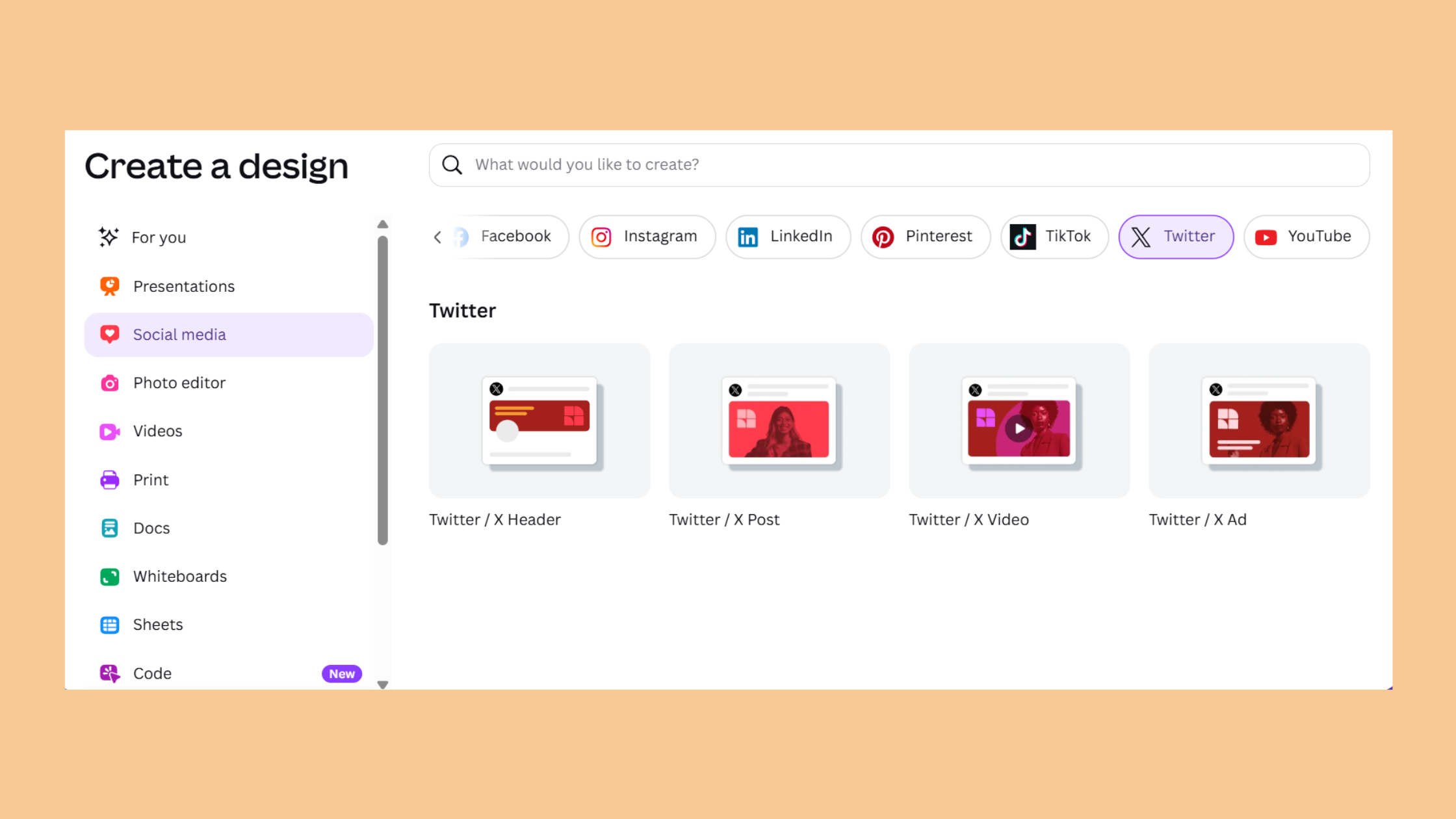
A twitter post template editable in Canva or a similar design tool solves two problems at once: it creates the visual layer that drives the 150% retweet lift cited above, and it produces a format that exports directly for Instagram and LinkedIn repurposing. The practical workflow: design your tweet as a 1080×1080 image with the tweet text as the hero element, post the image version on X with the text in the caption, and reuse the image natively on Instagram. No reformatting needed. This is the tweet visual export for Instagram approach that cross-platform creators use to compound reach from a single piece of copy.
Building visibility across LinkedIn too?
HyperClapper helps creators, founders, and marketers get real engagement on LinkedIn posts — real people in channels, not bots.
Try HyperClapper FreeCommon Mistakes That Turn Good Templates Into Account Risks
Creators who skip the variation step typically find their engagement drops before they ever get a formal flag — the shadowban kicks in quietly, weeks before most people notice the pattern.
Mistake 1 — Using verbatim public templates. The same template appearing across hundreds of unrelated accounts is a coordinated behavior signal, even with completely legitimate intent. The fix: treat every template as a structure, never as final copy. Your specific stat, your story, your observation fills the structural slot.
Mistake 2 — Ignoring the CTA variation rule. Rotating your hook but keeping the same CTA phrase on every post — especially link CTAs — is one of the quietest Twitter post copy that avoids shadowban failures. Most accounts rotate their opening sentence and think they're covered. They're not. The CTA is what X's systems see repeated at scale.
Mistake 3 — Confusing a twitter post template generator with automation. A generator that helps you write varied copy is a productivity tool. An automation tool that posts, likes, or follows on your behalf using browser simulation is a policy violation. Conflating the two is how well-intentioned accounts end up suspended.
Mistake 4 — Treating templates as final copy. The template is the skeleton. Your voice, your current context, your specific data point — that's what makes it both authentic and policy-safe. How to write tweets without getting shadowbanned comes down to this: the structure is repeatable; the content inside it should never be.
Safe Twitter engagement post ideas are not a content category — they're a usage discipline. The same template used with varied phrasing and genuine specificity stays safe indefinitely. The same template copy-pasted identically across posts gets flagged within weeks.
The same principle applies to LinkedIn engagement strategy — accounts that apply rotation and variation consistently outperform those using rigid templates. The guide on avoiding LinkedIn account suspension covers the platform-specific version of this exact pattern.
Frequently Asked Questions About Twitter Post Templates
What types of tweet templates are most likely to trigger a spam flag on Twitter?
Templates with identical CTAs, repeated hashtag clusters, and fixed link placement are most likely to trigger flags. X's systems detect repetition patterns across posts — even legitimate content gets flagged when the structural signature is identical across multiple posts in a short window. Vary phrasing, CTAs, and posting intervals.
Can I reuse the same tweet template multiple times without getting flagged?
Yes — if you customize the specific language each time. The structure is reusable; the exact words are not. The practical rule: no identical phrasing within a 14-day window, and no more than 2–3 posts per week from the same structural template type. Rotate at least 5–7 variants per content theme to stay below X's repetition threshold.
What are the safest content formats to post on Twitter without violating policies?
Experience shares, specific observations, open questions, and checklist tweets are consistently the safest formats. They invite genuine engagement, vary naturally in phrasing, and don't rely on link-heavy CTAs. Visual tweets with original image cards add reach without adding policy risk — according to AdWeek, they earn 150% more retweets than text-only posts.
How do I know if my Twitter account has been shadowbanned or flagged?
Signs of a shadowban: sudden engagement drop, your replies invisible to others in threads, your account not appearing in search results. Check by searching your username in an incognito browser or using a third-party shadowban checker. A shadowban typically resolves in 7–14 days of normal posting. Full suspension triggers a formal notification from X.
Give me Twitter post templates that comply with X platform rules
Every template in this article is designed for X policy compliance — structure-based, never verbatim-copy. The key compliance rule: use each as a skeleton with your own specific detail inserted. Templates 1–3 cover awareness, 4–6 cover engagement, 7–10 cover conversion. All 10 are built around the hook-body-CTA structure that avoids the repetition patterns X flags.
How often should you post on Twitter using templates before it becomes a risk?
3–5 posts per day is the safe operational ceiling for most accounts. Beyond that, reach-per-post drops and spam signals accumulate — particularly if templates are used without phrasing variation. Spacing matters as much as volume: five posts spread across a day outperform five posts within two hours, both for algorithmic reach and spam signal avoidance.
Why does Twitter keep flagging my tweets?
Recurring flags almost always trace back to one of four patterns: identical CTA phrasing across posts, the same hashtag cluster on every tweet, perfectly timed posting intervals that look automated, or link placement in the same structural position repeatedly. None of these require prohibited content — the repetition pattern itself is the signal X acts on.
What consistently separates accounts that scale safely from accounts that plateau or get flagged isn't the quality of their templates — it's the discipline of variation applied to every structural element: hook type, body specificity, CTA phrasing, posting interval, and hashtag selection. Accounts that treat all five as variables stay visible indefinitely. Accounts that fix even one of them typically trigger flags within 30–60 days of consistent template use. For the parallel discipline on LinkedIn, the full guide on growing on LinkedIn without account restrictions covers the same framework in platform-specific detail.



