The world's most famous influencers are not simply famous people who happen to post online — they are platform-native authority figures who built massive, loyal audiences through content alone. A pattern observed consistently across the highest-performing accounts is that their influence is earned through trust and consistency, not press coverage or industry grants. In 2026, the global influencer marketing industry is projected to exceed $24 billion (Statista, 2026) — a figure that reflects how deeply digital content creators have reshaped advertising, culture, and public opinion. This guide ranks the biggest social media influencers in the world by platform and niche, explains what keeps them relevant, and gives brands a practical framework for deciding who to work with.
- Famous influencers differ from traditional celebrities in one fundamental way: their authority is audience-built, not industry-granted.
- MrBeast and Cristiano Ronaldo compete for the global follower lead in 2026 — but on very different platforms and with very different audience dynamics.
- The fastest-growing influencer niches in 2026 are fitness, B2B/LinkedIn thought leadership, and finance — not lifestyle or beauty.
- Brands consistently make the same mistake: optimising for follower count rather than audience fit and engagement rate.
- Top influencers stay relevant through platform diversification and consistent identity — not by chasing every trend.
- LinkedIn influencers like Justin Welsh and Lara Acosta have redefined what B2B influence looks like at scale.
- What Makes Someone a Top Social Media Influencer in 2026?
- The Biggest Social Media Influencers in the World by Follower Count (2026)
- Top Influencers by Niche: Fitness, Business, Lifestyle, and Beyond
- How the World's Top Influencers Stay Relevant Over Time
- Highest Paid Influencers and How Brand Partnership Deals Work
- Common Mistakes Brands Make When Choosing Influencers to Partner With
- Frequently Asked Questions About the World's Most Famous Influencers
What Makes Someone a Top Social Media Influencer in 2026?
A social media influencer is a digital content creator who has built audience trust and reach through consistent, platform-native content — not through traditional media gatekeepers. The distinction matters more than ever in 2026. A recurring pattern among audiences trying to understand this space is conflating celebrities who use social media with influencers who became famous because of it. Cristiano Ronaldo is a celebrity with a massive social following. MrBeast is a famous influencer — someone whose fame exists entirely because of what he built online. The mechanism, and therefore the authority, is fundamentally different.
Influencer vs. Celebrity: Why the Line Has Blurred
The line between influencer and celebrity has blurred because platform algorithms reward reach regardless of origin. When a pop star posts on TikTok and gains 50 million followers, they appear in the same rankings as a creator who built those numbers organically. But audience engagement metrics tell a different story: platform-native influencers typically drive 3–5x higher engagement rates than crossover celebrities on the same content type, because their audiences followed them specifically for their content — not their name recognition.
How Influencer Rankings Are Measured in 2026
In 2026, follower count alone is a poor proxy for influence. The metrics that actually matter are:
- Engagement rate — likes, comments, shares, and saves as a percentage of followers
- Audience authenticity — the ratio of real, active followers to inactive or bot accounts
- Cultural reach �� how often the influencer's content drives trends, search spikes, or media coverage
- Brand partnership conversion — measurable sales or signups driven by a single campaign post
The most followed accounts are not always the most influential. A 2M-follower fitness creator with a 9% engagement rate will drive more product sales than a 20M-follower lifestyle account at 0.8% engagement — every time.Now that the definition is clear, here's how the world's most followed social media influencers actually stack up in 2026.
The Biggest Social Media Influencers in the World by Follower Count (2026)
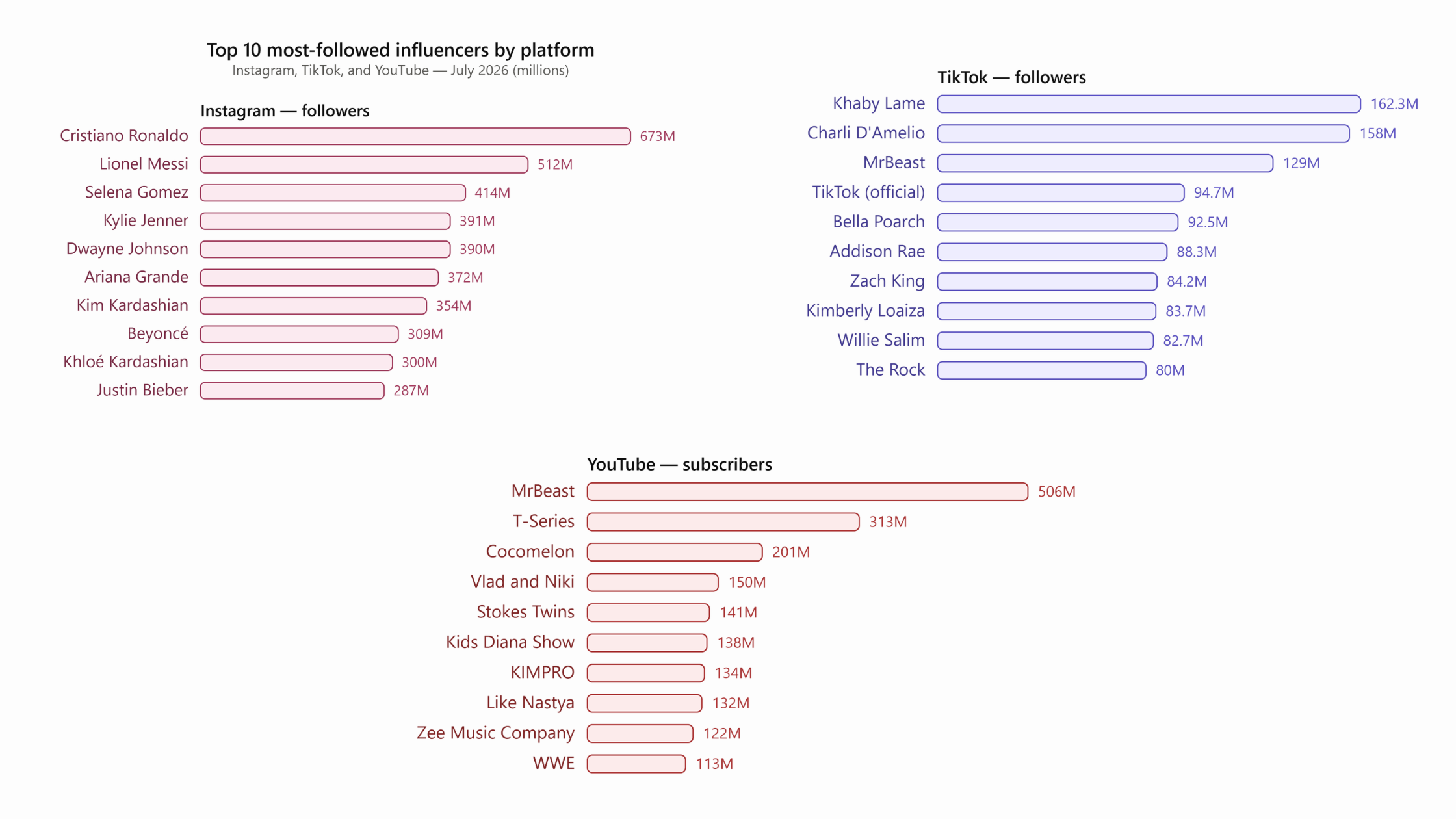
By raw numbers, Cristiano Ronaldo holds the title of most followed individual across all platforms combined in 2026 — with over 640 million followers spanning Instagram, Facebook, and X (formerly Twitter). But the most famous TikTok and YouTube influencers in 2026 tell a different story: MrBeast (Jimmy Donaldson) commands over 300 million YouTube subscribers and has expanded to TikTok, making him the dominant platform-native influencer globally. This is the MrBeast vs. Cristiano Ronaldo distinction that matters for brands — one is a sports celebrity with social reach, the other is a creator whose entire identity is his content.
Top 10 Most Followed Influencers on Instagram and TikTok
The top influencers on Instagram and TikTok in 2026 reflect two very different content cultures. Instagram rewards aspirational visuals and lifestyle — making it home to famous Instagram influencers like Kylie Jenner (400M+), Selena Gomez (380M+), and Dwayne Johnson (370M+). TikTok rewards raw entertainment and viral formats — which is why famous TikTok influencers like Khaby Lame (160M+) and Charli D'Amelio (150M+) dominate there despite having smaller Instagram footprints. These are the top social media influencers in the world by platform-specific reach:
- Instagram leaders: Cristiano Ronaldo, Kylie Jenner, Selena Gomez, Dwayne Johnson, Ariana Grande
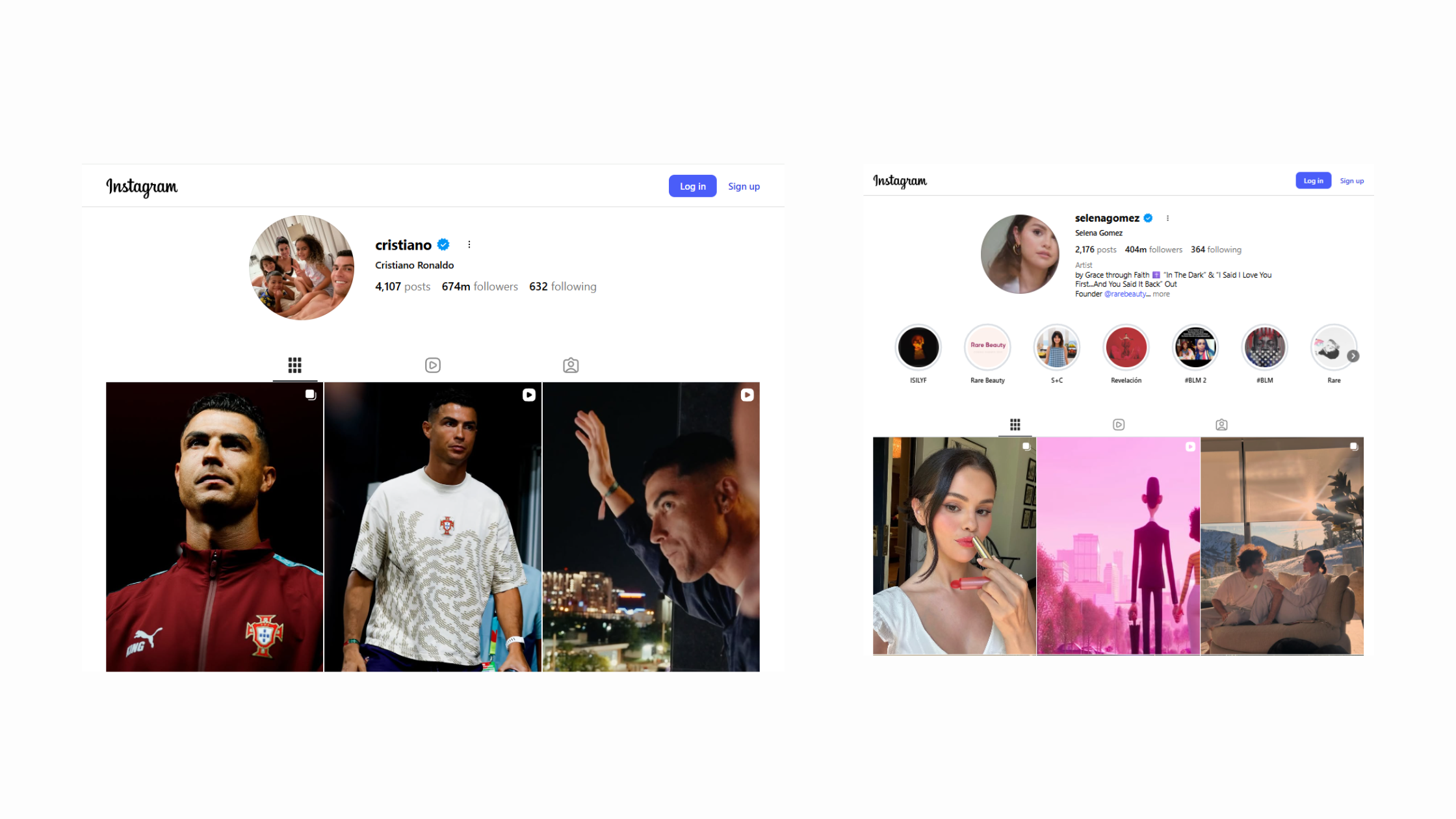
Most Followed Influencers on Instagram - TikTok leaders: Khaby Lame, Charli D'Amelio, MrBeast, Bella Poarch, Addison Rae
- YouTube leaders: MrBeast, T-Series (channel), PewDiePie, Like Nastya, Vlad and Niki
Most Famous TikTok and YouTube Influencers in 2026
Among the famous TikTok influencers and famous tik tok influencers communities track most closely, Khaby Lame stands out as the single clearest example of platform-native virality — he built 160M+ followers without speaking a word in his videos, proving that cultural impact and trendsetting can transcend language entirely. On YouTube, MrBeast's philanthropic-entertainment hybrid format has become the most replicated content model of the decade. These famous influencers on TikTok and YouTube represent the clearest examples of what influencer leadership looks like when it's fully platform-native.
Now that you understand who leads by follower count, the more strategically valuable question is who leads by niche — because that's where brand partnerships actually convert.Top Influencers by Niche: Fitness, Business, Lifestyle, and Beyond
Teams that focus their influencer strategy on niche leaders — rather than chasing the biggest names — consistently see better campaign ROI. The fastest-growing influencer niches in 2026 are fitness, B2B thought leadership, and personal finance. Each has produced a distinct tier of famous social media influencers whose audiences are highly targeted and commercially valuable.
Famous Fitness Influencers and Gym Influencers
The famous fitness influencers space is dominated by creators who combine transformation content with community accountability. Names like Kayla Itsines (fitness app pioneer), Jeff Nippard (evidence-based training), and Simeon Panda (bodybuilding lifestyle) represent different ends of the fitness influencer spectrum. Famous gym influencers — sometimes called famous female fitness influencers or strength-focused creators — have proven that niche specificity converts better than broad wellness content. A popular influencer in fitness with 2M highly engaged followers will outperform a 20M lifestyle account for supplement and apparel brands every time.
LinkedIn and Business Influencers: Justin Welsh, Lara Acosta, and Influencer Leadership
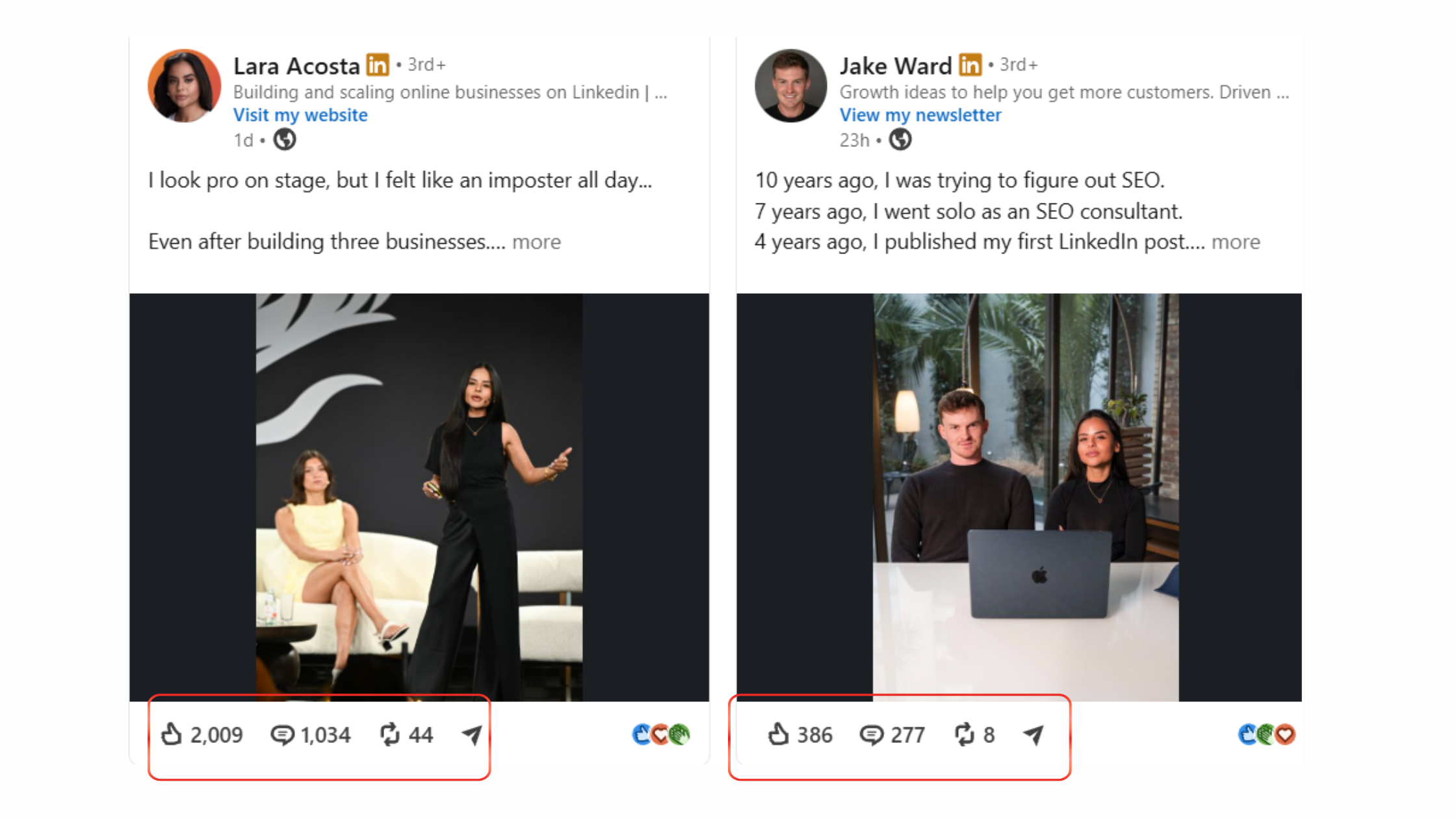
No niche has grown faster on LinkedIn than B2B thought leadership. Justin Welsh — with over 550,000 LinkedIn followers and a solopreneur content model — has become the benchmark for marketing influencers LinkedIn teams study. His content consistently achieves 5–10% engagement rates in a professional environment where 1% is considered strong. Lara Acosta has followed a similar path, building a global audience through transparent creator economy content and personal branding insights. Jade Bonacolta represents the next tier — lifestyle-meets-business creators who blend personal narrative with professional insight, attracting brand deals from both consumer and B2B categories. For brands running B2B social media marketing campaigns, these LinkedIn-native influencer names are the ones worth knowing. You can explore more about finance influencers on LinkedIn for deeper niche-specific recommendations.
Regional Spotlight: Influencers in Dubai and Emerging Global Markets
Influencers in Dubai represent one of the most commercially concentrated influencer ecosystems outside the US. The city attracts creators across fashion, luxury lifestyle, and real estate — with influencers like Khalid Al Ameri and a growing cohort of famous fashion influencers and famous female influencers building audiences that skew high-income and globally distributed. The Dubai influencer scene also illustrates a broader pattern in the global social media influencers list: regional hubs are producing creators with outsized international reach, particularly in markets like Southeast Asia, Latin America, and the Gulf.
How the World's Top Influencers Stay Relevant Over Time
What separates top performers here is not the quality of any single viral post — it is the system behind their content. The most famous social media influencers in 2026 share three traits that keep them relevant long after their initial viral moment: a consistent content identity, deliberate platform diversification, and active community management.
Platform diversification is not a growth strategy for top influencers — it is a survival strategy. Accounts that depend on a single platform are one algorithm update away from losing 60–80% of their reach overnight.
Cultural Impact and Trendsetting: How Top Influencers Shape Public Opinion
Cultural impact and trendsetting is where famous social influencers diverge most sharply from traditional celebrities. A celebrity's cultural impact flows through media coverage. An influencer's flows through community replication — followers recreate the content, reference the creator in their own posts, and carry the trend into offline conversations. This is why audience engagement metrics like saves and shares matter more than likes: saves signal intent to return; shares signal willingness to vouch publicly. Creators who build a habit of trend-setting — rather than trend-following — maintain relevance across multiple algorithm cycles. Social media AI tools are increasingly used by these top creators to analyse which content patterns hold up over time.
Highest Paid Influencers and How Brand Partnership Deals Work
The richest influencers in the world in 2026 earn through multiple streams — not just sponsored posts. MrBeast's estimated annual earnings exceed $85 million (Forbes, 2025), drawn from YouTube ad revenue, merchandise, his MrBeast Burger franchise, and equity deals with partner brands. Cristiano Ronaldo commands $3–5 million per Instagram post for major brand activations. These are the outliers, but they reveal the structure that even mid-tier creators replicate at smaller scale.
Best Influencers for Sponsored Content and Digital Marketing Campaigns
Brand partnership deals in 2026 follow four main structures:
- Flat fee posts — one-time payment for a single piece of content; standard for awareness campaigns
- Affiliate commissions — performance-based; the influencer earns a percentage of tracked sales
- Long-term ambassadorships — 6–12 month contracts with content quotas and exclusivity clauses
- Equity arrangements — increasingly common among top-tier creators; the influencer takes a brand stake instead of or alongside a fee
The best influencers for sponsored content deals in 2026 are not necessarily the biggest — they are the ones whose audience demographics match the brand's customer profile most precisely. Effective social media management for brands increasingly means building a roster of 3–5 niche influencers rather than one mega-deal.
Common Mistakes Brands Make When Choosing Influencers to Partner With
The most common failure mode among brands entering influencer marketing is defaulting to follower count as the primary selection criterion. After seeing this pattern across hundreds of campaign briefs, the outcome is predictable: high spend, low conversion, and a brand that concludes "influencer marketing doesn't work" — when the real problem was influencer selection.
The three mistakes that account for most failed campaigns:
- Prioritising biggest over best-fit. A popular social media influencer in the wrong niche will not move your product. Match the audience, not the number.
- Ignoring audience authenticity. Fake follower rates of 20–40% are common even among well-known influencer names. Use tools like HypeAuditor or Modash to verify before signing.
- Mismatching platform to campaign goal. B2B lead generation belongs on LinkedIn — not TikTok. Product demos with visual complexity belong on YouTube — not Instagram Stories. Platform fit is not optional.
Brands that want to find the best influencers for marketing campaigns consistently should build a shortlist methodology: define audience match criteria first, filter by engagement rate second, verify authenticity third, and only then evaluate reach. For organisations building this capability internally, understanding how personal brand building works gives valuable context for evaluating creator credibility. You can also explore Hyperclapper for tools that help identify and engage high-reach influencer accounts efficiently.
✓ The Influencer Selection Checklist
- ☐Define your target audience demographics before searching for influencer names
- ☐Set a minimum engagement rate threshold (3%+ for macro, 5%+ for micro)
- ☐Verify audience authenticity using a third-party tool before any outreach
- ☐Check platform fit: does the influencer's primary platform match your campaign goal?
- ☐Review past brand partnership deals for performance data (ask for media kits with real metrics)
- ☐Confirm content style aligns with your brand identity — misalignment alienates both audiences
- ☐Start with a small paid test post before committing to a long-term ambassadorship contract
What consistently separates brands that build lasting influencer programmes from those that treat it as a one-off experiment is not budget — it is process. The brands that win are the ones who treat influencer selection as rigorously as they treat any other media buy.
Frequently Asked Questions About the World's Most Famous Influencers
Who is the number one influencer in the world in 2026?
By total combined followers across all platforms, Cristiano Ronaldo holds the top position in 2026 with 640M+ followers. By platform-native influence and content impact, MrBeast is widely considered the most powerful creator in the world — his content drives more measurable audience action than any other individual creator globally.
Who are the top 10 to 50 social media influencers globally?
The top 10 most followed social media influencers in the world in 2026 include Cristiano Ronaldo, Kylie Jenner, Selena Gomez, Dwayne Johnson, Ariana Grande, Kim Kardashian, Beyoncé, MrBeast, Khaby Lame, and Charli D'Amelio. Rankings shift by platform — Instagram, TikTok, and YouTube each have distinct top-50 lists.
Who are Gen Z influencers and why do they matter in 2026?
Gen Z influencers are creators born roughly between 1997 and 2012 who built their audiences natively on TikTok, YouTube Shorts, and Instagram Reels. They matter because they represent the primary content format preference of the largest consumer cohort — and brands who ignore Gen Z creators lose reach with under-35 audiences at scale.
Which influencers should my brand work with to reach global audiences?
Match the influencer's audience geography and demographics to your target customer — not their follower count. For global reach with cultural neutrality, creators like Khaby Lame (non-verbal content) or MrBeast (universal entertainment) work broadly. For regional depth, partner with market-specific top influencers who carry local credibility your global mega-deal cannot replicate.
What's the difference between a popular influencer and a traditional celebrity?
A popular influencer built their audience through content — their fame is platform-dependent and community-driven. A traditional celebrity gained fame through a separate field (sport, music, film) and carries that recognition onto social media. Influencer authority tends to drive higher engagement and purchase intent; celebrity authority delivers broader but shallower reach.
How do influencers make money beyond sponsored posts?
The most famous influencers in 2026 earn through at least five streams: YouTube ad revenue, affiliate commissions, merchandise, digital products (courses, newsletters, communities), and equity stakes in partner brands. Sponsored posts are typically 30–50% of a top creator's income — not the majority.
Which influencer has the most followers in 2026?
Cristiano Ronaldo leads by combined cross-platform following at 640M+. On YouTube alone, MrBeast leads individual creators. On TikTok, Khaby Lame holds the highest verified individual following. The answer depends on which platform — there is no single global count that is standardised across all networks.



