How HyperClapper Transforms Your Tips on Prospecting Into Deals
Learn the core prospecting plan steps, channel tactics, and how HyperClapper turns LinkedIn visibility into warm pipeline — with role-specific templates and KPIs.
📅 ⏱ 27 min read📝 ~5400 words
A prospecting plan is a structured, repeatable system for identifying, qualifying, and engaging ideal buyers — not a generic checklist you revisit once a quarter. A pattern observed across high-performing sales teams is that the reps who consistently close aren't necessarily the best closers. They're the best prospectors. They have a daily discipline, a clear ideal customer profile (ICP), and a channel strategy that makes outreach feel less like cold calling and more like a warm conversation already in progress. What separates them from average performers isn't effort — it's the system behind the effort. This article walks through every prospecting plan step, shows you how to adapt it to your specific role, and explains exactly where a tool like HyperClapper accelerates the process from visibility to pipeline.
Key Takeaways
For: B2B sales reps, founders, recruiters, coaches, and marketers who need a prospecting plan they can actually execute — not just read about.
You'll learn: All core prospecting plan steps, a role-specific setup process, channel tactics for LinkedIn, email, and cold calls, and how to track KPIs that predict revenue.
Why it matters: According to MySalesCoach (2026), 42% of salespeople say prospecting is the hardest stage of the sale — a structured plan cuts that difficulty in half.
Most counterintuitive finding: Publishing great LinkedIn content without amplifying it generates almost no prospecting pipeline — reach, not quality alone, determines whether prospects ever see your name.
HyperClapper's role: It's not a cold outreach tool. It builds the visibility layer that makes every outreach feel warm before you send a single message.
Template included: A ready-to-use prospecting plan structure, a prospect cost formula, and a five-KPI tracking framework.
What Is a Prospecting Plan and Why Most Salespeople Get It Wrong
What Is a Prospecting Plan
Most salespeople have heard the advice — define your ICP, personalize your outreach, follow up consistently. They know the tips on prospecting. What they don't have is a structured, role-specific system that tells them exactly what to do on a Tuesday at 9 a.m. when quota is looming and their pipeline is thin. That gap — between knowing the framework and executing it daily — is where most prospecting plans collapse.
Three terms get conflated constantly, and the confusion is costly.
Prospecting Plan vs. Prospecting Strategy vs. Prospecting Process
Prospecting plan — the specific, documented system: who you target, how many contacts per week, which channels, and what metrics you track. It's operational.
Prospecting strategy — the directional decision about where to focus: inbound vs. outbound, enterprise vs. SMB, social selling vs. cold calling. It's positional.
Prospecting process — the sequential steps a rep follows from first contact to qualified meeting. It's procedural.
All three matter. But most guides give you a process (steps) without helping you build a plan (a working system) or choose a strategy (the right focus for your market). A financial advisor's prospecting plan looks nothing like a B2B SaaS rep's — the channels, the qualification criteria, the cadence, and the compliance constraints are all different. The steps may be the same; the sequencing and emphasis are not.
What a Completed Prospecting Plan Actually Looks Like (Real-World Template)
A completed prospecting plan isn't a slide deck. It's a one-page operating document that answers five questions:
Who am I targeting? — ICP defined by industry, company size, role/title, and trigger events (e.g., recent funding, new hire, product launch).
How many do I need? — Weekly activity targets back-calculated from revenue quota (covered in the next section).
Which channels? — Ranked by ROI for your specific role: LinkedIn first for most B2B contexts, then email, then phone.
What does my cadence look like? — A day-by-day outreach sequence with specific messaging at each touchpoint.
How do I track it? — Five KPIs logged weekly in a CRM or spreadsheet, reviewed monthly.
The most common failure mode in prospecting isn't laziness — it's a plan that exists only in someone's head, where accountability is impossible and patterns are invisible.
Once you have that document, you can present it to a manager, hand it to a new rep, or audit it against results. Without it, you're prospecting on instinct — which works in a bull market and fails everywhere else.
The Core Prospecting Sales Process: Steps That Actually Move Deals Forward
The sales prospecting process — the end-to-end sequence from identifying a prospect to booking a qualified meeting — has six core stages when done correctly. Most guides truncate these or leave out the qualification stage entirely, which is exactly why pipelines fill with contacts that never convert.
How to Prospect Step by Step: From ICP to First Meeting
Here is how to prospect effectively, stage by stage:
ICP Definition — Build your ideal customer profile using firmographic data (industry, revenue, headcount), technographic data (tools they use), and behavioral signals (content they engage with, events they attend). Without a sharp ICP, every subsequent step is guesswork.
List Building — Source contacts matching your ICP from LinkedIn Sales Navigator, Apollo.io, or a direct prospect survey of existing customers to identify shared characteristics. Aim for quality over volume: 50 precisely matched contacts outperform 500 loose ones.
Channel Selection — Choose 2–3 channels for each prospect segment. For LinkedIn-active buyers, LinkedIn social selling plus email is the highest-ROI combination in B2B contexts.
Outreach — Execute personalized first touches with a clear value proposition. The personalization doesn't need to be lengthy — one sentence connecting your message to something specific about the prospect's business is sufficient.
Qualification — Apply prospect qualification criteria (defined as the set of conditions a prospect must meet to enter your active pipeline) before investing significant time. BANT (Budget, Authority, Need, Timeline) or MEDDIC works; what doesn't work is skipping this stage entirely.
Nurture — For prospects not ready to buy, maintain low-pressure contact: share relevant content, engage with their LinkedIn posts, and check back at a defined interval (typically 30–60 days).
Handoff to Closing — Once qualified, transition to a discovery call and formal sales process. The prospecting phase ends here; the closing phase begins.
💡
Pro Tip:According to Salesgenie (2025), prospects are 70% more likely to accept a meeting when the outreach is based on a mutual connection. Engage with a prospect's LinkedIn content before sending any message — that engagement becomes your shared context.
The 7 Steps of a Sales Process and Where Prospecting Fits
The 7 steps of a sales process are: Prospecting → Initial Contact → Qualification → Needs Analysis → Presentation/Demo → Objection Handling → Closing. Prospecting is step one — but it directly influences every step that follows. A poorly qualified prospect wastes discovery time, resists demos, and generates objections that can't be resolved. Teams that fix prospecting fix everything downstream automatically.
The 5 P's of Prospecting
The 5 P's of prospecting are: Purpose (know why you're reaching out and what outcome you want), Preparation (research the prospect before any contact), Personalization (connect your message to their specific situation), Persistence (follow up systematically — most deals close after touch 5–8), and Performance (track metrics and adjust based on what the data shows). Every stage of the prospecting plan steps maps to at least one of these principles.
How to Build Your Prospecting Plan: A Role-Specific, Step-by-Step Setup
Here's what most guides on how to set up a prospecting plan skip: the math. A prospecting plan built without numbers is just intention. Built with numbers, it becomes a managed system.
Reverse-Engineering Your Weekly Activity from Revenue Goals
Start with your annual revenue quota and work backwards:
Revenue target ÷ average deal size = closed deals needed per year
Example: A B2B SaaS rep with a $600,000 quota, $30,000 average deal size, 25% win rate, 60% meeting-to-opportunity rate, and 5% outreach response rate needs roughly 267 outreach touches per week. That's about 54 per day — achievable only with a structured channel system and automation support for non-personalized elements.
B2B SaaS rep: LinkedIn first (social selling signals), email second, phone for non-responsive warm leads only.
Recruiter: LinkedIn InMail first, direct email second, referral networks third — phone is rarely the opener.
Financial advisor: Compliance constrains channels; warm referrals and events often outperform cold digital outreach; LinkedIn is useful for credibility-building rather than direct prospecting.
What Is Prospect Cost and What Benchmarks Should You Target?
Prospect cost is the total investment required to generate one qualified meeting, calculated as: (Time cost + Tool cost + Ad spend) ÷ Qualified meetings booked.
If a rep spends 20 hours per week prospecting at an effective hourly cost of $50, uses tools costing $500/month, and books 8 qualified meetings — the prospect cost is roughly $175 per meeting. Industry benchmarks vary by segment:
SMB B2B: $50–$150 per qualified meeting
Mid-market B2B: $150–$400 per qualified meeting
Enterprise B2B: $400–$1,200+ per qualified meeting
Teams that don't calculate prospect cost routinely overspend on low-conversion channels and underinvest in high-signal ones. This is the number that justifies tool investment to leadership.
Using a Prospect Survey to Sharpen Your ICP and Qualification Criteria
A prospect survey — a structured set of questions sent to existing customers or recently converted deals — is one of the most underused ICP-refinement tools in B2B sales. Ask 8–10 customers: What triggered their decision to evaluate your solution? What alternatives did they consider? What would have caused them to walk away? Their answers sharpen your qualification criteria from assumptions into evidence. Teams that run this exercise quarterly report materially higher qualification accuracy within 90 days.
Channel-Specific Prospecting Tactics: Email, Cold Calls, and LinkedIn Social Selling
B2B Prospecting in 2026 — By the Numbers
42%
of sales reps say prospecting is the hardest stage
70%
more likely to accept a meeting via mutual connection
1.7×
more likely that top performers use AI prospecting agents
According to Salesforce (2026), high performers are 1.7× more likely than underperformers to use AI prospecting agents — and that gap is widening. In practice, the reps pulling ahead in 2026 aren't doing more volume. They're doing smarter volume across three channels, layered in the right sequence.
42%
of sales reps name prospecting as the single hardest stage of the sale — a structured plan with channel sequencing cuts that difficulty significantly
LinkedIn Prospecting: Turning Engagement Into Pipeline
Social selling signals are behavioral cues — post engagement, profile views, content shares, comment activity — that indicate a prospect's interest or buying intent. On LinkedIn, these signals are visible, real-time, and highly actionable. A prospect who comments on your post about a pain point you solve has essentially pre-qualified themselves.
The playbook:
Publish value-driven content addressing your ICP's biggest problems.
Boost that content through an engagement layer (more on this in the HyperClapper section).
Monitor who engages — commenters and profile visitors are warm prospects.
Open a personalized connection request or DM referencing the content specifically.
This approach converts a cold outreach into a warm conversation. The prospect already knows your name, has read your thinking, and has signaled alignment — before you've sent a single message.
⚠️
Warning:LinkedIn connection request limits tightened in 2023 and remain enforced in 2026. Sending more than 20–25 unsolicited requests per day risks account restrictions. Prioritize quality targeting and warm signal triggers over volume blasting.
Email and Cold Call Cadences That Complement Your LinkedIn Outreach
Outreach cadence sequencing is the structured timing and channel order of your touches across a prospecting cycle. The most effective B2B cadence in 2026 for a typical 10–14 day window looks like this:
Day 1: LinkedIn connection request (personalized note referencing shared content or connection).
Day 3: Email #1 — short, problem-focused, no pitch.
Day 5: LinkedIn comment or engagement on their post (genuine, adds value).
Day 7: Email #2 — add a relevant case study or insight.
Day 10: Cold call — reference the emails and LinkedIn engagement explicitly.
Day 14: Final email — direct ask or a clear close of the sequence.
Reps who collapse this cadence into two or three rapid-fire emails and then go silent are the ones who complain that prospecting doesn't work. The cadence is the plan. Skip steps and the close rate reflects it.
What Is HyperClapper and How Does It Help With Prospecting?
HyperClapper is a LinkedIn engagement platform that amplifies post visibility through real community channels, AI-powered replies, and analytics. It is not a scraping tool or a cold outreach automation tool — and that distinction matters enormously for how it fits into a prospecting plan.
Think of HyperClapper as the distribution layer for your LinkedIn content strategy. You create the insight; HyperClapper ensures your ideal customers actually see it. When your content reaches the right people at scale, inbound social selling signals increase — profile views climb, connection requests arrive from ICP accounts, and DMs come from prospects who found you, not the other way around.
Core Features: Channels, AI Replies, Company Page Boosting, and Content Guard
Channels: Each channel connects your post to a group of ~50 real users who engage with it. Add 2 channels and you reach ~100 engagements; 3 channels reaches ~150. This early engagement signals relevance to LinkedIn's algorithm, extending organic reach to your broader ICP.
AI Replies: HyperClapper generates and posts contextual, non-generic AI replies that keep the conversation active. LinkedIn's algorithm rewards posts with sustained comment depth — a post that keeps generating replies on day 4 continues being distributed, long after competitors' posts have gone cold.
Feed More AI Replies: Users can inject additional AI replies days after publishing, reviving post distribution at will.
Company Page Boosting: Boosts posts from company pages — useful for brand-led prospecting where the company account is the visibility driver.
Content Guard: A moderation layer that prevents risky or off-brand content from being amplified — important for regulated industries and brand-conscious teams.
Analytics: Tracks engagement, post performance, and growth trends — the data layer that turns visibility into actionable prospecting intelligence.
Who HyperClapper Is Built For in a Sales Context
In a sales context, HyperClapper delivers the most value to:
Founders building visibility with potential customers and investors simultaneously.
B2B sales reps who post thought leadership content and want qualified prospects to find them before outreach.
Recruiters who need candidate trust before a cold message lands.
Agencies and sales teams who want to amplify both personal and company page content at scale.
Turn Your LinkedIn Content Into a Warm Prospecting Machine
HyperClapper connects your posts to real engagement channels — so your ICP finds you before you reach out to them.
How HyperClapper Turns LinkedIn Engagement Into an AI Sales Prospecting Engine
HyperClapper
The prospecting loop that high-performing teams using HyperClapper run consistently looks like this: publish a value-driven post addressing a real pain point your ICP faces → boost via 2–3 HyperClapper channels → AI replies extend conversation life for 3–5 additional days → ideal buyers engage or view the post → the seller identifies warm leads through engagement signals and initiates outreach with context already established.
What makes AI replies particularly effective here is credibility signaling. A post with 40 comments looks like a real conversation worth joining. A post with 3 comments looks like content nobody cared about. Pipeline velocity — the speed at which a deal moves from first contact to close — compresses when prospects already trust you before you send a message. The channel boost creates the initial reach; the AI reply depth creates the social proof; the analytics identify who's worth reaching out to.
Using HyperClapper Analytics to Find the Topics Your Prospects Care About
Prospect tracking is the process of monitoring where each prospect is in your pipeline — what they've seen, how they've engaged, and what the next action is. Within HyperClapper, the analytics dashboard shows how each of your posts performs, so you can see which topics earn the most engagement. If posts about sales process optimization consistently outperform posts about product features, that's a signal about what your ICP cares about — and it should directly shape your next outreach message. This is a form of audience intelligence most outreach tools simply can't provide.
Teams that use HyperClapper analytics to inform their messaging — not just to measure vanity metrics — see significantly faster prospect-to-meeting conversion. The data tells you what your ICP is already thinking about. Lead with that in your outreach, and cold emails stop feeling cold.
How to Turn Prospects Into Customers: Follow-Up, Nurture, and Conversion
Most prospecting efforts fail to close not because the outreach was bad, but because the follow-up was either too aggressive too soon, or it disappeared entirely after two touches. The most common failure mode is a rep who sends three emails in five days and then marks the prospect as "not interested" — when in reality, the prospect simply wasn't in a buying window yet.
The question of how to turn prospects into customers has a structural answer, not a silver-bullet one. It requires understanding where the prospect is in their buyer journey and matching the value of each touch to that stage.
How to Follow Up With Prospects Effectively Without Being Annoying
Here is a six-touch follow-up framework built on the prospecting plan steps above — specifically designed to answer the question of how to follow up with prospects effectively:
Touch 1: Initial outreach — short, specific, problem-framed. No pitch.
Touch 2: Personalized value-add — a relevant article, insight, or data point tied to their specific context.
Touch 3: Reference a social trigger — "I saw your post about X, which connects directly to what I wanted to share with you…"
Touch 4: Case study or social proof — a one-paragraph story of a similar company you helped, with a concrete outcome.
Touch 5: Question-based check-in — not "just following up" but a genuine question about their current situation.
Touch 6: Direct ask — a clear, low-friction next step (15-minute call, a demo, a specific question answered by video).
🔴
Avoid:"Just checking in" as a follow-up message. It signals that you have no new value to add and that your outreach is about your quota, not the prospect's problem. Every touch must carry something worth opening.
LinkedIn content amplified by HyperClapper acts as passive nurture between active outreach touches. While you're not sending messages, your posts keep your name visible to the prospect in their feed — without any additional effort on your part. This is what converts a six-touch sequence from aggressive to appropriately persistent.
The best way to convert prospects to deals is to be consistently present without being consistently pushy — and content with real distribution is how you stay visible between outreach touches at no marginal cost.
Prospect Tracking, KPIs, and How to Measure a Prospecting Plan's Success
Five KPIs predict the health of any prospecting plan — and every other metric is noise until these five are clean:
Contacts added per week — measures input discipline. If this drops, everything downstream drops with it.
Outreach open/reply rates — measures message quality and ICP accuracy. Low rates indicate either wrong audience or wrong message.
Qualified meetings booked per week — the primary output metric. This is what the plan exists to produce.
Pipeline created ($) per week — translates meetings into revenue language for leadership reporting.
Prospect cost ($) — the efficiency metric. This is what you use to justify tools, headcount, and channel investment.
A simple prospect tracking system doesn't require an enterprise CRM. A five-column spreadsheet works: Prospect Name | Stage | Channel | Last Touch Date | Next Step. Review it every Monday. Any prospect with a next step more than 14 days overdue either gets an immediate follow-up or gets archived. Letting leads age in a list is how pipelines bloat without producing revenue.
Pipeline velocity is the master metric that connects prospecting quality to revenue speed. The formula: (Number of deals × Average deal value × Win rate) ÷ Average sales cycle length. Improving prospecting quality — better ICP targeting, higher qualification discipline — directly raises win rate and reduces cycle length. Both multiply pipeline velocity faster than adding raw volume.
For teams already using LinkedIn analytics and automation tools, integrating those data streams into your prospect tracking system closes the loop between content engagement and pipeline activity.
How Often Should a Prospecting Plan Be Reviewed or Updated?
A prospecting plan should be reviewed monthly at minimum. Trigger a full revision — not just a tweak — when any of these three conditions occur:
Pipeline falls below 3× quota coverage for two consecutive months.
Your ICP shifts — a new competitor enters the market, your product expands to a new segment, or market conditions change buyer priorities.
A new channel shows meaningfully higher conversion than your current primary channel (e.g., inbound LinkedIn content starts generating more meetings than outbound email).
Plans that haven't been revised in more than 90 days are almost certainly optimized for a market that no longer exists.
HyperClapper vs. Other LinkedIn Prospecting and Automation Tools
The comparison most B2B sales teams need is not HyperClapper vs. cold outreach tools — it's HyperClapper vs. other LinkedIn engagement tools. These serve a different function from Apollo, Outreach, or Salesloft (which handle cold messaging and sequence management). HyperClapper handles visibility and warm signal generation.
For teams evaluating the best prospecting tools for B2B sales 2025 and beyond, a useful frame is to distinguish the function: cold outreach tools (Apollo, Outreach, Salesloft) reach prospects who don't know you yet. Engagement platforms like HyperClapper make prospects aware of you before you reach out — compressing the trust-building that cold outreach has to do in one message into a weeks-long passive visibility sequence.
What Features Should a Prospecting Tool Have in 2026?
The non-negotiable features for any prospecting tool in 2026:
Reach amplification — getting your message or content in front of ICP-aligned audiences at scale.
Engagement authenticity — real interactions that build credibility rather than bot activity that gets flagged.
Signal identification — surfacing which prospects are showing buying intent, not just raw volume metrics.
Safety controls — especially for LinkedIn, where account restrictions are a real risk with aggressive automation.
Analytics integration — connecting engagement data to pipeline data so you can measure what's actually driving meetings.
On HyperClapper pricing and plans: HyperClapper offers accessible entry tiers for individual creators and professionals, with scaled options for agencies and sales teams managing multiple LinkedIn accounts. For a detailed view of how LinkedIn plan costs compare to third-party engagement tools, this LinkedIn plans pricing breakdown provides useful context.
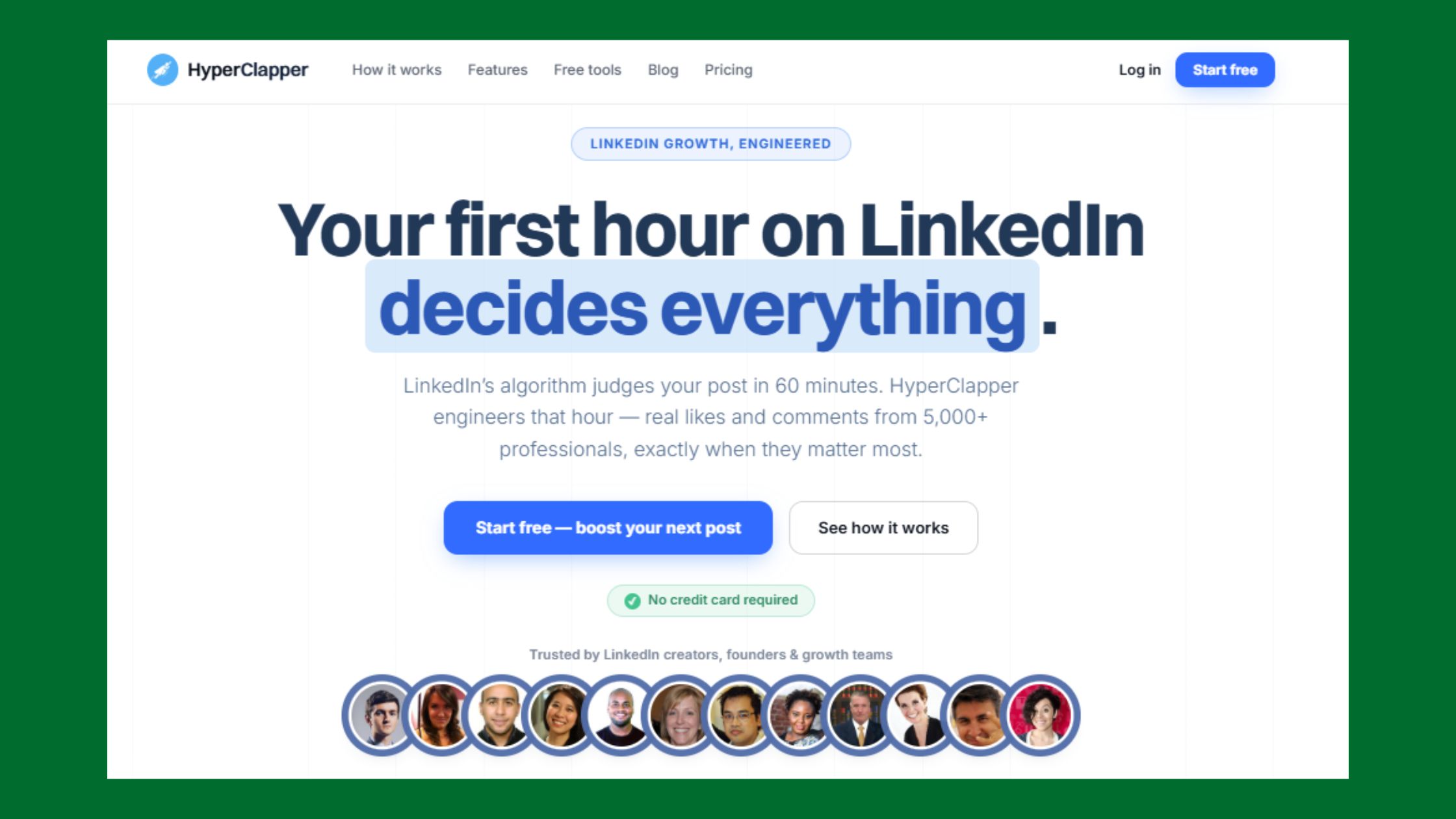
hyperclapper.com
HyperClapper — Boost your first hour on LinkedIn
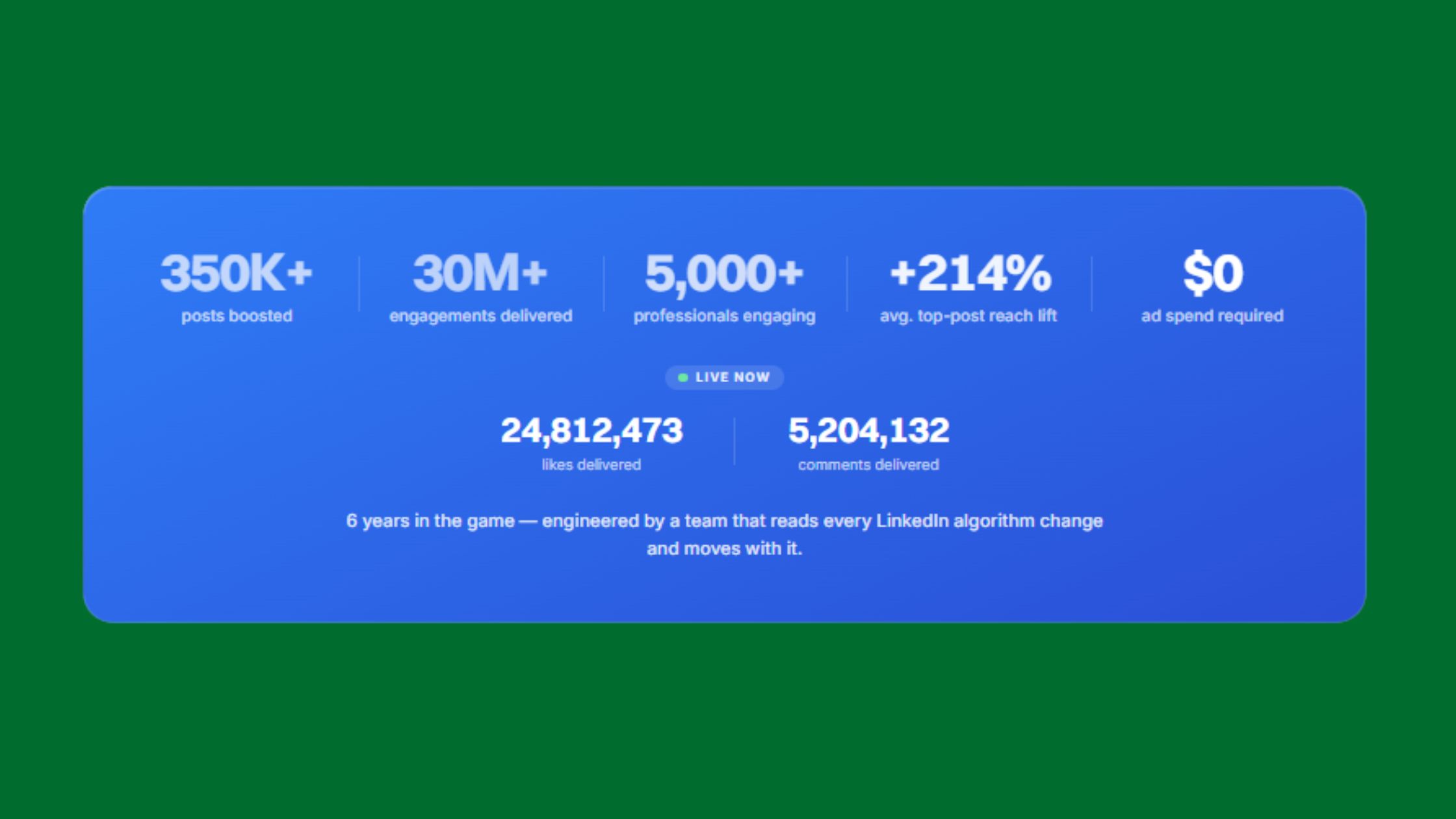
Real likes and comments from 5,000+ professionals in your post's first hour. 30M+ engagements delivered, zero ad spend.
Common Prospecting Mistakes That Kill Deals (and How to Fix Them)
In roughly 4 out of 5 cases where a prospecting plan fails to generate consistent pipeline, the cause is one of five predictable mistakes — not bad luck, not a bad market, and not bad product-market fit.
Why Most Prospecting Efforts Fail to Close and What to Do Differently
Mistake 1: Skipping ICP definition. Prospecting broadly means qualifying narrowly — and the numbers destroy you. A bloated list of 500 loosely matched contacts that converts at 1% produces 5 meetings. A tight list of 100 well-matched contacts at 8% produces 8. Do the ICP work first. Every day you skip it costs more than the time it would have taken.
Mistake 2: Treating tips on prospecting as a one-time project. A prospecting plan is a daily discipline, not a quarterly initiative. Reps who block prospecting time on their calendar — 90 minutes minimum, same time each day — consistently outperform reps who prospect "when there's time." There is never time. You make time.
Mistake 3: Single-channel dependence. Relying exclusively on email is the most common version of this mistake. LinkedIn social selling signals — a comment on your post, a profile view from an ICP account — are warm triggers that email can't generate. Ignoring them means leaving the highest-intent prospects unidentified.
Mistake 4: No prospect tracking system. A pattern observed consistently across underperforming pipelines is that deals don't fail because the prospect wasn't interested — they fail because the rep forgot to follow up on day 8. A simple five-column tracker, reviewed weekly, prevents this entirely.
Mistake 5: Publishing LinkedIn content without amplifying it. Good content with zero reach is a journal entry. A post that addresses your ICP's most pressing problem but gets 3 likes because the algorithm didn't distribute it has done nothing for your prospecting. This is the gap HyperClapper closes: consistent amplification turns good content into a prospecting asset.
Sales Pipeline Acceleration: Combining Your Prospecting Plan With HyperClapper
The integrated workflow that consistently produces the fastest time-to-meeting in B2B sales combines two layers: a structured prospecting plan (ICP definition → cadenced outreach → qualification discipline) with HyperClapper's visibility layer (content amplification → social selling signals → warm inbound prospects).
The compounding effect becomes significant at 60–90 days. In the first 30 days, boosted posts build reach with a new audience. By day 60, a recognizable name and consistent content theme mean that outbound messages land with pre-existing familiarity. By day 90, inbound signals — profile visits, connection requests, DMs from ICP accounts — begin supplementing and often exceeding outbound volume. This is what ideal customer profile alignment looks like in practice: your content finds your buyers, and your outreach closes them.
This is not a vanity metric play. It's a sales pipeline acceleration strategy. Teams that measure the correlation between LinkedIn engagement volume (boosted via HyperClapper) and qualified meetings booked consistently find a positive relationship — because both activities target the same ICP, in the same channel, with the same value messaging. The visibility work and the outreach work reinforce each other rather than running in parallel silos.
☐Review your five KPIs monthly and trigger a plan revision if pipeline falls below 3× quota for two consecutive months.
☐Run a prospect survey with 8–10 existing customers every quarter to sharpen ICP and qualification criteria.
Ready to Compress Your Time From Visibility to Pipeline?
HyperClapper builds the visibility layer your prospecting plan needs — real engagement, AI-powered replies, and analytics that show which posts perform best.
Frequently Asked Questions About Prospecting Plans and HyperClapper
What are the 5 P's of prospecting?
The 5 P's of prospecting are Purpose (define the goal of each outreach), Preparation (research your prospect before contact), Personalization (connect your message to their specific situation), Persistence (follow up across 6–8 touches systematically), and Performance (track metrics and optimize based on results). Each maps directly to a stage in the prospecting plan steps above.
What are the basic steps in the prospecting process?
The basic steps in the prospecting sales process are: define your ICP, build a targeted contact list, select your channels, execute personalized outreach, qualify prospects against defined criteria, nurture non-ready buyers, and hand qualified prospects off to the closing stage. Skipping the qualification step is the single most expensive shortcut in the prospecting process.
What are the 7 steps of a sales process?
The 7 steps of a sales process are: Prospecting → Initial Contact → Qualification → Needs Analysis → Presentation or Demo → Objection Handling → Closing. Prospecting is the first step, and it directly influences the quality of every subsequent step. Poor prospecting generates poor-fit opportunities that collapse at objection handling or closing.
How can HyperClapper turn my prospecting tips into actual sales deals?
HyperClapper amplifies your LinkedIn content through real engagement channels, making your posts visible to ICP-aligned buyers before you send a single message. Prospects who engage with your content become warm leads — meaning your outreach lands with pre-existing familiarity rather than as a cold approach. The AI reply feature extends post life, keeping your name visible in the prospect's feed over multiple days. Combined with a structured outreach cadence, this compresses time-to-meeting by building trust at scale passively.
Can AI tools really improve B2B prospecting success rates?
Yes — and the data is clear. According to Salesforce (2026), high performers are 1.7× more likely than underperformers to use AI prospecting agents. The improvement comes not from volume but from relevance: AI tools surface better signals, generate more contextually appropriate messaging, and keep conversations alive longer — all of which raise reply rates and meeting conversion.
What is the best way to convert prospects to deals and how does HyperClapper support it?
The most effective conversion sequence is: qualify first (don't demo unqualified prospects), add tailored value at each follow-up touch, and create specific next steps rather than open-ended "let me know." HyperClapper supports this by keeping your LinkedIn content visible to prospects between active outreach touches — functioning as passive nurture that makes the eventual "yes" easier to earn, without additional outreach effort.
What is a prospecting plan and how is it different from a prospecting strategy?
A prospecting plan is the operational document: who you target, how many weekly contacts, which channels, what cadence, and which KPIs you track. A prospecting strategy is the directional decision: inbound vs. outbound, enterprise vs. SMB, which market to prioritize. You need both — strategy sets the direction; the plan executes it with specific numbers and daily actions.
What B2B prospecting strategies that close deals look different from ones that just fill pipelines?
Strategies that close deals are built around qualification discipline and ICP precision, not raw volume. They use social selling signals to identify warm prospects before reaching out, apply a multi-touch cadence that adds value at every step, and track pipeline velocity — not just meetings booked. Filling a pipeline is easy. Building one where 25%+ of opportunities close requires ICP alignment from the first contact.
👋
⚡ Free plan
Leaving already?
Grab 3 free boosts on your next LinkedIn post — real likes & comments from 5,000+ creators. No card, cancel anytime.

 hyperclapper.com