
The honest answer to "do ai sdr tools actually work?" is: it depends entirely on what you feed them. A pattern observed across hundreds of outbound sales deployments is that AI SDR platforms — including Skylead — consistently underperform when teams treat them as autonomous pipeline machines, and consistently outperform when they're used as force multipliers with clean ICP data and human oversight built in. Skylead is a multi-channel outbound automation platform that combines LinkedIn and email sequences into one workflow. It doesn't source leads for you, it doesn't write your strategy, and it won't fix a broken ICP. What it does do — when set up correctly — is compress weeks of manual prospecting into days of structured, measurable outreach.
- Who this is for: B2B sales teams, SDRs, founders, and agencies running LinkedIn and email outreach at scale
- What you'll learn: Exactly what Skylead does, how it handles LinkedIn safety, and when it's worth the investment
- Biggest myth debunked: AI SDR tools don't replace human SDRs — they replace the manual, repetitive parts of the job
- The operational reality: Output quality is 100% determined by ICP clarity and lead data quality — not the platform itself
- Honest comparison: How Skylead stacks up against Lemlist and Expandi for different team types
- Counterintuitive finding: According to Digital Applied (2026), AI SDRs cut cost-per-opportunity up to 54% in hybrid human-AI pods — but pure-AI deployments wreck meeting quality
- What Is Skylead AI SDR and What Does It Actually Do?
- Skylead Features for Sales Outreach: How It Works in Practice
- Skylead AI SDR Review: Honest Benefits, Real Limitations, and Common Mistakes
- Skylead vs Lemlist vs Expandi: Which Tool Fits Your Team?
- Frequently Asked Questions About Skylead and AI SDR Tools
What Is Skylead AI SDR and What Does It Actually Do?
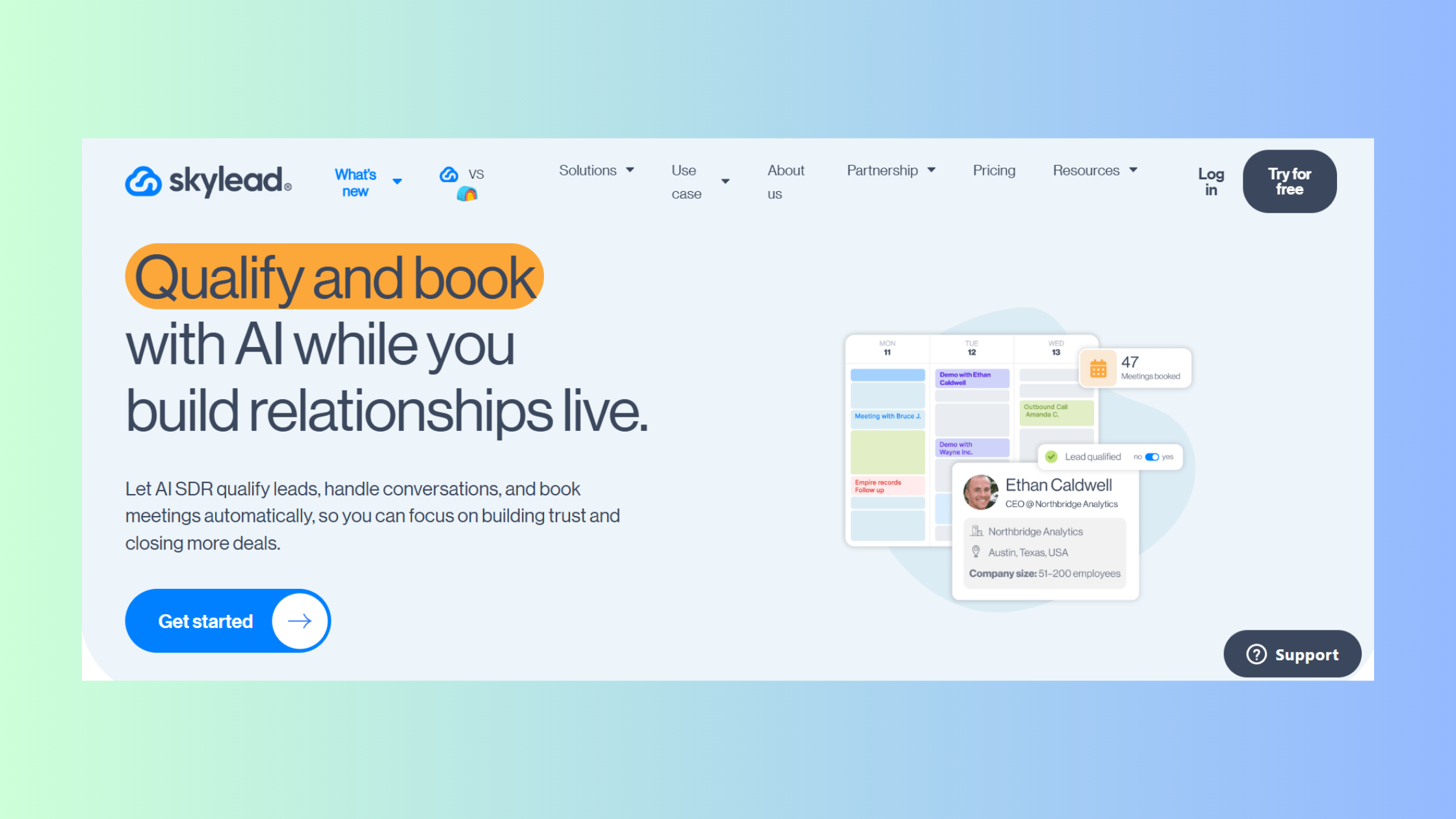
An AI SDR (AI Sales Development Representative) is software that automates the prospecting, outreach, and follow-up tasks traditionally handled by a human SDR — connection requests, cold emails, follow-up sequences, and reply routing. Skylead specifically is a LinkedIn outreach automation software and email sequencing platform built for B2B sales teams running multi-channel outbound campaigns.
The ai sdr meaning often gets muddied in vendor marketing. Here's the cleaner version: an AI SDR handles the execution layer of outbound sales — it does not replace the thinking layer. Skylead doesn't decide who your ICP is. It doesn't write your value proposition. What it does is execute your outreach playbook at scale, across LinkedIn and email simultaneously, with personalization variables and smart sequencing built in.
AI SDR vs Human SDR: What's the Real Difference in 2026?
What is the difference between an AI SDR and a human SDR? The core distinction is coverage versus judgment. A human SDR brings contextual judgment, live conversation handling, and relationship nuance. An AI SDR brings unlimited capacity, consistent follow-up, and zero fatigue. The most common failure mode in this debate is framing it as either/or — teams that deploy Skylead as a full human replacement consistently see declining meeting quality. Teams that use it to handle the first three to five touchpoints, then hand off to a human rep after a reply, see compounding efficiency gains.
According to AiSDR's State of the Industry Report (2026), the AI-powered sales tools market is growing at 42% annually, with 72% adoption among enterprise sales teams. That growth rate signals real utility — but it also means a flooded market where tool quality varies enormously.
Skylead is not a CRM, not a data provider, and not a magic pipeline generator. It is an autonomous prospecting workflow tool — meaning it automates the steps between having a lead list and having a booked meeting. That distinction matters enormously for how you configure and evaluate it.
The teams that waste budget on AI SDR tools are almost always the ones who confused buying the tool with building the system. The tool is 20% of the equation; the ICP clarity, data quality, and human handoff design are the other 80%.
Skylead Features for Sales Outreach: How It Works in Practice

The core workflow inside Skylead follows a predictable four-stage loop: import leads → build a multi-channel sequence → execute LinkedIn and email touchpoints → detect replies and route to a human. What separates Skylead from simpler automation tools is that it handles LinkedIn and email in a single sequence builder, so you're not stitching two platforms together.
How to Automate Cold Outreach at Scale Without Getting Banned
How does Skylead handle LinkedIn limits and safety? Skylead uses smart throttling — randomized delays between actions, daily activity caps, and gradual warm-up ramps — to reduce the risk of LinkedIn flagging your account. No tool eliminates this risk entirely, but Skylead's approach is designed to keep activity patterns within ranges that LinkedIn's detection systems are less likely to flag. Teams that skip the warm-up phase and push connection requests to the maximum on day one are the ones who see restrictions. Slow ramp over two to three weeks dramatically reduces account risk.
The Skylead features for sales outreach cover the full LinkedIn touchpoint stack:
- Connection requests with personalised notes
- Sequential LinkedIn messages after acceptance
- InMail to second and third-degree connections
- Profile visits (which trigger reciprocal visits roughly 20–30% of the time)
- Email steps interleaved within the same sequence
Does Skylead integrate with CRMs like HubSpot or Salesforce? Yes — Skylead offers native integrations with HubSpot and Salesforce, plus a Zapier connection for broader tool stacks. In practice, the CRM sync handles contact creation and basic activity logging reliably. Where users consistently report gaps is in outbound pipeline attribution — connecting a booked meeting back to a specific sequence step requires custom field mapping that takes time to set up correctly. Plan for that configuration work upfront; don't assume it's plug-and-play.
For teams focused purely on LinkedIn visibility and content engagement rather than direct outreach, tools like HyperClapper take a different approach — building genuine post engagement through real community channels rather than automated connection sequences.
Skylead AI SDR Review: Honest Benefits, Real Limitations, and Common Mistakes
Teams that see strong results from Skylead share three things in common: a tightly defined ICP, a pre-verified lead list, and a human rep assigned to handle replies. Teams that don't see results typically have at least one of those missing. This is the operational reality that most Skylead AI SDR review articles skip entirely.
Is Skylead Worth It for Small Sales Teams?
Is Skylead worth it for small sales teams? For a team of one to three SDRs running 50–150 outreach sequences per week, Skylead meaningfully compresses the manual work. For solo founders doing occasional outreach, the cost-to-value ratio is harder to justify. The sweet spot is a team with a clear ICP, an existing lead source (Sales Navigator, Apollo, or a scrape), and the bandwidth to review reply data weekly and iterate sequences.
Real benefits observed across Skylead deployments:
- Consistent multi-touch follow-up without human memory lapses — sequences run whether your SDR is sick or on holiday
- Scalable outreach volume that a single human cannot replicate manually
- Combined LinkedIn and email in one sequence reduces tool stack complexity
- Reply detection and automatic pause prevents over-messaging prospects who've already responded
Real limitations you need to plan for:
- Skylead requires clean, pre-verified lead lists — it does not source or enrich leads natively
- ICP signal enrichment must happen before import, not inside the tool
- Reporting is functional but not deep — attributing meetings to specific sequence steps requires CRM configuration
- LinkedIn account risk is real and non-zero, particularly for high-volume campaigns
According to Clara SDR's AI SDR Statistics Report (2026), 55% of companies with 500 or more employees had already adopted AI SDR tools as of Q1 2026. In practice, the gap between adoption and actual ROI is where the real story lives — and that gap almost always traces back to data quality and ICP clarity, not the tool itself. For additional context on how outreach tools compare at the platform level, see our Outreach.io vs Salesloft vs Salesrobot breakdown.
Want stronger LinkedIn visibility alongside your outreach?
HyperClapper boosts your LinkedIn post reach through real community engagement — so your content is visible to the same prospects your SDR sequences are reaching.
See How HyperClapper WorksSkylead vs Lemlist vs Expandi: Which LinkedIn Automation Tool Fits Your Team?
No single tool wins across every use case — the right choice depends on your primary channel, team size, and how much of the workflow you want inside one platform. Here's how the three most commonly compared options break down.
| Tool | Best For | LinkedIn Safety | Email Depth | Starting Price |
|---|---|---|---|---|
| Skylead | Multi-channel LinkedIn + email in one sequence | Moderate — throttling built in | Strong | ~$100/mo per seat |
| Lemlist | Email-first outreach with strong personalisation | Lower risk (email-primary) | Very strong | ~$59/mo per seat |
| Expandi | LinkedIn-only outreach with cloud-based safety | Higher — dedicated IP per account | Limited | ~$99/mo per seat |
Skylead alternatives for LinkedIn automation worth evaluating include Expandi (if LinkedIn safety is your top concern and you don't need email) and Lemlist (if email is your primary channel and LinkedIn is secondary). The Skylead vs Lemlist vs Expandi decision typically comes down to one question: is LinkedIn your primary prospecting channel or a supporting channel? If LinkedIn is primary, Skylead or Expandi. If email is primary with LinkedIn as a secondary touchpoint, Lemlist.
Sales Outreach Automation Pros and Cons Across These Platforms
The sales outreach automation pros and cons are consistent regardless of which platform you choose:
- Pros: Eliminates manual follow-up fatigue, enables consistent multi-touch coverage, scales outreach without adding headcount, generates measurable sequence performance data
- Cons: LinkedIn account risk is non-zero on all platforms, quality of output is ceiling-capped by lead list quality, personalization requires genuine upfront work — it doesn't happen automatically
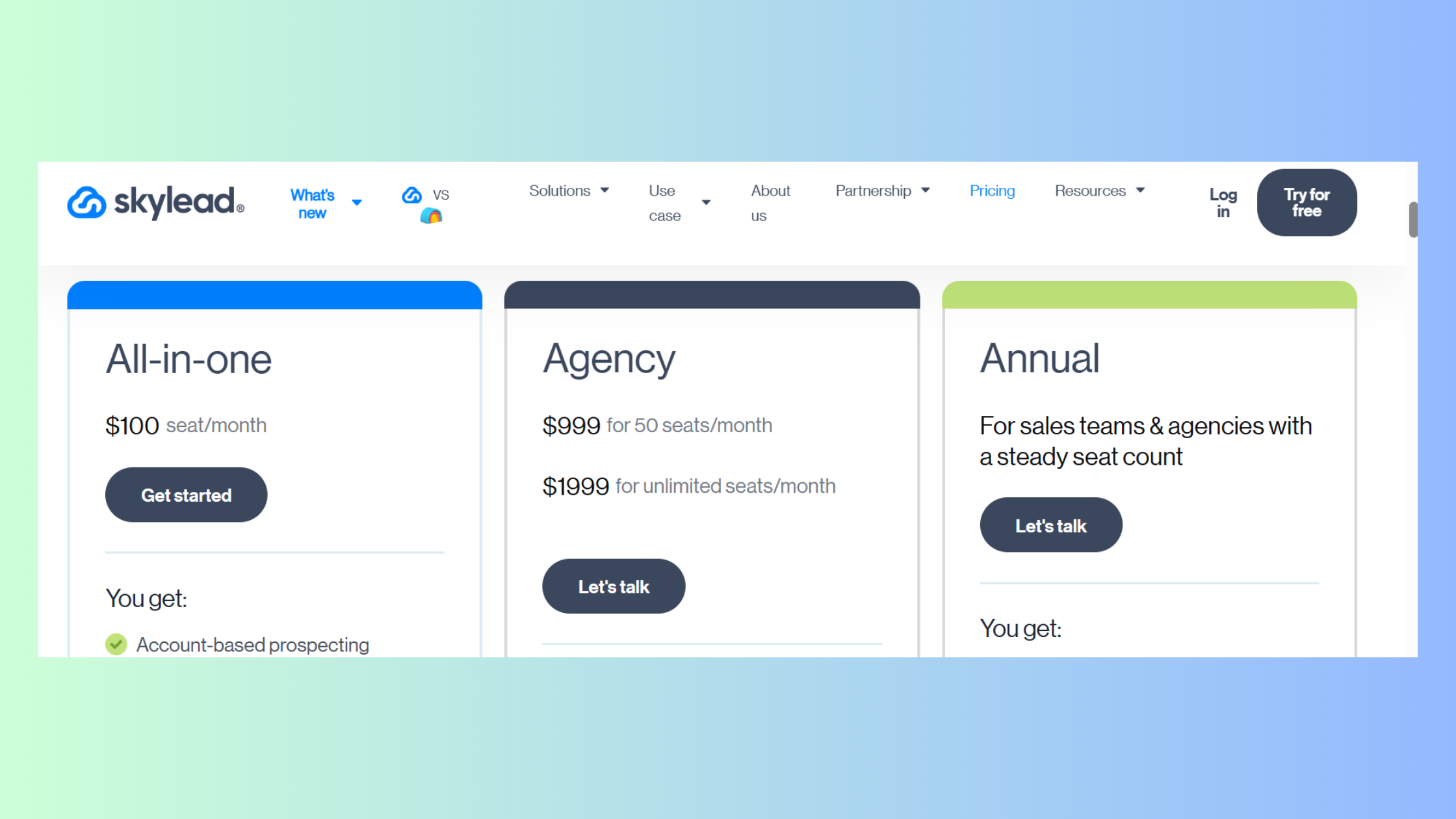
On Skylead pricing plans 2026: Skylead operates on a per-seat monthly model, starting around $100 per seat. Enterprise pricing for larger teams is negotiated directly. The cost-to-value calculation changes significantly at three or more seats — at that point, the consolidated LinkedIn-plus-email workflow justifies the price versus managing two separate tools. For solo operators, cheaper alternatives or manual outreach may deliver better ROI. You can compare how these tools stack against broader sales engagement platforms in our Mailshake alternatives guide and our Salesflow LinkedIn outreach review.
According to Autobound's AI SDR Tools Guide (2026), AI SDR tools churn at 50–70% annually — meaning half of teams who try them switch tools within a year. This means picking the right tool matters less than getting the fundamentals right: clean data, defined ICP, and human-in-the-loop sales automation built into the workflow from day one.
What consistently separates outbound teams that scale with AI SDR tools from teams that abandon them after 90 days is not the tool they chose — it's whether they treated the tool as a system to manage or a button to press.
✓ The AI SDR Readiness Checklist
- ☐ICP defined with at least 4 firmographic and 2 behavioural criteria
- ☐Lead list pre-verified and enriched before import
- ☐LinkedIn account has 90+ days of organic activity before automation begins
- ☐Sequence warm-up plan set (ramp over 2–3 weeks, not day one max volume)
- ☐Human assigned to handle and qualify replies — no fully autonomous reply flow
- ☐Weekly sequence review cadence scheduled to iterate based on reply data
- ☐CRM attribution mapping configured before first sequence launch
For teams looking to extend their visibility beyond direct outreach, consider pairing Skylead's connection sequences with a LinkedIn content strategy. Tools like LinkedIn analytics and engagement platforms help ensure your profile and content are working as a warm signal for the prospects your sequences are reaching. See also our Salesflare review for CRM-native outreach strategy context.
Build the LinkedIn presence your outreach sequences deserve
HyperClapper's real engagement channels boost your post visibility so prospects already know who you are before your first connection request lands.
Start with HyperClapperFrequently Asked Questions About Skylead and AI SDR Tools
What is an AI SDR tool?
An AI SDR tool is software that automates the prospecting, outreach, and follow-up tasks a human Sales Development Representative would otherwise handle manually — including connection requests, cold emails, and multi-step sequences. It does not replace the strategy or the human judgment required to qualify and convert replies into meetings.
What are the top AI SDR tools?
The most widely evaluated AI SDR tools in 2026 include Skylead, Lemlist, Expandi, Apollo.io, and AiSDR, each suited to different use cases. According to Fundraise Insider's tested ranking (2026), Apollo.io leads for combined data and sequencing, while Skylead leads for multi-channel LinkedIn-plus-email workflows.
What are the best AI SDR tools in 2026?
The best ai sdr tools in 2026 depend heavily on your primary channel. For LinkedIn-first outreach: Skylead or Expandi. For email-first: Lemlist or Apollo. For intent-driven autonomous prospecting: AiSDR. There is no single winner — the right ai sdr platform is the one that maps to your team's primary channel, data infrastructure, and human review capacity.
Is AI replacing SDRs?
No — AI is replacing the repetitive execution tasks within the SDR role, not the role itself. Qualification conversations, relationship building, and complex objection handling remain human-led. What changes is that one SDR with the right AI SDR tools can cover the prospecting volume that previously required three to four people doing manual outreach.
Is Skylead a good AI SDR tool for outbound sales teams in 2026?
Skylead is a solid choice for AI SDR tools for B2B sales when your team already has clean lead lists, a defined ICP, and a human-in-the-loop follow-up process. It underperforms for teams without these inputs. The tool itself is well-built; the risk is in treating it as a pipeline generator rather than an outreach executor.
How does Skylead's AI personalize sales outreach messages automatically?
Skylead personalises outreach using dynamic variables mapped to lead data fields — name, company, title, industry, and custom fields you define at import. Image personalisation (inserting a prospect's name or logo into a graphic) is also available. True intent-based sequence personalization requires you to segment lists by trigger or signal before import — the platform routes messaging based on the data you provide, not signals it detects independently.
What are the biggest limitations of using Skylead for cold outreach?
The biggest limitations are lead data dependency, LinkedIn account risk, and shallow native analytics. Skylead requires pre-enriched, pre-verified leads — it has no built-in prospecting database. LinkedIn restrictions are a genuine risk at high volumes. And attributing specific meetings to specific sequence steps requires CRM configuration that many teams skip, leaving their outbound pipeline attribution incomplete.
Which is better for LinkedIn outreach — Skylead or a dedicated sales engagement platform?
Skylead wins for multi-channel LinkedIn-plus-email in a single workflow at a lower price point than enterprise sales engagement platforms like Outreach.io or Salesloft. Dedicated sales engagement platforms win for deep CRM integration, team-level reporting, and compliance controls at larger team sizes. For teams under 10 SDRs, Skylead's value-to-cost ratio is typically stronger. For artisan ai sdr use cases where highly individualised, research-intensive outreach is the priority, a lighter tool or manual-first approach may outperform any automation platform.
What consistently separates ai sdr companies that generate real pipeline from those that automate noise is not their tool choice — it's whether they built a system around the tool or simply switched it on and waited. Skylead is a capable platform for how to automate cold outreach at scale, but it rewards the teams who invest in the operational setup, not just the subscription.



