A LinkedIn engagement pod is a coordinated group where members like and comment on each other's posts to trigger LinkedIn's early-signal ranking window — the critical first 60–90 minutes after a post goes live. When done with real users and niche-relevant content, pods can increase initial impressions by 30–50%, according to Hooktide (2026). The challenge most professionals face isn't finding pods — it's finding ones that build credibility rather than destroy it. A pattern consistently observed across high-performing LinkedIn accounts is that the best results come not from pods alone, but from pairing them with a disciplined outreach tool like Salesrobot, creating a two-layer visibility strategy that warms prospects before a cold message ever lands.
- LinkedIn engagement pods trigger LinkedIn's algorithm by generating early likes and comments — but quality and user authenticity determine whether they help or hurt.
- Salesrobot + HyperClapper is a two-tool stack: Salesrobot handles DM outreach; HyperClapper handles content amplification through real engagement channels.
- Prospects who have already seen your posts engage convert at meaningfully higher rates when your connection request arrives — social proof velocity is real.
- LinkedIn's 2026 algorithm is smarter at detecting bot-driven engagement; real-user pods with meaningful comments are safer and more durable than legacy pod tools.
- The most counterintuitive finding: posting before outreach — not after — is what separates accounts with strong reply rates from those that plateau.
- What Are LinkedIn Engagement Pods and How Do They Work in 2026?
- Salesrobot + HyperClapper: How the LinkedIn Automation and Engagement Pod Stack Works Together
- Benefits, Risks, and the LinkedIn Terms of Service Reality Check
- Choosing Your Tools: Salesrobot, HyperClapper, and the Alternatives
- LinkedIn Engagement Pod Strategy for Lead Generation: Step-by-Step
- Frequently Asked Questions About LinkedIn Engagement Pods
What Are LinkedIn Engagement Pods and How Do They Work in 2026?
LinkedIn engagement pods are coordinated groups where members systematically engage with each other's posts — liking, commenting, and sometimes sharing — within a short window after publication. The mechanism matters: LinkedIn's algorithm uses LinkedIn algorithm dwell time (how long people read your post before scrolling), first-degree connection signals (engagement from people connected to you carries more weight), and social proof velocity (the speed at which early engagement accumulates) to decide whether to push a post to a broader audience. Pods hack this early-signal window deliberately.
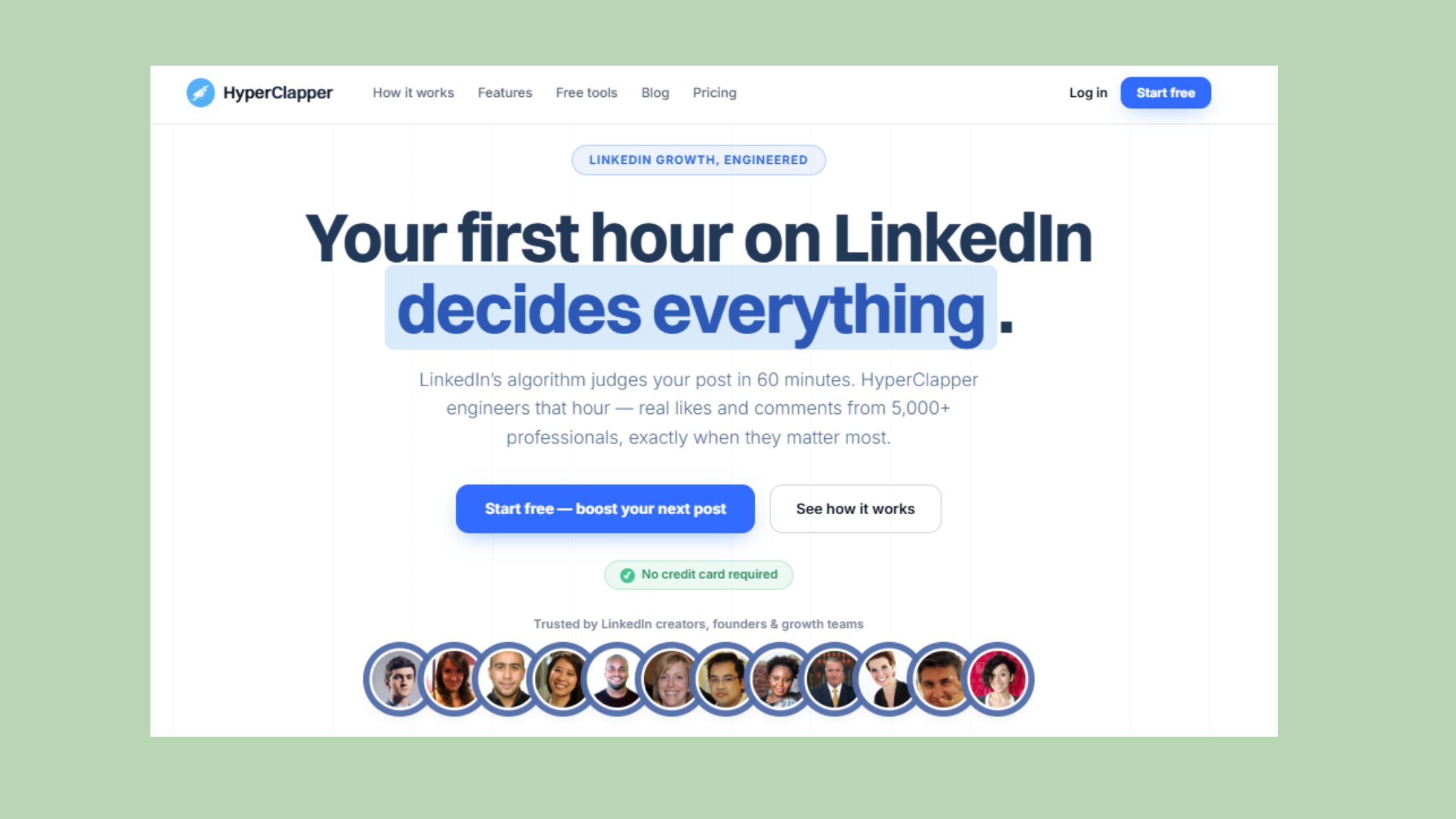
HyperClapper structures this as channels — each channel representing a pool of approximately 50 real users who engage with submitted posts. Submit to two channels and you reach roughly 100 possible real engagements; three channels, around 150. Critically, these are real LinkedIn users, not bots or fake accounts — which is exactly what separates legitimate pod tools from the comment-farming groups that get accounts flagged.
According to Digital Applied (2026), LinkedIn's algorithm now penalises engagement bait — generic comments like "Great post!" that add no conversational depth. This is the core reason most legacy pod tools are losing effectiveness: they optimise for comment volume, not comment quality.
Spammy Pods vs. Legitimate Engagement Communities: How to Tell the Difference
The most common failure mode among professionals trying pods for the first time is joining a generic pod — often found in a random Slack or Facebook group — where members drop low-effort comments on posts completely outside their niche. This damages credibility faster than it builds it.
Legitimate engagement communities have three distinguishing characteristics:
- Real, verified users — no fake profiles or bot accounts doing the engaging
- Niche-relevant matching — a B2B SaaS founder's post gets comments from people who plausibly care about B2B SaaS, not random accounts from unrelated industries
- Content moderation — the platform screens for posts that could generate reputational risk (HyperClapper's Content Guard does this automatically)
The question isn't whether engagement pods work in 2026 — it's whether the pod you're in uses real users, relevant context, and meaningful comments. The algorithm now knows the difference.
Understanding what separates a useful pod from a harmful one is the foundation — next comes understanding how to pair pods with outreach automation to close the loop on lead generation.
Salesrobot + HyperClapper: How the LinkedIn Automation and Engagement Pod Stack Works Together
The LinkedIn outreach automation and engagement pods pairing works because it solves two separate problems simultaneously: Salesrobot automates connection requests and follow-up DM sequences, while HyperClapper boosts post visibility so that prospects already recognise your name before the cold message lands. Most sales teams run one or the other. The ones consistently seeing higher reply rates run both — in the right sequence.
The workflow looks like this:
- Publish a value-led post (thought leadership, case study, insight)
- Submit the post to relevant HyperClapper channels — engagement fires within the first 60 minutes
- The post reaches second and third-degree connections organically, including target prospects
- Within 24–48 hours, Salesrobot sends a connection request to those same prospects
- The prospect recognises the name, accepts, and the DM sequence begins from a position of familiarity — not cold interruption
This is the practical answer to how to combine LinkedIn outreach with engagement pods: the content funnel (HyperClapper) warms the audience; the outreach funnel (Salesrobot) converts it. Running them in parallel, timed deliberately, is the LinkedIn social selling automation stack 2025 approach that the most effective B2B teams have landed on.
How to Warm Up Your LinkedIn Profile Before Launching an Outreach Campaign
Knowing how to warm up your LinkedIn profile before outreach campaign launches is the step most guides skip — and it's where the biggest gains are hidden. A profile with recent post engagement, comment activity, and a visible content history is treated very differently by both LinkedIn's algorithm and the humans receiving your connection requests.
- Spend 2–3 weeks publishing consistently before activating any outreach sequences
- Submit those posts to HyperClapper channels to build an engagement history on your profile
- Use HyperClapper's AI Replies to sustain comment threads — LinkedIn rewards meaningful conversations, not just like counts
- Check your Social Selling Index (SSI) score as a proxy — warmed-up profiles typically see SSI improvements that correlate with better outreach acceptance rates
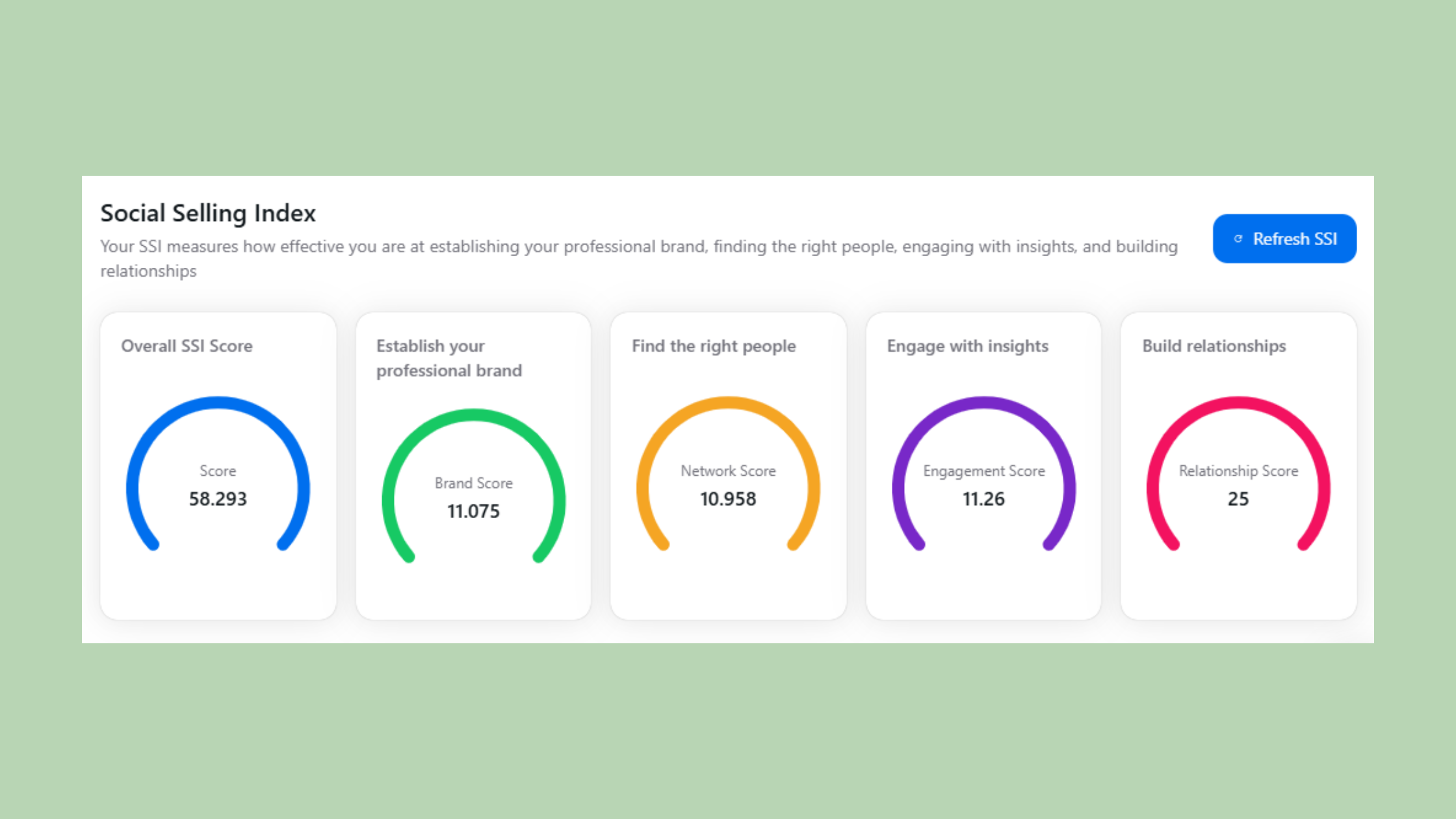
Social Selling Index (SSI)
Creators who skip this warm-up step typically find their Salesrobot sequences underperform significantly — not because the tool is wrong, but because the profile looks inactive to anyone who checks before accepting a connection request.
Benefits, Risks, and the LinkedIn Terms of Service Reality Check
The genuine benefits of combining LinkedIn engagement pods with outreach automation are measurable: organic reach amplification through the algorithm's early-signal window, stronger personal brand recognition among target prospects, higher outreach response rates, and faster pipeline velocity for B2B sales teams. According to ConnectSafely (2026), the average LinkedIn engagement rate reached 3.85% in 2026 — up 44% year-over-year — meaning the platform's organic potential is genuinely expanding for those using it correctly.
The honest risk picture is more nuanced. LinkedIn's 2026 algorithm update — as flagged by LinkedIn's own communications — has made it significantly smarter at identifying artificial engagement patterns. Pods using bot accounts, fake profiles, or generic comment templates now carry real account-restriction risk.
Common Mistakes That Get LinkedIn Accounts Restricted
Teams that push too hard on automation volume — without the guardrails that tools like HyperClapper and a well-configured Salesrobot sequence provide — consistently see the same outcome: temporary restriction, followed by permanent throttling of organic reach.
The most common mistakes:
- Sending too many connection requests too fast — Salesrobot's human-like pacing is designed to prevent this, but manual override of its limits creates risk
- Using low-quality pod comments — "Great post!" style comments are now a negative signal, not a neutral one
- Running outreach and engagement automation from the same session simultaneously — creates activity spikes that LinkedIn's systems flag
- Ignoring content moderation — posting on sensitive topics (politics, controversy) while in an engagement pod accelerates negative distribution
Addressing does LinkedIn automation violate terms of service directly: yes, technically both outreach automation and engagement pods exist in a gray zone relative to LinkedIn's ToS. Safety depends on activity limits, human-like pacing, and real-user engagement. HyperClapper's design — real users, content moderation, no scraping, no bot accounts — places it significantly lower on the risk spectrum than aggressive automation tools.
Want engagement that actually survives LinkedIn's 2026 algorithm?
HyperClapper connects your posts with real users in niche-relevant channels — AI-powered replies included.
Explore HyperClapperChoosing Your Tools: Salesrobot, HyperClapper, and the Alternatives
The best LinkedIn automation tools for B2B outreach 2025 conversation usually collapses into a single question: Salesrobot or Expandi? For most teams, Salesrobot vs Expandi LinkedIn automation comes down to this: Salesrobot wins on AI-personalisation at the message level and a simpler campaign setup — better for teams that want smart sequencing without a steep learning curve. Expandi wins on advanced campaign branching and conditional logic — better for agencies running complex multi-touch sequences across many client accounts. Neither handles content amplification well. That's not what they're built for.
This is why the LinkedIn social selling automation stack 2026 concept matters: one tool should own outreach (DMs, connection requests, follow-ups), and a separate, purpose-built tool should own content amplification (engagement pods, AI replies, post boosting). Trying to do both in one tool — which some all-in-one tools attempt — typically means doing neither well.
HyperClapper LinkedIn Pod Tool Review: Key Features That Matter for Lead Generation
For anyone evaluating a Salesrobot alternative with engagement features: the honest answer is that no outreach tool has genuinely cracked engagement pod quality. Compared to LinkBoost, Lempod, and Podawaa, HyperClapper's key differentiators for lead generation are:
- Real users in channels — not a network of automated accounts that LinkedIn's systems increasingly flag
- AI Replies + Feed More — keeps post conversations alive for days, extending the organic discovery window for prospects browsing their feeds
- Company Page Boosting — lets sales teams amplify brand-level posts alongside personal profile posts, creating both personal brand and company brand recognition simultaneously
- Content Guard — automatic moderation that prevents sensitive content from being submitted to channels, protecting account health
On HyperClapper pricing and plans: the platform uses a channel-based model where you choose how many channels (pools of ~50 real engagements each) to activate per post, with AI reply add-ons available. Visit app.hyperclapper.com for current plan details — pricing is structured to scale with usage rather than locking teams into fixed seat costs.
%2520(1).png) hyperclapper.com
hyperclapper.comLinkedIn Engagement Pod Strategy for Lead Generation: Step-by-Step
After observing this across dozens of B2B sales and marketing workflows, the LinkedIn engagement pod strategy for lead generation that works consistently is a four-step sequence — not a parallel scramble.
✓ The LinkedIn Outreach + Pods Launch Checklist
- ☐Publish 2–3 value-led posts per week for at least 2 weeks before launching any Salesrobot outreach sequence
- ☐Submit each post to relevant HyperClapper channels immediately after publishing
- ☐Activate HyperClapper's AI Replies to sustain comment threads beyond the first 24 hours
- ☐Build targeted Salesrobot prospect lists segmented by the same ICP you're posting content for
- ☐Time connection request sends to fire within 24–48 hours of a well-performing boosted post
- ☐Track outreach reply rate alongside post engagement metrics weekly — correlate and double down on what converts
Step 1 — Content before outreach. Publish 2–3 value-led posts per week and submit each to relevant HyperClapper channels. This builds social proof velocity — the visible engagement history on your profile that prospects check before accepting a connection request. See also: cold LinkedIn outreach without automation risk for content strategies that work before any tool is involved.
Step 2 — Segment and sequence. Use Salesrobot to build targeted prospect lists, then time connection request sends to follow within 24–48 hours of a post that performed well. The sequence matters. In practice, why LinkedIn outreach response rates are low for most teams traces back to this: they send cold messages from profiles with no visible content activity. The prospect checks the profile, sees nothing, and ignores the request.
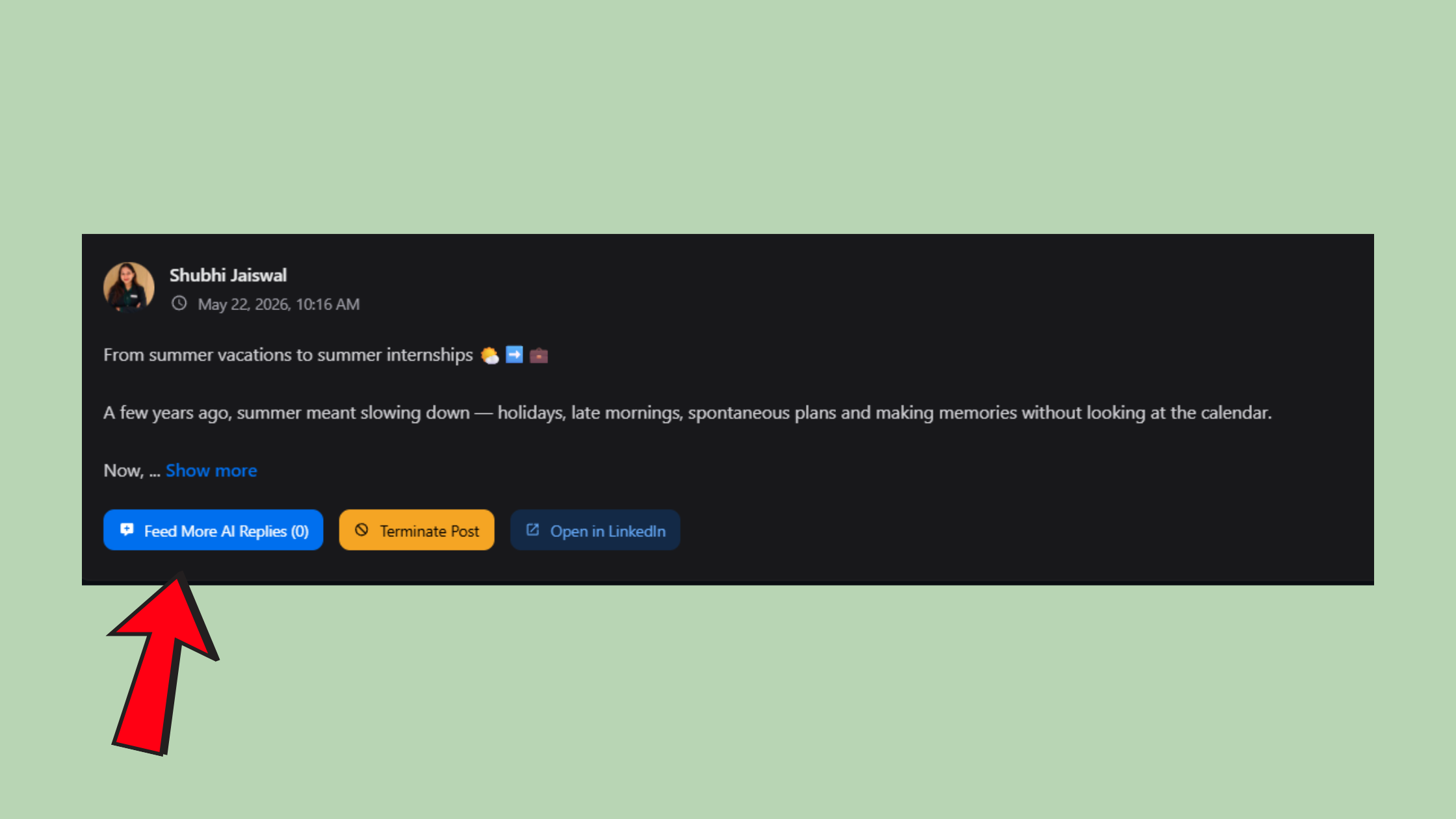
Step 3 — Sustain with AI replies. Use HyperClapper's Feed More AI Replies feature to keep post conversations alive past the 48-hour window. LinkedIn rewards threads with ongoing depth — a post that continues generating comments on day three reaches a new cohort of prospects organically. This extends the visibility window without requiring new posts.
Step 4 — Measure and iterate. Track outreach response rate alongside post engagement metrics. What consistently separates teams that scale this system from those that plateau is the measurement loop — identifying which content themes correlate with higher reply rates, then concentrating content production there. For a broader look at how this fits into a full LinkedIn tools automation outreach stack, the linked guide covers the full toolkit perspective.
Notably, engagement pods instagram communities operate on a similar early-signal logic — coordinated engagement within the first hour of posting to trigger algorithmic amplification — but LinkedIn's professional context and B2B audience make the stakes considerably higher. A low-quality comment on an Instagram post is forgettable; the same comment from a fake-looking account on a LinkedIn post in front of your prospects damages professional credibility directly.
Ready to build your LinkedIn outreach and engagement stack?
Start with HyperClapper's channels to build your social proof foundation — then layer Salesrobot sequences on top of a warm, visible profile.
Get Started with HyperClapperFrequently Asked Questions About LinkedIn Engagement Pods
What are engagement pods on LinkedIn?
LinkedIn engagement pods are coordinated groups where members like and comment on each other's posts shortly after publishing to trigger LinkedIn's algorithmic early-signal window. The goal is to generate enough initial engagement to push a post into broader distribution. Quality pods use real, niche-relevant users; low-quality pods rely on bots or generic comments that now actively suppress reach.
How to find LinkedIn engagement pods?
The most reliable way to find legitimate LinkedIn engagement pods is through purpose-built platforms like HyperClapper, which pre-vets users and organises them into niche-relevant channels. Avoid generic Slack or Facebook group pods — they typically produce low-quality comments that LinkedIn's 2026 algorithm now penalises. Check the HyperClapper vs LinkBoost comparison for a structured evaluation.
Can I use Salesrobot and HyperClapper together without getting banned on LinkedIn?
Yes — when used within their recommended activity limits and on separate operational tracks. The key is keeping HyperClapper's post engagement activity and Salesrobot's connection/DM actions from running simultaneously in the same session. Both tools are designed with human-like pacing; the risk rises only when users override those limits or stack too many automated actions at once. See this comparison for more on Salesrobot's safety architecture.
How do LinkedIn engagement pods improve outreach campaign results?
Engagement pods warm up your profile's social proof before a cold message arrives. When a prospect receives a Salesrobot connection request and visits your profile, they see posts with real likes and comments — not a dormant feed. This recognition effect meaningfully improves acceptance and reply rates. Teams that run content amplification and outreach in sequence consistently see stronger results than those running outreach cold.
Is Salesrobot safe to use for LinkedIn lead generation in 2026?
Salesrobot is designed with human-like pacing and activity limits that aim to reduce restriction risk — making it one of the safer outreach automation options available. That said, no outreach automation tool is completely without risk relative to LinkedIn's ToS. Safety depends on respecting daily limits, warming up the account with content activity first, and not stacking automation on a brand-new or inactive profile. For alternatives, see sales automation outreach tool alternatives.
What tools do top B2B sales teams use to automate LinkedIn prospecting and engagement?
The most effective B2B sales teams typically run a two-tool stack: a dedicated outreach automation tool (Salesrobot or Expandi for connection requests and DM sequences) paired with a dedicated engagement amplification tool (HyperClapper for post boosting, AI replies, and channel-based engagement). This separation — one tool per function — outperforms all-in-one tools that attempt both but excel at neither.
What is the best way to automate LinkedIn outreach and boost post engagement at the same time?
Run them in sequence, not simultaneously. Boost posts via HyperClapper channels for 2–3 weeks to build visible engagement history on your profile, then activate Salesrobot outreach sequences targeting the same ICP your content addresses. Time connection requests to follow within 48 hours of a high-performing post. This sequencing — content proof first, outreach second — is the approach that consistently converts at higher rates than cold outreach from inactive profiles. For a full walkthrough, see the LinkedIn tools and outreach automation guide.



