Regie AI Review 2026: Is It Worth It for LinkedIn Growth?
An honest Regie AI review 2026 covering pricing, LinkedIn fit, pros and cons, and top alternatives — so you know exactly what you're paying for before signing.
📅 ⏱ 24 min read📝 ~4700 words
A pattern observed across hundreds of AI sales tool evaluations is that the tools generating the most confusion are not the bad ones — they are the misaligned ones. Regie AI (stylised as Regie.ai) is an AI sales engagement platform built to help SDR teams write personalised cold outreach sequences at scale. It does that job well. The problem surfaces when LinkedIn creators, coaches, or founders stumble across it while searching for AI tools for LinkedIn growth — and discover only after signing up that the tool is solving a fundamentally different problem. This Regie AI review 2026 separates those two use cases clearly, benchmarks Regie AI against direct competitors, and gives you a verdict grounded in actual platform behaviour — not promotional copy.
Key Takeaways
Who it's for: B2B SDR teams, BDRs, and sales ops leaders running outbound email and LinkedIn cadences — not creators or personal brand builders.
Core strength: AI-generated, personalised cold outreach sequences across email and LinkedIn InMail — with genuine SDR productivity gains observed on multi-seat deployments.
Critical gap: No organic LinkedIn content creation, no post scheduling, no engagement analytics, no follower growth features — zero support for audience building.
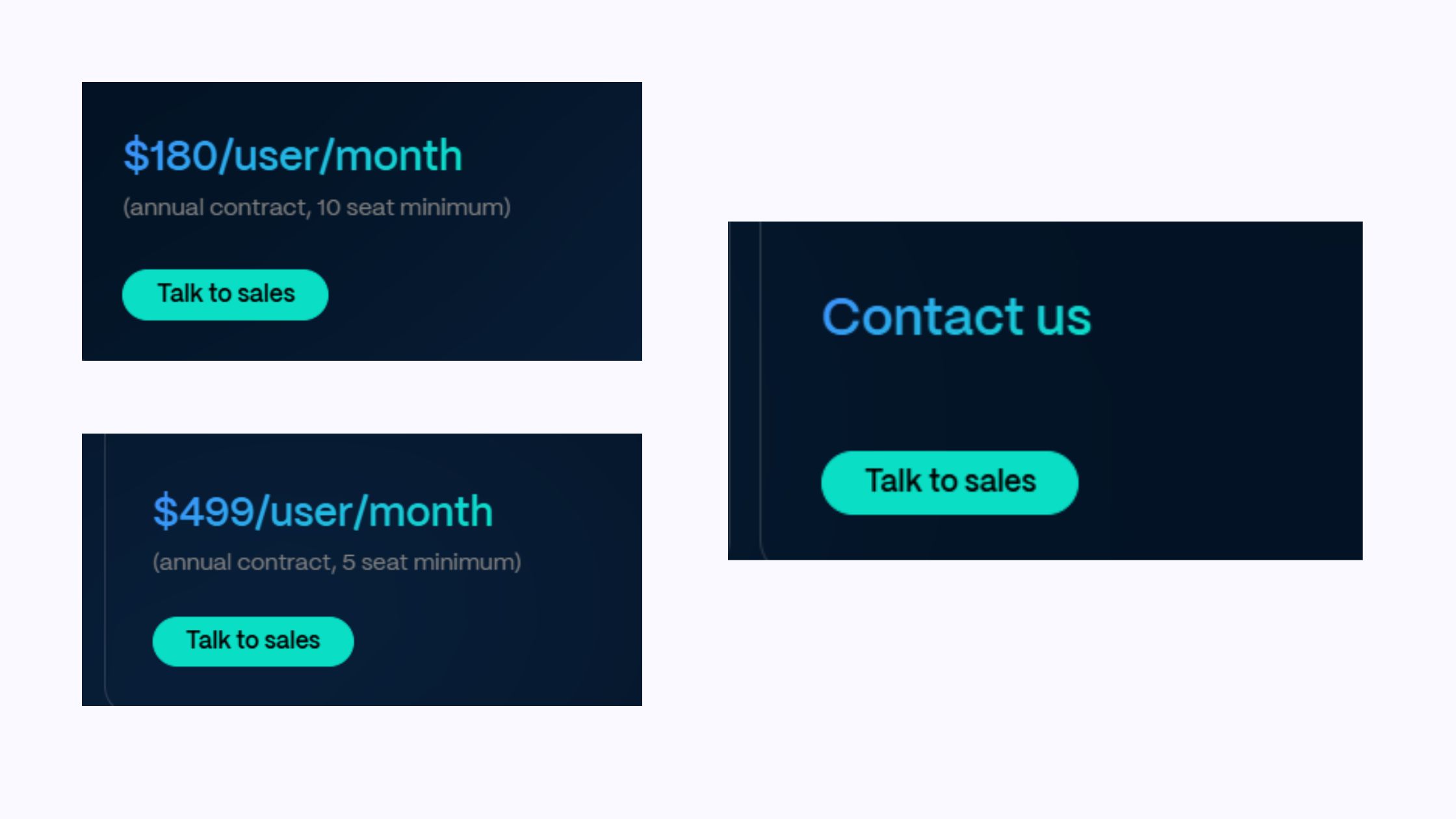
Pricing reality: Starts at roughly $180/user/month, with enterprise tiers reaching $499+/user/month — opaque, demo-gated, and hard to justify for solo users.
Most counterintuitive finding: Regie AI's biggest competitor for LinkedIn-focused buyers is not Apollo or Outreach — it's purpose-built creator tools like Taplio and engagement platforms like HyperClapper, because those actually solve the LinkedIn growth problem Regie AI doesn't touch.
Bottom line: Strong for outbound sales workflows. The wrong tool entirely for organic LinkedIn audience growth in 2026.
Reply rates for AI-personalised outreach vs 3–5% generic average
100+
GTM team hours saved per month, per ROI study
What Is Regie AI and What Does It Actually Do?
Regie AI
Regie AI is an AI sales engagement automation platform — software that generates personalised cold outreach sequences across email and LinkedIn InMail so sales development representatives spend less time writing and more time selling. It is not a LinkedIn content creation tool, a post scheduler, or a follower growth platform. That distinction matters enormously if you are evaluating it from a LinkedIn growth perspective.
The core workflow is built around sequences: a multi-step outreach cadence combining cold emails, LinkedIn connection requests, InMail messages, and call prompts. The AI generates the copy for each step, personalised to the prospect's role, company, and recent activity. Cold outreach personalisation at scale is the central value proposition — taking what used to require an SDR to spend 20-40 minutes per prospect and compressing it to minutes.
Regie AI Features 2026: What's Inside the Platform
The Regie AI features 2026 set centres on three pillars. First, the AI Sequence Builder: drag-and-drop cadence design with AI-generated copy at each step, including subject line variants, email bodies, and LinkedIn message scripts. Second, the Prospecting Agent: an autonomous AI that researches accounts, identifies relevant prospects, and drafts personalised outreach without manual input. Third, the Content Library: reusable, on-brand messaging templates that sales teams can share, edit, and deploy at scale.
Supporting features include:
CRM sync with Salesforce and HubSpot for two-way data flow
Sales engagement platform integrations with Outreach, Salesloft, and Apollo
Persona and ICP configuration to tune AI output to specific buyer profiles
Analytics dashboard showing sequence performance, open rates, and reply tracking
LinkedIn InMail drafting as a sequence channel — but not native LinkedIn posting
How Does Regie AI Work? The Workflow Explained
The workflow runs in four stages. You define your ICP and personas, connect your CRM and prospecting data source, configure a sequence template in the builder, and let the AI generate copy for each outreach step. The output lands in your connected sales engagement platform or email client. Reps review, tweak, and send. The system learns from reply data to improve future outputs over time.
What this workflow is not: it does not draft LinkedIn feed posts, it does not schedule content to your profile, and it does not help you grow an organic audience through thought leadership. Those are separate categories of LinkedIn tool entirely.
Regie AI Pricing 2026: Plans, Costs, and the Feasibility Problem
Regie AI Pricing 2026
Regie AI pricing is not publicly listed in the way most SaaS tools display it — you must book a demo to receive a formal quote. That alone signals enterprise positioning. Based on data from Landbase's Regie AI pricing breakdown (2026), Regie AI pricing 2026 starts at approximately $180 per user per month for the entry-level plan, with the Force Multiplier Rep tier priced at $499 per user per month. Custom enterprise pricing — branded as RegieOne — is available for larger deployments.
$499/user/mo
Regie AI's Force Multiplier Rep tier — the price tier where most of the advanced AI features live
According to MarketBetter's Regie AI analysis, annual contract costs for a small team are frequently cited in the $35,000/year range when fully loaded — making it one of the more expensive AI sales tools on the market. In practice, this means a three-person SDR team could be spending $15,000–$18,000 per year at entry tier, or over $50,000 at the premium tier. That is a meaningful budget commitment for outcomes that, as community discussions repeatedly flag, are not guaranteed.
Is There a Free Trial for Regie AI?
There is no confirmed public free tier or self-serve freemium plan for Regie AI in 2026. A limited trial may be available on request through the sales process, but it is not a no-credit-card, instant-access signup like many competing tools offer. This is a meaningful friction point: teams cannot explore the platform independently before committing to a sales conversation, which compresses the evaluation window and hands evaluation control to the vendor rather than the buyer.
⚠️
Warning:Regie AI's demo-gated pricing model means you may be 2-3 weeks into a sales process before you see the actual cost. Clarify total annual contract value, seat minimums, and cancellation terms in the very first call — not the last one.
For solo creators or small teams, the pricing model is not feasible relative to purpose-built LinkedIn tools. A LinkedIn creator can access Taplio's full feature set for roughly $65–$99/month — less than half of Regie AI's entry-tier per-seat cost — and get far more relevant functionality for feed content and audience growth.
Regie AI Pros and Cons: An Honest Breakdown
The Regie AI pros and cons split cleanly along use case lines. For outbound sales teams, the positives are real and measurable. For anyone approaching from a LinkedIn growth angle, the cons dominate.
What works well:
AI sequence quality: The copy output is genuinely personalised — better than most template libraries and noticeably better than GPT-4 prompting without a sales-specific layer on top.
SDR productivity benchmarks: According to a GTM Partners ROI study cited on PRNewswire, teams using Regie AI saved 100+ hours per month in GTM productivity, and positive email reply sentiment improved from 35% to 48% over a three-month period. In practice, this translates to faster ramp times for new SDRs and more consistent sequence quality across teams.
Multi-channel cadence: Email, LinkedIn InMail, and call steps in one workflow — this reduces the tool-switching overhead that fragments most SDR workflows.
CRM integration depth: Salesforce and HubSpot integrations have matured significantly and support two-way sync, reducing duplicate data entry.
What doesn't work as advertised:
Booked meetings are not guaranteed by the tool: Regie AI improves sequence quality and consistency, but reply rates and pipeline conversion still depend heavily on targeting, offer strength, and SDR follow-through. The most common G2 complaint pattern is: "great copy, still not enough meetings."
No organic LinkedIn support: No post drafting, no scheduling, no analytics on feed content performance.
Onboarding is vendor-dependent: There is no self-serve path. Your results during the first 30 days depend significantly on CSM quality.
Pricing scales painfully: At $499/user/month for the full-featured tier, a five-person SDR team is spending $30,000/year before CRM and data enrichment costs.
3 Lesser-Known Limitations Worth Knowing Before You Buy
Beyond the surface-level cons, three limitations appear consistently in user discussions but rarely make it into formal reviews:
Data quality dependency: Regie AI's personalisation is only as good as the prospect data feeding it. Teams using stale or unverified contact lists see immediate quality degradation — the AI hallucinates company details if source data is thin.
Contract terms and cancellation: Annual contracts are standard, and mid-term cancellation options are limited. Multiple review threads flag difficulty in exiting contracts when results underwhelm. Clarify the cancellation policy before signing.
Customer support response times: Support quality is rated lower than platform capability on G2, with several reviews citing slow response to technical issues. Enterprise tiers include dedicated CSM support; lower tiers rely on ticketing.
Want real LinkedIn post engagement — without the sales-tool price tag?
HyperClapper connects your posts to real engagement channels so your content actually gets seen — no enterprise contract required.
Does Regie AI Support LinkedIn Growth — Or Is That the Wrong Question?
Regie AI does support LinkedIn outreach automation as a channel within a sales cadence — specifically connection requests and InMail messages sent to a defined prospect list as part of a multi-touch sequence. That is a real, functional feature. But it has nothing to do with LinkedIn audience growth in the creator sense.
The distinction that most buyers miss: LinkedIn outreach automation targets specific named prospects in your CRM. LinkedIn audience growth targets an undefined future audience through content. These are not the same channel, not the same strategy, and not served by the same tools.
What separates top-performing LinkedIn creators from those who plateau is not just content quality — it is the combination of content quality, post engagement velocity in the first 60 minutes, and sustained conversation depth. Regie AI contributes to none of these. It does not help you write better LinkedIn posts for your feed, does not boost engagement on content you publish, and does not give you analytics on how your personal brand content is performing.
Regie AI LinkedIn Content Generation: What It Can and Can't Do
The phrase "Regie AI LinkedIn content generation" is where significant misalignment hides. Regie AI can generate LinkedIn InMail copy and connection request messages — both of which are outreach tools, not content tools. What it cannot do:
Draft or schedule LinkedIn feed posts for your profile or company page
Generate carousel content, text posts, or native document posts
Suggest post topics based on trending content in your niche
Track engagement, follower growth, or reach on your content
Surface commenting or engagement opportunities from your network
The sales sequence quality vs volume trade-off that Regie AI is built around — targeted messages to fewer, more relevant people — is fundamentally different from the content distribution logic that drives LinkedIn audience growth, where broader reach and engagement velocity drive algorithmic amplification.
This distinction is what makes evaluating Regie AI for LinkedIn genuinely difficult: it touches LinkedIn, but it serves outbound pipeline goals, not inbound visibility goals.
Who Is Regie AI Best For in 2026?
Teams that get strong ROI from Regie AI consistently share three characteristics: they have a well-defined ICP, they already have an outbound motion in place, and they have at least 3–5 active SDRs who will use the platform daily. Without all three, the platform's cost is hard to justify.
Regie AI is purpose-built for:
B2B SDR and BDR teams running high-volume outbound email and LinkedIn InMail campaigns
Sales ops leaders who need consistent, on-brand messaging across a distributed rep team
Revenue teams at mid-market to enterprise companies with defined pipeline targets and a CRM-native workflow
Companies using Salesforce, HubSpot, Outreach, or Salesloft who want an AI layer on top of their existing stack
Regie AI is not built for:
LinkedIn creators building a personal brand through organic content
Founders, coaches, or consultants trying to grow LinkedIn followers
Recruiters or HR professionals building a talent brand on LinkedIn
Solo professionals or small teams whose primary growth channel is feed content, not cold outreach
Anyone looking for AI tools for LinkedIn growth in the audience-building sense
The most common failure mode here is teams purchasing Regie AI for a hybrid goal — some outbound sales, some LinkedIn brand building — and finding it excels at one while providing zero value for the other. AI sales engagement automation and LinkedIn audience growth require separate, purpose-specific tooling.
Regie AI vs Taplio and Other AI Tools for LinkedIn Growth 2026
Head-to-head, Regie AI vs Taplio is not a close call for LinkedIn content purposes. Taplio is purpose-built for LinkedIn creators — it generates post ideas, drafts long-form and short-form content, schedules directly to LinkedIn, tracks post performance, and surfaces engagement opportunities from your network. Regie AI does none of that. For LinkedIn feed content and audience building, Taplio wins outright at a fraction of the price.
How Does Regie AI Compare to Apollo.io, Outreach, and Salesloft?
Within its actual category — outbound sales engagement — Regie AI's most meaningful competitors are Apollo.io, Outreach, and Salesloft. The comparison is more nuanced here.
vs Apollo.io: Apollo offers a free tier and self-serve onboarding, making it far more accessible for teams evaluating AI-assisted outreach before committing budget. Apollo's AI writing features have matured significantly in 2026. For smaller teams or those newer to AI outreach, Apollo typically offers better value. Regie AI edges ahead on sequence personalisation depth for high-volume SDR teams with clean data.
vs Outreach and Salesloft: These are sales engagement platforms that Regie AI is often used with, not instead of — they handle sequence execution and rep management while Regie AI handles content generation. Positioning them as direct competitors misunderstands the stack. Many teams run Regie AI as the AI content layer feeding into Outreach or Salesloft for execution.
The honest answer to how Regie AI compares to competitors is: it is a specialised AI content generation layer, not a full sales engagement platform. Framing it as a replacement for Outreach or Apollo is a positioning error that leads to buyer disappointment.
Best Regie AI Alternatives for LinkedIn Growth in 2026
The Regie AI alternatives for LinkedIn that actually solve the right problem depend entirely on which problem you are trying to solve. Most review articles conflate two separate categories — and that is where buyers get misled.
Quick Answer: Best Tool for Your LinkedIn Goal
Best for LinkedIn post creation and scheduling → Taplio — purpose-built content drafting, scheduling, and creator analytics for LinkedIn feed content.
Best for boosting LinkedIn post reach and engagement →HyperClapper — real community engagement channels, AI-powered replies, and post visibility amplification for creators who want their content actually seen.
Best Regie AI alternative for outbound sales sequences → Apollo.io — self-serve, free tier available, strong prospecting + AI sequence writing at lower cost.
Best for autonomous AI SDR → Artisan — AI-native SDR agent for high-volume outbound without manual rep input.
Best for intent-driven outreach → Unify — connects buyer intent signals to outreach triggers for warmer, more timely prospecting.
Why HyperClapper Solves What Regie AI Misses for LinkedIn
The gap Regie AI leaves for LinkedIn-focused users is specific: you can write excellent LinkedIn content and still see almost no reach, because LinkedIn's algorithm weights engagement velocity — how quickly a post collects likes and comments after publishing — as heavily as content quality. Writing a great post and getting 3 reactions is worse for reach than writing a decent post and getting 40 reactions in the first hour.
This is where HyperClapper fills the gap. Rather than replacing your content creation workflow, it amplifies what you have already written. Users add their LinkedIn post to a channel — a group of real, relevant LinkedIn professionals — and receive genuine engagement from real people inside the platform. One channel delivers roughly 50 possible engagements; three channels extend that to approximately 150 real interactions, all from actual profiles, not bots.
The AI replies feature goes further: HyperClapper generates and posts contextually relevant replies to keep the conversation active and increase post depth — which LinkedIn rewards more than basic likes alone. For content creators who invest in writing quality posts but find their reach plateauing, this addresses the specific failure mode Regie AI cannot touch.
For those also considering other LinkedIn engagement tools, our LinkBoost review 2026 covers how the engagement-pod category compares in depth.
💡
Pro Tip:If your LinkedIn strategy involves both outbound prospecting and content-led brand building, the most efficient stack in 2026 is Apollo (outbound) + HyperClapper (content amplification) — not a single platform trying to do both poorly.
Onboarding, Integrations, and the Real Learning Curve
Regie AI onboarding is fully guided — a CSM walks your team through the setup, ICP configuration, and sequence building. That sounds like support; in practice it means your time-to-value is determined by your vendor's calendar availability, not your own. Teams that are ready to move fast often find the guided process slows them down. Those with limited internal resources often find it helpful. Neither outcome is predictable from the outside.
CRM and tech stack integration compatibility is a meaningful Regie AI strength. Salesforce and HubSpot integrations are well-documented and actively maintained. Outreach, Salesloft, and Gong integrations exist but require configuration during onboarding — expect to allocate 2–4 hours of your team's time on integration setup, and plan for troubleshooting if your Salesforce instance has custom objects. LinkedIn integration operates through LinkedIn's API for InMail sending, which means your LinkedIn Sales Navigator subscription status affects what is accessible.
The learning curve is moderate for experienced sales ops teams and steep for those new to AI-assisted tooling. The sequence builder is intuitive once configured, but the AI's output quality is directly proportional to the quality of inputs you provide. Teams that rush through persona definition get generic output and often blame the AI. In most cases, the AI is not the problem — the inputs are.
The most common onboarding mistake: teams skip ICP configuration to "get something sent quickly," receive generic AI output, and conclude the platform doesn't work — when the platform was never given the information it needed to perform.
What separates teams that achieve strong ROI from Regie AI from those that don't is rarely platform competency — it is the discipline to define personas, refine value propositions, and iterate on sequence data over the first 90 days.
Common Mistakes to Avoid When Using Regie AI
Across SDR communities and review platforms, four failure patterns appear with enough regularity to call out directly:
1. Treating it as set-and-forget automation. Regie AI generates the copy, but reps still need to review, personalise the final mile, and follow up strategically. Teams that treat it as fully autonomous automation see flat reply rates. The AI saves writing time — it does not replace rep judgement.
2. Using Regie AI for LinkedIn audience growth. This is the category mismatch covered throughout this review. Using an outbound prospecting tool to try to grow an organic LinkedIn following is like using a hammer to tighten a screw — the tool is real, it just doesn't fit the job.
3. Ignoring AI-generated email deliverability impact. High-volume AI-generated sequences sent from a cold or under-warmed domain will land in spam regardless of copy quality. AI-generated email deliverability impact is a real concern that Regie AI does not solve for you — domain warm-up, DNS configuration (SPF, DKIM, DMARC), and sending volume ramp-up are prerequisites, not optional extras.
4. Skipping data hygiene. Cold outreach personalisation at scale only works with clean, current, and enriched contact data. A wrong job title, a company that changed its product focus six months ago, or a stale email address undermines the personalisation entirely. Budget for a data enrichment tool — ZoomInfo, Clearbit, or Clay — alongside Regie AI, not instead of it.
🔴
Avoid:Launching Regie AI sequences from a domain less than 4 weeks old, or from an email address sending more than 50 cold emails per day in the first week. Poor sending practices get domains blacklisted within days — excellent AI copy cannot save a blacklisted domain.
✓ Regie AI Pre-Launch Readiness Checklist
☐ICP defined with at least 3 specific job titles, 2 industry verticals, and company size ranges
☐Persona pain points documented — at least 3 distinct pain points per buyer persona
☐Sending domain warmed up for minimum 4 weeks before first campaign launch
☐SPF, DKIM, and DMARC records configured and verified for all sending domains
☐Contact list verified and enriched — email validity confirmed, job titles current
☐CRM integration tested — records syncing correctly in both directions before first send
☐Contract terms reviewed — cancellation policy and minimum seat commitment confirmed in writing
Is Regie AI Worth It? Final Verdict for 2026
The question Is Regie AI worth it for LinkedIn? has two completely different answers depending on who is asking.
If you are a B2B sales team running outbound sequences: Yes, Regie AI is worth evaluating seriously — particularly if your team has 5+ reps, a defined ICP, clean data, and an existing CRM workflow. The AI sequence quality is genuinely strong, the productivity gains for SDRs are real, and the GTM Partners ROI data showing 100+ hours saved per month and improved reply sentiment is consistent with what active users report on G2. Budget accordingly, negotiate the contract terms carefully, and commit to the 90-day configuration investment before judging results.
If you are a LinkedIn creator, founder, coach, recruiter, or personal brand builder: No — Regie AI is not solving your problem. You would be paying enterprise prices for outbound sales infrastructure that does not touch the organic feed, follower growth, or content performance metrics you actually care about. The best AI tools for LinkedIn posts 2026 for your use case are Taplio for content creation and HyperClapper for engagement amplification — two tools that together cost less than half of Regie AI's entry tier and address the actual problem directly.
The measurable ROI question the community keeps raising is legitimate: Regie AI improves sequence quality and SDR efficiency, but it does not book meetings on its own. Expect better copy consistency and faster onboarding for new reps. Do not expect it to replace strong targeting, a compelling offer, and rep follow-through. No AI sales tool does that yet — and the reviews that claim otherwise are selling something.
For anyone navigating the broader LinkedIn tool landscape before committing, our roundup of LinkedIn tools for automation and outreach covers the full category map — including where tools like Regie AI, HyperClapper, and Apollo each fit without overlap.
Ready to actually grow your LinkedIn audience — not just your outbox?
HyperClapper gives your posts real engagement from real people, AI-powered replies that deepen conversations, and visibility analytics that tell you what's working. No enterprise contract. No demo required.
Regie AI is an AI-powered sales engagement platform that generates personalised cold outreach sequences — emails, LinkedIn InMails, and call scripts — for B2B SDR teams. It automates the writing step in outbound sales cadences, not LinkedIn content creation or audience growth. Think of it as an AI copywriter for cold outreach, not a LinkedIn content tool.
How much does Regie AI cost — and is it worth the price?
Regie AI pricing starts at approximately $180 per user per month, with the advanced Force Multiplier Rep tier at $499 per user per month, according to Landbase (2026). Pricing is demo-gated — no public pricing page. It is worth the cost for multi-seat B2B SDR teams with clean data and defined outbound motion. It is not justified for solo creators or LinkedIn-focused professionals.
Is Regie AI a good tool for growing a LinkedIn audience in 2026?
No — Regie AI is not designed for LinkedIn audience growth. It supports LinkedIn InMail and connection request automation within outbound sales sequences, but it does not draft feed posts, schedule content, boost organic reach, or track follower growth. For LinkedIn content and audience building, purpose-built tools like Taplio or HyperClapper are far better fits.
What are the main limitations of Regie AI for LinkedIn?
The main limitations are: no organic feed post creation or scheduling, no LinkedIn engagement analytics, no follower growth features, and LinkedIn access restricted to InMail and connection requests within a sales cadence. Additionally, full LinkedIn functionality requires a Sales Navigator subscription. For anyone whose primary goal is LinkedIn content visibility, these limitations make Regie AI the wrong tool category entirely.
Which AI writing tool is best for LinkedIn content creation in 2026?
For LinkedIn feed content — posts, carousels, thought leadership — Taplio is the most purpose-built option for drafting, scheduling, and analytics. For boosting the reach and engagement of content you have already written, HyperClapper is the strongest choice because it connects posts to real engagement communities and uses AI replies to sustain post momentum after publishing.
Is Regie AI good — and does it actually work?
Regie AI is a well-built platform for its intended use case: AI-assisted outbound sales sequencing. It holds a 4.4/5 rating across G2 reviews and independently verified ROI data shows meaningful SDR productivity gains. Whether it "works" in the sense of booking meetings depends on targeting quality, offer strength, and rep follow-through — not the AI alone. It works. It just works for outbound sales, not LinkedIn growth.
Does Regie AI have a free trial before committing to a paid plan?
Regie AI does not offer a publicly accessible free tier or self-serve free trial in 2026. A limited trial may be available through the sales process on request, but access requires engaging with a sales rep first. This contrasts with competitors like Apollo.io, which offer a free tier with no credit card required — a significant accessibility difference for teams evaluating options independently.
g2.com
https://www.g2.com/products/regie-ai/reviews
Find a video: “Regie AI review 2026 sales engagement tool”
Search YouTube and embed a relevant clip
↗ Search
👋
⚡ Free plan
Leaving already?
Grab 3 free boosts on your next LinkedIn post — real likes & comments from 5,000+ creators. No card, cancel anytime.