How to Choose the Right Outplay Alternative for LinkedIn
Exploring outplay alternatives for LinkedIn outreach? Compare top tools by features, pricing, and fit to find the right platform for your sales team's needs.
📅 ⏱ 15 min read📝 ~3000 words
A pattern observed across hundreds of sales teams evaluating their outreach stack is that Outplay works reasonably well as a multichannel email platform — but the moment LinkedIn becomes a primary prospecting channel, its extension-dependent architecture creates friction that compounds over time. The Outplay alternative for LinkedIn search has surged because teams aren't just looking for a cheaper option; they're looking for a fundamentally better fit for LinkedIn-native workflows. This guide cuts through the noise: what Outplay actually does well, where it falls short for LinkedIn specifically, and which tools solve the problems it doesn't.
Key Takeaways
Who this is for: Sales reps, SDR managers, founders, and LinkedIn-focused teams unhappy with Outplay's LinkedIn capabilities
Outplay's core weakness: LinkedIn outreach runs via a Chrome extension, not native integration — creating reliability gaps and automation limits
Best for LinkedIn engagement + visibility:HyperClapper pairs real community engagement with AI replies to amplify content reach
Best for multichannel sequences: Lemlist and Apollo.io offer stronger LinkedIn step support at competitive pricing
Counterintuitive finding: Cold outreach volume alone is declining in effectiveness — pairing outreach with a content engagement platform produces compounding pipeline results
Migration tip: Export all contact lists and CRM mappings from Outplay before canceling — most teams who lose data do it in this exact order
What Is Outplay and Why Are Sales Teams Looking for Alternatives?
What Is Outplay
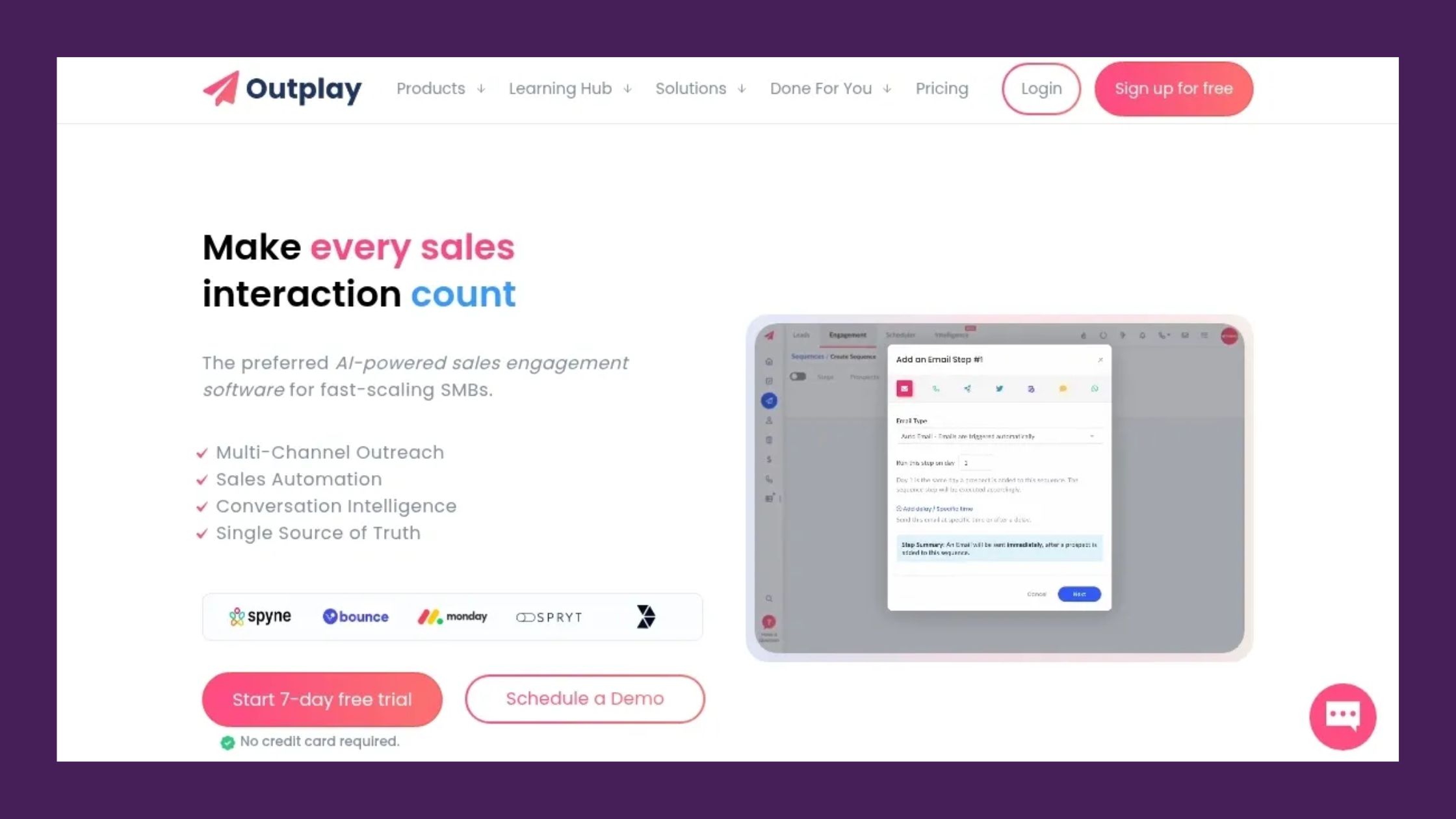
Outplay is a multichannel sales engagement platform that manages email, LinkedIn, calls, and SMS sequences from a single interface. It targets SMB and mid-market sales teams who want to coordinate outreach across channels without stitching together multiple tools. On paper, that's a compelling pitch. In practice, the LinkedIn side of that stack is where friction accumulates fastest.
Outplay's Key Features and LinkedIn Integration, Broken Down
Outplay's core functionality includes automated email sequences, a built-in dialer, SMS steps, and LinkedIn touchpoints as part of multi-step cadences. The LinkedIn integration operates through a Chrome extension — meaning it runs as a background process resource usage layer on your browser rather than connecting to LinkedIn through an API or cloud-based session. This architectural choice is the root of most LinkedIn-specific complaints: the extension requires the browser to be active, introduces session instability, and limits what can be automated safely.
Email sequences with A/B testing and deliverability tools
Built-in phone dialer with call logging
LinkedIn steps (connection requests, messages, profile views) via Chrome extension
CRM integrations with Salesforce, HubSpot, and Pipedrive
Basic team reporting and sequence analytics
Outplay Pricing vs Competitors: Is It Worth the Cost?
According to pricing data aggregated by Abmatic.ai (2026), Outplay, Klenty, Reply.io, and Apollo all publish self-serve per-seat pricing ranging from free tiers or roughly $39–$50 up to around $119–$139 per user per month. Outplay's paid plans fall in the middle of that band. For a two-rep team testing LinkedIn outreach, that's manageable. For a ten-rep team needing deep LinkedIn-native capability, the cost-to-capability ratio starts to look unfavorable — especially when LinkedIn-specific tools with stronger native automation exist at similar or lower price points.
4.5 / 5
Outplay's average G2 rating across 269 reviews — solid overall, but LinkedIn-specific scores trail its email ratings
According to G2 data (2026), Outplay holds a 4.5/5 average across 269 reviews, while Apollo.io leads the category with a 4.7/5 from 9,664 reviews. In practice, this means Apollo has a dramatically larger user validation base — and the rating gap, while small in absolute terms, reflects consistent advantages in feature depth and reliability. For teams prioritizing LinkedIn, that gap is worth taking seriously.
Now that the pricing context is clear, the specific LinkedIn limitations deserve a closer look.
Is Outplay Good for LinkedIn Outreach? Honest Limitations to Know
Outplay is a viable tool for email-led multichannel outreach — it is not a strong choice when LinkedIn is your primary prospecting channel. The distinction matters. Teams that use LinkedIn as one of five steps in a cold email sequence will tolerate its limitations. Teams where LinkedIn is the dominant channel will hit those limits constantly.
Why Teams Switch: Real Friction Points from the Community
The most frequently cited Outplay LinkedIn integration limitations fall into three categories:
Extension dependency: The Chrome extension must be active for LinkedIn steps to fire, tying automation to browser uptime rather than running in the background reliably
Sequence depth: LinkedIn automation through Outplay is limited to basic touchpoints — connection requests, direct messages, and profile views. Post engagement, InMail, and company page outreach are not supported
Volume caps: Connection request volumes are capped, but the tool lacks the granular rate-limiting controls that LinkedIn-native tools offer, increasing account risk for high-volume users
No engagement layer: There is no feature for interacting with a prospect's LinkedIn content before or alongside outreach — a meaningful gap given that content engagement significantly warms cold outreach
A recurring pattern among sales teams trying to build LinkedIn-first sequences is that they initially treat these as minor inconveniences — and then, three months in, realize they've been leaving significant response rate potential on the table by not using a tool built specifically for how LinkedIn's algorithm and ToS actually work.
⚠️
Warning:Relying on a Chrome extension for LinkedIn automation means your sequences pause whenever your browser is closed, the extension updates, or LinkedIn changes its front-end. This creates silent gaps in sequence delivery that are hard to detect in reporting.
What Features Should a LinkedIn Outreach Tool Actually Have?
LinkedIn Outreach Tool Actually Have?
Teams that consistently see strong LinkedIn reply rates share a common pattern: they choose tools built around LinkedIn's actual mechanics, not tools that treat it as one channel among many. Here's what that looks like in practice.
GDPR, Privacy, and LinkedIn ToS Compliance
GDPR compliance and LinkedIn Terms of Service alignment are non-negotiable features, not optional add-ons. Any tool storing EU prospect data needs a lawful basis for processing, clear data retention policies, and the ability to honor deletion requests within 30 days. On the LinkedIn ToS side, look for tools that publish their compliance stance explicitly — not just vague claims of "safety." Specifically:
Randomized sending delays that mimic human behavior patterns lower detection probability
Published limits on daily actions that stay within LinkedIn's observed thresholds
Privacy-safe clip software — or in outreach terms, tools that don't request excessive LinkedIn page permissions beyond what their stated function requires
Small Team vs Enterprise: How Requirements Differ
What a two-person startup needs from a LinkedIn outreach tool differs sharply from what a 50-rep sales org needs. Small teams prioritize ease of setup, low cost, and simple sequence building. Enterprise teams need user role management, shared sequence libraries, approval workflows, and bi-directional CRM sync with field mapping. Choosing an enterprise tool for a small team creates unnecessary complexity; choosing a solo-focused tool for a large team creates governance gaps. Map your actual requirements before evaluating any tool on this list.
The single most reliable predictor of LinkedIn outreach tool success is not feature count — it is how well the tool's architecture matches the way LinkedIn's own systems actually operate. A tool built around email logic retrofitted for LinkedIn will always underperform one designed for LinkedIn from the ground up.
Top Outplay Alternatives for LinkedIn Outreach in 2026
The best Outplay alternative LinkedIn outreach depends on what you're optimizing for. Below are the strongest options evaluated against consistent criteria: LinkedIn-native capability, CRM integration depth, safety controls, pricing, and verified user ratings.
HyperClapper: Best for LinkedIn Engagement and Visibility Growth
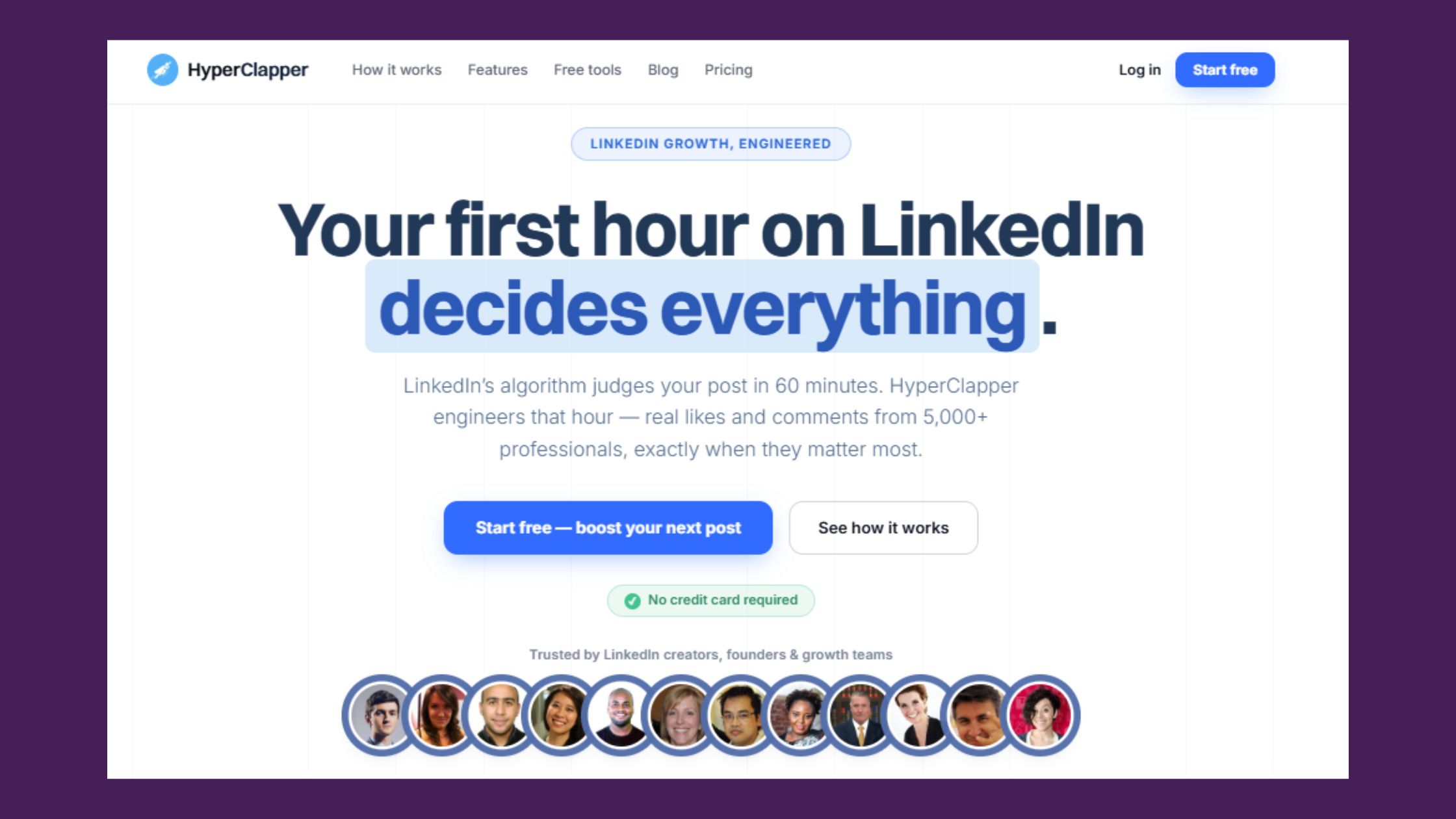
Tools like HyperClapper approach LinkedIn from a different angle entirely — not cold outreach automation, but engagement amplification. HyperClapper connects users with real engagement communities called channels, where LinkedIn posts receive authentic likes and comments from relevant professionals. Each channel generates roughly 50 real engagements, and users can stack multiple channels to scale reach. Paired with AI-powered replies that maintain post conversation depth, this creates the kind of content visibility that makes subsequent connection requests and cold outreach land in a warm context rather than cold.
HyperClapper's Content Guard system filters sensitive or risky content before it enters channels — a meaningful differentiator from platforms that push any content through any group. For founders, recruiters, and LinkedIn creators where content authority drives pipeline, this is the highest-leverage LinkedIn tool in the stack. For teams already using a separate LinkedIn automation comparison to evaluate outreach tools, HyperClapper complements rather than replaces their outreach sequence tool.
Lemlist: Best for Multichannel Sequences with LinkedIn Steps
Lemlist is one of the strongest answers to the question "How does Outplay compare to Lemlist for LinkedIn?" — and the comparison favors Lemlist for LinkedIn-heavy workflows. Lemlist's LinkedIn steps integrate more reliably than Outplay's extension-based approach, and its personalization capabilities (custom images and videos in connection messages) produce noticeably higher acceptance rates in practice. Pricing starts at a similar range to Outplay, making Outplay vs Lemlist a genuine apples-to-apples decision for most SMB teams.
Salesloft: Best for Enterprise LinkedIn + CRM Alignment
Salesloft — now positioned as a revenue orchestration platform — is the enterprise answer in this comparison. According to Miniloop.ai (2026), Salesloft runs at approximately $125 per user per month, positioning it well above Outplay on cost but delivering substantially deeper CRM alignment, bi-directional sync, and team governance. For the Outplay vs Salesloft LinkedIn comparison, Salesloft wins at scale — but it's overkill for teams under 10 reps. See also: a full breakdown of sales automation and outreach tool alternatives covering the broader landscape.
Other Notable Alternatives: Expandi, Waalaxy, and La Growth Machine
For teams specifically focused on LinkedIn-native automation without the multichannel complexity, three tools consistently appear in practitioner-recommended lists:
Expandi: Cloud-based LinkedIn automation with strong safety controls and dynamic personalization. No browser extension required — a direct fix for Outplay's primary LinkedIn limitation
Waalaxy: Strong for LinkedIn + email sequences, particularly popular with European teams due to GDPR-conscious design. See a detailed Waalaxy alternatives comparison for context on where it fits
La Growth Machine: Multichannel with strong LinkedIn depth, particularly for Twitter/X + LinkedIn combined sequences
Apollo.io: Leads the category on G2 rating volume and combines prospecting database access with sequence execution — strong value for teams that want one tool covering data and outreach
Want LinkedIn posts that make your outreach land warmer?
HyperClapper boosts post visibility through real community engagement — so prospects already know your name before your connection request arrives.
This LinkedIn sales engagement platform comparison uses consistent evaluation criteria across every tool. No self-promotion shapes the ratings — scores reflect verified G2/Capterra data and observed capability patterns.
Tool
Best For
LinkedIn Native?
CRM Depth
Starting Price
G2 Rating
Outplay
Email-led multichannel
Extension only
Moderate
~$49/user/mo
4.5/5
HyperClapper
LinkedIn engagement + visibility
Yes — engagement layer
Analytics-focused
See hyperclapper.com
—
Lemlist
Multichannel with strong LinkedIn steps
Partial (better than Outplay)
Moderate–Deep
~$59/user/mo
4.3/5
Apollo.io
Prospecting data + outreach in one
Moderate
Deep
Free tier / ~$49/mo
4.7/5
Expandi
LinkedIn-native cloud automation
Yes — cloud-based
Moderate
~$99/user/mo
4.0/5
Salesloft
Enterprise revenue orchestration
Partial
Deep (bi-directional)
~$125/user/mo
4.5/5
Waalaxy
LinkedIn + email for European teams
Yes
Moderate
~$40/mo
4.4/5
Onboarding and Setup Time: What to Expect from Each Tool
Setup time is a practical differentiator that rarely appears in feature comparisons. Teams that switch from Outplay to another LinkedIn outreach tool consistently report that onboarding takes longer than expected — not because tools are poorly designed, but because sequence logic, CRM field mappings, and prospect data don't transfer cleanly between platforms. Realistic estimates:
Apollo.io: 1–3 days for a solo rep; 1–2 weeks for a team with CRM sync needs
Lemlist: 2–5 days for sequence rebuild and integration setup
Expandi: 1–2 days for initial setup; LinkedIn warm-up period of 2–4 weeks recommended before full volume
Salesloft: Typically 2–4 weeks with enterprise onboarding support; implementation calls are standard
HyperClapper: Fastest path to value — add a post, select channels, and engagement activates within the session. No sequence logic to configure.
Risks and Limitations of LinkedIn Outreach Automation Tools
What separates teams that run LinkedIn automation successfully from teams that get accounts restricted is not which tool they chose — it is how they configured it. Every tool on this list carries risk if misused.
LinkedIn actively detects unusual activity patterns. Tools that ignore rate limits, send hundreds of connection requests per day, or operate at machine-like speed trigger account reviews. This is not a theoretical risk — it is a documented, frequently reported outcome in practitioner communities. Extension-based tools that run as background process resource usage layers can also read page data beyond their stated scope, a privacy concern that has driven users away from extension-dependent tools toward cloud-based alternatives.
Common Mistakes to Avoid When Switching LinkedIn Outreach Tools
The most common failure mode when switching tools is not technical — it's behavioral. Teams move too fast, skip the warm-up period on the new tool, and push the same volume they ran on Outplay from day one. That's the pattern that triggers LinkedIn restrictions on the new account before the tool has even proven its value.
🔴
Avoid:Sending more than 20–25 connection requests per day during the first two weeks on any new LinkedIn automation tool. LinkedIn's detection systems flag new activity spikes on accounts not yet established with the tool's IP pattern — regardless of which tool you're using.
How to Choose the Right LinkedIn Outreach Tool for Your Team
The right framework for how to choose a sales outreach tool starts with one question: what percentage of your pipeline currently originates from LinkedIn versus email? If the answer is over 50%, the tool you choose must be LinkedIn-native. If it's under 30%, a multichannel platform with LinkedIn steps is likely sufficient.
Decision Framework: Matching Tool to Use Case
Quick Answer: Best Outplay Alternative for Your Goal
Best for LinkedIn engagement + content visibility → HyperClapper — real community engagement and AI replies amplify post reach to warm your outreach audience
Best for multichannel sequences (LinkedIn + email) → Lemlist or Apollo.io — stronger LinkedIn step reliability than Outplay at comparable cost
Best for LinkedIn-native cold outreach only → Expandi —
Frequently Asked Questions About Outplay Alternatives
Are Outplayed and Overwolf the same?
Outplayed is a game clip recording app owned by Overwolf, so they are related but not identical. Overwolf is the platform and ecosystem; Outplayed is one app built on top of it. If you use Outplayed, you are running it through the Overwolf client — they are bundled together.
Is Outplayed a good clipping app?
Outplayed is a solid free option for automatic game clip capture, especially for casual gamers who want zero setup. It supports most major titles and integrates with the Overwolf overlay. The main trade-offs are background resource usage and occasional performance overhead compared to hardware-based capture solutions like OBS or a dedicated capture card.
Which sales engagement tool works best for LinkedIn outreach instead of Outplay?
Apollo.io and Lemlist are the strongest Outplay replacements for LinkedIn-primary outreach. Apollo offers native LinkedIn steps, a larger contact database, and a 4.7/5 G2 rating across nearly 10,000 reviews. Lemlist adds personalized video and image steps inside LinkedIn sequences. Both outperform Outplay's Chrome-extension-dependent LinkedIn automation at comparable price points.
What should I look for when replacing Outplay for my LinkedIn sales workflow?
Prioritize tools with cloud-based or native LinkedIn integration rather than a Chrome extension — this eliminates the browser-uptime dependency that causes Outplay's reliability gaps. Also look for granular rate-limiting controls, support for InMail and post engagement steps, and CRM sync that maps LinkedIn activity automatically, not just email touchpoints.
Is there a cheaper alternative to Outplay that supports LinkedIn sequences?
Apollo.io has a free tier and paid plans that start below Outplay's mid-range pricing, while offering stronger native LinkedIn sequence support. Lemlist's entry plans are similarly competitive. Both tools support multi-step LinkedIn cadences — connection requests, messages, and InMail — without requiring a browser extension to stay active.
How do I migrate from Outplay to a different LinkedIn outreach tool?
Export your contact lists, sequence data, and CRM field mappings from Outplay before you cancel — teams that lose data almost always skip this step. Then map your existing sequence logic to the new tool's step types, reconnect your CRM integration, and run a small test campaign before fully switching over your active sequences.
What are the best alternatives to Outplay for LinkedIn?
Apollo.io, Lemlist, and HyperClapper each address different LinkedIn outreach needs. Apollo is best for high-volume prospecting sequences, Lemlist for personalized multichannel cadences, and HyperClapper for pairing outreach with LinkedIn content engagement to build visibility alongside direct prospecting — a combination that compounds pipeline results over time.
👋
⚡ Free plan
Leaving already?
Grab 3 free boosts on your next LinkedIn post — real likes & comments from 5,000+ creators. No card, cancel anytime.