A solid LinkedIn engagement strategy isn't about posting more — it's about engaging smarter. A pattern observed across high-performing LinkedIn accounts is that influence comes from consistent authority signals and community trust, not follower counts or posting volume. Creators who prioritise reciprocal engagement — commenting thoughtfully, replying fast, and seeding early reactions — routinely outgrow accounts with 10x their following. The gap is almost always engagement habits, not content quality.
- LinkedIn influence is built through engagement habits, not follower counts or daily posting
- Early engagement (first 60–90 minutes) dramatically expands how far LinkedIn distributes your posts
- Substantive comments on others' posts act as micro-content seen by their entire audience
- 15–20 minutes of focused daily engagement outperforms sporadic hour-long sessions
- Real-user engagement pods outperform bot-based tools — quality and safety both matter
- Counterintuitive finding: posts with questions get 77% more comments than standard posts
- What It Actually Means to Become a LinkedIn Influencer in 2026
- How LinkedIn Engagement Actually Affects Your Reach and Following
- The LinkedIn Commenting Strategy That Builds Visibility and Authority
- Tools and Strategies to Grow LinkedIn Presence Faster
- Your LinkedIn Engagement Strategy to Grow Following: A Practical Action Plan
- Frequently Asked Questions About Growing LinkedIn Influence
What It Actually Means to Become a LinkedIn Influencer in 2026
Most people chasing LinkedIn influence are measuring the wrong things. # Influence on LinkedIn is not a follower milestone — it is the accumulation of personal brand authority signals: niche credibility, inbound opportunities, shares into new networks, and DMs from people who found you through a comment. Vanity metrics like raw impression counts feel good but don't move your career or business forward.
What actually signals influence:
- Post saves — readers bookmarking content for later use
- Shares and reposts — your ideas reaching new networks without extra effort
- Inbound DMs — collaborations, clients, or interview requests from strangers
- Profile visits after commenting — a direct sign your comment was compelling enough to prompt curiosity
Can You Become a LinkedIn Influencer Without a Large Following?
Yes — and it's the norm, not the exception. Founders, recruiters, coaches, and marketers regularly build LinkedIn authority as thought leaders starting from under 500 connections. The mechanism is simple: LinkedIn surfaces content based on engagement velocity, not account size. A post from a 300-follower account that generates 20 comments in the first hour will outperform a 10,000-follower account's post that gets 5 likes and silence. You can absolutely become a LinkedIn influencer without a large following — you just need a smarter entry point.
Influence on LinkedIn is an output of smart engagement habits, not content volume. The accounts with real reach are usually the ones who spend more time in the comments section than the editor.
How LinkedIn Engagement Actually Affects Your Reach and Following
LinkedIn algorithm engagement signals work on a simple principle: early engagement proves content quality to the algorithm, which then distributes it wider. According to Digital Applied (2026), LinkedIn's algorithm now penalises engagement bait and external links significantly — which means authentic, conversation-driven engagement matters more than ever. Posts that generate threaded replies and follow-up questions within the first 60–90 minutes see dramatically expanded distribution windows.
How does LinkedIn engagement affect reach? Think of it like a trust score. A single like registers as a weak signal. A substantive comment — especially one that triggers a reply — registers as meaningful conversation depth, a platform metric LinkedIn has been weighting more heavily since 2025. According to Metricool (2026), posts with a question get 77% more comments than standard posts. In practice: end your posts with a direct question, and your own engagement rate climbs without any other change.
A recurring pattern among creators struggling with low likes and reposts is that the problem isn't their content — it's the absence of a seeded early engagement layer and a reciprocal commenting network. Does engaging with others increase your LinkedIn followers? Yes. Consistently. Commenting pulls your profile in front of the original poster's audience, and profile visits convert to follows at a measurable rate when your profile is well-positioned.
The 3-2-1 and 4-1-1 Rules: Content Distribution Cadence That Works
Two frameworks dominate LinkedIn content planning discussions. The 3-2-1 rule suggests posting 3 pieces of educational content, 2 conversational posts, and 1 promotional post per week — keeping your feed useful rather than sales-heavy. The 4-1-1 rule applies a similar logic: for every self-promotional post, share 4 pieces of others' content and 1 piece of collaborative content. Both frameworks reflect the same insight: social proof amplification — the idea that generosity on the platform earns reciprocal visibility — is a real, algorithmic phenomenon, not just networking advice.
Why Your LinkedIn Content Isn't Getting Engagement (And How to Fix It)
Why is my LinkedIn content not getting engagement? In most cases, three problems explain it: posting without seeding early engagement, ignoring the first-60-minute comment window, or writing content with no clear hook or call-to-response. Posting and immediately leaving the platform is the single most common mistake. Fix it by staying active for 30–60 minutes after publishing — reply to every comment, ask a follow-up question, and prompt your network to weigh in.
The LinkedIn Commenting Strategy That Builds Visibility and Authority
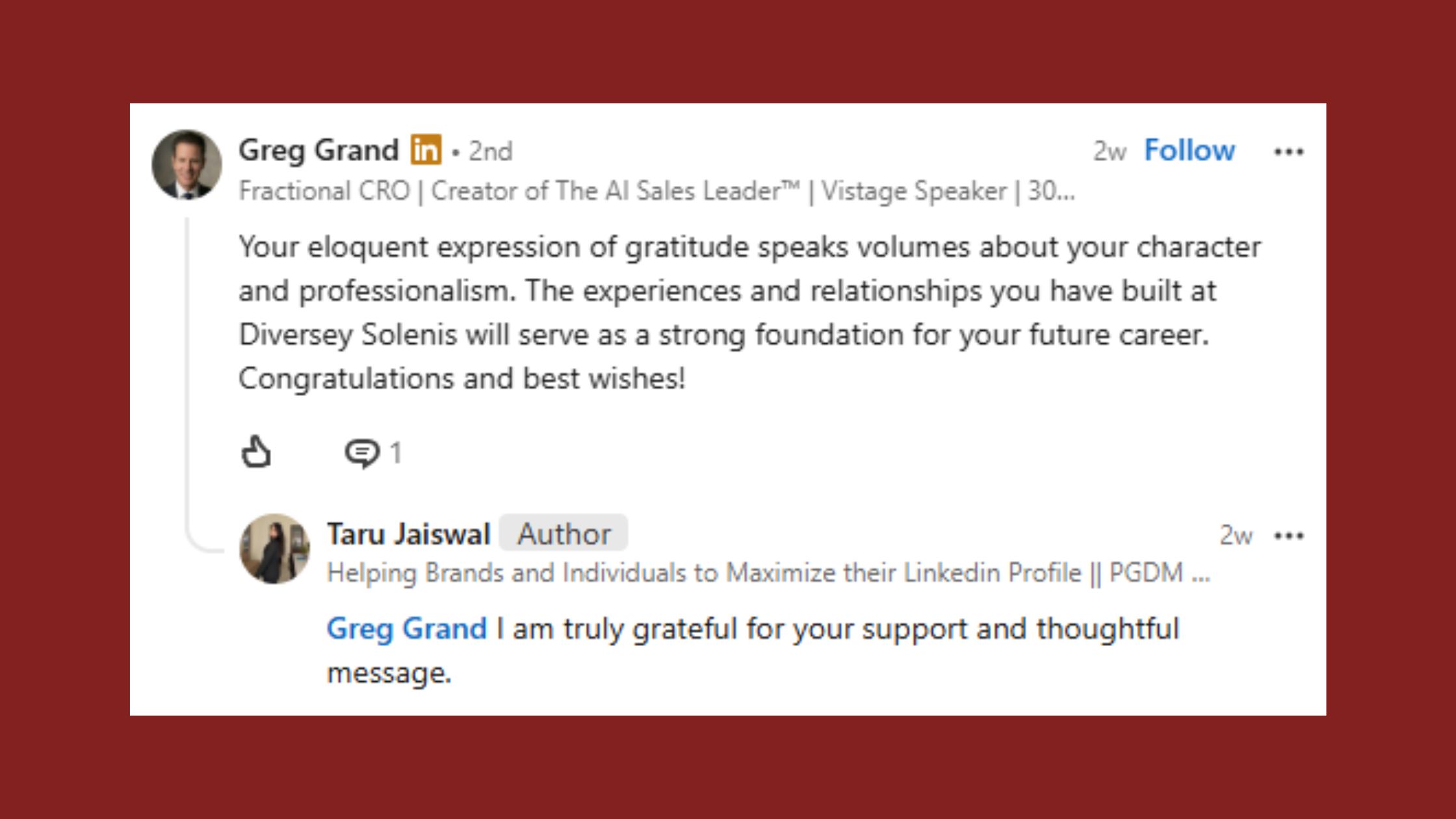
A LinkedIn commenting strategy for visibility is one of the highest-ROI activities available on the platform — and the most underused. Your comment isn't just a reply; it's a micro-post seen by the original creator's entire audience. What type of LinkedIn comments get the most engagement? Substantive, opinion-forward comments that add a new angle or share a contrarian data point. "Great post!" filler generates nothing. A comment that says "We tested this with 50 clients — the results flipped our assumption" pulls readers into your profile.
A practical daily commenting rhythm that works:
- Morning (15 min): Find 5–10 posts by creators in your niche posted in the last 2 hours — recency matters for your comment's visibility window
- Leave substantive comments — add an angle, share a specific result, or ask a sharp follow-up question
- Afternoon: Reply to anyone who engaged with your comment — this deepens the thread and signals conversation quality to LinkedIn's algorithm
How often should you engage on LinkedIn to grow? Consistency beats volume. The accounts that grow fastest from commenting spend 15–20 focused minutes daily rather than a sporadic 90-minute session once a week. According to the La Growth Machine 2026 LinkedIn Strategy Guide, the 80/20 rule applies: spend 80% of your LinkedIn time engaging with others' content and 20% creating your own. That ratio feels counterintuitive, but it's what the data consistently shows.
What Engagement Habits Do Successful LinkedIn Influencers Share?
Teams that study high-growth LinkedIn accounts see the same three habits appear reliably: they comment before they post each day, they reply to every comment on their own posts within the first hour, and they maintain a defined niche so the algorithm can categorise and distribute their content to the right audience. None of these require premium tools. All of them require daily discipline.
Tools and Strategies to Grow LinkedIn Presence Faster — Including What to Avoid
The best LinkedIn automation tools for engagement fall into three categories: engagement pod platforms, AI writing assistants, and scheduling tools. Each solves a different part of the growth stack — and combining them without understanding the risks is where most accounts run into trouble.
According to ConnectSafely (2026), small LinkedIn accounts (under 1,000 followers) can achieve engagement rates of 4–8% — far higher than larger accounts — which means early-stage creators have a structural advantage if they use the right tools. Mid-market accounts (1,000–50,000 followers) typically see 2–4%. This means the quality of your early engagement matters more than the quantity.
When comparing the top LinkedIn engagement pods — Podawaa, Lempod, LinkBoost, and HyperClapper — the key differentiator isn't features, it's the nature of the engagement. Tools that use real users in structured channels produce engagement that looks natural to LinkedIn's algorithm. Tools that rely on bot networks or fake accounts trigger spam filters, damage credibility, and violate Terms of Service.
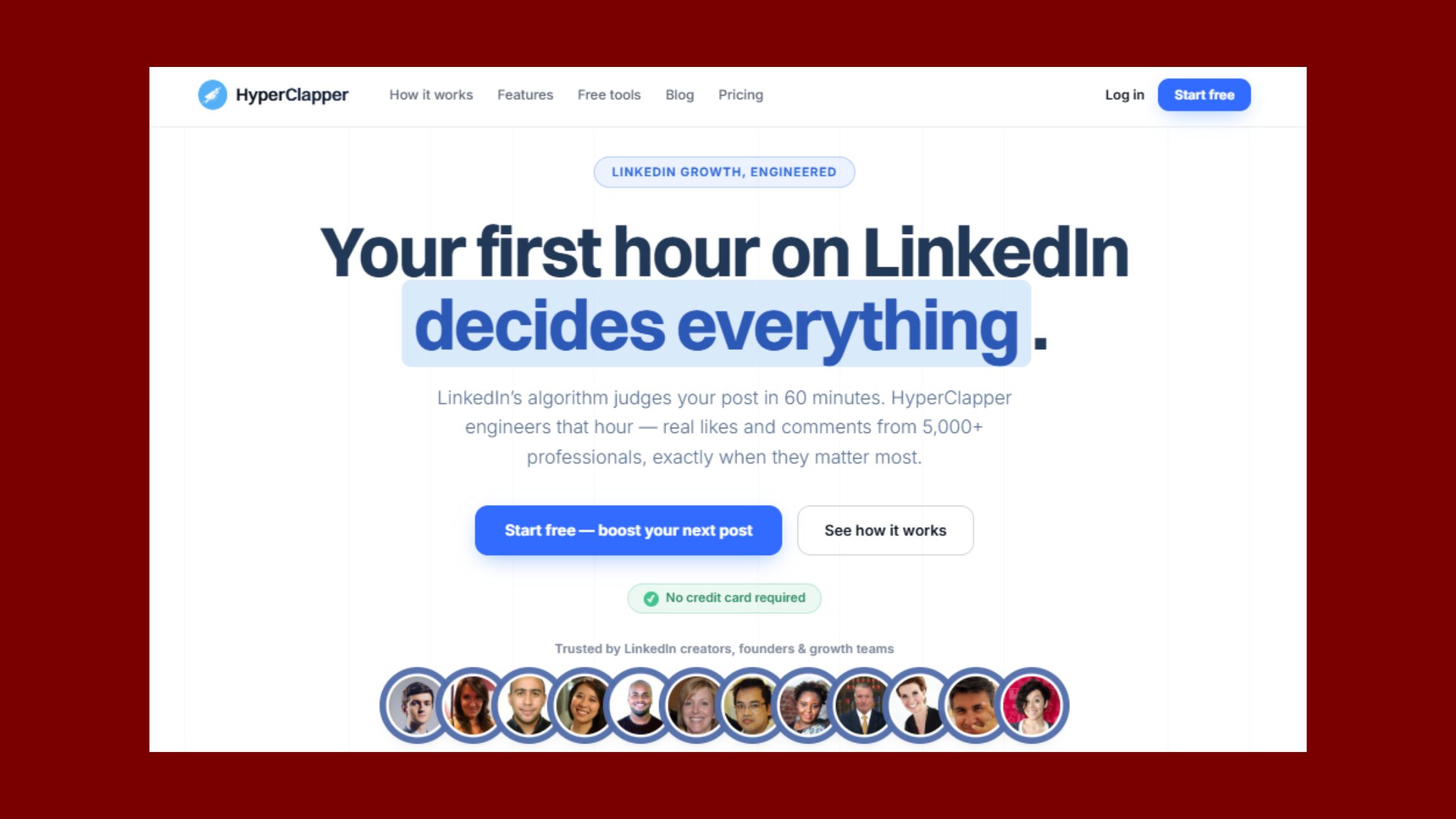
HyperClapper is built specifically around this distinction. Its channel system connects posts with real community members — each channel delivering around 50 genuine engagements — and its AI reply feature sustains conversation depth after the initial boost, which is exactly what LinkedIn's Depth Score metrics now reward. The Content Guard system also filters out risky or sensitive topics before they cause account problems. For a detailed comparison, see HyperClapper vs Podawaa.
Is LinkedIn Premium worth it for growing influence? Premium improves search visibility and unlocks InMail — genuinely useful for outreach and recruiter visibility. But it doesn't replace an active engagement strategy. Organic reach on LinkedIn is driven entirely by engagement signals, not subscription tier. Pay for Premium if the outreach features matter to your use case. Don't expect it to move your content reach without the engagement habits in place.
Common Mistakes That Kill LinkedIn Engagement Growth
The most common failure mode is treating LinkedIn like a broadcast channel — post, disappear, and wonder why nobody engages. Real growth requires a content distribution cadence that includes pre-post engagement (warming up your network), the post itself, and a 60-minute active reply window after publishing. Skip any leg of that and you're leaving reach on the table.
Get Real Engagement on Your Next LinkedIn Post
HyperClapper connects your posts with real community members — genuine likes, substantive comments, and AI-powered replies that keep conversations alive.
Start Boosting Free →Your LinkedIn Engagement Strategy to Grow Following: A Practical Action Plan
The following plan reflects what works across accounts at different stages — not a textbook framework, but a rhythm drawn from observing what separates stagnant profiles from compounding ones.
✓ The LinkedIn Influence Growth Checklist
- ☐Audit your last 10 posts — identify your top format (text, carousel, document) and best posting time using LinkedIn analytics or HyperClapper
- ☐Comment on 5–10 niche posts each morning before publishing your own content — warm the network first
- ☐Post with a direct question at the end — posts with questions generate 77% more comments
- ☐Stay active for 60 minutes after publishing — reply to every comment, deepen threads
- ☐Seed early engagement using a real-user channel (HyperClapper channels deliver ~50 engagements each)
- ☐Add AI replies to keep older posts active after 48 hours — conversation depth is rewarded by the algorithm
- ☐Review analytics every 30 days — double down on the topics and formats driving profile visits and follower growth
What consistently separates accounts with real compounding reach from accounts with impressive-looking numbers is not any single tactic — it's the consistent execution of all four steps together. Accounts that get the full loop right see reach build on itself. Accounts that nail content but skip the engagement rhythm typically plateau within 60–90 days regardless of content quality.
Ready to See Real LinkedIn Growth?
Stop posting into the void. HyperClapper gives your content the early engagement boost it needs to break through LinkedIn's algorithm — with real people, not bots.
Try HyperClapper Free →Frequently Asked Questions About Growing LinkedIn Influence
What is the 3-2-1 rule on LinkedIn?
The 3-2-1 rule is a content cadence framework: post 3 educational pieces, 2 conversational posts, and 1 promotional post per week. This keeps your feed genuinely useful rather than sales-heavy, which the LinkedIn algorithm rewards with better organic distribution. It also mirrors what audiences respond to — value first, pitch rarely.
What is the 4-1-1 rule on LinkedIn?
The 4-1-1 rule means for every self-promotional post, share 4 pieces of others' content and 1 collaborative piece. It's a generosity-first approach that builds social proof amplification — your sharing increases visibility for others, and reciprocal engagement follows naturally. It's particularly effective in the early stages of growing an audience from scratch.
What is the 95-5 rule on LinkedIn?
The 95-5 rule reflects the reality that 95% of LinkedIn users never post — they only consume. Just 5% generate all the content. This means consistent posters face far less competition than the 1.3 billion member count suggests. Showing up regularly already puts you ahead of the vast majority of your network.
How do you improve LinkedIn engagement?
Improve LinkedIn engagement by ending posts with a direct question, staying active for 60 minutes after publishing, commenting substantively on niche posts daily, and seeding early reactions through a real-user engagement layer. According to Metricool (2026), posts with questions receive 77% more comments — that single change alone meaningfully shifts your baseline engagement rate.
What is the fastest way to grow influence on LinkedIn without posting every day?
Strategic commenting is the fastest way to grow LinkedIn presence faster without daily posting. Leaving 5–10 substantive comments on high-traffic posts in your niche exposes your profile to large audiences daily — no original post required. Combine this with 3 quality posts per week and a real-user engagement boost on each, and follower growth compounds without daily publishing pressure.
How does strategic commenting on LinkedIn help you get more followers?
A LinkedIn commenting strategy for visibility works because your comment appears as a micro-post in the original creator's thread, visible to their entire audience. A sharp, opinion-forward comment drives profile visits — and profile visits convert to follows. Creators who treat commenting as a distribution channel consistently report faster follower growth than those focused purely on their own posts.
Is LinkedIn Premium worth it for growing influence?
LinkedIn Premium worth it for growing influence depends on your goal. Premium improves recruiter search visibility and unlocks InMail for direct outreach — both genuinely useful. But it has no direct effect on organic content reach. Engagement signals, not subscription tier, determine how far your posts distribute. Use Premium for outreach; use an active engagement strategy for reach.
What are the best LinkedIn best practices for businesses in 2026?
Following linkedin best practices for businesses in 2026 means prioritising conversation depth over raw impressions. Post 3–4 times per week, always include a question, engage in comments within the first hour, and use company page boosting to amplify key posts. According to LinkedIn's own marketing blog, 89% of B2B practitioners say LinkedIn is their most effective organic social channel — the opportunity is real, but only for those with active engagement habits.



