
A LinkedIn b2b sales funnel is a staged sequence — awareness, consideration, intent, conversion — where each stage maps to a specific LinkedIn action: a post that surfaces your name, a comment that starts a conversation, a DM that opens a door. What separates accounts that generate consistent pipeline from those that just accumulate followers is deliberate stage design. A pattern observed across high-performing B2B accounts is that they treat LinkedIn as all three funnel layers simultaneously — top-of-funnel content builds reach, mid-funnel engagement builds trust, bottom-of-funnel outreach converts it — with a clear trigger defined for moving prospects between each stage. Most professionals skip the triggers entirely, which is why their LinkedIn activity produces impressions but not meetings.
- Who this is for: Founders, marketers, sales teams, and coaches who want LinkedIn to generate real pipeline, not just impressions.
- What you'll learn: A stage-by-stage LinkedIn B2B funnel blueprint pairing each funnel stage with the right HyperClapper feature and LinkedIn action.
- Why it matters: According to Folk (2026), LinkedIn generates 80% of all B2B social media leads and converts visitors at 2.74% — nearly 3x higher than any other social channel.
- The safety reality: Most automation bans target volume and velocity — not tools that use real community engagement. HyperClapper sidesteps this entirely.
- Most counterintuitive finding: Boosting every post equally is a waste. HyperClapper's channels deliver the highest ROI on bottom-of-funnel offer posts, not awareness content.
- Small team feasibility: A solo founder can run this full funnel in under 2 hours per week with the right setup.
- What Is a LinkedIn B2B Sales Funnel (and Why Most People Get It Wrong)
- How HyperClapper Works as a LinkedIn Sales Funnel Engine
- Building an Inbound LinkedIn Sales Funnel with Content-Led Outreach
- Building an Outbound LinkedIn Sales Funnel: From Cold Profile to Warm Conversation
- LinkedIn Sales Funnel Automation: What's Safe and What Gets You Banned
- HyperClapper vs. Other LinkedIn Automation Tools: Honest Comparison
- How to Convert LinkedIn Connections Into Clients: The Funnel Conversion Layer
- LinkedIn Funnel Analytics: Measuring What Actually Moves the Needle
- LinkedIn Ads as a Funnel Accelerator: Paid + Organic Working Together
- HyperClapper Pricing Plans: What You Get at Each Tier
- Common LinkedIn Sales Funnel Mistakes (and How to Avoid Them)
- Step-by-Step: Build Your LinkedIn Sales Funnel with HyperClapper in 2026
- Frequently Asked Questions About LinkedIn B2B Sales Funnels
What Is a LinkedIn B2B Sales Funnel (and Why Most People Get It Wrong)
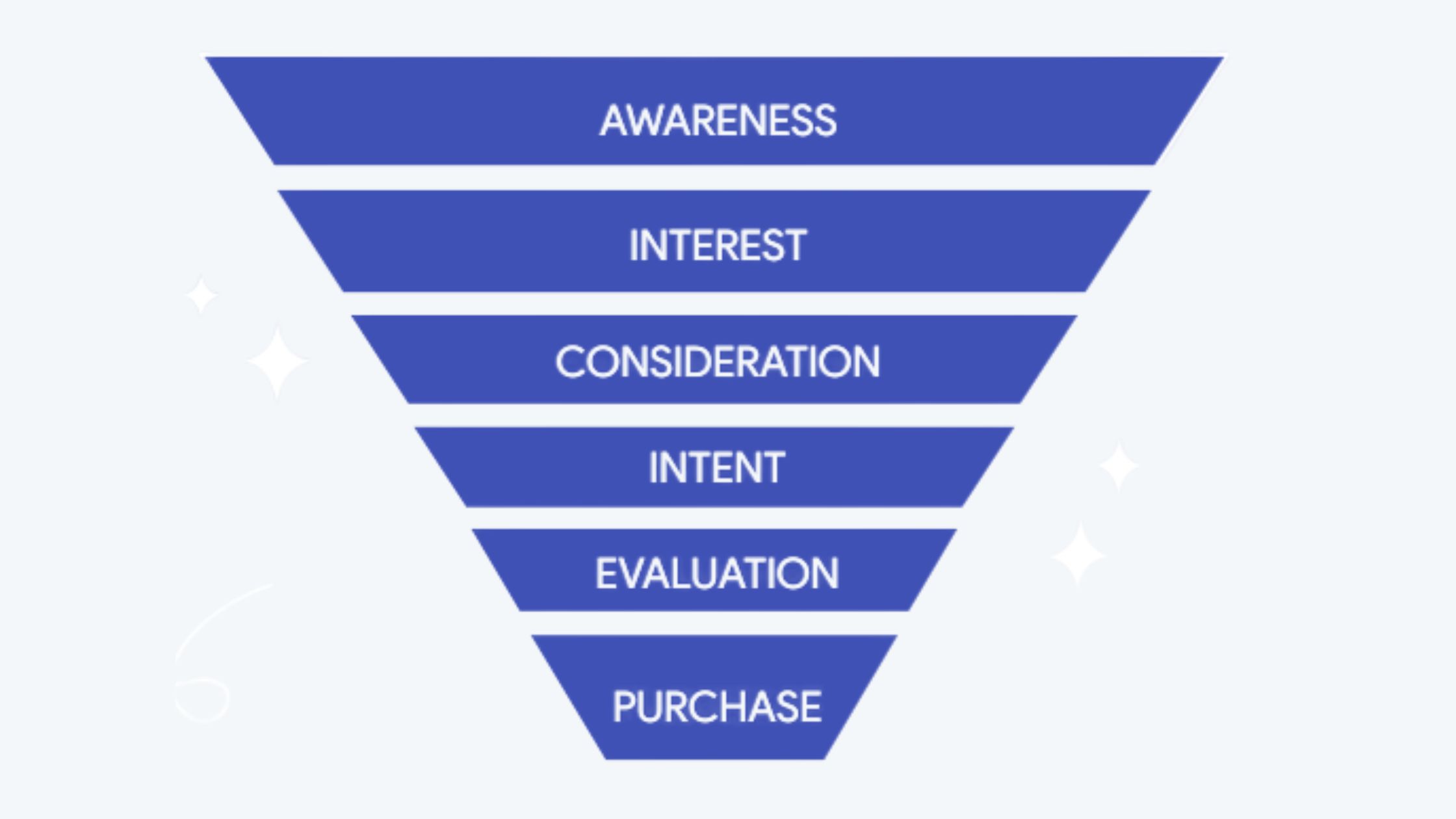
What is a LinkedIn sales funnel? It is a deliberate, staged sequence that moves a stranger through four phases — Awareness (they discover you), Consideration (they evaluate your expertise), Intent (they signal buying readiness), and Conversion (they take the next step toward becoming a client). Each stage requires a different LinkedIn action and a defined trigger that advances the prospect forward. Without those triggers, activity stalls in the middle.
The most common pain point, reflected across communities and forums discussing LinkedIn strategy, is that professionals cannot identify where LinkedIn fits in their overall B2B funnel. The answer: it can occupy all three layers — top, middle, and bottom — but only when each layer has deliberate content and a defined next step. LinkedIn is not a closer. It is a trust accelerator that, when structured correctly, hands warm, pre-sold prospects to your sales process.
This contrasts sharply with email or paid ad funnels, which are click-led. You post an ad, someone clicks, they fill a form. LinkedIn funnels are relationship-led — conversion happens after repeated signal exchange: a like, a comment, a DM, a profile visit. That means defining "conversion" differently at each stage. A ToFu conversion is a new follower from your ICP. A MoFu conversion is a comment that opens a DM thread. A BoFu conversion is a meeting booked.
The Four Funnel Stages Mapped to LinkedIn Actions
- Top of Funnel (ToFu) — Awareness: Thought leadership posts, industry takes, and trend commentary. Goal: reach new ICP profiles who don't know you exist.
- Middle of Funnel (MoFu) — Consideration: How-to content, case studies, frameworks. Goal: demonstrate expertise and generate comments that open DM threads.
- Bottom of Funnel (BoFu) — Intent: Social proof posts, client results, direct offers, and event invitations. Goal: surface prospects who are actively evaluating solutions.
- Conversion: A DM sequence, a booked call, or a LinkedIn Lead Gen Form submission. The handoff to your pipeline.
Why LinkedIn Outperforms Other Channels for B2B Lead Generation in 2026
According to Folk (2026), LinkedIn generates 80% of all B2B social media leads and delivers a 2.74% visitor-to-lead conversion rate — nearly three times higher than Facebook or X. This means that the same content that would generate modest pipeline on other platforms is generating 3x more qualified leads here. In practice, that difference compounds: a founder posting consistently on LinkedIn for six months will often outperform a six-month paid social campaign at a fraction of the cost.
According to Digital Applied (2026), B2B lead generation on LinkedIn costs 28% less than paid search, with a 14.6% lead-to-opportunity conversion rate versus just 1.7% for average outbound campaigns. This means LinkedIn isn't just a cheaper channel — it's a fundamentally higher-quality one when it's built as a proper funnel. What this tells you is that the ROI argument for investing in LinkedIn infrastructure (content, engagement, tools) is already won at the data level. The question is only execution.
Now that you understand what a LinkedIn B2B funnel actually is, here's where HyperClapper changes the equation.
How HyperClapper Works as a LinkedIn Sales Funnel Engine
Teams that use LinkedIn engagement tools strategically — rather than just scheduling posts — consistently see higher funnel velocity because engagement is the algorithmic signal that determines who sees your content next. HyperClapper is a LinkedIn engagement platform that connects users with real community members through structured engagement groups called channels.
The mechanic is straightforward: you submit a LinkedIn post, select one or more channels, and HyperClapper distributes the post to real community members who like and comment on it. Each channel delivers approximately 50 real engagements. Two channels = roughly 100 engagements. Three channels = roughly 150. This is not bot activity — it is real human engagement from a verified community, which means it reads naturally to LinkedIn's algorithm and to anyone who views your post.
Channels, Post Boosting, and Company Page Engagement
Post boosting is the core ToFu driver. When a post receives early engagement — likes and substantive comments within the first hour of publishing — LinkedIn's algorithm reads it as high-quality content and extends its distribution to a wider audience. This is the engagement velocity effect: the speed at which a post receives reactions after publishing directly determines how far it travels.
HyperClapper also supports company page boosting and company page replies, which matters for B2B sellers whose brand authority comes from their company presence as much as their personal profile. A company page with active, engaged posts signals credibility to buying committee members who are researching your brand before responding to a DM.
AI Replies and the 'Feed More' Feature for Prospect Nurture
HyperClapper's AI Replies feature generates and posts contextually relevant replies on your LinkedIn posts, keeping the conversation thread active. This matters because LinkedIn's algorithm weights comment depth — multi-turn conversations — more heavily than raw likes. A post with 12 comments in a substantive thread outperforms a post with 40 likes and no comments for algorithmic reach.
The Feed More feature extends this: you can inject additional AI replies days after the original post, re-activating it in the algorithm's view. This is the prospect nurture sequence layer of HyperClapper — it keeps your content visible to MoFu prospects who are evaluating you over days or weeks, not just in the 90-minute window after posting.
The most powerful demand generation touchpoint on LinkedIn is not the post itself — it is the conversation that happens in the comments. HyperClapper's AI Replies create that conversation depth deliberately, turning a single post into an extended visibility window.
Connect each feature directly to a funnel layer: post boosting drives ToFu reach, AI replies sustain MoFu conversations, and HyperClapper's analytics surface BoFu conversion signals — which posts triggered the most profile visits from ICP accounts.
Building an Inbound LinkedIn Sales Funnel with Content-Led Outreach

Inbound LinkedIn funnels are powered by content-led outreach — content that is deliberately designed to attract your ICP rather than broadcast to everyone. The goal is to make your profile the destination, not a static directory listing. When built correctly, inbound funnels generate a stream of connection requests and DMs from prospects who have already pre-qualified themselves by engaging with your content.
How to Turn Your LinkedIn Profile Into a Lead Magnet
Your profile is the landing page of your LinkedIn funnel. Most professionals treat it as a CV. High-converting profiles treat it as a sales page with a clear ICP, a defined value proposition, and a low-friction CTA in the featured section. Specifically:
- Headline: State who you help and what outcome you deliver — not your job title.
- About section: Write to your ICP's specific problem in the first two lines (these show before "see more").
- Featured section: Link to a high-value resource (framework, case study, audit) that captures an email or starts a DM conversation.
- Banner image: Reinforce your positioning with a visual that signals authority in your niche.
The most common failure mode here is a generic headline like "Helping businesses grow" — it is invisible to an ICP prospect scanning search results. Profiles with specific, outcome-focused headlines see noticeably higher connection acceptance rates from relevant prospects.
Content Pillars That Drive Buying Committee Engagement
Map your content calendar to funnel stages. Not every post needs to convert — but every post should serve a stage.
- ToFu (Awareness): Industry trends, contrarian takes, data-driven observations. These reach the widest audience including people who don't know your category yet.
- MoFu (Consideration): How-to breakdowns, frameworks, case studies. These signal expertise to a prospect actively evaluating options — this is the buying committee engagement layer, where multiple stakeholders at a target account are quietly reading and assessing you.
- BoFu (Intent): Client results, social proof carousels, direct offers, limited-time events. These are the posts worth boosting with HyperClapper channels because high engagement on a BoFu post extends its reach to ICP accounts at exactly the moment they're most conversion-ready.
Use HyperClapper to boost BoFu posts specifically. The inbound conversion signal to watch for: profile visits from people who fit your ICP after they engaged with a BoFu post. Those are warm prospects — and the right moment to send a DM referencing what they saw.
Building an Outbound LinkedIn Sales Funnel: From Cold Profile to Warm Conversation
Outbound LinkedIn funnels start with a prospect list and end with a booked meeting. The critical difference between LinkedIn outbound and email outbound is visibility before contact: on LinkedIn, you can establish name recognition with a prospect before ever sending a message — which fundamentally changes your reply rates.
LinkedIn Sales Navigator: Features Worth the Price in 2026
Sales Navigator is LinkedIn's premium prospecting tool, offering advanced filters — company size, job title, seniority level, recent activity, keywords in profile — that standard LinkedIn search doesn't provide. For B2B sellers targeting specific ICPs, the list-building capability alone justifies the subscription. The key filters worth mastering:
- Changed jobs in past 90 days: New executives are actively evaluating vendors — high intent signal.
- Posted on LinkedIn in past 30 days: Active users are more likely to notice and respond to engagement.
- Follows your company: These prospects are already in your funnel — they just haven't signaled directly yet.
What a Full Outbound Sequence Looks Like Stage by Stage
- Follow + engage (Days 1–5): Find the prospect on Sales Navigator. Follow their profile. Like and leave a genuine comment on their most recent post. This establishes your name in their notifications without any ask.
- Connect with context (Day 6–7): Send a connection request with a personalised note referencing their content or a shared context (mutual connection, same event, shared industry problem).
- Value-first DM (Day 10–12): After acceptance, send a message referencing what you commented on and adding a relevant observation, resource, or connection — not a pitch.
- Soft ask (Day 15–18): Follow up with a low-friction question: "Would it make sense to compare notes on [specific challenge]?" Not a calendar link. A question.
The step most people skip is Step 1. Going straight to a connection request with a pitch in the note is the single most common outbound failure mode — it signals a transaction, not a relationship, and burns the prospect before the funnel even starts.
Use HyperClapper to boost your own posts throughout an outbound sequence. When a prospect checks your profile after receiving your DM, they see an active feed of high-engagement content. That social proof converts a "who is this person?" reaction into a "I should reply to this" decision. Think of it as a digital reputation layer that does the selling before the conversation starts.
Turn Your LinkedIn Posts Into a Pipeline Engine
HyperClapper boosts your LinkedIn posts with real community engagement — so every outbound DM lands on a credible, active profile.
Start for Free at HyperClapperLinkedIn Sales Funnel Automation: What's Safe and What Gets You Banned
Does LinkedIn automation get your account banned? It can — but the risk is specific to tools that scrape profile data, send bulk connection requests in high volumes, or simulate human behavior at speeds no human could sustain. LinkedIn's enforcement targets volume and velocity, not automation per se. Understanding this distinction is what separates professionals who scale safely from those who lose accounts.
| Tool | Best For | Ban Risk | AI Features | Outreach? |
|---|---|---|---|---|
| HyperClapper | Content visibility, social proof, engagement-led funnel | Very Low | AI Replies + Feed More | No (by design) |
| Dripify | Cold outreach sequencing at volume | Medium–High | Basic message personalisation | Yes (core use case) |
| Lempod | Post engagement pods | Low–Medium | None | No |
| Podawaa | Post engagement pods | Low–Medium | Basic | No |
LinkedIn ToS Risk: What Compliance Actually Looks Like in 2026
LinkedIn's Terms of Service explicitly prohibit three categories of behavior:
- Scraping or crawling: Automated data extraction from profiles or search results.
- Automated messaging: Bulk DM sending tools that bypass LinkedIn's native interface.
- Fake engagement: Bots generating likes, comments, or connections that simulate human activity.
The risk trigger is almost always velocity: sending 200 connection requests in a day, or blasting the same DM to 500 people in an afternoon. LinkedIn's systems detect inhuman patterns, not the presence of a third-party tool in your browser. A pattern consistently observed across accounts that receive restrictions is that they were using connection-request bots or bulk DM tools at scale — not engagement community platforms that operate within normal human behavior ranges.
Can you automate LinkedIn outreach safely? Yes, with two guardrails: keep daily action volumes within human-range limits (under 25 connection requests per day, under 50 profile views per day) and avoid any tool that requires your LinkedIn credentials to be stored on an external server for scraping purposes.
LinkedIn Sales Funnel Automation: The Stack That Works Without the Risk
The distinction between safe and risky LinkedIn sales funnel automation is not complexity — it is category. Here is the difference:
- Safe automation: Post scheduling (Buffer, Taplio), AI reply drafting, engagement community tools like HyperClapper's funnel automation approach, CRM logging via Zapier.
- Higher-risk automation: Bulk connection request bots, mass DM sequencers running at high volume, profile scraping tools.
HyperClapper's safer engagement model sidesteps ban risk entirely by design. It does not send DMs, scrape data, or simulate fake engagement. Real community members engage with your posts — which means the activity is genuine and indistinguishable from organic engagement to both LinkedIn's algorithm and to your audience.
HyperClapper vs. Other LinkedIn Automation Tools: Honest Comparison

80 to 90% of the "LinkedIn automation" tools on the market are outreach sequencers — they send connection requests and DMs automatically. HyperClapper solves a fundamentally different problem: content visibility and social proof. Understanding this distinction is the key to building a stack that actually works.
Best LinkedIn Automation Tools for Sales in 2026: Feature Breakdown
For the best LinkedIn automation tools for sales comparison, here is an honest breakdown across the dimensions that actually matter for a B2B sales funnel:
Frequently Asked Questions About LinkedIn B2B Sales Funnels
How can I use HyperClapper to generate leads on LinkedIn without getting banned?
HyperClapper avoids bans by using real community engagement rather than mass cold outreach or connection spam. Its pod-based model mimics organic human behaviour, so LinkedIn's algorithm sees natural activity patterns. Stick to gradual volume ramp-ups, avoid blasting identical DMs, and let HyperClapper's engagement layer warm prospects before any direct outreach.
What is the best way to automate a LinkedIn sales funnel in 2025?
The most effective approach pairs content automation with engagement automation at each funnel stage. Schedule thought leadership posts for awareness, use engagement pods to amplify reach, and trigger personalised DM sequences only after a prospect has interacted with your content. This staged, signal-based approach converts far better than cold volume outreach alone.
Can HyperClapper help convert LinkedIn followers into paying customers?
Yes, HyperClapper directly supports bottom-of-funnel conversion by identifying which followers engage with your offer and social proof posts. That intent signal is your trigger to move them into a DM sequence or direct them to a booking link. Followers who see boosted BoFu posts convert at significantly higher rates than cold connection requests.
What makes HyperClapper different from other LinkedIn automation tools?
HyperClapper builds engagement through real user pods rather than bot-simulated activity, which is the core distinction from tools like Dripify or Expandi. That means your post reach and comment volume come from genuine accounts, reducing ban risk while also producing social proof that influences real prospects evaluating your credibility before they respond to outreach.
What is a LinkedIn sales funnel?
A LinkedIn sales funnel is a staged sequence moving a stranger from discovery to client across four phases: Awareness, Consideration, Intent, and Conversion. Each phase maps to a specific LinkedIn action and requires a defined trigger to advance the prospect forward. Without those triggers, most LinkedIn activity produces impressions but never generates booked meetings.
Does LinkedIn automation get your account banned?
LinkedIn bans are triggered by volume and velocity, not automation itself. Sending hundreds of identical connection requests or DMs in a short window is what flags accounts. Tools that replicate human-paced behaviour and use organic engagement signals, rather than cold mass outreach, operate in a significantly lower-risk zone and rarely result in restrictions.
How do you turn a LinkedIn profile into a lead magnet?
Optimise your headline and banner around the problem you solve, not your job title, so your ICP immediately recognises relevance when they land on your profile. Add a clear call-to-action in your About section pointing to a lead capture asset. Combined with consistent posting, this turns every piece of content into a profile-visit-to-lead pathway.



