
HeyReach is a cloud-based LinkedIn automation tool built specifically for agencies and B2B sales teams running outreach across multiple LinkedIn accounts simultaneously. A pattern observed consistently across LinkedIn outreach tools is that single-account tools hit daily sending limits fast — HeyReach's multi-seat rotation model is designed to sidestep exactly that bottleneck. Whether it delivers genuine ROI, though, depends on factors the tool itself cannot control: list quality, message copy, and offer-market fit. This review breaks down how HeyReach actually works, what it costs, how safe it is, and how it stacks up against the alternatives — so you can make an honest call before committing your team's budget.
- Who this is for: Agencies and B2B sales teams managing 5+ LinkedIn accounts who need to scale outreach without hammering individual accounts.
- What you'll learn: How HeyReach's rotation model works, its real pricing structure, its safety posture, and honest ROI benchmarks.
- Most counterintuitive finding: HeyReach's multi-seat architecture reduces ban risk per account — but it cannot protect you from LinkedIn's improving detection if your operating discipline is poor.
- Vs. competitors: HeyReach outperforms Expandi for multi-seat agency workflows; Lemlist wins for multi-channel (email + LinkedIn) teams.
- The gap most teams miss: Outreach volume alone doesn't build LinkedIn authority — pairing outreach with a content engagement strategy is what drives compounding visibility.
- Bottom line: HeyReach is a credible tool for its target audience; it is not a magic ROI machine and should be evaluated against your cost-per-seat vs. qualified-conversation economics.
- What Is HeyReach and How Does It Work?
- HeyReach Pricing Plans: What Do You Actually Pay For?
- Does HeyReach Get LinkedIn Accounts Banned?
- What Results Can You Realistically Expect from HeyReach?
- HeyReach vs Expandi vs Lemlist: Which LinkedIn Tool Wins in 2026?
- HeyReach Honest Verdict: Strengths, Limitations, and the ROI Verdict
- Frequently Asked Questions About HeyReach and LinkedIn Automation
What Is HeyReach and How Does It Work?
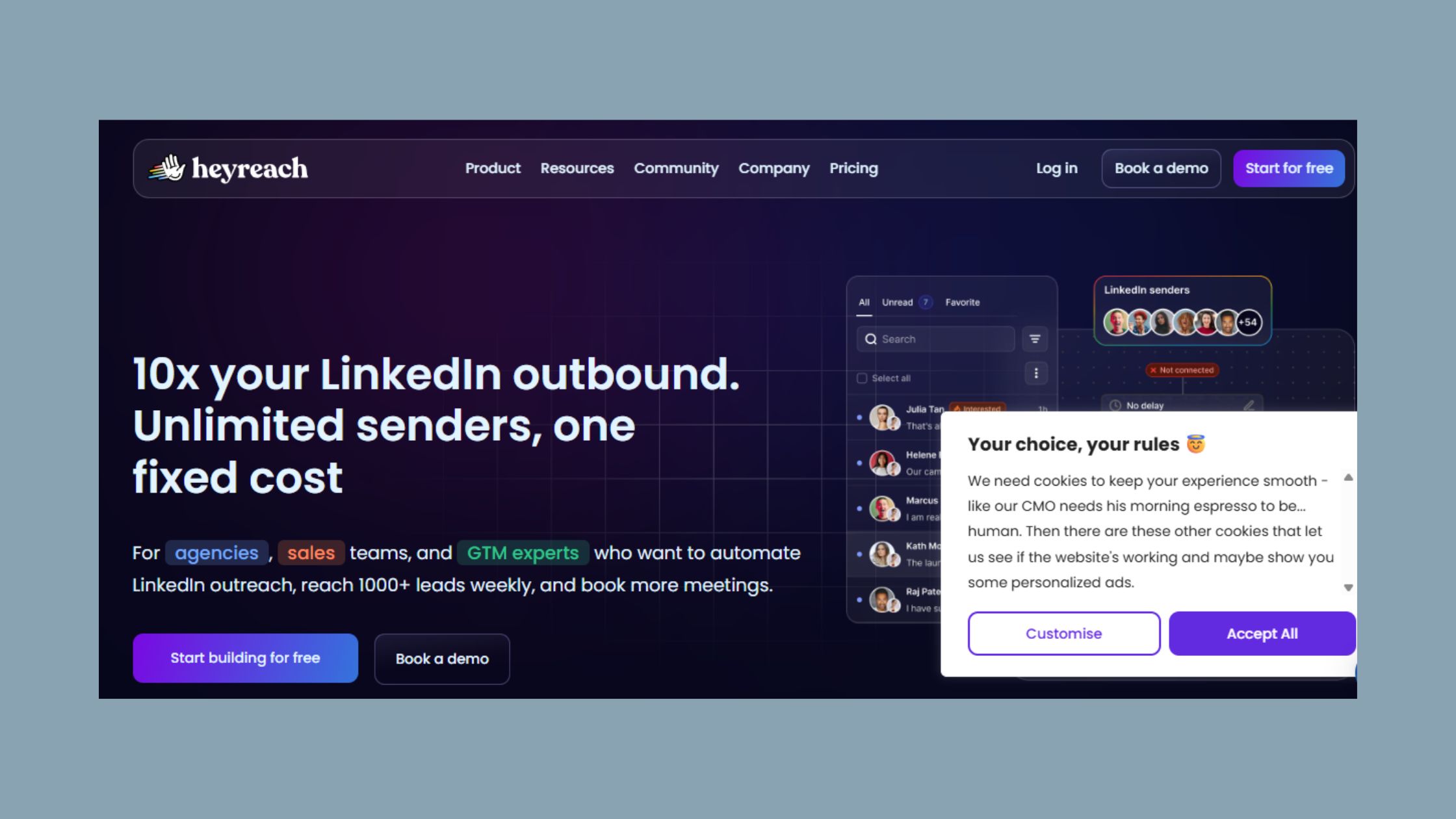
HeyReach is a cloud-based LinkedIn automation tool designed for agencies and B2B sales teams that need to run outreach across multiple LinkedIn accounts at once. Unlike single-account tools that push one profile to its daily limit, HeyReach uses a seat rotation model — distributing connection requests, follow-up messages, and sequence steps across several connected LinkedIn accounts simultaneously. This keeps each individual account's daily activity well below LinkedIn's detection thresholds, which is the core architectural decision that separates HeyReach from most competitors.
Here's the practical mechanism: users build multi-step outreach sequences with personalisation variables (first name, company, role, etc.), then HeyReach assigns and rotates the sending workload across all connected seats. Replies flow back into a centralised inbox, so the team manages conversations in one place regardless of which account sent the original request.
Understanding this rotation model is non-negotiable before evaluating HeyReach — it's simultaneously the source of its competitive advantage and the reason its pricing structure looks the way it does.
Core Features and Capabilities in 2026
- Multi-account seat management — connect and manage multiple LinkedIn profiles from one dashboard
- Automated outreach sequences — multi-step connection + message + follow-up flows with personalisation variables
- Unified inbox — all replies from all accounts consolidated in one interface
- CRM integrations — native or Zapier-based connections to HubSpot, Pipedrive, and others
- White-label reporting — agency-tier plans include branded dashboards for client reporting
- LinkedIn Sales Navigator compatibility — import lead lists directly from Sales Nav searches
- Agency client workspaces — separate campaign environments per client, managed from one account
The rotation model also matters for your B2B lead generation workflow design. Because HeyReach spreads activity across accounts, your targeting list needs to be segmented carefully so different accounts aren't approaching the same prospects — something single-account tools never have to manage. Now that the architecture is clear, here's what you'll actually pay for it.
HeyReach Pricing Plans: What Do You Actually Pay For?
HeyReach prices per LinkedIn account seat, not per user — and that distinction matters enormously when you're building an honest cost model. Most competing tools charge per user login or per campaign; HeyReach's per-seat model is more transparent but scales linearly, which means costs accelerate as you add client accounts.
According to ConnectSafely (2026), the LinkedIn automation tools market has reached an estimated $850 million annually, growing 42% year-over-year — which tells you both how much demand exists and how crowded the competitive landscape has become.
As of 2026, HeyReach's plans start at a per-seat monthly fee, with agency tiers unlocking white-label reporting, client dashboards, and bulk seat discounts. Since pricing changes regularly, always verify current tiers at heyreach.io. The structure you should plan around looks like this:
- Starter / Solo tier: 1–2 seats, basic sequences, limited integrations — suited to individual SDRs or founders testing outreach
- Growth tier: 3–10 seats, full sequence builder, CRM integrations, unified inbox — the entry point for small agencies
- Agency tier: 10+ seats, white-label reporting, client workspaces, bulk discounts, priority support
Who Gets the Most Value from Each Plan Tier?
Teams that consistently get the most value from each tier follow a simple pattern: value scales with the ratio of seats managed to human hours spent managing them. A solo founder running 1 account gets minimal benefit from HeyReach versus a cheaper single-account tool. An agency running 15 client accounts gets substantial operational value from the centralised inbox and client dashboards alone.
Is HeyReach worth it for LinkedIn outreach? The honest answer: at 5+ seats under active management, the multi-seat coordination features justify the cost. At 1–2 seats, evaluate whether you genuinely need the architecture or whether a simpler tool handles your volume more cost-effectively.
The per-seat model forces an honest conversation: your true cost is seats × monthly price + team hours for setup, copy, and monitoring. Teams that skip this calculation consistently overpay for volume they don't convert.
Does HeyReach Get LinkedIn Accounts Banned? Safety and Compliance Reality
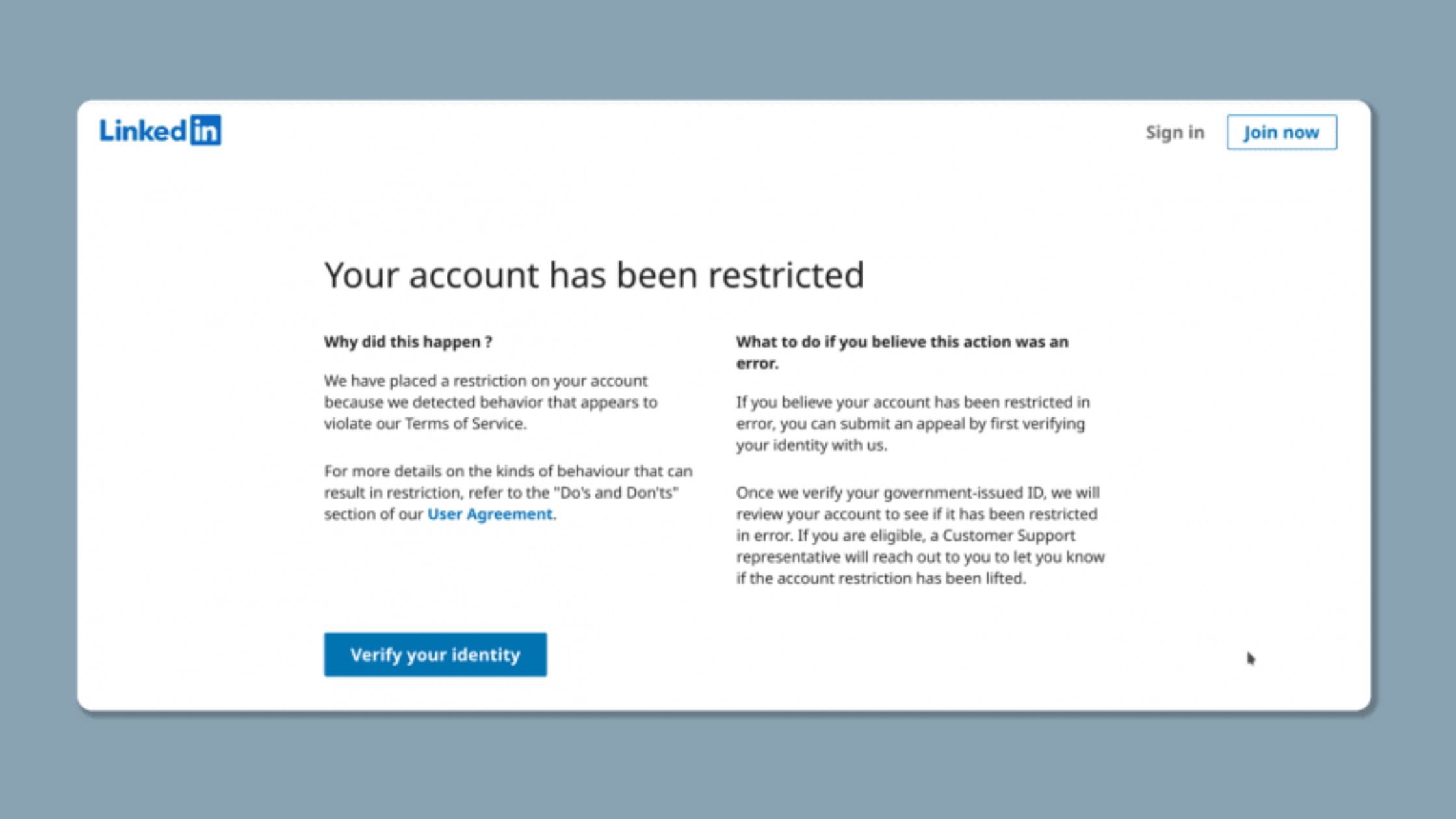
No LinkedIn automation tool can guarantee account safety — and any vendor that claims otherwise is misrepresenting LinkedIn's terms of service. That said, HeyReach's architecture is specifically designed to reduce the risk profile compared to aggressive single-account automation.
LinkedIn account safety compliance is governed by LinkedIn's detection systems, which monitor for behavioural signals that look non-human: unusually high connection request volumes, identical message copy sent at machine-speed, scraping activity, and rapid profile visiting patterns. LinkedIn's detection has improved significantly through 2025–2026, which means the margin for sloppy automation has narrowed.
What HeyReach does well: by distributing activity across multiple seats, each individual account sends far fewer requests per day than a single-account tool running the same total volume. This keeps per-account behaviour closer to human norms. What HeyReach cannot do: override LinkedIn's terms of service or protect accounts that use aggressive daily limits, scraped lists of poor quality, or identical copy across thousands of messages.
Common Mistakes That Get Accounts Flagged
A recurring pattern among teams using any LinkedIn automation tool — including HeyReach — is underestimating how much operating discipline matters relative to tool choice. The most common mistakes observed:
- Skipping account warm-up — new accounts pushed to full sending volume immediately flag within days
- Copy-pasting identical messages — LinkedIn detects near-identical message patterns across high send volumes
- Ignoring withdrawal rates — pending connection requests left unaccepted for weeks signal spam behaviour
- Overshooting daily limits — even with seat rotation, individual accounts pushed above ~80–100 requests/day increase risk measurably
- Using scraped or purchased lists — Quora practitioners consistently note that Sales Navigator list accuracy sits around 33%, meaning low-quality targeting generates low acceptance rates that further flag accounts
The safety discipline required applies to every linkedin outreach automation tool on the market. HeyReach's rotation model is a structural advantage — not a safety guarantee. With that context established, here's what you can realistically expect from a well-run HeyReach campaign.
What Results Can You Realistically Expect from HeyReach?
Realistic connection request acceptance rates with properly personalised outreach sequences sit in the 25–40% range. Generic blasts — same message, no personalisation, untargeted lists — typically fall below 15% and simultaneously elevate account flag risk. The delta between these two outcomes is almost entirely a function of targeting quality and copy quality, not which tool you use.
Teams that consistently report strong HeyReach ROI tend to share a specific operational profile: they invest in building clean, well-segmented lead lists, they write genuinely personalised openers (not just {{FirstName}} tokens), and they manage reply volume as a sales function rather than leaving it to junior team members.
In terms of volume: HeyReach's multi-seat architecture allows meaningful aggregate sending — potentially hundreds of connection requests per week across all seats — without stressing any individual account. For an agency managing 10 client accounts, that can translate to a substantial pipeline acceleration if the underlying offer and outreach sequence personalisation are solid.
Who Is HeyReach Best Suited For?
Who is HeyReach best suited for? Based on usage patterns, three profiles get disproportionate value:
- LinkedIn agencies running outreach for multiple clients — the white-label reporting and client workspace separation alone justify the price at this scale
- B2B sales teams with 5+ SDRs — coordinating sequences across reps from one dashboard reduces operational complexity significantly
- Founders or consultants managing multiple personal brand accounts — the unified inbox eliminates the tab-switching overhead of managing accounts manually
The honest ROI benchmark for any linkedin automation tool for lead generation: the tool earns its cost when the qualified conversations it generates, multiplied by your close rate and deal value, outpace the monthly seat fees plus team time. Track this explicitly — vague "activity metrics" will obscure whether you're actually getting returns.
For teams focused on LinkedIn posting schedule and timing ROI, it's worth noting that outreach ROI and content ROI compound together — prospects who see your content AND receive a personalised message convert at measurably higher rates than cold outreach alone.
Want to boost your LinkedIn post visibility alongside your outreach strategy?
HyperClapper connects your posts with real engagement channels so every piece of content you publish gets the early traction it needs to reach more of your target audience.
See How HyperClapper WorksHeyReach vs Expandi vs Lemlist: Which LinkedIn Tool Wins in 2026?
Most practitioners evaluating LinkedIn outreach tools in 2026 end up comparing the same three names: HeyReach, Expandi, and Lemlist. They overlap enough to cause confusion but serve meaningfully different use cases. Here's the honest comparison — followed by when outreach tools are the wrong category entirely.
| Tool | Best For | Multi-Seat? | Multi-Channel? | Safety Model | Price Signal |
|---|---|---|---|---|---|
| HeyReach | Agencies, multi-seat teams | ✓ Core feature | LinkedIn-native | Rotation-based | Per-seat |
| Expandi | Solo power users, deep sequences | Limited | LinkedIn + basic email | Conservative limits | Per account |
| Lemlist | Multi-channel teams (email + LinkedIn) | Via team plans | ✓ Email-first | Moderate | Per user |
| HyperClapper | Content visibility, engagement growth | Channel-based | LinkedIn engagement | Real users, Content Guard | Channel-based |
HeyReach vs Expandi: Both are cloud-based with safety-conscious sending limits. Expandi's sequence logic is deeper and better suited to single-account users who want granular control over branching flows. HeyReach's multi-seat management is the clear winner for agencies — it's architecturally built for that use case in a way Expandi isn't.
HeyReach vs Lemlist LinkedIn: This comparison is almost a category mismatch. Lemlist is genuinely multi-channel — email is its primary channel, with LinkedIn as a secondary touch. It offers polished personalisation features (dynamic images, video thumbnails) that HeyReach doesn't match. If your team lives in email-first outreach and LinkedIn is a supporting channel, Lemlist wins. If LinkedIn is your primary pipeline driver, HeyReach is more purpose-built.
According to Clearout's 2026 LinkedIn automation tool comparison, the best LinkedIn automation tools for agencies in 2026 cluster around HeyReach, Expandi, and La Growth Machine — each serving a distinct operational profile. The right choice depends on whether multi-channel, multi-seat, or deep personalisation is your primary lever.
When to Choose an Engagement Tool Instead of an Outreach Tool
The most common failure mode in LinkedIn growth strategy is treating outreach and content as separate problems requiring separate tools — then optimising only for outreach volume. What separates top-performing LinkedIn accounts from accounts with high send volumes but low authority is the combination of outreach and inbound content pull.
A HeyReach alternative worth considering isn't always another outreach tool. For creators, founders, and professionals whose primary goal is building LinkedIn algorithm visibility signals and audience authority — rather than cold pipeline — an engagement-first platform like HyperClapper addresses a fundamentally different need. HyperClapper connects posts with real engagement channels, generating genuine likes and contextual comments that signal content quality to LinkedIn's distribution algorithm. It's not an outreach tool — it's a content amplification tool, and for many professionals, that's the missing piece that outreach tools can't fill.
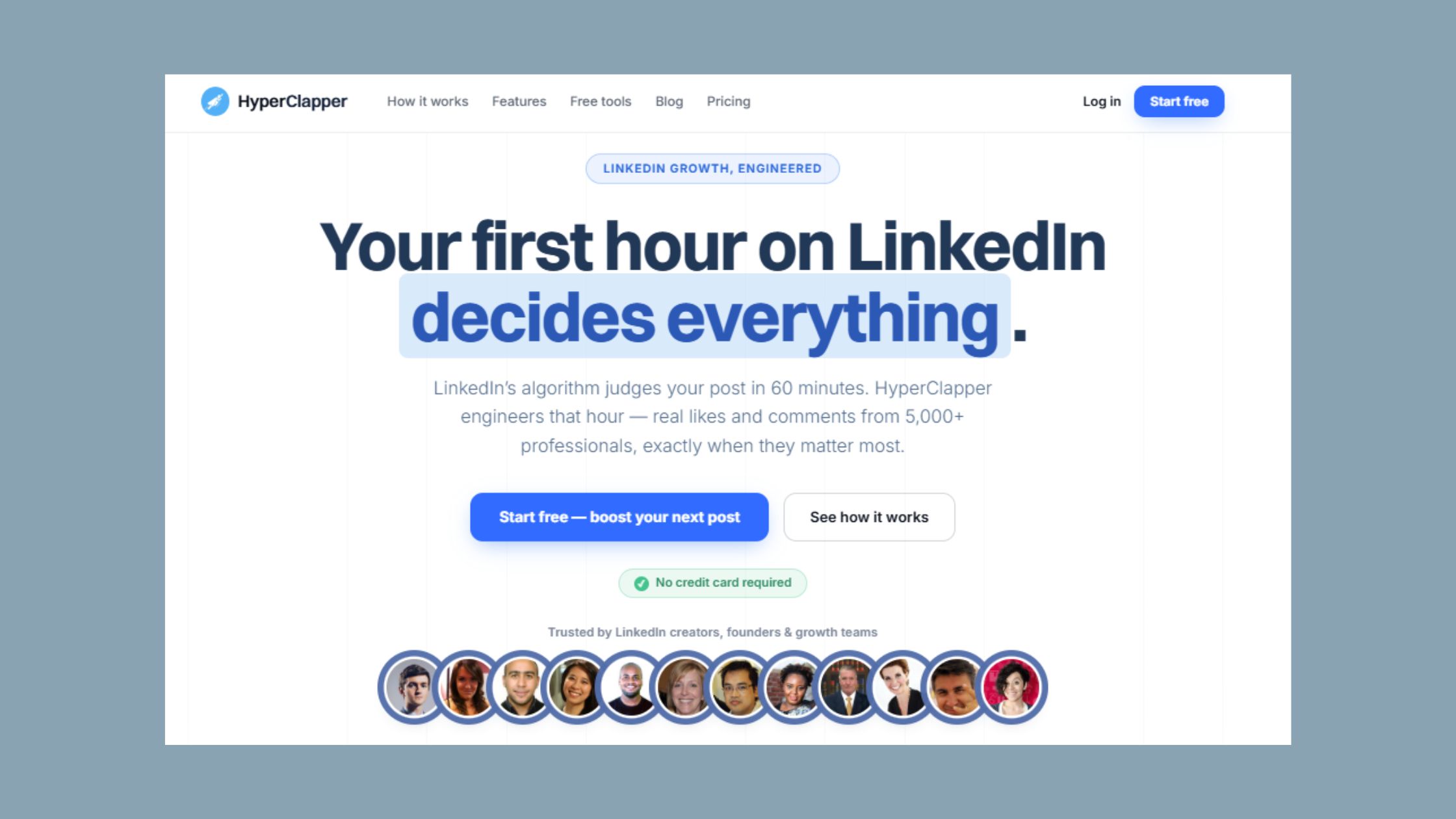
For teams serious about building real LinkedIn reactions without gaming the algorithm, combining outreach and engagement tools creates compounding visibility that neither approach achieves alone.
HeyReach Honest Verdict: Strengths, Limitations, and the ROI Verdict
After reviewing HeyReach's architecture, pricing model, safety posture, and competitive position, the picture is clearer than most vendor-adjacent reviews admit. This is a genuinely well-built tool that solves a real problem — and it's also a tool that cannot save a weak strategy.
Strengths:
- Multi-seat rotation is architecturally superior for agencies — no competitor matches it at this specific use case
- Clean, functional UI that doesn't require significant technical onboarding
- Solid CRM integrations that fit naturally into existing B2B sales workflows
- White-label reporting makes client management operationally viable at scale
- Safety-conscious sending model that beats aggressive single-account blasters on per-account risk
Limitations:
- Per-seat pricing scales in ways that hurt small operators and solo practitioners
- The tool requires significant strategic investment (list quality, copy, targeting) to deliver ROI — it amplifies good strategy and amplifies bad strategy equally
- Purely LinkedIn-native: teams who need email + LinkedIn multi-channel sequencing will find it limiting
- Does not address content visibility, LinkedIn algorithm signals, or inbound authority building — it's an outbound-only tool
The broader gap in LinkedIn automation tools is not outreach volume — it's that most tools help you reach more people while leaving your content authority untouched. Prospects who receive a cold message from someone with 47 followers and three posts respond differently than those who receive one from someone whose content they've already seen.
The verdict on HeyReach LinkedIn outreach ROI: it's a credible, well-constructed tool for its intended audience. For LinkedIn agencies and multi-seat B2B sales teams running 5+ accounts, it's one of the strongest options in 2026. For solo practitioners, founders, or teams where LinkedIn content visibility is the priority, better-matched tools exist.
What consistently separates accounts with real pipeline growth from accounts with impressive outreach volume is not any single tool — it's the combination of targeted outreach and genuine content authority. Teams that invest in both see compounding results. Teams that optimise only for outreach volume typically plateau regardless of which automation tool they use.
For teams building LinkedIn profile keyword authority alongside outreach, the content visibility side of the equation is where HyperClapper fills the gap that HeyReach and similar outreach tools leave open — real engagement from real people, driving genuine LinkedIn algorithm visibility signals on every post you publish.
✓ The LinkedIn Automation Safety Checklist
- ☐Warm up each new account for 2–3 weeks at 10–20 requests/day before scaling
- ☐Keep individual account daily limits below 80 connection requests/day
- ☐Personalise opening messages beyond first name — reference role, recent post, or company specifics
- ☐Withdraw pending connection requests older than 3 weeks to maintain a clean pending queue
- ☐Use verified, targeted lists — avoid scraped or purchased databases with low accuracy
- ☐Monitor each account's acceptance rate weekly — below 20% signals targeting or copy problems
- ☐Pair outreach activity with active content publishing to build profile authority alongside pipeline
- ☐Review LinkedIn's terms of service updates quarterly — detection criteria evolve continuously
Your outreach reaches prospects. Your content makes them say yes.
HyperClapper amplifies your LinkedIn posts with real engagement from real people — so every prospect your outreach touches already knows your name. Try it free alongside your outreach strategy.
Start Boosting Posts FreeFrequently Asked Questions About HeyReach and LinkedIn Automation
Is HeyReach a safe LinkedIn automation tool that won't get my account banned?
HeyReach is designed to reduce ban risk through multi-seat rotation, keeping each account's daily activity below LinkedIn's detection thresholds — but it cannot guarantee safety. LinkedIn's terms of service prohibit all third-party automation, and its detection systems have improved significantly. Account safety depends more on operating discipline (conservative limits, warm-up, personalised copy) than on tool choice alone.
What is the best LinkedIn automation tool for lead generation agencies in 2026?
For pure LinkedIn agency workflows managing multiple client accounts, HeyReach is among the strongest options in 2026 due to its multi-seat architecture, white-label reporting, and unified inbox. According to SBL's 2026 tool comparison, top agency-focused tools also include Expandi and La Growth Machine — the right choice depends on whether you prioritise multi-seat management, deep sequencing, or multi-channel capability.
How much does HeyReach cost and is it good value for B2B sales teams?
HeyReach charges per LinkedIn seat, with agency tiers offering white-label reporting and bulk discounts. It delivers clear value for B2B sales teams managing 5+ LinkedIn accounts; below that threshold, the per-seat cost may exceed what simpler tools charge for equivalent functionality. Always calculate total cost as seats × monthly price plus team hours for campaign management — not just the listed seat price.
Can HeyReach automate LinkedIn connection requests and follow-ups at scale?
Yes — automating linkedin outreach automation tool workflows including connection requests, follow-up messages, and multi-step sequences is HeyReach's core function. Its rotation model distributes this activity across multiple seats, enabling agencies to send hundreds of connection requests per week in aggregate while keeping each individual account's daily volume within safer operating ranges.
What results can you expect from HeyReach outreach campaigns?
Realistically, personalised HeyReach campaigns achieve 25–40% connection acceptance rates; generic blasts fall below 15%. The tool is a delivery mechanism — it amplifies whatever targeting, copy, and offer you bring to it. Teams with strong lists and genuine personalisation consistently outperform teams relying on volume alone, regardless of which tool they use. Track qualified conversations per seat per month, not raw connection counts.
What is the best HeyReach alternative if it doesn't fit my needs?
The best alternative depends on your gap. For single-account deep sequences: Expandi. For multi-channel email + LinkedIn: Lemlist. For sophisticated branching automation: La Growth Machine. For linkedin tools for lead generation focused on content visibility and inbound authority rather than cold outreach: HyperClapper fills a different but complementary role — real post engagement that builds the profile authority that makes outreach convert at higher rates.
Does HeyReach work for free LinkedIn automation tool needs?
HeyReach does not offer a meaningful free tier for ongoing outreach at scale — it is a paid per-seat tool. A free linkedin automation tool option typically means trial periods, freemium caps, or open-source tools with significant limitations. If cost is the primary constraint, evaluate whether a free trial period gives you enough data to project ROI before committing to monthly seat fees.



