Is HeyReach API Really Worth It for LinkedIn Growth in 2026?
The heyreach campaign api reviewed: endpoints, pricing tiers, code examples, competitor comparison, and an honest ROI verdict for agencies in 2026.
📅 ⏱ 17 min read📝 ~3200 words
The heyreach campaign api lets agencies and developer teams create, configure, and launch LinkedIn outreach campaigns entirely through code — no dashboard clicks required. A pattern observed consistently across agency workflows is that teams hit a ceiling with manual campaign management around the 5–10 sender-account mark, and that's exactly when a programmatic interface stops being a luxury and starts being a necessity. But "can it be done via API?" and "is it worth doing via API?" are two different questions. This guide answers both — covering what the API actually does, where it falls short, how it prices against alternatives, and when you're genuinely better off skipping it.
Key Takeaways
Who this is for: Agencies, dev teams, and growth operators managing 10+ LinkedIn sender accounts programmatically
What you'll learn: How the HeyReach Campaign API works, its real limitations, pricing tiers, and how it stacks up against Lemlist, Expandi, Phantombuster, and Outreach.io
Why it matters: The wrong LinkedIn automation API can get sender accounts flagged — understanding the safety tradeoffs before buying in protects your clients
Most counterintuitive finding: HeyReach's API has no native analytics endpoint — you get campaign control but no programmatic reporting, which forces a dashboard dependency anyway
For smaller teams: The API tier is overkill — the dashboard covers everything under 3 campaigns/month without the engineering overhead
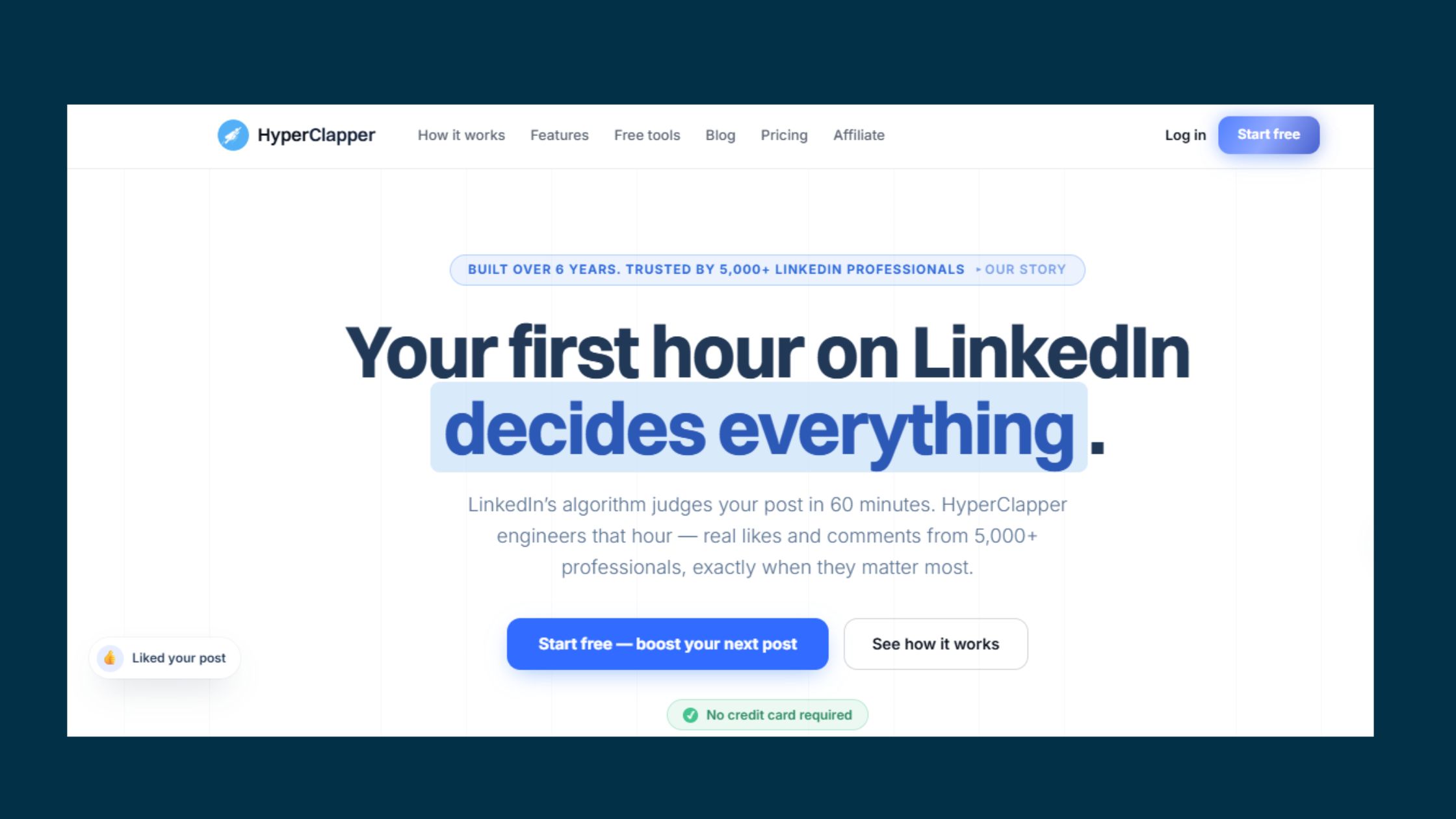
Alternative angle: Engagement-first tools like HyperClapper take a fundamentally different (and safer) approach to LinkedIn growth through real community engagement rather than cold outreach automation
What Is the HeyReach API and What Can It Actually Do?
What Is the HeyReach API
The HeyReach Campaign API is a REST-based programmatic interface for building, configuring, and managing LinkedIn outreach campaigns without touching the HeyReach dashboard. It is designed specifically for agencies and developer teams that need to trigger campaign actions dynamically — based on CRM events, lead list updates, or custom workflow logic — rather than setting campaigns up manually each time.
The distinction matters: HeyReach the product is a LinkedIn automation platform with a visual UI. HeyReach the API is a separate surface that exposes a subset of those capabilities programmatically, enabling multi-sender sequence orchestration (coordinating outreach across multiple LinkedIn sender accounts simultaneously) and webhook-triggered lead enrollment (automatically adding new leads to active campaigns when an external system fires an event).
The core API surface area covers:
Campaign creation — spin up new campaigns with defined parameters via POST
Sequence updates — modify the message steps in an active campaign
Account assignment — programmatically assign or rotate sender LinkedIn accounts
Schedule control — set or adjust send windows without dashboard access
Sequence retrieval — GET the current state of a campaign's sequence for auditing or syncing
What it does not expose natively — and this is a real gap — is analytics. There is no reporting endpoint. Campaign performance data lives in the dashboard only, which creates an awkward dependency for teams trying to build fully automated reporting pipelines.
⚠️
Warning:Many users searching for "heyreach campaign api" land on generic tool-comparison threads with no clear answer on what the API actually covers. The absence of a public analytics endpoint is consistently underreported — if programmatic reporting is a requirement for your stack, plan to supplement with dashboard exports or third-party monitoring tools from day one.
HeyReach API vs. the Dashboard: When Does Programmatic Control Make Sense?
The dashboard is sufficient for most use cases under 5 sender accounts and 3 concurrent campaigns. Programmatic control becomes genuinely valuable when campaign creation is a repeatable, templated operation — for example, when a new client onboards and an agency needs to spin up a standardised sequence automatically, or when a CRM event (like a lead reaching a specific stage) should trigger immediate LinkedIn outreach enrollment without a human in the loop.
Teams that reach that inflection point and use the API consistently see meaningful time savings on campaign operations. Teams that adopt the API before hitting it spend engineering time on integration that the dashboard would have handled with a few clicks.
How the HeyReach Campaign API Works: Core Endpoints and Authentication
HeyReach API authentication uses an OAuth bearer token authentication flow — you obtain an access token from HeyReach's auth endpoint, attach it as a Bearer header on every subsequent request, and rotate it before expiry to maintain uninterrupted campaign operations. Tokens that expire mid-campaign without rotation cause silent failures: the campaign appears active in the dashboard but stops accepting programmatic updates.
The six primary campaign endpoints, in the order you'd typically call them:
POST /api/public/campaign/Create — creates a new campaign with name, type, and initial config
POST /api/public/campaign/UpdateSettings — sets campaign-level parameters (daily limits, targeting filters)
POST /api/public/campaign/UpdateSequence — defines or modifies the message sequence steps
POST /api/public/campaign/UpdateAccounts — assigns LinkedIn sender accounts to the campaign
POST /api/public/campaign/UpdateSchedule — configures send windows and timezone settings
GET /api/public/campaign/GetCampaignSequence — retrieves the current sequence state for a given campaign ID
On rate limiting and request pagination: HeyReach applies per-minute and per-day request caps that vary by pricing tier. Exceeding burst limits doesn't immediately break campaigns, but it does queue requests in a way that can desynchronize your lead enrollment timing — a significant issue if your workflow depends on precise sequencing. Implement exponential backoff retry logic on any 429 response, and log all retries to catch patterns before they become account-level problems.
Real Code: Campaign Creation in Python and Node.js
Here's a minimal end-to-end flow that the competitor documentation omits entirely.
💡
Pro Tip:Always call UpdateSchedule before enrolling leads. Campaigns without a confirmed schedule default to platform-level send windows, which may fire messages outside your client's preferred timezone — a common agency complaint in HeyReach community threads.
Multi-Sender Sequence Orchestration and CRM Integration
The UpdateAccounts endpoint is where HeyReach's multi-sender capability becomes genuinely powerful. You can assign multiple sender accounts to a single campaign, and HeyReach distributes outreach across them — reducing per-account daily volume to safer levels. For CRM integration, the standard pattern is a webhook listener on your CRM side: when a lead hits a qualifying stage, the webhook fires a POST to your middleware, which calls the HeyReach API to enroll that lead in the appropriate campaign. Tools like n8n and Make (formerly Integromat) are commonly used as the glue layer between CRM platforms like HubSpot or Salesforce and the HeyReach API, as documented in HeyReach's own n8n integration guide.
HeyReach Pricing Plans 2026 and API Access Tiers
Not every HeyReach plan includes API access — this is the most common discovery gap for buyers evaluating the platform. As of 2026, the public Campaign API is gated behind HeyReach's higher-tier plans (typically the Agency plan and above). Starter and Growth tiers get dashboard access and basic campaign tooling, but programmatic endpoints are not exposed at those levels.
What changes as you move up tiers:
Request caps: lower tiers that happen to have limited API access face tighter per-day call limits
Campaign limits: the number of concurrent active campaigns scales with tier
Sender account maximums: the Agency plan supports substantially more simultaneous LinkedIn sender accounts — the core value prop for multi-account outreach
What happens at the ceiling: hitting campaign or sender limits mid-month doesn't pause existing campaigns, but it blocks new campaign creation via API — requests return a quota error that teams often discover only when an automated onboarding flow breaks
HeyReach API Pricing vs. Competitors
On a cost-per-LinkedIn-sender basis, HeyReach's Agency tier sits below Outreach.io significantly, roughly comparable to Lemlist's Scale plan for LinkedIn-only use cases, and above Phantombuster's Starter tier (though Phantombuster's model is fundamentally different — phantom-based scraping, not managed sequences). The honest ROI calculation: if your agency is billing clients for LinkedIn outreach campaigns and managing more than 8–10 sender accounts, the API tier pays for itself in reduced manual campaign management time within roughly 4–6 weeks. Below that volume, the math is tight.
~21%
Median LinkedIn connection acceptance rate among HeyReach campaigns targeting qualified leads
According to HeyReach's own A/B testing data, campaigns targeting qualified leads see a median connection acceptance rate of ~21% and reply rate of ~22%. In practice, that means an agency running 500 weekly connection requests across 10 sender accounts (50/account — well within safe limits) can expect roughly 105 new connections per week from qualified outreach. At that volume, the API pays back in campaign management hours saved.
HeyReach API vs. Competitors: Lemlist, Expandi, Phantombuster, and Outreach.io
HeyReach API vs. Competitors: Lemlist, Expandi, Phantombuster, and Outreach.io
Four tools come up repeatedly when evaluating the best LinkedIn automation API tools 2026 landscape. They are not equivalent — each occupies a meaningfully different position.
Tool
API Maturity
LinkedIn Safety
Multi-Account
Best For
HeyReach
Solid, LinkedIn-focused
Good (built-in throttling)
✅ Native
LinkedIn agencies, 8–50 senders
Lemlist
More mature, multi-channel
Moderate
Limited
Email + LinkedIn mixed outreach
Expandi
No true public API
Good
Limited
Solo founders, small teams
Phantombuster
Flexible, scraping-first
Lower (higher ban risk)
Via phantoms only
Dev-heavy, custom pipelines
Outreach.io
Enterprise-grade
High (compliance controls)
Via Salesforce integration
Enterprise CRM-heavy stacks
The HeyReach vs Lemlist API integration comparison comes down to channel focus. Lemlist's API surface is broader — it handles email sequences and LinkedIn touches within the same workflow, with more mature webhook support and better documentation for multi-step multi-channel flows. If your outreach is LinkedIn-only, HeyReach's tighter focus is an advantage. If you're blending channels, Lemlist's API wins on flexibility.
The outreach api from outreach.io (the enterprise sales engagement platform) targets a completely different buyer — CRM-embedded enterprise sales teams with Salesforce at the centre. Its API is significantly more complex, substantially more expensive, and built around opportunities and accounts in CRM rather than LinkedIn-native sender accounts. HeyReach wins on simplicity and LinkedIn-specific pricing for agencies that don't need that depth.
The biggest structural difference between HeyReach and Phantombuster API isn't price — it's intent. Phantombuster scrapes first and sequences second. HeyReach sequences first and limits scraping exposure by design. That distinction determines which one is safer to hand to a client's LinkedIn account.
HeyReach Alternatives With API Access Worth Considering in 2026
Teams specifically evaluating HeyReach alternatives with API access should look at Expandi's 2026 alternatives comparison, which covers 10 tools across safety, pricing, and features. The short version: Waalaxy has an API beta, La Growth Machine offers solid multi-channel API access, and Dripify has limited programmatic hooks — but none match HeyReach's native multi-sender LinkedIn API depth as of mid-2026.
Want LinkedIn visibility without the outreach API complexity?
HyperClapper builds LinkedIn reach through real community engagement and AI-powered replies — no cold outreach, no sender account risk, no developer setup required.
Risks, Limitations, and LinkedIn ToS Compliance for Automation APIs
LinkedIn's Terms of Service explicitly prohibit unauthorized automated actions that replicate human behaviour at scale — and every LinkedIn automation API, including HeyReach's, operates in that gray zone. What HeyReach does to reduce risk: it applies configurable rate throttling (limiting daily actions per sender account), introduces human-like delays between sequence steps, and manages LinkedIn session tokens internally to reduce session expiry–related detection signals.
What that does not protect against: volume. The most common failure mode across agencies using LinkedIn outreach APIs is onboarding a new sender account and immediately running it at full API-allocated daily limits. LinkedIn's trust model weights account age and prior behaviour heavily — a fresh account sending 40+ connection requests on day one is a reliable ban trigger regardless of how clean the API implementation is. Accounts need 2–4 weeks of warm-up with gradually increasing activity before any API-driven campaign volume is safe.
🔴
Avoid:Auto-enrolling CRM leads into HeyReach campaigns without verifying account warm-up status first. The API has no built-in account readiness check — it will fire requests on a cold account if you tell it to, and LinkedIn's detection will respond accordingly.
Honest HeyReach API features and limitations summary:
Limited Sales Navigator support at lower tiers — advanced filtering workflows require higher plans
No content moderation at the API level — message content filtering is a UI feature only; the API will push whatever message string you send it
No native A/B testing endpoint — split-testing sequences requires creating separate campaigns and comparing results manually
GDPR and Agency Compliance Considerations
✓ HeyReach API Compliance Checklist for Agencies
☐Verify all CRM leads enrolled via API have a documented lawful basis for LinkedIn cold outreach (legitimate interest or explicit consent)
☐Confirm sender accounts are fully warmed up (minimum 2–3 weeks of organic LinkedIn activity) before enabling API campaign enrollment
☐Set daily connection request limits below 30/day per sender account for accounts under 6 months old
☐Implement token rotation logic to prevent silent mid-campaign failures from expired bearer tokens
☐Review all message templates manually before API deployment — no content moderation exists at the API layer
☐Log all API calls and 429 responses to catch rate limit patterns before they escalate to account flags
☐Include opt-out handling: any lead who declines or doesn't respond after sequence completion should be flagged in CRM and excluded from re-enrollment
Is HeyReach API Worth It? ROI Verdict for Agencies and Growth Teams in 2026
For agencies managing 10 or more LinkedIn sender accounts with programmatic lead enrollment requirements, the HeyReach Campaign API delivers a defensible return. Campaign creation, account assignment, and sequence updates that take 20–30 minutes per client per week in the dashboard take under 2 minutes when automated — at agency scale across 20+ clients, that's a material operational improvement.
The ROI for LinkedIn growth tools ROI 2026 context is worth stating clearly: the API does not improve outreach results. What separates successful HeyReach API deployments from expensive failures is targeting and message quality — both of which exist entirely outside the API. Teams that consistently see strong results are running the API on top of tightly defined ICPs and tested message frameworks. Teams that struggle are automating a strategy that wasn't working manually and expecting volume to fix it.
For solo founders or small teams running fewer than 3 campaigns per month, the API tier is genuinely overkill. The dashboard handles that volume without engineering overhead, and the cost-per-result math doesn't favour the upgrade. This is consistent with a pattern observed across small-team LinkedIn tooling decisions — the most expensive mistake is buying for the team you plan to be, not the team you are.
It's also worth considering what HeyReach API is not: it is a cold outreach orchestration tool, not an engagement or visibility platform. For professionals whose primary goal is LinkedIn reach, post visibility, and building an audience rather than scaling cold connection requests, the risk profile and use case are meaningfully different. LinkedIn growth strategies built on real engagement — like community-based post boosting and AI-powered replies — carry significantly lower account risk and serve a different growth objective entirely. Tools like HyperClapper are built specifically for that use case, connecting users with real engagement communities rather than automating cold outreach.
HyperClapper's real community engagement channels and AI-powered replies drive genuine LinkedIn visibility — no cold outreach, no account ban risk, no engineering overhead.
Frequently Asked Questions About HeyReach API and LinkedIn Automation
Is the HeyReach API good enough to replace manual LinkedIn outreach in 2026?
For agencies managing 10+ sender accounts, yes — the HeyReach API automates the repetitive operational layer of campaign creation, lead enrollment, and sequence updates well enough to replace manual dashboard work at scale. What it cannot replace is strategy: targeting, message quality, and ICP definition must still happen upstream. The API amplifies whatever approach it's given.
How do I integrate HeyReach with my CRM using the API?
The standard integration pattern uses a webhook listener in your CRM (HubSpot, Salesforce, or Pipedrive) that fires when a lead hits a qualifying stage. A middleware layer — typically n8n, Make, or a custom Node.js service — receives that webhook and calls the HeyReach campaign enrollment endpoint to add the lead programmatically. HeyReach itself provides no native CRM connectors; the integration is always custom or middleware-based.
What are the biggest limitations of HeyReach API for LinkedIn automation?
The three most significant limitations are: no analytics or reporting endpoint (performance data is dashboard-only), no content moderation at the API layer (you can push any message string), and no native A/B testing endpoint. Additionally, Sales Navigator workflows are limited to higher pricing tiers, and webhook support for inbound reply handling requires middleware rather than native API callbacks.
Can HeyReach API help agencies manage multiple LinkedIn accounts safely?
Yes — multi-sender account management is HeyReach's core differentiator. The UpdateAccounts endpoint lets you assign and rotate sender accounts programmatically across campaigns. Safety depends on account warm-up: the API will not prevent you from running a cold account at full volume, so agencies must enforce warm-up protocols manually before enabling API-driven campaign enrollment on any account.
How does HeyReach API compare to building a custom LinkedIn automation solution?
Building custom means using LinkedIn's unofficial private API or browser automation — both of which carry substantially higher detection and ban risk than HeyReach's managed approach. Custom builds also require ongoing maintenance as LinkedIn updates its session management. HeyReach API trades some flexibility for a managed safety layer and maintained infrastructure — for most agency use cases, that tradeoff is clearly worth it.
Does HeyReach API support multi-account LinkedIn outreach and what are the account limits?
Yes — multi-account LinkedIn outreach is native to HeyReach's API via the UpdateAccounts endpoint. Account limits scale with pricing tier: the Agency plan supports substantially more concurrent sender accounts than Starter or Growth plans. Exact maximums are plan-specific and subject to HeyReach's current terms; verify current limits directly with HeyReach before committing to a tier based on your account volume requirements.
Is HeyReach API worth it for content creators and solo founders?
Generally no. HeyReach API is engineered for programmatic agency workflows, not solo LinkedIn growth. Solo founders and content creators running 1–3 campaigns monthly get full value from the HeyReach dashboard without any API access. For visibility-focused LinkedIn growth, engagement-first platforms are a better fit — lower risk, no engineering setup, and directly aligned with how LinkedIn's algorithm rewards active post conversations rather than connection volume.
👋
⚡ Free plan
Leaving already?
Grab 3 free boosts on your next LinkedIn post — real likes & comments from 5,000+ creators. No card, cancel anytime.