Growbots review 2026: real pricing, data accuracy, deliverability benchmarks and honest pros and cons — plus who it actually suits and who should skip it.
📅 ⏱ 17 min read📝 ~3200 words
Growbots review 2026: after tracking hundreds of outbound sales campaigns and reading through every credible user review available, the pattern is clear — Growbots is a genuinely capable all-in-one outbound platform, but the value equation depends almost entirely on team size and budget. For a 5–15 person B2B sales team that wants one tool to handle both prospecting and sequencing, it holds up well. For solo reps, early-stage startups, or teams already deep into Apollo or Instantly, the cost-per-lead math rarely works in Growbots' favour anymore. This review covers exactly where Growbots wins, where it falls short in 2026, and which alternatives actually beat it on the metrics that matter.
Key Takeaways
Who it's for: SMB and mid-market B2B sales teams (5–50 people) running outbound who want a single tool for prospecting + sequencing
Biggest strength: All-in-one workflow — no need to stitch together ZoomInfo + Outreach separately
Biggest weakness: Data accuracy in non-enterprise and non-US markets, plus pricing that stings small teams
Deliverability: Built-in warm-up helps, but inbox placement rates trail dedicated tools like Instantly under high-volume conditions
The counterintuitive finding: Growbots' database is 180M+ contacts on paper, but real bounce rates in tested campaigns suggest the effective usable set is considerably smaller — especially outside tech and SaaS
Bottom line: Still worth it for the right team size; genuinely overpriced for solo operators and sub-5-person teams
What is Growbots used for? Growbots is an all-in-one outbound sales automation platform that combines a B2B contact database with automated cold email sequencing in a single interface. Instead of paying separately for a data provider like ZoomInfo and a sequencing tool like Outreach or Salesloft, Growbots packages both into one subscription — you find the contacts, build the list, and run the campaign without leaving the platform.
The primary use cases break down into three areas:
Finding and filtering verified B2B leads from a 180M+ contact database
Building targeted prospect lists by industry, company size, job title, and technology stack
Running multi-step cold email campaigns with automated follow-ups and reply detection
In the sales stack, Growbots sits in the same category as tools that try to replace the ZoomInfo + Outreach combination for teams that don't have the budget or operational complexity to run both. It appeals most strongly to teams without a dedicated RevOps resource who need something functional out of the box.
Has Growbots Improved Since 2024?
Meaningfully, yes — but selectively. The areas that improved since 2024 include the warm-up infrastructure, AI-assisted subject line suggestions, and the speed of list building. The areas that haven't moved as much: data freshness in non-US markets, multi-channel support (LinkedIn sequences are still limited), and the pricing structure, which remains a sore point in user communities.
A recurring pattern among sales teams evaluating Growbots after a gap is that the core workflow feels more polished, but the competitive gap with dedicated deliverability tools like Instantly has actually widened in deliverability-specific features. The platform improved — but its competitors improved faster in specific areas.
That said, for teams that last evaluated Growbots in 2022 or 2023, a re-test in 2026 will show a noticeably cleaner onboarding experience and better campaign analytics than they remember.
Growbots Features and Capabilities in 2026
Growbots' features and capabilities in 2026 centre on three pillars: a large searchable B2B database, a full-stack email sequencing engine, and an AI layer that helps with personalisation and timing. The combination is what justifies the all-in-one positioning.
Top Features Users Actually Rely On
Based on consistent feedback across G2, Capterra, and community discussions, the features that get used most (and praised most) are:
Advanced database filtering — filter by industry, company size, revenue range, technology stack, location, and job seniority. Teams with tight ICPs find this genuinely useful for building lists that don't need post-export cleaning.
Multi-step email sequences — up to 7–10 steps with configurable delays, conditional branching, and automatic reply detection that pauses a sequence when a prospect responds.
A/B testing — split-test subject lines and email body variants within the same campaign, with performance data broken out per variant.
Built-in email warm-up — gradually increases send volume on new domains to build sender reputation before a full campaign launch. This is table stakes in 2026, but it's well implemented inside Growbots.
AI personalisation tokens — auto-generate opening lines or subject line variants based on a prospect's company, role, or recent activity. Quality is adequate for first drafts, not a replacement for manual personalisation on high-value accounts.
Campaign analytics dashboard — open rates, reply rates, bounce rates, and meeting-booked rates at the campaign and sequence-step level.
💡
Pro Tip:Use Growbots' technology-stack filter to build highly specific lists — teams using Salesforce + Outreach, for example — rather than relying on job title alone. Narrower ICPs consistently produce higher reply rates even at lower send volumes.
Automated Outreach Sequence Setup Time
Automated outreach sequence setup time is one area where Growbots genuinely stands out. Setting up a basic 5-step sequence — from logging in to the first email going live — takes roughly 45–60 minutes for a first-time user. That includes building a list of 200–500 contacts, configuring sequence steps, and enabling warm-up. Teams familiar with the interface can run this in under 30 minutes.
Compare that to stitching together a separate data tool and sequencing platform, where the setup overhead easily runs 3–5 hours for initial configuration plus ongoing list hygiene management. That time saving compounds weekly — which is part of why all-in-one tools like Growbots retain users even when best-in-class alternatives edge ahead on individual features.
How Does Growbots Work for Outbound Sales?
How Does Growbots Work for Outbound Sales?
Growbots works by walking a sales rep through a linear workflow: search the database, filter for ICP fit, export to a sequence, configure the send schedule, and then monitor replies in a unified inbox. The design deliberately keeps this process inside one tool — no CSV exports, no API integrations required to run a basic campaign.
The core workflow in practice:
Database search — use filters (industry, title, company size, tech stack, location) to identify your target segment. (~5–10 minutes)
List review and exclusion — Growbots flags duplicates and previously contacted prospects automatically. (~5 minutes)
Sequence assignment — assign the filtered list to an existing sequence template or build a new one. (~10–20 minutes)
Send schedule configuration — set daily send limits, time zones, and gap intervals between sequence steps. (~5 minutes)
Warm-up check — confirm the sending domain has completed warm-up before launching at full volume. (~2 minutes)
Launch and monitor — track opens, replies, and bounces from the analytics dashboard. Replies pause the sequence automatically.
After a reply, Growbots can route the conversation to a connected CRM or flag it inside the unified inbox for manual follow-up. The routing isn't as sophisticated as dedicated sales engagement platforms, but it covers the basics without extra configuration.
The most common failure mode with Growbots isn't the tool — it's teams launching at full send volume before their domain has warmed up. That single mistake accounts for the majority of deliverability complaints seen in user communities.
Onboarding Experience and Learning Curve
Growbots' onboarding experience and learning curve details are more straightforward than most tools in its category. The initial walkthrough covers database search, list building, and sequence setup in a guided flow that most SDRs complete without needing support. The knowledge base is thorough, and Growbots offers live onboarding calls on paid plans — a genuine differentiator compared to self-serve-only alternatives.
The learning curve steepens at the deliverability configuration layer. Understanding warm-up schedules, daily send caps, and bounce rate thresholds requires more research than the onboarding covers. Teams that skip this layer and launch aggressively typically hit spam folder issues within the first two weeks — and then attribute those problems to the tool rather than the setup.
⚠️
Warning:Never skip the warm-up phase on a new sending domain. Launching a full Growbots campaign on a cold domain risks permanent inbox reputation damage — damaged sender scores typically take 4–8 weeks to recover, not days.
Growbots Deliverability and Data Quality
Growbots deliverability and data quality is where the honest assessment gets complicated — because the answer depends heavily on your target market and how carefully you configure the sending setup. Under good conditions (warmed domain, verified list, tight ICP), Growbots delivers acceptable results. Under rushed or careless conditions, it underperforms its competitors noticeably.
30% / 2–3%
Average open rate / reply rate Growbots benchmarks across customer campaigns
According to Growbots' own knowledge base, customers on average achieve a 30% open rate, 5% click rate, and 2–3% reply rate, with warm (positive) replies running at 0.5–1%. These are benchmarks to calibrate against, not guarantees — campaign quality, ICP fit, and sender reputation all shift these numbers considerably. In practice, well-configured campaigns from experienced operators tend to land at the higher end; first-time users launching without warm-up typically see open rates under 15%.
Cold email deliverability benchmarks in 2026 generally consider a 25–35% open rate healthy for B2B cold outreach when sending to a warmed, verified list. Growbots sits within that range when set up properly.
How Accurate Is Growbots' Contact Database for B2B Prospecting?
In practice, Growbots' 180M+ contact database is strongest in the US tech, SaaS, and professional services verticals and weakest in non-English-speaking markets, smaller SMBs, and niche industries. The headline number is real — but not all 180 million contacts are equally fresh or equally accurate.
As noted by Nurturance's 2026 review, business contacts change roles at roughly 30% per year — which means a significant portion of any static database is stale at any given time. Growbots uses a real-time verification layer that checks email deliverability before export, which helps reduce bounces, but it doesn't eliminate them. Bounce rates under well-configured Growbots campaigns typically run 3–8%, compared to an industry benchmark of under 5% for quality lists. That gap closes with tighter ICP filtering but widens when pulling broad, less-defined segments.
G2 reviewers in 2026 note that data accuracy can be an issue affecting the overall experience — particularly for campaigns targeting VP-level and above titles, where role changes are frequent. The practical implication: always run a small test batch of 50–100 contacts before scaling a campaign, regardless of what the verification layer flags.
Does Growbots Integrate with CRMs and Other Tools?
Yes, Growbots integrates with CRMs natively — but the depth varies by platform. The integrations work well enough for standard sync needs but show gaps when teams need granular field mapping or bidirectional data flow.
Native CRM integrations include:
Salesforce — two-way sync with contact, lead, and activity logging. Field mapping is configurable but requires initial setup time.
HubSpot — solid two-way sync; most teams find it functional without custom configuration.
Pipedrive — one-way push of contact data and activity notes; bidirectional sync is limited compared to Salesforce and HubSpot.
Beyond native CRMs, Growbots supports Zapier and webhook connections, which covers the majority of tools outside the native list — Slack notifications for new replies, calendar integrations for meeting booking links, and inbox-level connectivity for reply management.
Where the integration ecosystem falls short is in the deeper workflow automations that enterprise teams expect. Tools like Outreach and Salesloft offer custom object syncing, multi-CRM support, and real-time bidirectional activity logging at a level Growbots doesn't match. For teams running a simple CRM + email workflow, Growbots' integrations are sufficient. For teams with complex RevOps stacks, the gaps become friction points.
🔴
Avoid:Relying on Zapier as a substitute for robust CRM sync on high-volume campaigns. At 500+ contacts per week, Zap delays and trigger failures can create duplicate records and missed reply notifications — test your Zap workflows thoroughly before scaling.
Teams evaluating Growbots alongside dedicated sequencing tools should map out their CRM sync requirements before committing. If bidirectional Salesforce sync with custom object support is a hard requirement, Growbots will frustrate — look at Outreach or Salesloft instead.
Growbots Pricing 2026: What You Actually Pay
Growbots Pricing 2026
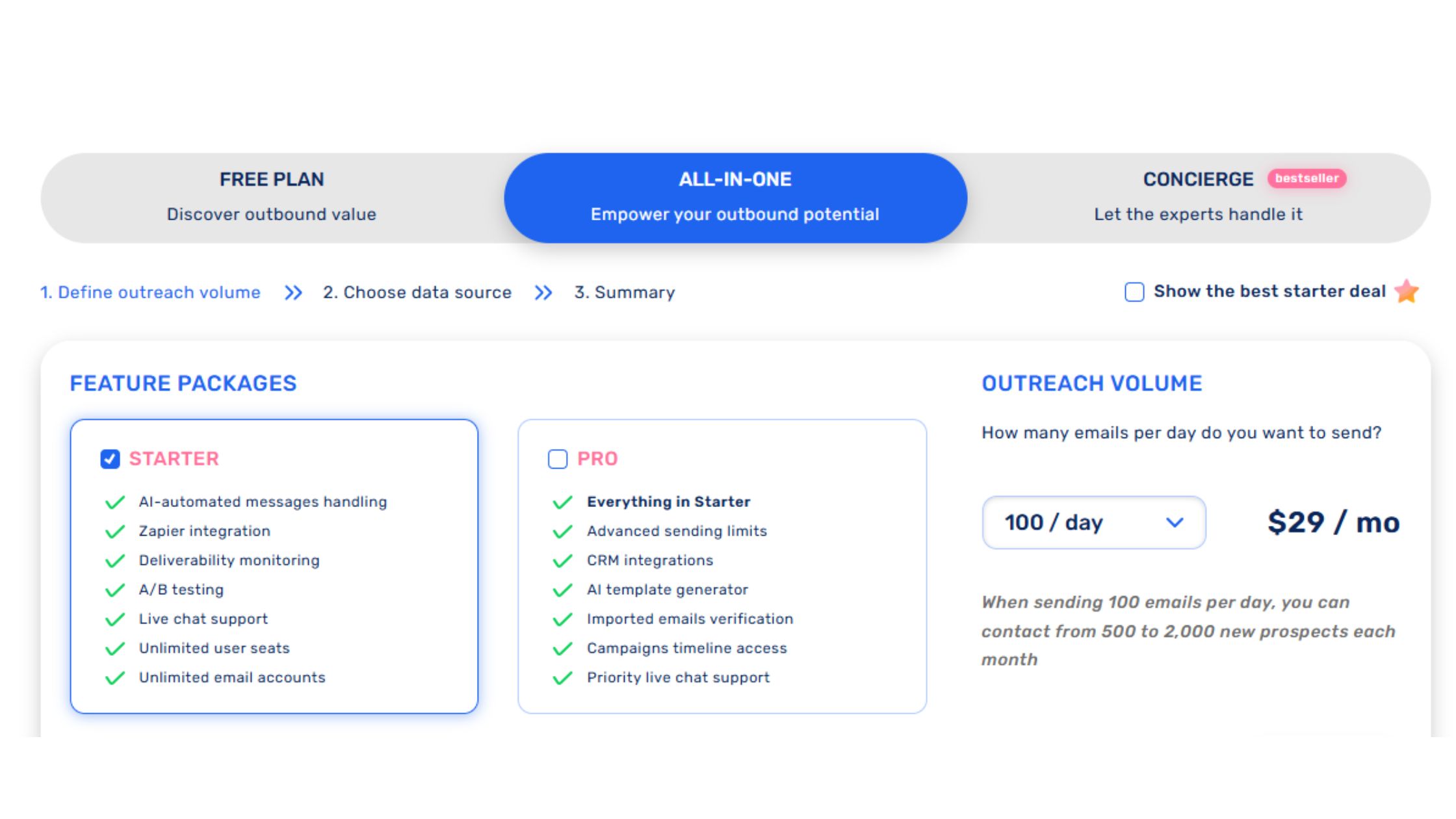
Growbots pricing 2026 follows a tiered structure starting around $49/month for a basic plan, scaling upward based on the number of contacts exported per month, active sequences, and seat count. The starting price looks accessible — but the real cost for an active sales team climbs fast.
Current pricing tiers (approximate — verify on Growbots.com as pricing updates frequently):
Starter (~$49/mo): Limited exports per month, 1 active sequence, basic filtering. Functional for testing; constrained for real campaigns.
Growth (~$199/mo): Increased export volume, multiple sequences, A/B testing, warm-up included. This is where most small teams land.
Per-seat charges for additional SDRs — the per-seat cost adds up quickly on teams of 3+
Overage fees when you exceed the monthly contact export limit on mid-tier plans
Email verification add-ons if you need list verification beyond Growbots' built-in checks
Outbound Sales Automation ROI: Is the Cost Justified?
The outbound sales automation ROI question is the one that keeps coming up in every community discussion about Growbots — and the honest answer is: it depends entirely on your deal size and close rate. For teams selling products with an average contract value above $5,000, the cost-per-meeting-booked math works in Growbots' favour at Growth tier pricing. For teams with lower ACVs, the monthly subscription quickly exceeds what a leaner setup (Apollo free tier + Instantly) would cost to produce the same results.
As a rough benchmark: at the Growth tier (~$199/mo), if a team books 4–6 meetings per month from cold outreach, the cost per meeting runs $33–50. For B2B software, consulting, or agency sales, that's a strong return. For recruitment, SMB services, or lower-margin businesses, that math becomes harder to justify against Apollo's free tier or Instantly's $37/mo starting point.
The pricing-to-value gap feels wider for solo reps and sub-5-person teams than it does for mid-market sales teams — not because Growbots' features are worse, but because the fixed cost structure doesn't scale down proportionally the way usage-based tools do.
Teams that get the best ROI from Growbots are those running 2–5 active SDRs with a consistent outbound motion — where the time saved on manual prospecting alone offsets the subscription cost within the first month.
Combining cold email outreach with LinkedIn visibility?
HyperClapper complements your outbound stack by boosting LinkedIn post visibility through real community engagement — so prospects already know your name before your cold email lands.
The strongest case for Growbots is the same in 2026 as it has always been: one tool replaces two or three. Teams that previously juggled a data provider, a sequencing platform, and an email warm-up tool find genuine relief in having it all in one place — and the time saved on tool management is real and recurring.
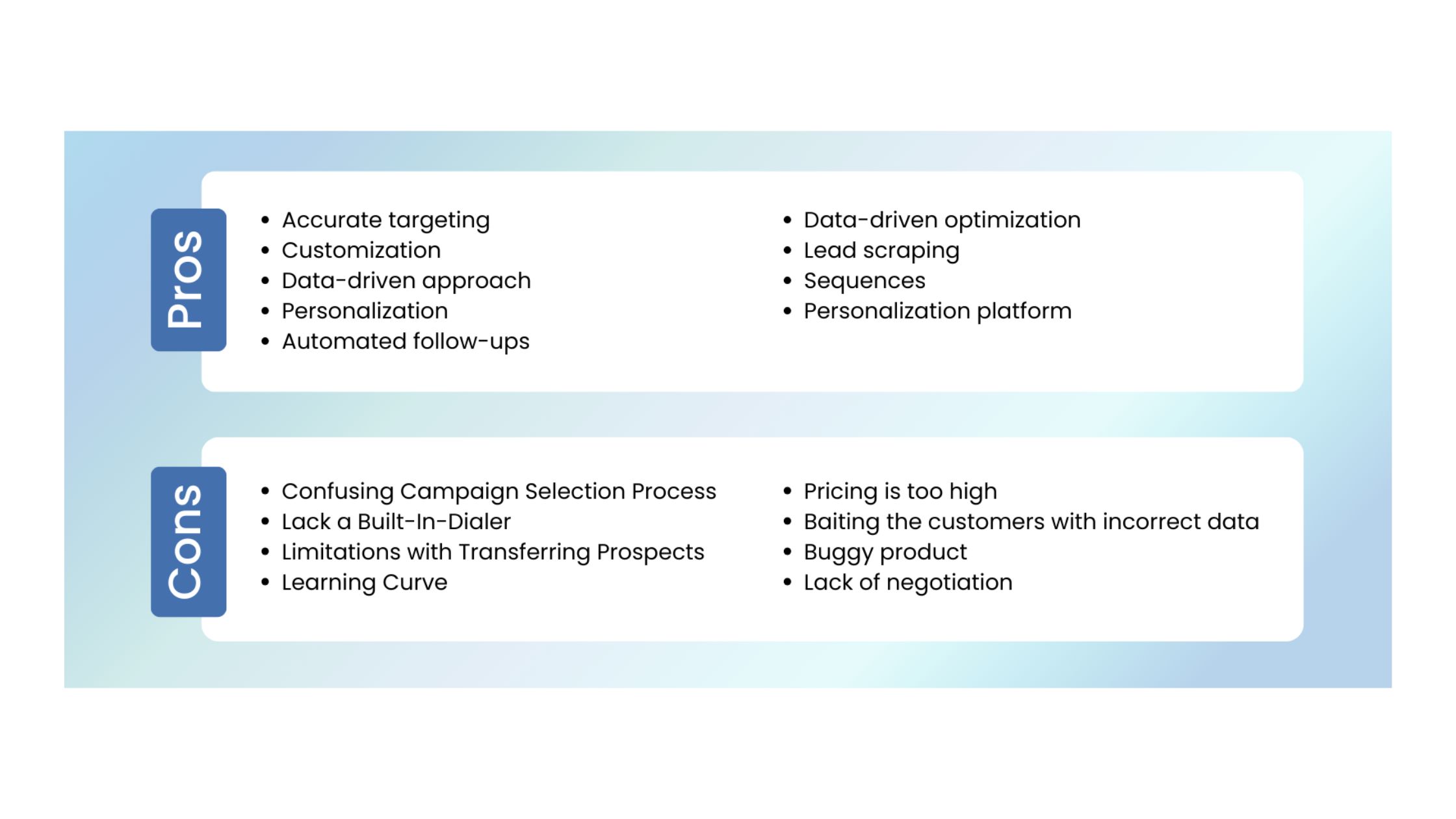
Growbots pros and cons, summarised honestly:
Pros:
All-in-one workflow eliminates the need for separate data and sequencing tools
Built-in warm-up is well implemented and reduces deliverability setup friction
Fast list building — tight ICP filters produce export-ready lists faster than most competitors
Solid onboarding calls and knowledge base for non-technical users
A/B testing and campaign-level analytics cover standard reporting needs
Data accuracy in non-enterprise segments and non-US markets is noticeably weaker
No native LinkedIn sequencing — email-only limits multi-channel teams
Pricing structure
Frequently Asked Questions About Growbots
Is cold email outreach with Growbots GDPR compliant?
No, Growbots does not make cold outreach automatically GDPR compliant. Compliance depends on your legal basis for contacting EU prospects, your opt-out handling, and how you disclose data sources. The platform gives you sending controls and unsubscribe handling, but the legal responsibility stays with your company.
How long does email warm-up take before launching a Growbots campaign?
Plan for several weeks rather than several days. Growbots' built-in warm-up gradually increases send volume on a new sending domain, and launching before it completes is the most common cause of spam-folder problems. Confirm warm-up status in the platform before pushing a campaign to full daily volume.
Should I use a separate domain for Growbots cold email campaigns?
Yes, use a separate sending domain for Growbots campaigns rather than your primary company domain. Cold outreach carries real reputation risk, and a damaged sender score can take one to two months to recover. Keeping campaigns on a lookalike domain protects the inbox your team relies on daily.
Can I export contacts from Growbots and use them in another tool?
Yes, you can export contacts out of Growbots and use them elsewhere, but your plan's monthly export limit governs how many. Lower tiers cap exports tightly and charge overage fees beyond them, so teams treating Growbots purely as a data source usually find the cost-per-contact unattractive.
How long before a Growbots campaign starts producing meetings?
Expect roughly a month before the numbers mean anything. Warm-up, initial sends, and follow-up steps all take time, and reply rates only stabilise once a few hundred prospects have moved through a full sequence. Judging a campaign after one week of sends produces misleading conclusions.
Does Growbots replace the need for an SDR?
No, Growbots automates prospecting and sending, not selling. It removes the manual list-building and follow-up work, but someone still has to handle replies, book meetings, and run the conversation. Teams that expect the tool to generate pipeline without a human owning responses are consistently disappointed.
👋
⚡ Free plan
Leaving already?
Grab 3 free boosts on your next LinkedIn post — real likes & comments from 5,000+ creators. No card, cancel anytime.