Clearbit — now rebranded as HubSpot Breeze Intelligence — is a B2B data enrichment platform that appends firmographic, technographic, and contact-level data to CRM records automatically. After HubSpot's late-2023 acquisition, the product shifted from a standalone API tool to a credit-based add-on living inside the HubSpot ecosystem. A pattern consistently observed across B2B sales and marketing teams evaluating this tool is that the central question isn't just "does it work?" — it's "is it safe to build a LinkedIn data strategy around it, and what are the real compliance risks?" This review answers both, directly.
- Clearbit is now Breeze Intelligence — same data engine, but locked inside HubSpot's credit-based system with no standalone API plan in 2026.
- Clearbit does not scrape LinkedIn directly, but feeding it with scraped LinkedIn data creates upstream compliance risk for your team.
- GDPR compliance is shared responsibility — Clearbit's infrastructure meets the standard, but your outreach use of that data must too.
- Data quality scores well for US tech/SaaS companies (4.4/5 on G2) but drops for SMBs, APAC markets, and recently restructured firms.
- Apollo.io, ZoomInfo, Clay, and Lusha are the strongest alternatives depending on your workflow and compliance requirements.
- Most counterintuitive finding: the biggest compliance risk isn't Clearbit itself — it's what you do with the enriched data afterward.
- What Is Clearbit (Now Breeze Intelligence) and What Changed?
- Is Clearbit Safe for LinkedIn Data?
- Clearbit GDPR Compliance and B2B Data Privacy Risks
- Breeze Intelligence Data Quality vs Apollo and ZoomInfo
- Clearbit Pricing in 2026: Credits, Costs, and Value
- Clearbit Alternatives for B2B Enrichment in 2026
- Frequently Asked Questions About Clearbit and LinkedIn Data Safety
What Is Clearbit (Now Breeze Intelligence) and What Actually Changed After the HubSpot Acquisition?
Breeze Intelligence is what Clearbit became after HubSpot completed its acquisition in late 2023 — the underlying data engine is the same, but the packaging is fundamentally different. What was once a developer-friendly, API-first enrichment platform is now a credit-based add-on embedded inside the HubSpot CRM. You cannot buy it standalone. That single change reshapes who it's actually built for.
The most common pain point observed across returning Clearbit users is exactly this: is it the same product? The honest answer is partly. The firmographic and technographic data sources remain largely intact, but the product now bundles Clearbit's enrichment with HubSpot's own buyer intent signals — giving HubSpot-native teams more signal in one place, while removing the flexibility that made Clearbit attractive to non-HubSpot stacks.
Key terminology shift worth knowing: the old pricing tiers (Growth, Business, Enterprise) are gone. Enrichment credits — a unit that depletes each time a contact or company record is enriched — replaced them. One credit typically enriches one record. This changes cost planning significantly.
What Data Does Clearbit / Breeze Intelligence Actually Collect?
What data does Clearbit collect? Breeze Intelligence aggregates data across four main categories:
- Firmographic data — company size, industry, revenue range, headcount, funding stage
- Technographic data — technology stack the company uses (CRM, marketing tools, infrastructure)
- Contact-level data — job title, seniority, department, business email
- Buyer intent signals — HubSpot-proprietary signals layered on top post-acquisition
Clearbit sources this data from public web crawls, third-party data partnerships, and user-contributed data — not from direct LinkedIn scraping. This distinction matters enormously for compliance, which we cover in the next section.
How Does the HubSpot Native Enrichment Workflow Work in 2026?
The HubSpot native enrichment workflow operates in two modes: automatic enrichment (new contacts enriched on creation) and manual batch enrichment (you select existing records and trigger enrichment). Both consume credits at the same rate. The integration is genuinely seamless — enriched fields map directly to HubSpot properties, trigger workflows, and feed scoring models without any middleware setup. This is where Breeze Intelligence earns its strongest marks. The data quality score from independent reviewers sits at 7/10 according to Warmly's 2026 review, with user interface rated 9/10 — excellent workflow, solid-but-not-exceptional data.
Is Clearbit Safe for LinkedIn Data — Does It Scrape LinkedIn or Violate LinkedIn's Terms of Service?
Clearbit does not scrape LinkedIn. Full stop. The platform aggregates data from public web sources and third-party partnerships independently of LinkedIn's infrastructure. It may return a LinkedIn profile URL as a data field on an enriched contact, but that is referencing a publicly visible URL — not accessing LinkedIn's internal data systems or violating their crawling restrictions.
This is the critical distinction for anyone asking whether Clearbit LinkedIn data enrichment is safe to use. The answer depends entirely on where your contact list came from — not on Clearbit itself.
The compliance risk in most LinkedIn enrichment workflows isn't the enrichment tool — it's the data that flows into it. Clearbit enriching a contact record is legal; exporting that contact from LinkedIn via an unauthorized scraper before enriching it is where the violation lives.
Does Clearbit violate LinkedIn's Terms of Service? No — because it doesn't access LinkedIn's platform to collect data. LinkedIn's ToS prohibits scraping profile data without authorization. Clearbit sidesteps this entirely by sourcing independently. What you do with a Clearbit-enriched record — particularly if you then use it for Clearbit LinkedIn data enrichment-style outreach sequences — falls under standard outreach compliance rules, not LinkedIn's scraping policy.
Can You Use Clearbit for LinkedIn Outreach — What's Actually Allowed?
Can you use Clearbit for LinkedIn outreach? Yes, with an important boundary: Clearbit enriches your CRM data with contact intelligence; it does not send LinkedIn messages or automate LinkedIn interactions. Using enriched data to personalize connection requests or InMail is permitted. The LinkedIn data scraping legality question only arises if your upstream lead source was a scraping tool — at that point, the violation is in that tool, not in Clearbit. For teams doing legitimate outbound from a CRM populated via inbound forms, events, or manual prospecting, Clearbit enrichment carries no LinkedIn ToS risk.
For teams focused on LinkedIn content performance rather than data scraping, tools like checking your LinkedIn outreach strategy before launching campaigns provides a useful pre-launch compliance framework.
Clearbit GDPR Compliance and B2B Data Privacy Risks in 2026
Teams that treat GDPR compliance as the vendor's problem — not theirs — consistently find themselves exposed during data subject requests and audits. Clearbit GDPR compliance is structured as a shared responsibility model, and understanding which part is yours is the difference between a clean compliance posture and a costly one.
Is Clearbit GDPR compliant? HubSpot, as the post-acquisition parent, maintains SOC 2 Type II certification and operates under the EU-US Data Privacy Framework. Breeze Intelligence inherits these protections. HubSpot acts as a data processor on your behalf under a Data Processing Agreement (DPA) that customers can execute directly. This covers the infrastructure side of Clearbit data privacy compliance.
What it does not cover is your use of that data. B2B data enrichment risks that remain your responsibility include:
- Establishing a valid legal basis for processing (typically legitimate interest for B2B outreach — but this requires a documented Legitimate Interest Assessment on your side)
- Honoring data subject access requests (DSARs) — enriched contact fields in your HubSpot CRM are in scope
- Data minimization — enriching every field available doesn't mean you should retain every field available
- Retention limits — stale enriched records sitting in your CRM for years without review create audit risk
LinkedIn Data Scraping Legality vs. Third-Party Enrichment: Where's the Line?
The legal distinction here is well-established but frequently misunderstood. LinkedIn data scraping legality hinges on method of access — automated crawling of LinkedIn's servers without authorization violates their ToS and, in some jurisdictions, computer fraud statutes. Third-party enrichment like Clearbit collects data from its own independent sources — public registries, company websites, partner databases — and then serves it via API. You're not accessing LinkedIn's servers; you're querying Clearbit's. These are categorically different acts with different legal treatments.
The gray zone is enrichment of a record whose identity came from LinkedIn — e.g., you manually noted someone's name and employer from LinkedIn, put them in HubSpot, and then Breeze enriched the rest. That manual act is generally permitted (reading publicly visible profiles isn't scraping). Automating that act with an unauthorized tool is where the line is crossed. See our detailed breakdown in LinkedIn data scraping for B2B insights for a full treatment of where the boundaries sit.
Breeze Intelligence Data Quality: Match Rates, Firmographic Freshness, and How It Compares to Apollo and ZoomInfo
According to Derrick App's 2026 Breeze Intelligence review, based on 629+ verified G2 reviews (4.4/5), Breeze Intelligence's data quality holds up well for its target use case — but that target use case is narrower than Clearbit's original positioning suggested.
What works consistently: firmographic and technographic data for US-headquartered companies in tech, SaaS, and professional services. Match rates in this segment are high and data freshness is adequate for most pipeline workflows. What struggles: SMBs, APAC markets, and companies that have recently rebranded, been acquired, or restructured. The quarterly refresh cycle means a company that closed a funding round two months ago may still return outdated revenue or headcount data. According to MarketBetter's 2026 Clearbit review, enrichment data is "generally strong for US-based companies" with starting costs around $60/month — but mid-market usage quickly reaches $950–$1,000+ monthly as credit consumption scales.
The most common failure mode here is bulk-enriching an existing CRM database without first filtering by firmographic profile — burning credits on records where match rates are inherently low (small businesses, international contacts, freelancers) before establishing which segments actually return high-quality matches.
Clearbit vs ZoomInfo vs Apollo: Data Compliance and Accuracy Compared
| Tool | Best For | Data Strength | GDPR Posture | Price Range |
|---|---|---|---|---|
| Breeze Intelligence | HubSpot-native teams, US tech/SaaS | Strong firmographic; weaker contact-level | SOC 2 + EU-US DPF via HubSpot DPA | ~$60–$1,000+/mo |
| Apollo.io | Outbound SDR teams, non-HubSpot stacks | Strong contact-level emails + phones | GDPR compliant; opt-out database | Free tier; paid from ~$49/mo |
| ZoomInfo | Enterprise firmographic depth, compliance-heavy orgs | Best-in-class firmographic + direct dials | Strongest compliance documentation | $15,000+/yr (enterprise) |
| Clay | Technical teams, waterfall enrichment | Multi-source waterfall (pay per match) | Inherits from data providers used | From ~$149/mo |
| Lusha | LinkedIn-heavy SDR workflows | Strong mobile + direct email via LinkedIn extension | GDPR compliant; user consent model | Free tier; paid from ~$36/mo |
In practice, the Clearbit vs ZoomInfo data compliance comparison comes down to depth vs. integration convenience. ZoomInfo's compliance documentation is more extensive and its enterprise data accuracy is meaningfully higher — but at 10–20x the cost of Breeze Intelligence. For teams already inside HubSpot who primarily target US tech companies, Breeze Intelligence's integration advantage often justifies the data quality tradeoff. For teams targeting enterprise accounts across multiple geographies, ZoomInfo's accuracy gap is harder to accept.
Building your LinkedIn presence alongside your enrichment stack?
HyperClapper helps your enriched outreach land better — boosting post visibility and real engagement so prospects already know your name before your first message.
See How HyperClapper WorksClearbit Pricing in 2026: Credits, Costs, and Who It's Actually Worth It For
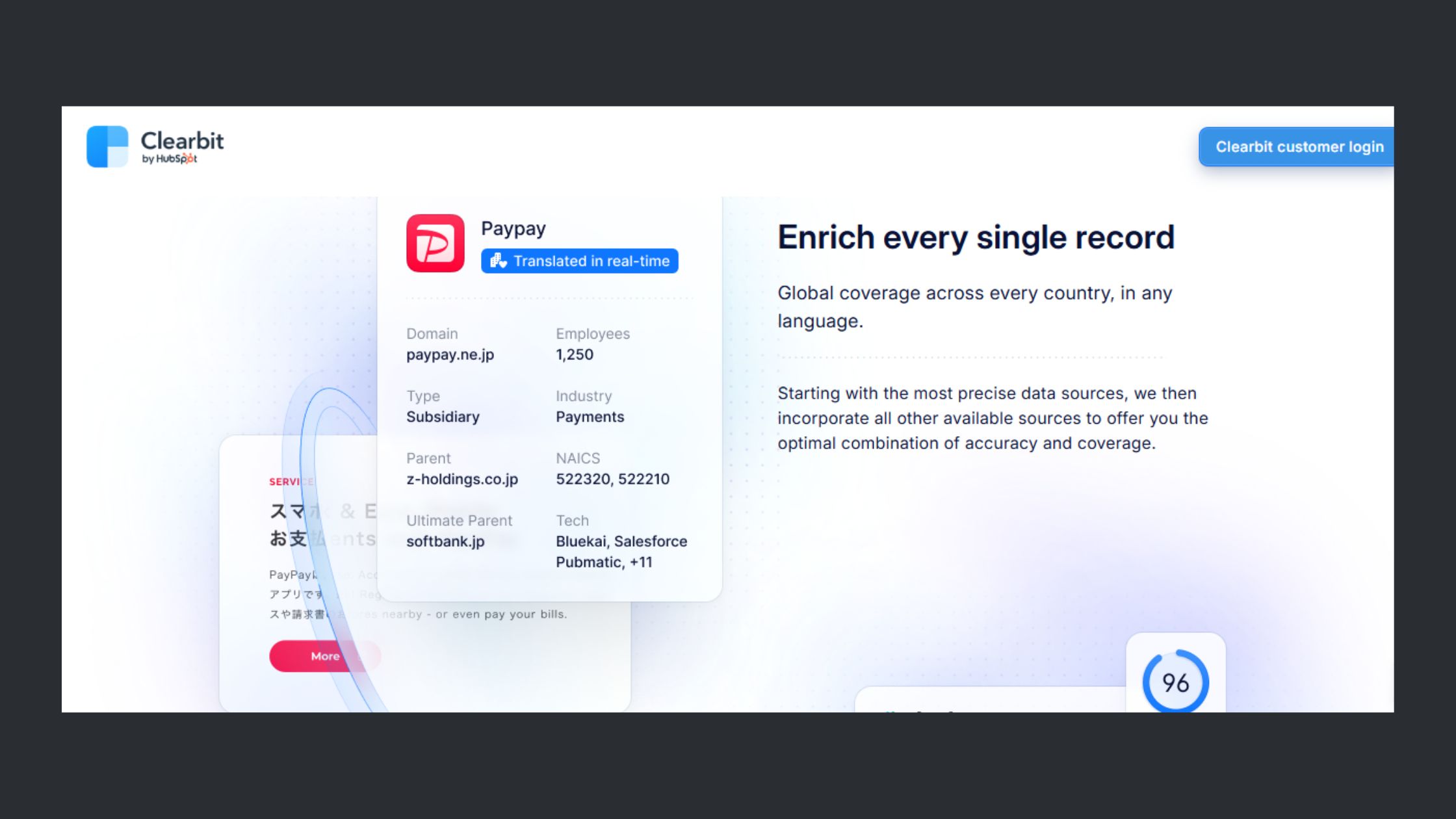
There is no standalone Clearbit plan in 2026. Accessing Breeze Intelligence requires an active HubSpot subscription — full stop. Credit bundles are then layered on top. According to MarketBetter's analysis, entry-level access starts around $60/month for HubSpot plus 100 enrichment credits. Mid-market usage — teams enriching several hundred new contacts monthly and running periodic bulk updates — reaches $950 to $1,000+ per month when credits scale.
The conventional wisdom that "you just pay for what you enrich" masks a dangerous credit burn pattern. Teams that enriching all existing CRM contacts at once — rather than enriching net-new records only — routinely double or triple their expected monthly cost in the first billing cycle. Data enrichment credit consumption is the single most common source of budget shock for new Breeze Intelligence users.
What is the exact monthly cost for a typical HubSpot Starter or Pro plan user running Breeze Intelligence? A Starter plan user doing light enrichment (100–200 new contacts/month) should budget $60–$150/month total. A Pro user running active outbound with 500–1,000 enrichments/month is looking at $400–$700/month minimum, scaling higher with bulk operations.
Is There API Access to Clearbit / Breeze Intelligence Outside of HubSpot in 2026?
This is one of the most searched questions from former Clearbit API users — and the answer is a meaningful change from the old product. In 2026, Breeze Intelligence does not offer a general-purpose standalone API for non-HubSpot users. The developer API access that made original Clearbit attractive for custom data pipelines, webhook-driven enrichment flows, and third-party CRM integrations is no longer available in the same form. Access is routed through HubSpot's API surface, which means your HubSpot subscription is the gating requirement. Teams that relied on Clearbit's direct API for non-HubSpot workflows need to evaluate Clay, Apollo's API, or Clearbit alternatives like Lusha's developer API as replacements.
Clearbit Alternatives for B2B Enrichment and LinkedIn Data Strategies in 2026
After seeing the patterns in how B2B teams evaluate their enrichment stack post-acquisition, the decision usually splits along two axes: how HubSpot-dependent they are, and how important outbound contact accuracy is relative to firmographic data.
Here are the four strongest Clearbit alternatives for B2B enrichment based on those axes:
- Apollo.io — Best Clearbit alternative for outbound-focused teams not locked into HubSpot. Strong contact-level match rates, built-in email sequencing, a generous free tier, and solid GDPR posture with an opt-out database. In practice, Apollo frequently outperforms Breeze on raw contact email accuracy for SDR workflows.
- ZoomInfo Enrich — Best for enterprise teams where data depth and compliance documentation are non-negotiable. Pricing is significantly higher ($15,000+/year), but the firmographic accuracy and direct-dial hit rates justify it at scale. Their compliance team is also more responsive for data subject request handling.
- Clay — Best for technical teams wanting a waterfall enrichment approach. Clay combines Clearbit, Apollo, Hunter, and dozens of other providers, charging only for successful matches. This makes it dramatically more credit-efficient than single-provider enrichment — you only pay when you get a result. The tradeoff is setup complexity.
- Lusha — Best for LinkedIn-heavy SDR workflows. The browser extension surfaces mobile numbers and direct emails directly on LinkedIn profiles, making it the most practical tool for reps who live in LinkedIn Sales Navigator. GDPR compliance is handled through a user-contributed consent model. See our LinkedIn outreach tool review for a broader look at outreach stack options.
One angle that rarely gets discussed in enrichment tool comparisons: data enrichment solves the who to reach problem, but it doesn't solve the why they should engage problem. Teams that layer LinkedIn content visibility on top of their enrichment stack — so prospects recognize the brand before a cold outreach arrives — see meaningfully better reply rates. Tools like HyperClapper address exactly this: using real community engagement and AI-powered replies to build the LinkedIn presence that makes enriched outreach land warmer. It's not a replacement for enrichment; it's the distribution side of the same equation. For a broader look at LinkedIn engagement tools, our LinkBoost review covers how post-boosting tools compare.
The The 80/20 of B2B outreach isn't finding the right contact data — it's arriving with enough credibility that the right contact actually responds. Enrichment solves the first half. LinkedIn presence solves the second.
✓ The B2B Data Enrichment Compliance Checklist
Frequently Asked Questions About Clearbit and LinkedIn Data Safety
Is it safe to use Clearbit to enrich LinkedIn contact data for outbound sales?
Yes, Clearbit itself does not scrape LinkedIn and poses no direct platform risk. The safety of your outbound strategy depends on how your contact list was built. If those contacts came from unauthorized LinkedIn scraping or exports, enriching them with Clearbit does not make the underlying data lawful to use.
Does using Clearbit put my company at risk of violating LinkedIn's terms of service?
Not directly — Clearbit sources data independently and does not access LinkedIn's systems. Your risk exposure comes from upstream, not the tool itself. If your workflow starts with contacts pulled from LinkedIn via scraping tools or bulk exports, that activity violates LinkedIn's ToS regardless of which enrichment platform processes those records afterward.
How does Clearbit source its data and is it GDPR compliant?
Clearbit aggregates data from public web crawls, third-party data partnerships, and user-contributed sources — not LinkedIn scraping. Its infrastructure meets GDPR standards, but compliance is a shared responsibility. Your legal basis for processing enriched contact data and your outreach consent practices must independently satisfy GDPR requirements; Clearbit's compliance does not cover your use of the data.
What are the privacy risks of using third-party enrichment tools with LinkedIn data?
The primary risk is processing personal data without a valid legal basis under GDPR or CCPA. Enrichment tools append additional data points to individuals who never consented to that profiling. If you cannot demonstrate legitimate interest or another lawful basis for your outreach, enriched contact records can create regulatory liability regardless of which tool generated them.
Is Clearbit accurate enough for markets outside the US?
Coverage drops meaningfully outside North American tech and SaaS companies. Clearbit scores well for US-based firms with established digital footprints, but match rates and data freshness decline for SMBs, APAC markets, and recently restructured organizations. Independent reviewers rate overall data quality at 7 out of 10, with geographic gaps being the most cited limitation.
Can you still use Clearbit without HubSpot in 2026?
No. Since the HubSpot acquisition, Clearbit has been rebranded as Breeze Intelligence and is only available as a credit-based add-on within HubSpot CRM. There is no standalone API plan in 2026. Teams running Salesforce, Pipedrive, or other CRMs who relied on Clearbit's original API will need to evaluate alternatives like Apollo, Clay, or Lusha.
How does Clearbit compare to ZoomInfo on data compliance?
Both platforms source B2B contact data from third-party aggregation rather than direct LinkedIn access, giving them similar compliance postures at the tool level. ZoomInfo offers more granular consent documentation and a larger database, while Clearbit's advantage is seamless HubSpot-native workflow. For compliance-heavy procurement processes, ZoomInfo's longer audit trail tends to satisfy legal review more readily.