
The best time to post on LinkedIn is Tuesday through Thursday, between 7–9 AM and 10 AM–noon in your audience's local timezone — with Wednesday morning standing out as the single most consistent overperformer across industries and follower sizes. A pattern observed consistently across high-performing LinkedIn accounts is that timing doesn't just influence reach — it determines whether the algorithm amplifies your post to a wider audience at all. Yet most professionals post whenever they finish writing, which skews heavily toward mid-morning chaos or late-afternoon fatigue. That gap between optimal and actual is exactly why good content routinely gets buried.
- Best windows: Tuesday–Thursday, 7–9 AM and 10 AM–noon (audience's local timezone)
- Wednesday morning is the closest thing to a universal "golden hour" on LinkedIn
- LinkedIn's algorithm scores posts in the first 60–90 minutes — timing determines your initial audience size
- Industry matters: B2B audiences peak pre-work; recruiters see strong Sunday evening engagement that generic guides miss
- Posting 3–5x per week at peak windows compounds reach far beyond posting daily at random times
- Most counterintuitive finding: early-evening posts (3–8 PM) now outperform mornings for certain content types — the morning window is real but not universal
- Best Time to Post on LinkedIn in 2026 (Quick Answer)
- Best Day to Post on LinkedIn: A Day-by-Day Breakdown
- Industry-Specific Best Posting Times: Why Generic Advice Fails You
- How the LinkedIn Algorithm Uses Post Timing and Early Engagement
- How Often Should You Post on LinkedIn? Frequency + Timing Together
- How to Find YOUR Best Time to Post on LinkedIn
- Common Posting Mistakes That Kill Your LinkedIn Reach
- Frequently Asked Questions About LinkedIn Posting Times
The Best Time to Post on LinkedIn in 2026 (Quick Answer)
Tuesday through Thursday, 7–9 AM and 10 AM–noon in your audience's local timezone — that is the consistent consensus across multiple large-scale analyses. According to Kanbox's analysis of 4.8 million LinkedIn posts, the Tuesday–Thursday 10 AM–2 PM window delivers the strongest sustained engagement, with weekends seeing a 50–70% drop compared to peak weekday performance. According to Sprout Social's 2026 research, Tuesdays from 11 AM–5 PM and Wednesdays from 11 AM–4 PM show the sharpest engagement spikes.
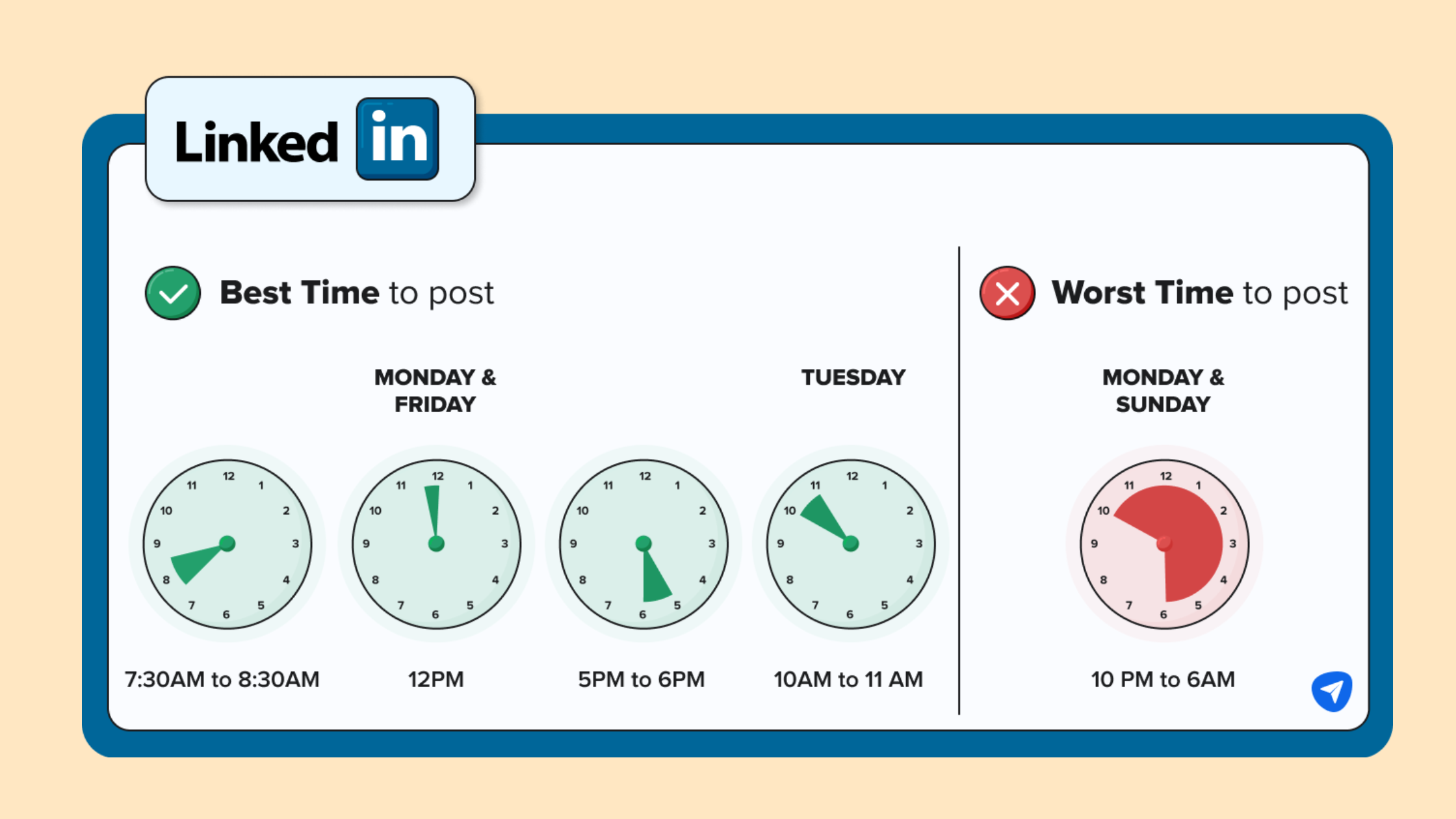
Wednesday morning consistently outperforms all other single slots. This isn't arbitrary — it sits in the middle of the professional week, when people have cleared Monday's inbox chaos but haven't yet shifted mentally toward the weekend. Think of it as the LinkedIn equivalent of prime-time TV: maximum audience, minimum distraction.
Use these windows as your starting benchmark, not a fixed rule. Your specific audience, niche, and content format can shift the optimal window by 1–2 hours in either direction. The goal is to land in front of your audience before their deep work begins — not during it.
What Is the "Golden Hour" for LinkedIn Posts?
The golden hour on LinkedIn refers to the first 60–90 minutes after a post is published — the window in which the algorithm evaluates early engagement signals to decide whether to amplify your content to a wider audience. It is not just a metaphor; it is the core mechanic of LinkedIn's distribution model. Posts that accumulate meaningful likes and comments within this window get pushed to second-tier connections and broader audiences. Posts that don't, effectively stall. This is why timing matters so much: posting at 7 AM on a Wednesday means your golden hour overlaps with peak professional browsing time. Posting at 11 PM means your golden hour plays out while your audience is asleep.
Does Posting Time Really Affect LinkedIn Reach?
Yes — and the effect is larger than most people assume. Posting time determines the initial audience size LinkedIn serves your post to, which directly shapes the early engagement signals the algorithm receives. A well-written post published at a low-traffic time is shown to fewer people, receives fewer early reactions, and gets classified as low-interest content — regardless of its actual quality. The most common failure mode observed across LinkedIn creator accounts is not bad content; it's good content published at the wrong hour. Timing is the distribution lever most creators ignore entirely.
Best Day to Post on LinkedIn: A Day-by-Day Breakdown
Tuesday, Wednesday, and Thursday are the clear frontrunners — professionals are fully in work mode, scrolling LinkedIn during natural pause points, and more likely to engage with substantive content. Here's how each day actually performs:
| Day | Best Time | Engagement Level | Notes |
|---|---|---|---|
| Monday | 4 PM | Below average AM; moderate PM | Morning inbox overload kills early signals |
| Tuesday | 11 AM–5 PM | High | Best time to post on LinkedIn on Tuesday: 11 AM sharp |
| Wednesday | 8–10 AM, 11 AM–4 PM | Highest overall | Best single slot across most industries |
| Thursday | 1–5 PM | High | Strong for B2B and thought leadership content |
| Friday | 8–11 AM | Moderate | Attention drifts by midday; morning only |
| Saturday | 9–11 AM | Low | Lower volume AND lower engagement — double disadvantage |
| Sunday | Evening | Niche-dependent | Recruiters and HR pros are an exception here |
The best time to post on LinkedIn on Monday is actually late afternoon (around 4 PM), not the early morning slot most creators default to. Monday AM is the worst-performing window of the weekday — professionals are clearing email, joining standup calls, and planning their week. Your carefully written post competes with 47 unread Slack messages. It loses.
The best time to post on LinkedIn on tuesdays and Wednesdays is mid-morning from 10–11 AM onwards — that's when the dust from morning routines settles and people reach for a first intentional scroll. For best time to post on LinkedIn on Thursday, lean into the afternoon window (1–3 PM), when professionals are taking mental breaks before the end-of-week push. The best time to post on LinkedIn on Friday narrows significantly — anything after 11 AM sees rapid attention decay as the weekend mindset kicks in. And the best time to post on LinkedIn wednesday is the article's headline finding: 8–10 AM, before the day accelerates.
LinkedIn Engagement Rate by Time of Day
Across weekdays, the LinkedIn engagement rate by time of day shows two distinct peaks: a pre-work spike (7–9 AM) and a lunch window (11 AM–1 PM). The pre-work spike is slightly sharper but shorter; the lunch window is broader and more forgiving if you miss by 30 minutes. According to Buffer's 2026 analysis of 4.8 million posts, evening hours (3–8 PM) now outperform mornings for certain content types — a finding that challenges conventional wisdom and reflects changing professional schedules post-pandemic. This means the morning-only advice is incomplete. In practice: test both windows before committing to one.
When Most People Actually Post on LinkedIn (And Why It's Wrong)
Why do most people post on LinkedIn at the wrong time? Because they post reactively — when the content is ready, not when the audience is ready. The typical pattern: finish writing a post mid-morning, hit publish immediately, then wonder why engagement is flat. Teams that schedule posts in advance instead of publishing on impulse consistently see higher early engagement signals. Posting "whenever I finish writing" is the LinkedIn equivalent of throwing a party and sending the invitations after it starts.
Industry-Specific Best Posting Times: Why Generic Advice Fails You
Most LinkedIn timing guides treat 950 million users as one homogeneous audience. They're not. The most glaring gap in generic advice is the absence of industry nuance — a B2B SaaS founder and a career coach have fundamentally different audiences with different scroll habits, different work rhythms, and different reasons for being on LinkedIn at any given hour.
B2B vs B2C Posting Time Differences on LinkedIn
B2B audiences (finance, consulting, enterprise tech, legal) skew heavily toward the pre-work window. These are people with structured days, back-to-back meetings by 9 AM, and a narrow window of intentional browsing before the calendar takes over. Catching them at 7:30–8:30 AM Tuesday–Thursday is significantly more effective than catching them at 2 PM. According to Reddit's LinkedIn growth community data (2026), Tuesday through Thursday 7:30–8:30 AM local time consistently outperforms all other slots for B2B content.
B2C-adjacent LinkedIn audiences (marketing, HR, coaching, education, creative services) show stronger lunch and early-evening engagement. These professionals tend to have slightly more flexible days and are active on LinkedIn at different touchpoints. For this audience, an 11 AM–1 PM window often outperforms the early morning slot by a meaningful margin.
Industry-specific patterns worth knowing:
- Recruiters and HR professionals: Sunday evening engagement is genuinely strong — a pattern invisible in aggregated data but consistent when you isolate this group. Recruiters browse LinkedIn on Sunday nights to prep for Monday's hiring push.
- Tech and engineering: Pre-work window (7:30–9 AM) dominates; Thursday afternoons also perform well for thought leadership.
- Creative industries (design, media, content): Flatter engagement curves overall, with relatively stronger Thursday–Friday performance compared to finance or enterprise professionals.
- Sales professionals: Mid-morning Tuesday–Wednesday (10–11 AM) aligns with when their prospects are also checking LinkedIn between calls.
Does LinkedIn Timezone Affect Post Performance?
Yes — and it's one of the most under-addressed factors in LinkedIn timing advice. The question "does LinkedIn time zone affect post performance?" doesn't appear in most guides, but it consistently matters for anyone with a cross-continental audience. Your golden hour is based on when your audience is active, not when you are. A London-based creator with a primarily US audience who posts at their own 8 AM is publishing at 3 AM Eastern — which means their golden hour plays out while their core audience is asleep. Timezone-adjusted scheduling strategy is non-negotiable for any creator with international reach. Check your LinkedIn analytics for your top follower locations, calculate the overlap window, and schedule accordingly.
Timing is not about when you write — it is about when your audience scrolls. Those two things are rarely the same, and the gap between them is where reach goes to die.
How the LinkedIn Algorithm Uses Post Timing and Early Engagement
LinkedIn's algorithm scores posts using an early engagement velocity metric — a measure of how quickly a post accumulates likes, comments, and shares in its first 60–90 minutes. Posts that hit a certain velocity threshold get amplified to a wider second-tier audience; posts that don't, effectively stop distributing. Timing determines the size of the initial audience your post is shown to. Early engagement determines whether the algorithm extends distribution beyond that initial group. These two levers are sequential, not parallel — you can't compensate for bad timing with great content.
Content Decay Rate on LinkedIn: What Happens After the First Hour
Content decay rate is the speed at which a post's algorithmic distribution decreases over time. On LinkedIn, most posts see their largest distribution burst in the first 2–3 hours. After that, reach decays sharply unless the engagement rate remains elevated. Comments carry more algorithmic weight than likes — because comments signal genuine interest and generate notification-driven return visits. Replies to comments extend the post's active engagement window, sometimes keeping a post alive in feeds for 24–48 hours beyond its initial burst. Posts published outside active windows get smaller initial audiences, which suppresses early engagement signals, creating a compounding disadvantage that rarely recovers regardless of content quality.
How Post Format Interacts with Timing
Different content formats have different engagement patterns, and timing interacts with format in non-obvious ways. Text-only posts and documents (carousels) perform strongly in the morning pre-work window, when people read quickly before their day begins. Video posts and polls perform relatively better in the lunch window and early afternoon, when people have slightly more time to consume longer formats. Native articles see flatter timing curves — they're saved-for-later content that people return to — so the initial posting time matters less, but Tuesday–Wednesday is still optimal for the initial distribution push. Check how LinkedIn scheduling, carousels, and analytics work together to align format strategy with your timing approach.
What consistently separates top-performing LinkedIn accounts from average ones is not just knowing the right window — it's engineering the first hour of engagement to maximise algorithmic amplification. This is where tools like HyperClapper provide a distinct edge: by connecting your post to real engagement channels the moment it publishes, you create the early velocity signal that the algorithm uses to decide whether your content deserves wider reach.
Struggling to get engagement in that critical first hour?
HyperClapper connects your posts to real LinkedIn engagement channels the moment you publish — building the early signal the algorithm needs to amplify your reach.
See How HyperClapper WorksHow Often Should You Post on LinkedIn? Frequency + Timing Together
3–5 posts per week is the data-backed sweet spot for most professionals. That cadence maintains algorithmic momentum — LinkedIn's feed prioritises accounts that post regularly — without cannibalising your own posts' engagement windows by flooding the feed. What's the LinkedIn posting schedule for engagement that actually compounds? It's not posting more. It's posting consistently at the right times.
Creators who skip consistent scheduling typically find their reach fluctuating wildly — a great week followed by a dead week, because the algorithm deprioritises inconsistent accounts. Posting on a predictable cadence trains both the algorithm and your audience to expect your content at certain times.
The compounding effect of frequency plus timing is significant. Consider two creators with identical content quality:
- Creator A: Posts 7x per week, randomly, often multiple times per day
- Creator B: Posts 4x per week, Tuesday–Friday, at 8 AM and 12 PM in their audience's timezone
Creator B will consistently outperform Creator A on reach and engagement rate — because LinkedIn throttles over-posters and rewards predictable, well-timed content. This is one of the most counterintuitive lessons observed across high-volume LinkedIn accounts.
For a detailed breakdown of how scheduling cadence affects ROI, see the LinkedIn posting schedule and timing ROI guide.
Setting Realistic Engagement Expectations Based on Follower Count
Engagement benchmarks scale non-linearly with follower count. According to Sprinklr's 2026 LinkedIn data, a typical LinkedIn engagement rate for well-timed posts falls in the 2–5% range for accounts under 5,000 followers, with that rate generally declining as follower count grows (larger audiences are harder to activate consistently). What this means in practice: don't benchmark your 500-follower account against a creator with 50,000. Focus on engagement rate, not raw numbers. A post getting 25 comments from 800 followers is genuinely outperforming one getting 100 comments from 80,000.
How to Find YOUR Best Time to Post on LinkedIn (Personalized Strategy)
Generic benchmarks get you into the right neighbourhood. Your own data gets you to the right house. LinkedIn's native analytics — available to every account at no cost — shows you follower demographics, top locations, and post-level performance data including impressions and engagement by post. Use it before relying on anyone else's study, including this one.
Here's a systematic approach to personalising your timing:
- Check your follower location data (Settings → Analytics → Followers). Identify your top 2–3 follower countries or cities. This is your target timezone. Time: 5 minutes.
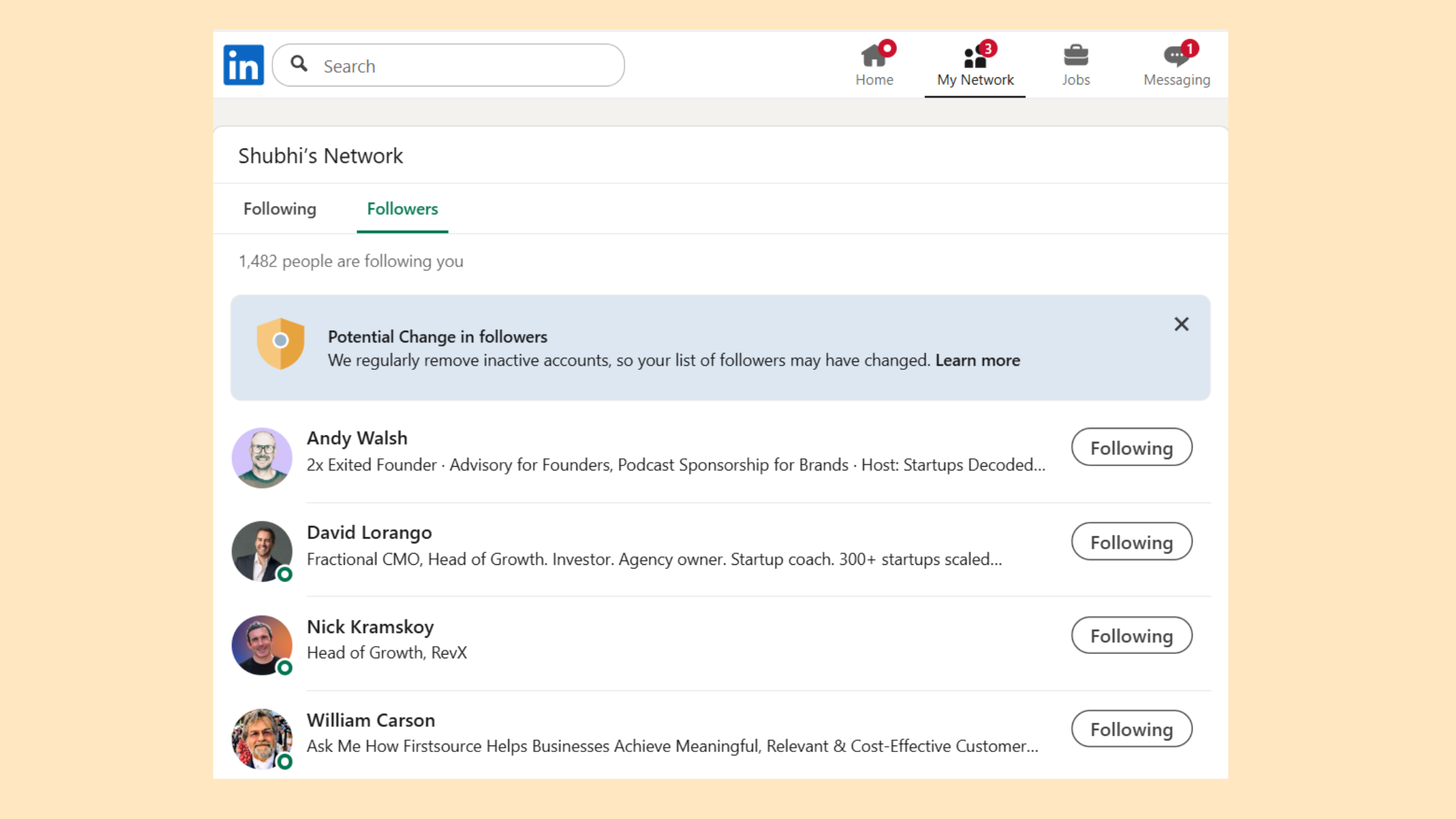
Check your follower location data - Run a 4-week timing test. Post equivalent content formats across three windows: pre-work (7–9 AM), lunch (11 AM–1 PM), and late afternoon (3–5 PM) in your audience's timezone. Post at least 2 times per window across the 4 weeks. Time: ongoing.
- Track comments per post — not just impressions. Comments are a cleaner signal of timing quality because they require intentional effort. Impressions can spike from LinkedIn sending notifications, which inflates the number artificially.
- Identify your top 3 performing posts and check exactly when they were published. Look for clustering around specific time slots.
- Lock in your winning window and schedule consistently for 8 weeks before re-evaluating. Consistency of signal matters — one week of great data means nothing; eight weeks of consistent posting reveals the real pattern.
Best LinkedIn Scheduling Tools in 2026: LinkedIn Native vs Buffer vs Hootsuite
Once you've identified your optimal window, a best LinkedIn scheduling tool is what turns that knowledge into consistent execution. Here's how the main options compare:
| Tool | Best For | LinkedIn Native Features | Price Range |
|---|---|---|---|
| LinkedIn Native Scheduler | Solo creators, simplicity | Basic scheduling, no analytics | Free |
| Buffer | Multi-platform teams | Post scheduling + basic analytics | $6–$12/month |
| Hootsuite | Agencies, enterprise | Advanced scheduling + team workflows | $99+/month |
| HyperClapper | LinkedIn creators, founders | Scheduling + real engagement boosting + AI replies | See hyperclapper.com |
The key difference between a LinkedIn scheduler vs Buffer vs Hootsuite for LinkedIn-specific goals: generic scheduling tools handle timing but do nothing about early engagement velocity. For creators who want to schedule posts and ensure those posts get the early engagement signals that matter to the algorithm, scheduling for more LinkedIn engagement requires combining a timing tool with an engagement strategy — which is exactly the gap HyperClapper addresses. Also worth reading: how to tag people on LinkedIn for maximum reach, another lever that interacts directly with post timing.
The best scheduling tool is the one you actually use consistently. Consistency of timing beats perfection of timing every single time.
Common Posting Mistakes That Kill Your LinkedIn Reach
After seeing this across hundreds of LinkedIn accounts in different niches and follower sizes, the pattern is clear: most reach problems are timing problems in disguise. Content gets blamed when schedule is the real culprit. Here are the most consistent failure modes:
✓ The LinkedIn Timing Mistakes Checklist
- ☐Publishing when content is ready instead of when your audience is active
- ☐Posting Monday AM (worst-performing window) out of "start the week strong" instinct
- ☐Ignoring timezone mismatch — posting in your local peak when your audience is in a different continent
- ☐Posting multiple times per day, triggering LinkedIn's content throttling
- ☐Posting on Friday afternoon or weekend expecting weekday-level engagement
- ☐Switching posting times week-to-week, making it impossible for the algorithm to build expectations
- ☐Failing to engage with early comments — abandoning the post right after publishing kills algorithmic extension
What Happens If You Consistently Post Outside Peak Windows?
Consistent off-peak posting creates a compounding reach deficit that's hard to reverse. When you post outside active windows, the algorithm sees small initial audiences, weak early engagement, and classifies your account as a lower-priority content source. Accounts that drop into this pattern typically require 3–6 weeks of consistent on-peak posting to recover their former distribution baseline — not because the platform penalises them permanently, but because the algorithm needs sustained positive signals to reclassify the account. In practical terms: one week of bad timing won't destroy your reach. One month will put you in a hole that takes two months to climb out of.
For a deeper look at LinkedIn's peak hours mechanics, the LinkedIn peak hours and posting schedule guide breaks down how the feed prioritisation system behaves hour-by-hour.
How HyperClapper Solves the Early Engagement Problem
Timing gets your post in front of the right initial audience. But what happens in the first hour still depends on whether real people engage with it. This is the gap most creators can't solve with scheduling tools alone. HyperClapper addresses it directly: users publish at their optimal window, submit the post to relevant channels (engagement groups of real LinkedIn professionals), and receive genuine likes and comments in that critical first 60–90 minutes. The result is that the algorithm sees the velocity it needs to push the post further — not manufactured engagement from bots, but real responses from professionals in HyperClapper's community. For creators who consistently post at the right time but still plateau, early engagement velocity is almost always the missing variable.
Post at the right time. Get real engagement at the right moment.
HyperClapper pairs your optimal posting window with real community engagement — so the algorithm sees the early signals it needs to amplify your reach. No bots. No fake activity. Real professionals.
Start Boosting Your LinkedIn PostsFrequently Asked Questions About LinkedIn Posting Times
What is the best time to post on LinkedIn for maximum exposure?
The best time to post on LinkedIn for maximum exposure is Tuesday through Thursday, between 7–9 AM and 10 AM–noon in your audience's local timezone. Wednesday 8–10 AM is the single strongest slot across most industries. These windows align with when professionals browse before deep work begins, maximising both initial audience size and early engagement velocity.
What is the golden hour for LinkedIn posts?
The golden hour for LinkedIn posts is the first 60–90 minutes after publishing. LinkedIn's algorithm evaluates early engagement velocity during this window to decide whether to amplify your post to a wider audience. Posts that accumulate meaningful likes and comments in this period get significantly broader distribution; posts that don't typically plateau at their initial audience size.
What time should I post on LinkedIn to get the most views?
Post between 7–9 AM or 10 AM–noon on Tuesday, Wednesday, or Thursday in your audience's timezone to get the most views. Wednesday morning is the single highest-performing slot across most professional categories. According to Kanbox's analysis of 4.8 million posts, this Tuesday–Thursday 10 AM–2 PM window consistently delivers the strongest engagement.
Why is there a gap between the best time to post on LinkedIn and when people actually post?
Most people publish when content is ready, not when audiences are active — a reactive habit that consistently underperforms. The best time to post on LinkedIn is determined by audience behaviour, but most creators prioritise their own schedule. This gap is why well-written posts routinely underperform: timing was never optimised for the reader, only for the writer's workflow.
Does posting on LinkedIn in the morning or evening get more engagement?
Morning (7–9 AM and 10 AM–noon) gets stronger engagement for most professional categories, particularly B2B audiences. However, Buffer's 2026 analysis of 4.8 million posts found that evening posts (3–8 PM) now outperform mornings for certain content types. The honest answer: test both windows for your specific audience rather than assuming mornings always win.
How does the LinkedIn algorithm specifically reward early engagement?
LinkedIn's algorithm uses engagement velocity — the speed of likes, comments, and shares in the first 60–90 minutes — to classify post quality. Comments carry more weight than likes. A post hitting a velocity threshold gets pushed to second-tier connections; one that misses it stalls. Replies to comments extend the active engagement window, slowing content decay and sustaining distribution for additional hours.
Do sponsored posts follow the same timing rules as organic posts?
Sponsored (paid) posts on LinkedIn are less dependent on organic timing rules because their distribution is budget-driven rather than algorithm-driven. However, peak engagement windows still influence click-through and conversion rates for paid campaigns. Running ads during Tuesday–Thursday professional hours typically yields better CTR — the audience's active mindset applies regardless of whether they're seeing paid or organic content.
How often should you post on LinkedIn?
3–5 times per week is the optimal posting frequency for most LinkedIn professionals. Posting more than once per day triggers LinkedIn's content throttling, which suppresses the second post's reach by 40–60%. Accounts that post 4x per week consistently at peak windows significantly outperform accounts posting 7x per week at random times, even with identical content quality.
What posting habits do most LinkedIn users have that hurt their reach?
The most common damaging habits are: publishing reactively (when content is ready, not when audiences are active), defaulting to Monday mornings or Friday afternoons, ignoring timezone mismatch for global audiences, and posting multiple times per day. Each habit individually reduces reach; combined, they create a compounding algorithmic disadvantage that makes even strong content invisible.
What is the best time to post on LinkedIn on Sunday?
Sunday is generally a low-engagement day for most LinkedIn audiences, but Sunday evening (7–9 PM local time) shows above-average performance for recruiters and HR professionals who use weekend evenings to prepare for Monday's hiring activity. For most other professional categories, saving Sunday's content for a Tuesday or Wednesday post will outperform weekend publishing.
What consistently separates accounts with compounding LinkedIn reach from accounts that plateau isn't knowing any single timing rule — it's the disciplined combination of posting at the right window, maintaining a consistent schedule, and ensuring that golden-hour engagement actually materialises. Accounts that get all three right see reach build on itself week over week. Accounts that nail timing but ignore early engagement, or post consistently but at the wrong hours, typically hit a ceiling and stay there regardless of how good their content gets.



