The best accounts to follow on LinkedIn aren't necessarily the ones with the biggest followings — they're the ones whose audiences overlap with the professionals you want to reach. A pattern observed across thousands of LinkedIn profiles is that creators who grow fastest aren't simply following popular names; they're building a curated network that trains the algorithm to surface their content to the right people. Follow strategically, engage authentically, and your own reach compounds. Follow randomly, and you get a noisy feed with zero algorithmic payoff.
- Who this is for: LinkedIn creators, founders, marketers, recruiters, and professionals trying to grow their visibility in 2026.
- What you'll learn: How to identify, evaluate, and engage with LinkedIn accounts that actually move the reach needle — plus a category-by-category breakdown.
- Why it matters: Who you follow shapes your feed, your engagement patterns, and — critically — who the LinkedIn algorithm associates you with.
- The counterintuitive finding: Following 20 highly relevant accounts and commenting consistently beats following 500 popular accounts passively.
- Key tools: Native LinkedIn analytics + platforms like HyperClapper help you track which follows are actually influencing your reach.
- Core rule: Engagement rate and comment quality on an account's posts matter far more than follower count when deciding who to follow.
- Why Who You Follow on LinkedIn Shapes Your Reach in 2026
- Best LinkedIn Accounts to Follow by Industry and Career Goal in 2026
- How to Increase LinkedIn Organic Reach: Strategy Behind the Follow
- How to Evaluate Any LinkedIn Account Before You Follow
- Common Mistakes That Kill Your LinkedIn Reach (Even With Great Follows)
- Best LinkedIn Analytics Tools to Track Reach and Refine Your Strategy
- Frequently Asked Questions About Following LinkedIn Accounts to Grow Reach
Why Who You Follow on LinkedIn Shapes Your Reach in 2026
LinkedIn's algorithm is not just watching what you post — it's watching what you engage with. Every account you follow and every comment you leave trains the platform's distribution model to understand your professional context. When you consistently engage with posts in a specific niche, LinkedIn begins surfacing your content to people in that same professional cluster. This is the mechanism most guides miss entirely.
Most professionals follow by popularity alone. The real lever is relevance: accounts whose audiences overlap with the people you want to reach. According to Leadfeeder (2026), LinkedIn has surpassed 1 billion members — which means the platform's signal-to-noise ratio has never been more dependent on deliberate curation.
Following engagement-driven LinkedIn creators creates a feedback loop. Their commenters — the active, senior professionals who leave thoughtful replies — become your future audience when you engage meaningfully in those threads. You're not just following an account; you're accessing its entire professional community.
Does Following Others on LinkedIn Actually Increase Your Reach?
Yes — but only if you engage, not just follow. Passive following adds your feed noise but zero algorithmic signal. What actually moves the needle is commenting within the first 30–60 minutes of a post going live. LinkedIn's distribution algorithm uses early engagement velocity — the speed at which a post receives interactions — as its primary signal for broader amplification. When you're a regular early commenter on a creator's posts, LinkedIn associates your profile with their content cluster, which gradually expands the audience exposed to your own posts.
Following the right accounts on LinkedIn isn't a growth hack — it's an algorithm education strategy. Every account you engage with tells LinkedIn's distribution engine exactly who your content should reach next.
The community pain point here is real: most professionals don't lack names to follow — they lack a way to evaluate whether a creator will actually move the needle for their specific goals. That evaluation framework is what the next sections provide.
Best LinkedIn Accounts to Follow by Industry and Career Goal in 2026
Categorizing your follows by industry prevents a diluted feed and keeps your engagement contextually relevant. A diluted feed — marketing, tech, finance, HR all mixed without purpose — produces scattered engagement signals. LinkedIn's algorithm interprets that as topic ambiguity, which limits how precisely it can distribute your content. Focused follows build a coherent professional identity in the algorithm's eyes.
The January 2026 LinkedIn Top Voices list offers a useful starting point, but it skews toward high-follower generalists. Below is a more useful breakdown by goal and niche.
LinkedIn Thought Leaders Worth Following for Marketing and Personal Branding
For marketers and personal brand builders, the accounts worth following are those who post original frameworks, proprietary data, or contrarian takes — not reshared news articles. Creators like Katelyn Bourgoin (consumer psychology for marketers) and Lenny Rachitsky (product and growth) consistently generate comment sections filled with senior professionals — exactly the audience most marketers want to reach.
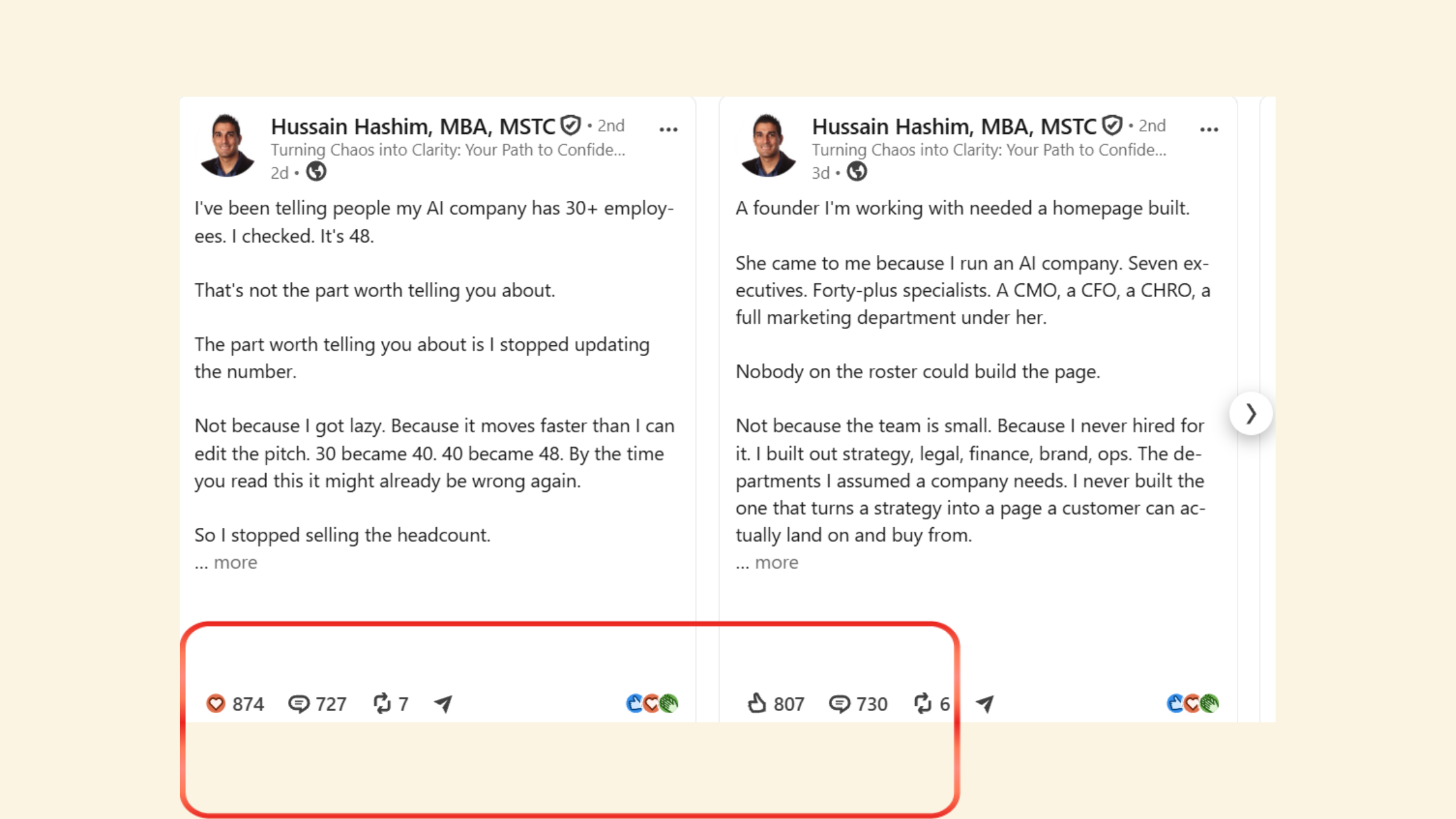
What makes these accounts valuable isn't their follower count — it's their comment-to-like ratio. A post with 200 comments and 800 likes is far more valuable to engage with than a post with 50 comments and 2,000 likes. The comment section is where real relationships — and real algorithmic signals — form.
- Content format they favor: Text-based posts, carousels, and personal case studies
- Posting frequency: 3–5 times per week
- Why their audience matters: CMOs, brand strategists, and agency founders are active in these comment threads
Top LinkedIn Creators for Tech, Founders, and Sales Professionals
Tech founders and sales professionals benefit from following creators who share process transparency — how they built something, what failed, what the data showed. According to NoGood's 2026 LinkedIn influencer roundup, creators in the B2B sales and SaaS founder categories consistently generate the highest engagement rates relative to follower count on the platform.
For sales professionals specifically, Josh Braun and Anthony Iannarino consistently surface in the top LinkedIn influencers lists for 2026 — and more importantly, their comment sections are populated by active sales practitioners, not passive scrollers.
- Tech founders: Look for creators sharing fundraising data, product decisions, and team-building frameworks — not just milestone announcements
- Sales professionals: Prioritize accounts that post scripts, cold outreach examples, and real rejection stories — these attract the most engaged sales communities
- Data and AI: Creators like Cassie Kozyrkov and Bruno Aziza attract senior data professionals and technical decision-makers
LinkedIn Creators Who Grow Engagement: What Makes Their Content Work
Teams that study top-performing LinkedIn creators consistently identify three shared behaviors: they post on a predictable schedule, they reply to every comment within the first hour, and they end posts with a specific question rather than a generic call to action. These aren't stylistic choices — they're deliberate algorithmic levers. LinkedIn rewards meaningful conversations, and a creator who drives 50 replies per post is one whose comment section you want to be visible in.
Understanding which accounts to follow is only half the equation — the other half is knowing exactly how to engage with them to extract algorithmic value for your own content.
How to Increase LinkedIn Organic Reach: Strategy Behind the Follow
Increasing LinkedIn organic reach requires pairing your follow strategy with a consistent content cadence and active engagement. The follow list alone does nothing. According to Sprout Social's 2026 LinkedIn statistics report, LinkedIn users respond most strongly to educational content and text-based posts — and the accounts that consistently earn high reach are the ones that treat their LinkedIn content strategy as a system, not a series of one-off posts.
LinkedIn Content Rules Explained: 5-3-2, 4-1-1, and 3-2-1 in Practice
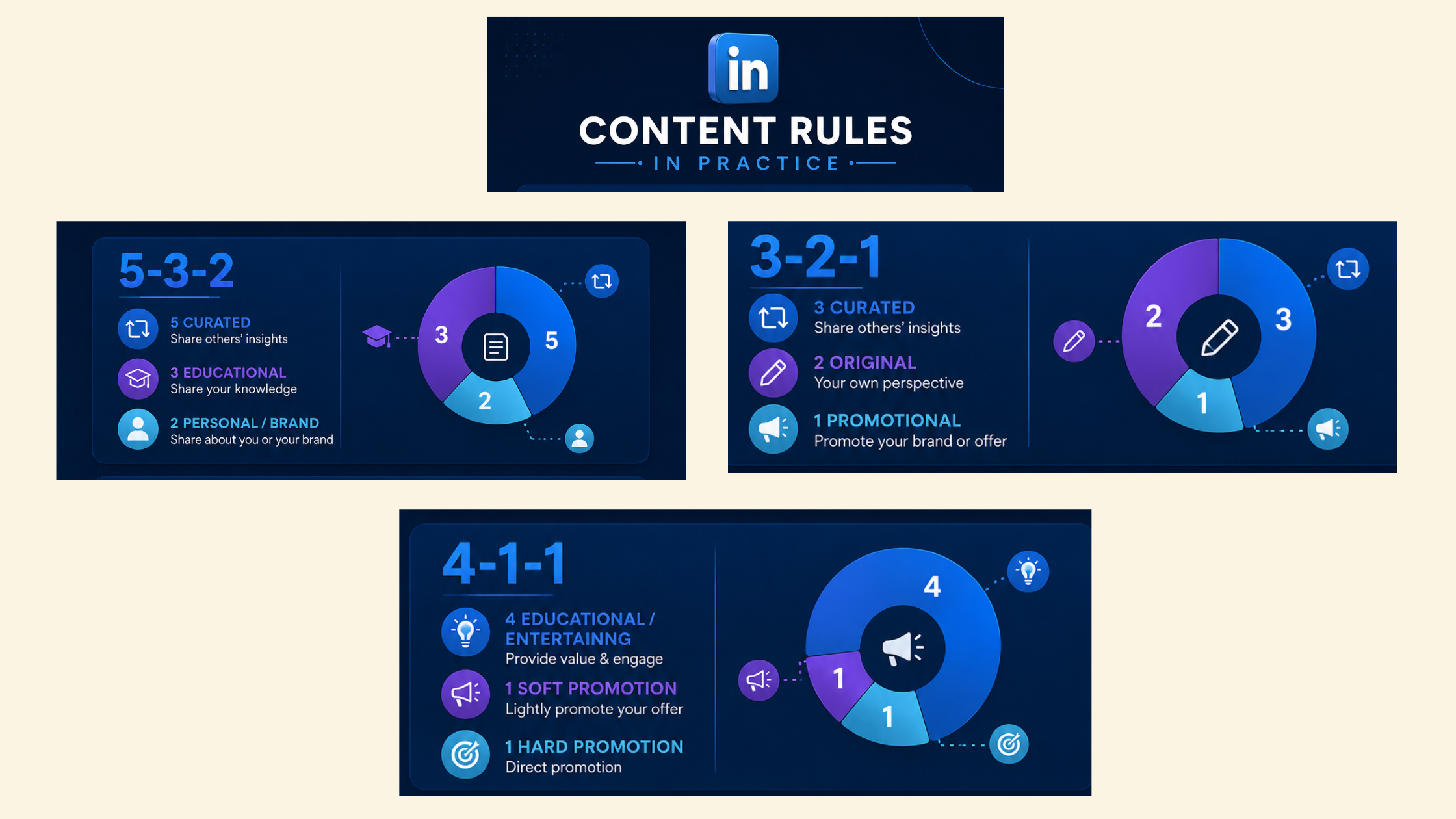
The 5-3-2 rule, 4-1-1 rule, and 3-2-1 rule are LinkedIn content strategy frameworks that govern how to balance promotional, educational, and curated content in your posting mix. They share a core principle: the majority of your posts should serve your audience, not sell to them.
- 5-3-2 Rule: For every 10 posts — 5 are curated from others, 3 are original educational content, 2 are personal or brand-related. Think of it as a content diet: mostly vegetables (others' insights), some protein (your original thinking), and occasional treats (self-promotion).
- 4-1-1 Rule: 4 pieces of educational or entertaining content, 1 soft promotion, 1 hard promotional post. Best suited for sales professionals and founders building an audience while nurturing leads.
- 3-2-1 Rule: 3 pieces of others' content, 2 original posts, 1 promotional. More aggressive content creation cadence — suits established creators posting daily or near-daily.
What separates top performers here is not which rule they follow — it's that they follow any rule consistently. Accounts that wing their content mix post too much self-promotion, see engagement collapse, and blame the algorithm.
Why Is My LinkedIn Reach So Low — and How Following Better Accounts Fixes It
Low LinkedIn reach almost always traces back to one of three causes: posting into an irrelevant network, posting inconsistently, or posting without engaging. The algorithm measures your content's relevance by how your existing network responds to it. If your network is full of dormant accounts or people outside your niche, even strong content will flatline.
Following better accounts — and actively commenting on their posts — rebuilds this. Over 4–6 weeks of consistent engagement in a specific niche, the algorithm recalibrates your content distribution toward the professional cluster you're engaging in. You can also check patterns in your own data using the LinkedIn analytics dashboard guide to identify exactly which posts are gaining traction and in which professional segments.
How to Evaluate Any LinkedIn Account Before You Follow
A ranked list of names ages fast — new LinkedIn creators emerge monthly, established ones pivot their content, and what worked for someone else's goals may not work for yours. The more durable asset is a repeatable evaluation framework you can apply to any profile at any time. This is the gap most "best accounts to follow" articles miss entirely.
Who Should I Follow on LinkedIn to Grow My Audience? A Decision Framework
Before following any LinkedIn account, run it through this five-point check:
- Posting frequency (30 seconds): Do they post at least 2–3 times per week? Accounts that post sporadically won't give you consistent engagement opportunities.
- Comment-to-like ratio (1 minute): Open their last 5 posts. A comment-to-like ratio above 1:10 indicates a genuinely engaged audience. Below 1:30 suggests passive followers, not an active community.
- Content originality (2 minutes): Are they sharing original frameworks, personal data, or unique perspectives? Or is it mostly reshared articles with a line of commentary? Original content creators attract higher-quality commenters.
- Niche alignment (1 minute): Check who leaves comments on their posts — not who follows them. Commenters reveal the actual professional community around that account. Are those the people you want to be visible to?
- Reply behavior (30 seconds): Do they reply to comments? Creator accounts that ignore their comment sections have disengaged audiences. You want to engage where real conversation happens.
✓ The LinkedIn Account Evaluation Checklist
- ☐Posts at least 2–3 times per week (check their recent post dates)
- ☐Comment-to-like ratio above 1:10 across recent posts
- ☐Posts original frameworks, data, or contrarian takes — not just reshared news
- ☐Their commenters are professionals you want to be visible to
- ☐They reply to comments (check their last 2–3 posts)
- ☐Content niche aligns with your professional goals or target audience
- ☐No red flags: no purely promotional feeds, no inactive comment sections
The most common failure mode here is evaluating an account solely on its follower count. Follower count is a vanity metric — it reflects past growth, not current audience quality. An account with 8,000 highly engaged niche followers is more valuable to follow than one with 80,000 passive connections in an unrelated field.
Common Mistakes That Kill Your LinkedIn Reach (Even With Great Follows)
Following the right LinkedIn accounts to grow reach is necessary but not sufficient. The most common failure mode among professionals building their LinkedIn presence is treating the follow list as the strategy, when it's actually just the setup.
How to Engage With LinkedIn Creators Strategically (Not Just Lurk)
Passive following contributes zero algorithmic benefit. What builds reach is consistent, early, substantive commenting — and most professionals get this wrong in two specific ways.
First, they comment too late. LinkedIn's engagement velocity window — the period during which early interactions have outsized distribution impact — is typically the first 30–60 minutes after a post is published. Commenting 6 hours later is better than not commenting, but it misses the amplification window entirely.
Second, they comment too generically. "Great post!" and "Totally agree!" add no value to the conversation and signal low-quality engagement to both the creator and the algorithm. The most effective comments do one of three things:
- Add a specific data point or example that extends the post's argument
- Offer a respectful counterpoint that invites further discussion
- Ask a direct question the creator would genuinely want to answer
Two other mistakes that consistently suppress reach even when the follow strategy is solid:
- Inconsistent personal brand: Your profile, post tone, and comment style should reinforce the same professional identity. If your posts are about B2B marketing but your comments are scattered across HR, fitness, and politics, LinkedIn can't build a coherent distribution profile for you.
- Over-relying on following as a growth hack: Following the right LinkedIn accounts to grow reach works only when paired with a LinkedIn content strategy that runs in parallel. The follow strategy feeds the algorithm; your content is what the algorithm distributes. Both must function together. For a deeper breakdown of timing and format, see this guide on boosting LinkedIn content reach on weekends.
Once your engagement habits are solid, the next question is: how do you actually measure whether any of this is working?
Best LinkedIn Analytics Tools to Track Reach and Refine Your Strategy
LinkedIn's native analytics dashboard covers impressions, profile views, follower growth, and basic post performance — sufficient for a baseline understanding, but limited for the kind of post-level and engagement-depth insights that actually inform strategic decisions.
According to Brenton Way's 2026 LinkedIn marketing statistics, engagement rate benchmarks vary significantly by content type and industry — which means tracking your own engagement rate against relevant benchmarks (not platform averages) is the most useful signal. Native analytics doesn't surface those comparisons.
Key metrics worth tracking beyond what LinkedIn natively provides:
- Engagement rate per post (likes + comments + shares ÷ impressions) — benchmark this across your own posts to identify which formats consistently outperform
- Comment-to-impression ratio — a high ratio indicates genuine audience resonance, not just reach
- Follower growth rate week-over-week, correlated with specific post types
- Best-performing post formats — carousels, text-only, images, or documents
How HyperClapper Helps You Amplify Reach Alongside a Strong Follow Strategy
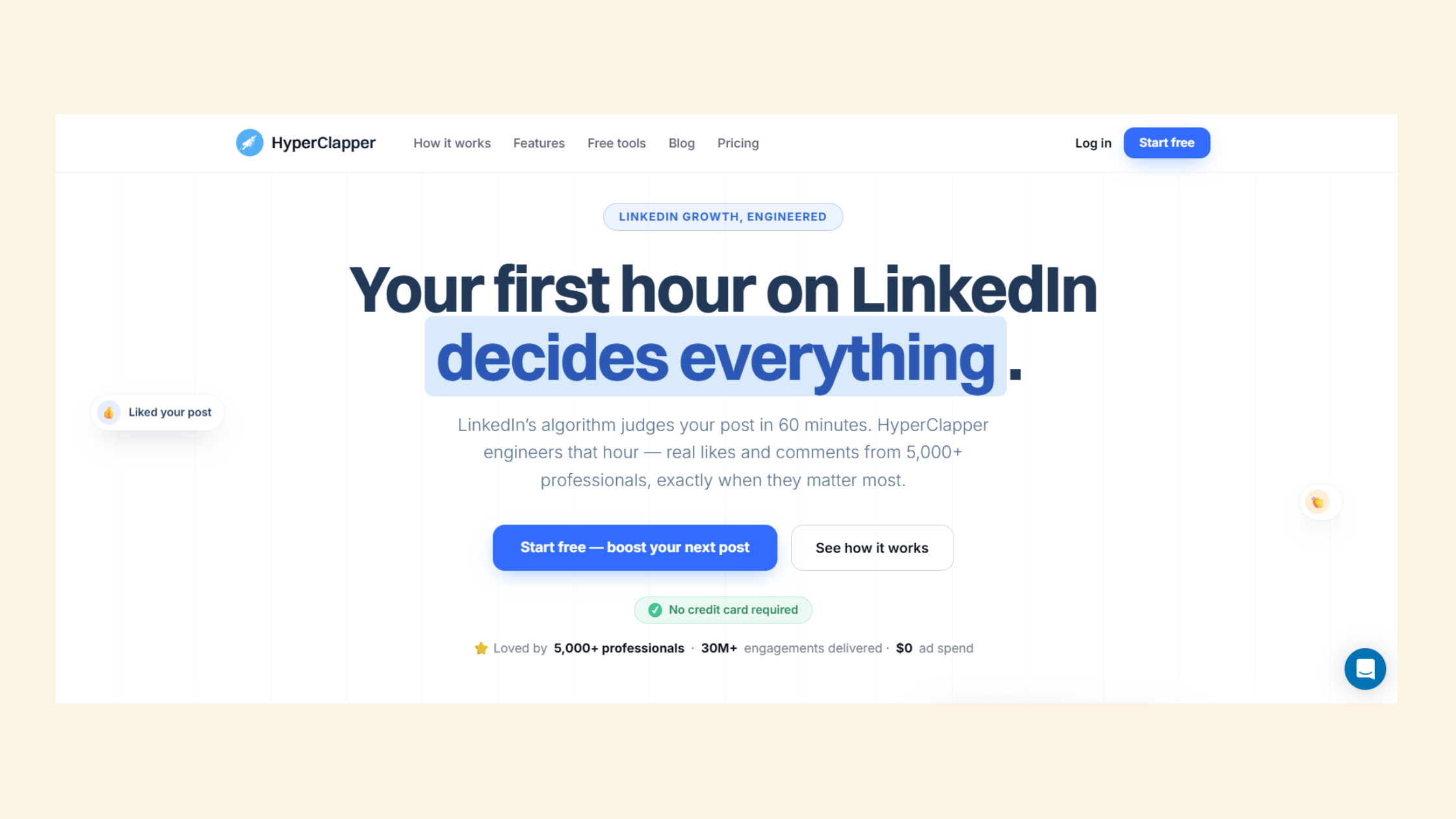
For content creators focused on visibility, HyperClapper is one of the strongest tools for amplifying reach because it combines real community engagement with analytics that LinkedIn's native dashboard doesn't surface. Rather than bot-driven activity, HyperClapper connects your posts with real professionals inside engagement channels — groups of roughly 50 people who interact with your content meaningfully. The result is higher early engagement velocity, which is the primary signal LinkedIn's algorithm uses to decide how widely to distribute a post.
What separates accounts with real reach from accounts with impressive follower numbers is not any single tactic — it's the combination of a curated follow strategy, consistent posting, and early engagement signals working together. Remove any one of the three, and reach plateaus regardless of content quality.
HyperClapper's AI-powered replies also keep conversations active beyond the first 60 minutes — useful because LinkedIn rewards depth of conversation, not just initial likes. You can explore how this integrates with a broader analytics workflow in the LinkedIn analytics and automation tools guide for marketers, or get a full picture of scheduling and carousel tools in the LinkedIn tools overview.
Analytics should directly inform your follow strategy: if posts about a specific topic consistently spike in reach, follow more creators in that niche to feed the algorithm's understanding of your content's relevance.
Get Real Engagement on Your Next LinkedIn Post
HyperClapper connects your posts with real professionals who engage early — training LinkedIn's algorithm to distribute your content more broadly.
Try HyperClapper FreeFrequently Asked Questions About Following LinkedIn Accounts to Grow Reach
What is the 5-3-2 rule on LinkedIn?
The 5-3-2 rule is a LinkedIn content strategy framework where, for every 10 posts, 5 are curated from other sources, 3 are original educational content you create, and 2 are personal or brand-related posts. It prevents over-promotion and keeps your content mix audience-focused. Creators who follow this ratio consistently see higher sustained engagement than those who post without a structure.
What is the 95-5 rule on LinkedIn?
The 95-5 rule refers to B2B marketing research showing that only 5% of your target audience is actively in-market and ready to buy at any given time — the other 95% are not yet ready. On LinkedIn, this means 95% of your content should build awareness and trust with the future buyers, not push immediate conversions. Most LinkedIn marketers over-invest in the 5% and under-serve the 95%.
What is the 3-2-1 rule on LinkedIn?
The 3-2-1 rule is a posting framework: 3 pieces of curated or reshared content, 2 original posts, and 1 promotional post per content cycle. It's a more creator-heavy variant of the 5-3-2 rule, suited for professionals who post frequently and want to balance original thinking with community curation. The single promotional post limit keeps self-promotion from overwhelming your audience.
What is the 4-1-1 rule on LinkedIn?
The 4-1-1 rule states that for every 6 posts, 4 should be educational or entertaining content from others or yourself, 1 should be a soft promotion (sharing a resource, case study, or insight), and 1 should be a direct promotion of your product or service. It's widely used by sales professionals and founders who need to nurture an audience while keeping commercial intent visible.
How often should you post on LinkedIn for reach?
Posting 3–5 times per week is the optimal cadence for LinkedIn reach in 2026. Dropping below 3 posts per week causes algorithmic reach decay — typically within 10–14 days — and recovery usually takes 3–4 weeks of consistent posting. Posting more than once per day risks cannibalising your own post's distribution, as LinkedIn tends to prioritise one post per account in a given feed cycle.
What type of LinkedIn posts get the most reach?
Text-based posts and carousels (document posts) consistently generate the highest reach on LinkedIn. According to Sprout Social (2026), educational content outperforms promotional content by a significant margin. Posts with images receive up to 94% more views than text-only posts. Posts that end with a specific question also outperform those with generic calls to action, because they directly drive comments — the algorithm's highest-value engagement signal.
Does following more people on LinkedIn directly increase your reach?
Following more people does not directly increase your reach. What increases reach is engaging with the right accounts — particularly commenting on relevant posts within the first 60 minutes of publication. Passive following adds no algorithmic signal. The quality and relevance of your engagement matters far more than the quantity of accounts you follow. Following 20 highly relevant creators and engaging consistently outperforms following 500 popular accounts passively.



