Agentforce is Salesforce's autonomous AI agent platform — designed to handle sales, service, and outreach tasks inside the Salesforce ecosystem without constant human intervention. After reviewing hundreds of practitioner accounts across the Salesforce community, the honest pattern that emerges for this Agentforce review 2026 is this: the platform is technically impressive, commercially expensive, and significantly misunderstood when it comes to LinkedIn. Teams expecting a LinkedIn prospecting tool will be disappointed. Teams expecting a deep CRM automation layer — and willing to build toward it — will find real value, but only after clearing substantial setup barriers.
- Agentforce is a CRM automation platform, not a LinkedIn tool — it does not natively automate LinkedIn outreach.
- LinkedIn Sales Navigator integration exists via Salesforce's CRM sync, but Agentforce cannot perform actions directly on LinkedIn.
- Pricing is consumption-based (~$2/conversation) but the real cost is five to six figures annually when Salesforce licenses are factored in.
- Only 8% of eligible customers have deployed Agentforce to production — the gap between demo and real deployment is wide.
- B2B LinkedIn prospecting teams get better ROI combining Agentforce (CRM layer) with a dedicated LinkedIn engagement tool.
- Counterintuitive finding: The teams seeing the best Agentforce results started with a single, narrow use case — not a full SDR build-out.
- What Is Agentforce?
- Agentforce AI Sales Agent Features, Broken Down
- Agentforce and LinkedIn: What the Integration Actually Looks Like
- Agentforce Pricing 2026: What It Actually Costs
- Agentforce Limitations, Risks, and Real-World Gaps
- Agentforce Alternatives for LinkedIn Automation and B2B Sales
- Getting Started with Agentforce: Implementation Reality Check
- Frequently Asked Questions About Agentforce in 2026
What Is Agentforce? (The Honest Overview)
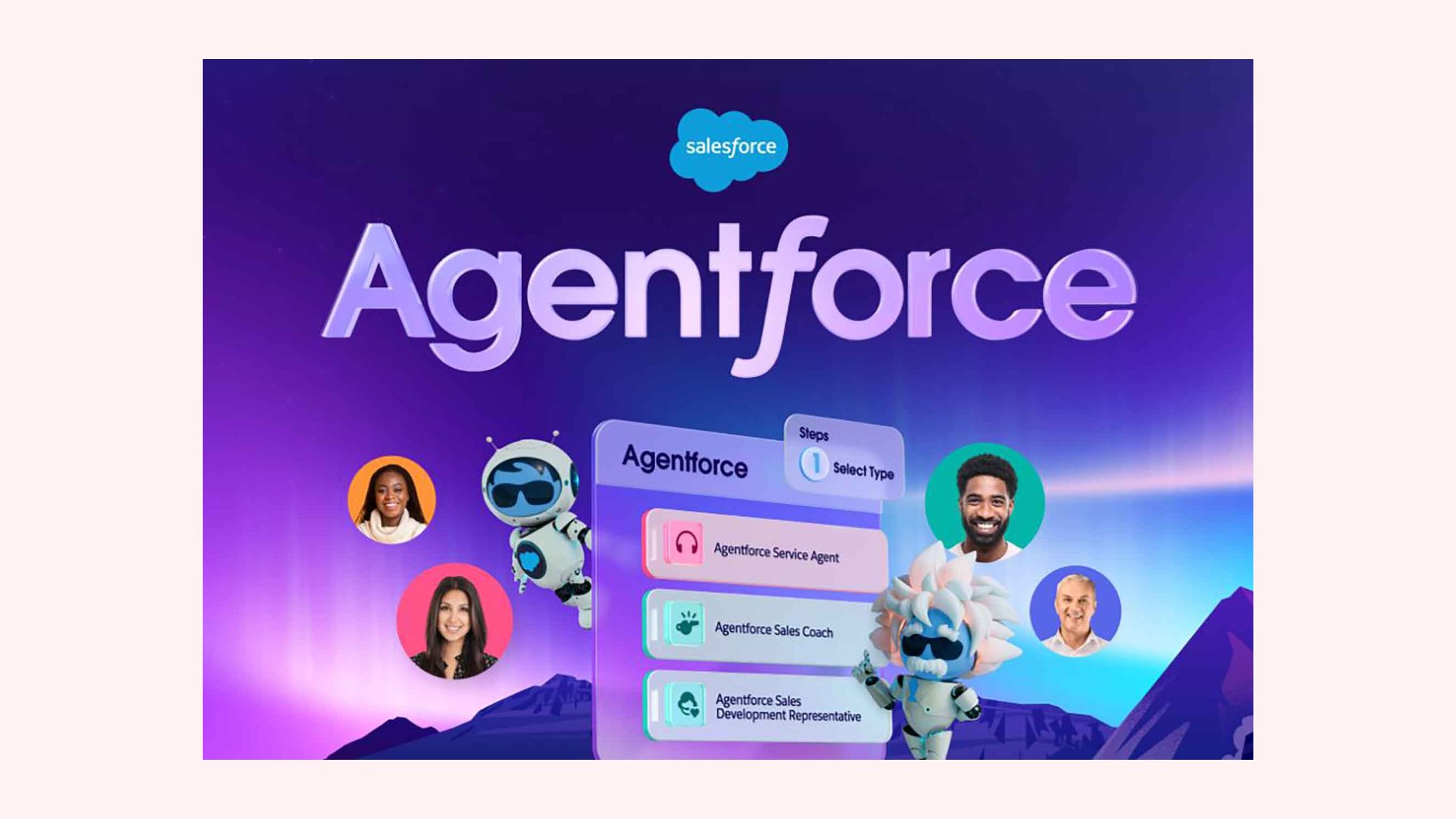
What is Agentforce in Salesforce? Agentforce is Salesforce's platform for building and deploying autonomous AI agents — software entities that can read CRM data, make decisions, and trigger multi-step actions like sending messages, updating records, or escalating to a human, all without waiting for a person to click a button. It launched in late 2024 and represents Salesforce's central bet on AI agent orchestration — the ability to chain tasks together intelligently, not just execute single commands.
The distinction matters. A traditional Salesforce workflow rule fires when a condition is met. An Agentforce agent reasons: it looks at context, considers options, and decides what to do next — closer to how a junior SDR thinks than how a macro runs. That's the genuine innovation here. It's also where the complexity begins.
How Agentforce Works: AI Agent Orchestration Explained
AI agent orchestration is the process of coordinating multiple AI actions in sequence — one agent reads a lead record, another decides whether to reach out, another drafts the message, and another logs the result back to the CRM. Agentforce handles this loop inside the Salesforce environment using natural language instructions defined in Agent Studio. No single action is remarkable on its own. The value is in the chain — and in doing it without a human manually moving things between steps.
The architecture relies on Salesforce Data Cloud for grounding (connecting the agent to real customer data), Einstein AI for reasoning, and the existing Salesforce permission system for access control. That dependency on the broader Salesforce stack is both the platform's strength and its biggest adoption barrier, which the pricing section covers in detail.
Agentforce AI Sales Agent Features, Broken Down
Four core agent types cover the most common commercial use cases:
- SDR Agent — prospects, drafts outreach, follows up on stale leads, logs activity automatically
- Service Agent — resolves support tickets, routes escalations, deflects routine queries
- Sales Coach Agent — reviews rep calls, surfaces coaching moments, tracks deal progress
- Custom Agent (Agent Studio) — build any workflow using natural language instructions
Agentforce SDR Agent: What It Can (and Can't) Do
The SDR Agent is the most scrutinised feature for B2B sales teams evaluating Agentforce AI sales agent features. In practice, it performs well at:
- Drafting personalised outreach emails using CRM context (company size, industry, last activity)
- Following up on leads that have gone cold without a rep having to remember
- Logging call summaries and next steps back to Salesforce records automatically
- Prioritising prospect lists based on engagement signals surfaced in Data Cloud
What it cannot do: initiate a LinkedIn connection request, send a LinkedIn message, comment on a prospect's post, or perform any action directly on the LinkedIn platform. That boundary is hard. No amount of Agent Studio configuration changes it without custom middleware.
Agent Studio is genuinely useful for teams that want custom agents without writing Apex code for every step — admins can define agent behaviour in plain English. Complex use cases, however, still require developer involvement. The most common failure mode observed among early adopters is attempting to build a full SDR agent before the underlying data quality supports it — garbage data produces unreliable agents with confidence.
The 8% production deployment rate isn't a technology failure — it's a data readiness failure. Agentforce is only as good as the Salesforce org it runs on. Most orgs aren't ready.
Agentforce and LinkedIn: What the Integration Actually Looks Like
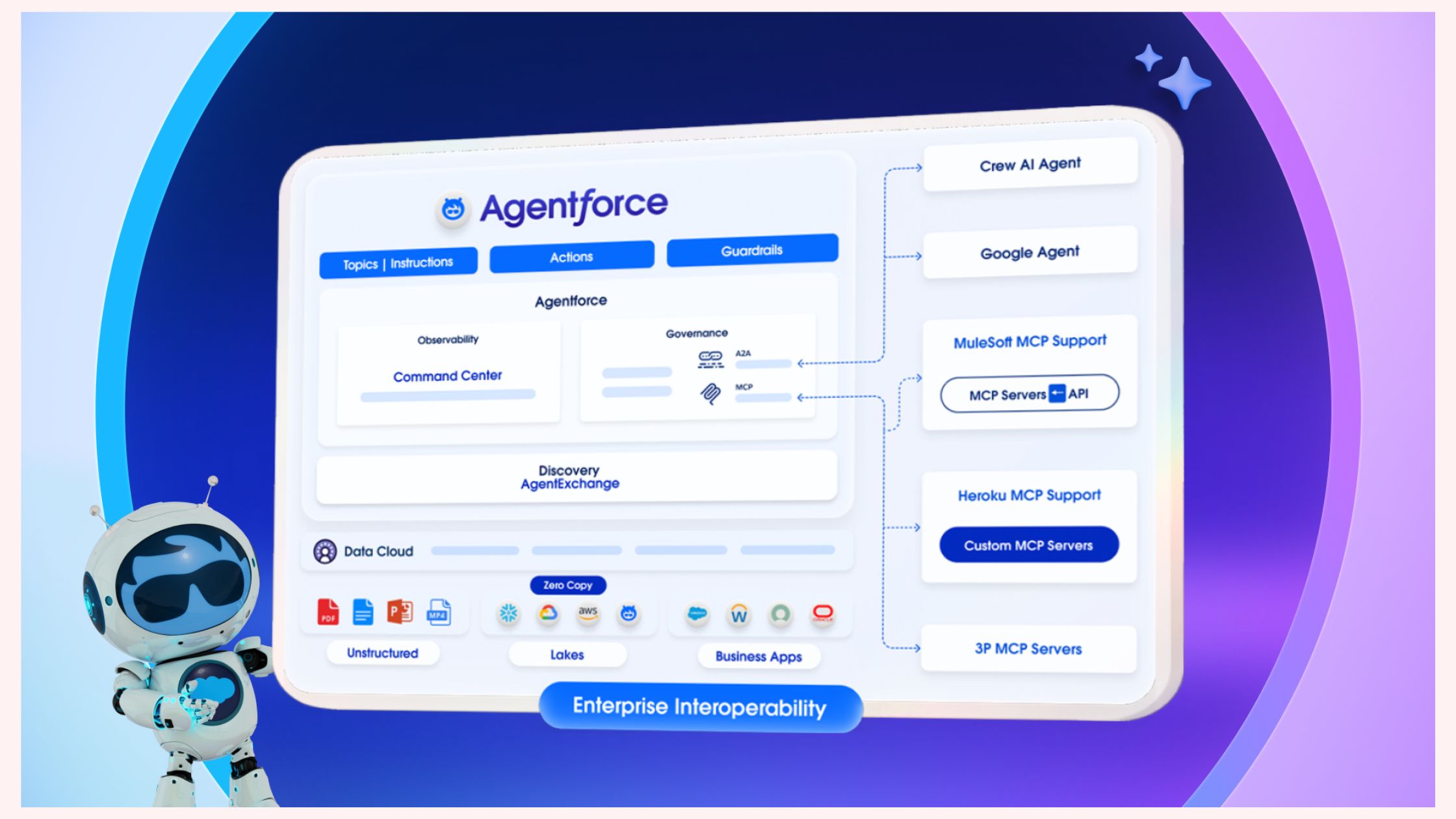
The question asked most frequently in B2B sales communities is whether Agentforce for LinkedIn prospecting is viable. The direct answer: it's viable as an enrichment layer, not as an outreach engine. Here's what that means in practice.
Salesforce Agentforce LinkedIn integration works through the existing LinkedIn Sales Navigator CRM sync — a feature that surfaces Sales Navigator data (profile views, job changes, InMail history) inside Salesforce records. Agentforce can read that data to inform decisions. For example, an SDR agent might prioritise a prospect who recently changed jobs, using the Sales Navigator signal that appeared in their Salesforce record.
What Agentforce cannot do through this integration:
- Send LinkedIn messages or connection requests
- Like, comment, or react to LinkedIn posts
- View or act on a LinkedIn profile directly
- Run sequences that mix LinkedIn and email steps without custom connectors
Teams asking can Agentforce automate LinkedIn outreach need an honest no. Not without building a custom integration using middleware like Zapier, Make, or a dedicated LinkedIn automation layer. That custom build adds cost and technical complexity that most teams underestimate when they see an Agentforce demo.
Agentforce vs LinkedIn Sales Navigator: Different Tools, Different Jobs
Agentforce vs LinkedIn Sales Navigator is a comparison that frames the wrong question — these tools aren't competing, they're complementary layers that serve different functions.
| Tool | Best For | LinkedIn Actions? | Salesforce Required? | Price Signal |
|---|---|---|---|---|
| Agentforce | CRM automation, multi-step agent workflows | No (data read only) | Yes | $2/conversation + licenses |
| LinkedIn Sales Navigator | LinkedIn prospecting, InMail, lead lists | Yes | No | ~$100/seat/month |
| HyperClapper | LinkedIn post engagement, visibility, AI replies | Yes (native) | No | Accessible entry pricing |
| 6sense | Intent data + multichannel outreach orchestration | Partial | No | Enterprise |
For a deeper look at how LinkedIn Sales Navigator performs as a standalone investment, the LinkedIn Sales Navigator review covering pricing and ROI breaks down what teams actually get for that spend. It's worth reading alongside this Agentforce analysis before committing to a combined stack.
Who Should Use Agentforce for Social Selling (And Who Shouldn't)
Who should use Agentforce for social selling depends heavily on existing infrastructure. The realistic profile of a team that sees value:
- Already running Sales Cloud or Service Cloud at scale
- Has a Data Cloud license and clean, segmented data
- Has Salesforce admin capacity (ideally a dedicated architect)
- Wants CRM-side automation — not LinkedIn-side action
Who shouldn't evaluate Agentforce for social selling: early-stage teams without a Salesforce footprint, companies whose primary prospecting channel is LinkedIn-native, and any team that needs direct outreach actions on LinkedIn without a six-figure infrastructure investment to support it.
Agentforce Pricing 2026: What It Actually Costs
Salesforce publishes a base rate of approximately $2 per conversation for Agentforce consumption. That number consistently underrepresents the true cost — and experienced practitioners know why.
According to 11x.ai's Agentforce Review 2026, Salesforce has closed 29,000 Agentforce deals in just 15 months — yet only 8% of eligible customers have deployed to production. That gap tells you everything about the distance between buying intent and implementation reality. In practice, the full cost stack looks like this:
- Salesforce Sales Cloud or Service Cloud license — required prerequisite, typically $75–$300/user/month
- Salesforce Data Cloud — required for Agentforce to access real customer data, adds thousands per month
- Agentforce consumption — $2/conversation at published rates, but volume adds up fast in an active sales team
- Implementation and admin costs — expect 40–120 hours of consulting or internal developer time for initial deployment
- Ongoing maintenance — agents need tuning as data changes and use cases evolve
Can Agentforce be used effectively without existing Salesforce licenses? No — it's architecturally embedded in the Salesforce platform. Non-Salesforce shops have no practical path to Agentforce without first adopting the core CRM, making it economically unviable for teams not already in the ecosystem.
Is Agentforce Worth It for B2B Sales Teams in 2026?
For teams already invested in Salesforce at scale, is Agentforce worth it for B2B sales comes down to one question: do you have the org quality to support it? Teams that do — clean data, active Data Cloud, dedicated admin — report meaningful time savings on follow-up workflows and CRM hygiene. Teams that don't find themselves spending more time debugging agent behaviour than the automation saves.
The teams consistently getting value aren't the ones who bought Agentforce for the vision. They're the ones who started with one narrow workflow — say, auto-follow-up on MQLs that haven't been touched in 14 days — proved it worked, and expanded from there. That's the pattern that produces real ROI, not the full SDR-in-a-box pitch.
If you're also evaluating LinkedIn Sales Navigator costs as part of your prospecting stack, the LinkedIn Sales Navigator pricing breakdown covers whether that investment holds up independently — useful context before layering Agentforce on top.
Agentforce Limitations, Risks, and Real-World Gaps
Agentforce limitations and drawbacks cluster into three categories that community discussions return to repeatedly: org readiness, compliance exposure, and the honesty gap between demos and production.
Common Mistakes to Avoid When Implementing Agentforce
A pattern observed across Salesforce practitioner communities — Reddit, Trailblazer, and implementation forums alike — is that teams consistently underestimate Salesforce org configuration complexity as the primary deployment barrier. Messy orgs produce unreliable agents. An agent that draws on stale or misattributed data doesn't just fail quietly — it can send inappropriate outreach, misclassify leads, or log incorrect activity, all without flagging an error.
- Mistake 1: Building before auditing. Deploying any Agentforce agent before cleaning up data quality, permission structures, and object relationships is the most common reason rollouts stall. Fix the org first.
- Mistake 2: Skipping the sandbox phase. Agents tested only in production have caused real outreach errors. Always validate with realistic anonymised data before touching live records.
- Mistake 3: Over-automating sensitive conversations. CRM AI integration challenges include hallucination risk — agents occasionally produce responses that sound confident but are factually wrong. Human review checkpoints for high-value prospects are not optional.
On agentforce reddit threads, the most upvoted concerns centre on exactly this: implementation teams discovering compliance requirements after purchase, not before. The question of how Agentforce handles GDPR and data sovereignty is one Salesforce's sales team often glosses over — request documented data residency options and a Data Processing Addendum before signing.
According to Oliv.ai's analysis of Agentforce reviews, B2B sales deployments report a 23% success rate compared to 65% for customer service implementations. The gap is largely explained by data complexity: B2C customer service deals with structured, high-volume queries. B2B sales involves nuanced, context-heavy interactions where agent reasoning errors are far more costly.
Agentforce Alternatives for LinkedIn Automation and B2B Sales
The gap Agentforce leaves on LinkedIn is real — and several tools fill it more directly. The best AI sales agents for LinkedIn 2026 aren't single-platform solutions; the highest-performing B2B teams layer tools by function rather than expecting one platform to do everything.
Agentforce vs SalesRobot and Other LinkedIn-First Tools
Most comparative content on Agentforce benchmarks it against SalesRobot — a LinkedIn outreach automation tool. That comparison is category confusion. SalesRobot automates LinkedIn sequences: connection requests, messages, follow-ups. Agentforce automates CRM workflows. They're not competing for the same job.
More useful Agentforce alternatives for LinkedIn automation depend on what gap you're filling:
- For LinkedIn post visibility and engagement: HyperClapper operates natively on LinkedIn, boosting posts through real community engagement channels and AI-powered replies — handling the social layer that Agentforce cannot touch. For creators, founders, and B2B marketers whose lead pipeline runs through LinkedIn visibility, it addresses the specific gap Agentforce leaves.
- For conversational AI in inbound sales: Conversica and Drift are closer Agentforce equivalents — AI-driven conversation platforms that qualify inbound leads. Neither requires the full Salesforce stack.
- For intent-data-driven multichannel outreach: 6sense combines buying intent signals with outreach orchestration and has stronger out-of-the-box LinkedIn ad and data capabilities than Agentforce for prospecting-heavy teams.

For teams evaluating the LinkedIn engagement tool landscape more broadly, the 10 proven LinkedIn B2B marketing and sales strategies for 2026 covers what's working across the full channel — useful context when deciding where Agentforce fits in a broader stack.
If you've looked at pod-based engagement tools as part of this evaluation, the Lempod review 2026 and LinkBoost review 2026 both cover how community-based engagement compares to older pod models — worth reading before committing to any LinkedIn visibility strategy.
Need LinkedIn visibility that Agentforce can't provide?
HyperClapper boosts your LinkedIn posts through real engagement channels and AI-powered replies — operating directly on LinkedIn where Agentforce stops short.
Try HyperClapper FreeGetting Started with Agentforce: Implementation Reality Check
Teams that succeed with Agentforce share a consistent pattern: they treat the first deployment as a learning exercise, not a transformation. Here's the implementation sequence that produces real results.
- Audit your Salesforce org (2–4 weeks). Clean data, verified permission sets, and an active Data Cloud license are hard prerequisites. If your contact records have significant gaps in key fields (company size, industry, last activity date), resolve that before touching Agentforce. Agents built on incomplete data produce inconsistent outputs.
- Define one narrow use case (1 week). Auto-follow-up on MQLs that haven't been contacted in 14 days is a better first agent than a full SDR build. Narrow scope means faster iteration and measurable results. Teams that try to build the complete agent vision on day one uniformly stall.
- Build and test in sandbox (2–3 weeks). Use realistic but anonymised prospect data. Run at least 50 test conversations before promoting to production. Document what the agent does and doesn't handle correctly — this becomes your human escalation trigger list.
- Go live with human review checkpoints. For the first 30 days, have a rep review agent-drafted outreach before it sends. Production deployment readiness isn't just a technical standard — it's a confidence standard built through verified output quality.
✓ The Agentforce Pre-Deployment Readiness Checklist
- ☐Salesforce org data audit complete — key fields populated on ≥80% of active records
- ☐Data Cloud license active and connected to relevant data sources
- ☐GDPR / data residency configuration reviewed and documented
- ☐Single use case defined with clear success metric (e.g. "follow-up response rate")
- ☐Sandbox environment built with anonymised production-like data
- ☐50+ sandbox test conversations reviewed and edge cases documented
- ☐Human review checkpoint defined for first 30 days in production
- ☐LinkedIn engagement layer (separate tool) identified to cover on-platform prospecting Agentforce cannot reach
What separates teams that deploy Agentforce successfully from teams that stall at the pilot stage isn't budget or technical ability — it's discipline about scope. Every team that over-built on day one is still trying to finish. Every team that started narrow is now expanding.
Combine Agentforce's CRM power with real LinkedIn visibility
HyperClapper handles the on-platform LinkedIn layer — real engagement, AI-powered replies, and post boosting — that completes what Agentforce leaves unfinished.
See HyperClapper in ActionFrequently Asked Questions About Agentforce in 2026
Is Agentforce the best AI tool for LinkedIn lead generation in 2026?
No — Agentforce is not designed for LinkedIn lead generation. It's a CRM automation platform that can use LinkedIn Sales Navigator data as an input, but it cannot perform any actions on LinkedIn directly. For LinkedIn-native lead generation, tools like HyperClapper (engagement and visibility), LinkedIn Sales Navigator (prospecting), or Conversica (conversational AI) serve that function better.
What are the pros and cons of using Agentforce for LinkedIn outreach?
Pro: Agentforce can enrich LinkedIn Sales Navigator data inside Salesforce and trigger CRM actions based on LinkedIn signals (job changes, engagement). Con: It cannot send LinkedIn messages, connection requests, or interact with content on the platform. For actual LinkedIn outreach automation, you need a separate tool — Agentforce handles what happens in the CRM after LinkedIn activity, not the LinkedIn activity itself.
How does Agentforce compare to other AI agents for B2B social selling?
Agentforce wins on CRM depth — it's unmatched for Salesforce-native workflow automation. For B2B social selling specifically, 6sense has stronger multichannel outreach orchestration, Conversica handles inbound qualification better, and LinkedIn Sales Navigator remains the dominant tool for prospecting activity on-platform. Agentforce is best positioned as the CRM backbone in a multi-tool stack, not a standalone social selling solution.
Does Agentforce integrate directly with LinkedIn Sales Navigator?
Yes, through Salesforce's existing Sales Navigator CRM sync — but this is a data integration, not an action integration. Agentforce can read Sales Navigator data surfaced inside Salesforce records (job changes, profile views, InMail history) to inform agent decisions. It cannot perform outreach actions on LinkedIn through this integration. The sync is read-only from Agentforce's perspective.
Can Agentforce be used without a Salesforce license?
No. Agentforce is architecturally embedded in the Salesforce platform and requires at minimum a Sales Cloud or Service Cloud license, plus a Data Cloud license for production use. Teams without existing Salesforce infrastructure face the full license cost — typically $75–$300/user/month — before Agentforce consumption charges apply. It's not viable for non-Salesforce shops without a complete platform adoption decision.
What is the actual pipeline impact reported by Agentforce customers?
Verified third-party data is limited, but Oliv.ai's review analysis shows B2B sales deployments report a 23% success rate versus 65% for customer service implementations. Salesforce has reported strong commercial momentum — 29,000 deals and $11.2B in Q4 FY26 revenue — but pipeline impact per deployment varies significantly by data quality and scope of implementation.
What is the general sentiment around Agentforce ("agentforce vibes") in the Salesforce community?
Mixed — and that tension is informative. Salesforce practitioners are impressed by the architecture and excited about the long-term direction, but consistently frustrated by the gap between demo capability and production reality. The dominant sentiment is cautious optimism: Agentforce is the right bet, but most orgs aren't ready for it yet. That assessment aligns with the 8% production deployment rate despite 29,000 deals closed.
What consistently separates teams that extract measurable value from Agentforce from teams that stall at the pilot stage isn't budget, team size, or technical sophistication — it's org data quality and deployment discipline. Teams that treat clean data as a prerequisite deploy successfully. Teams that try to automate their way around a messy Salesforce org end up with unreliable agents and abandoned projects. The technology is ready. Most orgs aren't. That honest assessment is what this Agentforce review 2026 keeps coming back to — and it's the question worth asking before signing any contract.