
A pattern observed across thousands of LinkedIn accounts is this: creators invest hours crafting posts, hit publish — and watch them flatline at under 200 impressions despite having 5,000+ followers. The reason isn't bad content. It's that LinkedIn post reach is gated by a small-window engagement test that most creators don't know exists. LinkedIn tests every post on a tiny slice of your audience first. If that slice doesn't engage, the post dies. LinkedIn engagement pods exist specifically to solve that cold-start problem — and understanding both the algorithm and the pod mechanic is the fastest path to fixing your reach.
- LinkedIn tests every post on a small audience first — zero early engagement means near-zero distribution, regardless of your follower count.
- LinkedIn engagement pods are groups of users who coordinate early likes and comments to pass LinkedIn's algorithmic threshold and unlock wider reach.
- Comments carry more algorithmic weight than likes — a post with 10 relevant comments outperforms one with 50 likes and no comments.
- External links in post bodies suppress reach significantly; posting natively and keeping links in comments is the correct approach.
- Document posts (carousels/PDFs) generate the highest average dwell time of any LinkedIn format — directly boosting algorithmic quality scores.
- The counterintuitive finding: pods don't just boost individual posts — consistent pod-assisted engagement raises your account's baseline score, making future organic posts perform better too.
- Why Is My LinkedIn Post Getting No Reach?
- What Is the LinkedIn Algorithm and How Does It Work?
- What Are LinkedIn Engagement Pods?
- How LinkedIn Engagement Pods Boost Reach — The Mechanics
- Do LinkedIn Engagement Pods Actually Work?
- Are LinkedIn Engagement Pods Against the Rules?
- How to Get More LinkedIn Post Engagement Organically
- LinkedIn Content Strategy: Formats That Increase Reach
- LinkedIn Organic Reach Strategy: How Posting Frequency Affects Algorithm Trust
- Best Time to Post on LinkedIn
- LinkedIn Engagement Pods vs Alternatives
- How to Increase LinkedIn Post Visibility: Step-by-Step
- Frequently Asked Questions
Why Is My LinkedIn Post Getting No Reach? (The Real Answer)
The uncomfortable truth is that most LinkedIn posts get no views not because they're poorly written, but because they receive zero early engagement signals. LinkedIn doesn't broadcast your post to all your followers simultaneously — it distributes to roughly 3–5% of your audience first, measures engagement rate within that window, and decides whether to expand distribution based on that result. Posts that fail the initial test typically stall below 300 impressions permanently, regardless of how many followers the account has.
Why You Have LinkedIn Followers but No Post Engagement
LinkedIn reach vs impressions: reach is the number of unique people who saw your post; impressions count total views including repeat views. Having 8,000 followers and 180 impressions means LinkedIn showed your post to roughly 2% of your audience — and stopped there. The most common reason is a combination of low historical engagement rate on your account and no early signals on the specific post. LinkedIn's system interprets this as "this content isn't resonating" and stops distribution. It's a self-reinforcing trap: low reach means fewer chances to get engagement, which means continued low reach.
LinkedIn Reach Dropped Suddenly — Common Triggers
A sudden reach drop usually traces to one of four specific causes:
- External link in the post body — LinkedIn suppresses posts with outbound links by a reported 30–60%
- Posting gap longer than 30 days — account baseline resets toward zero
- Engagement rate collapse — several recent posts underperformed, lowering your account's trust score
- Algorithm update — LinkedIn periodically reweights signals, and accounts that relied heavily on one tactic often see sudden drops
Understanding why reach fails is only half the equation — the other half is understanding exactly how the algorithm decides what to amplify.
What Is the LinkedIn Algorithm and How Does It Work?
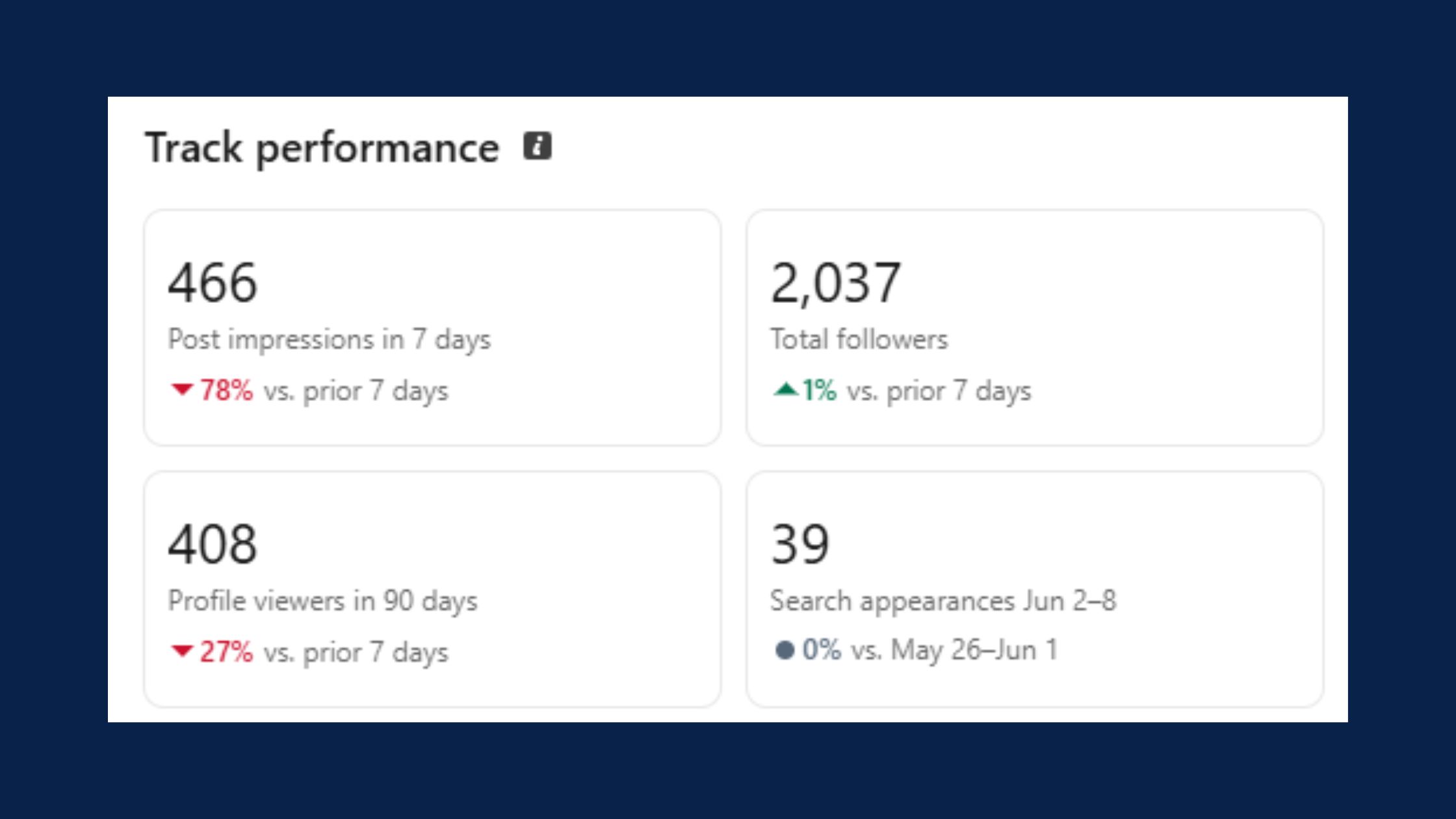
LinkedIn's algorithm uses a four-stage filtering system to decide how far your content travels: an automated spam and quality check, a small test-audience distribution, a relevance scoring phase based on early engagement, and finally broader rollout to second- and third-degree connections. Most posts never make it past stage two.
How LinkedIn Distributes Content to Connections and Followers
LinkedIn algorithm signals — the behavioral inputs LinkedIn uses to score a post's quality — are weighted in roughly this order of importance:
- Comments (highest weight, especially multi-turn conversations)
- Shares and reposts
- Reactions/likes
- Dwell time on posts — how long users spend reading before scrolling past
- Click-through behavior (for posts with links, though these are already suppressed)
Dwell time is particularly underappreciated. A post that people read for 15+ seconds signals value even if they don't react — and that signal feeds the algorithm's next distribution decision.
LinkedIn Post Golden Hour Engagement Window Explained
The LinkedIn post golden hour — the first 60–90 minutes after publishing — is the engagement window that determines whether your post gets broader distribution. Posts that cross a 2–3% content engagement rate within this window are consistently pushed to wider audiences. Below 1% and the algorithm treats the post as low-value content, limiting further distribution. This window is why timing matters enormously, and why coordinated early engagement is so effective.
The golden hour isn't a metaphor — it's a measurable distribution gate. Miss it with low engagement and no amount of great writing recovers the reach that was available in those first 90 minutes.
Now that the algorithm's mechanics are clear, the logic behind engagement pods becomes much more obvious.
What Are LinkedIn Engagement Pods?

LinkedIn engagement pods are groups of LinkedIn users who agree to engage — likes and comments — on each other's posts shortly after publishing, specifically to trigger the algorithm's early-engagement threshold and unlock wider distribution.
Manual vs Automated LinkedIn Pods — What's the Difference?
Manual pods typically operate through Slack groups, WhatsApp chats, or email threads. Members share their post links when they publish and ask others to engage within the hour. The coordination is human-managed, which is slower and less reliable — members may miss the window or forget to engage entirely.
Automated LinkedIn engagement pod tools like HyperClapper, Lempod, and Podawaa streamline this process: you submit your post, choose engagement groups (called channels in HyperClapper's system), and the platform coordinates engagement automatically within your chosen window. The key differentiator between tools is whether the engagement comes from real human accounts or bots — a distinction LinkedIn's detection systems are increasingly good at identifying.
LinkedIn Pod Member Targeting and Niche Relevance
The quality of pod membership matters as much as the quantity. LinkedIn's algorithm factors in the relevance of engagers to the post's topic. A B2B SaaS founder getting comments from other founders, marketers, and tech professionals signals strong topical resonance. The same post getting comments from accounts in unrelated industries sends a weaker relevance signal. The most effective pods are niche-matched — LinkedIn engagement pods for B2B marketers, separate pods for HR professionals, separate ones for founders.
Understanding what pods are leads naturally to the next question: exactly how do they move the algorithmic needle?
How LinkedIn Engagement Pods Boost Reach — The Mechanics
When pod members engage within the first 30–60 minutes of a post going live, they artificially satisfy the algorithm's "test audience" requirement — passing the post to the next distribution tier. Think of it as a lock with a specific key: the algorithm requires a minimum engagement signal before opening the distribution gate. Pods provide that key on demand.
LinkedIn Algorithm: How Early Engagement Works Step by Step
- Publish your post (0 minutes) — LinkedIn distributes to 3–5% of your audience
- Pod activation (within 15 minutes) — pod members begin liking and commenting
- Algorithmic scoring (30–60 minutes) — LinkedIn measures engagement rate against content quality signals
- Distribution expansion (60–90 minutes) — if threshold is met, content is pushed to second-degree connections and relevant non-followers
- Compounding effect — increased reach generates additional organic engagement, further expanding distribution
Comments carry significantly more weight than likes in this process. A post with 10 meaningful comments consistently outperforms one with 50 likes and no comments. This is why AI-powered comment features matter: tools like HyperClapper's AI reply system generate contextually relevant responses — not generic "Great post!" filler — which carry both algorithmic and social credibility.
LinkedIn Pod Strategy for More Impressions — What Actually Works
The LinkedIn pod strategy for more impressions that consistently performs follows a specific pattern:
- Activate pods within 15 minutes of publishing — not hours later
- Use niche-matched channels rather than the largest available groups
- Ensure pod comments are substantive (2+ sentences, topically relevant)
- Reply to every pod comment yourself — this doubles the comment count and extends dwell time
- Add follow-up AI replies 24–48 hours later to re-trigger the algorithm's recency signal
Get Real Engagement on Your Next LinkedIn Post
HyperClapper connects your posts with real professionals through niche-matched channels and AI-powered replies — no bots, no generic comments.
Start Boosting Posts →Do LinkedIn Engagement Pods Actually Work? Results and Evidence
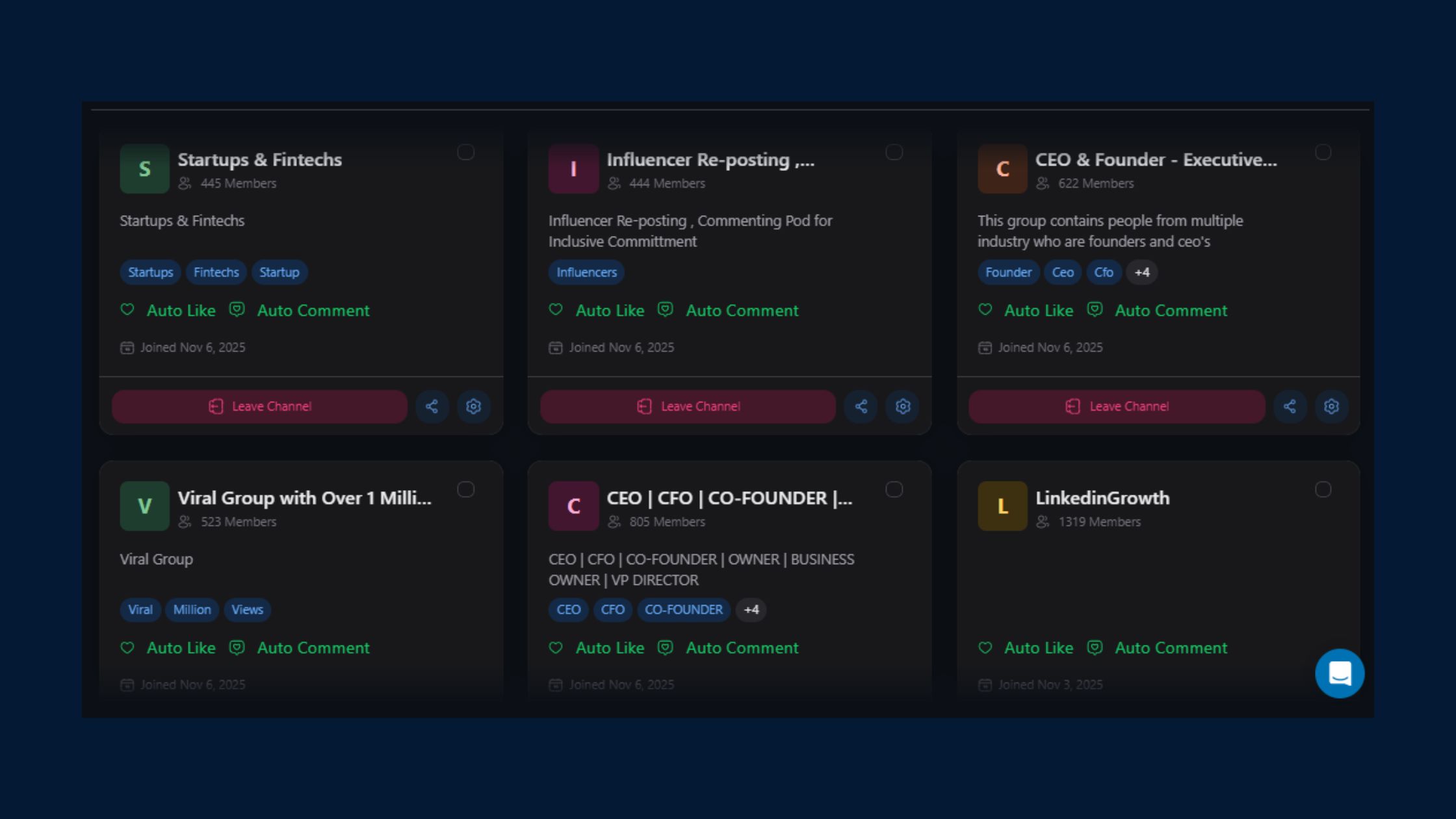
Yes — for the specific goal of increasing early-stage algorithmic distribution, the evidence is consistent. LinkedIn creators using structured, niche-matched pods routinely report 200–500% more impressions per post compared to their non-boosted baseline. The mechanism is well understood and the results are repeatable.
LinkedIn Engagement Pods for B2B Marketers and Founders
Teams that use pod-assisted distribution alongside quality content consistently see engagement compound over time. The pattern among LinkedIn reach strategy for founders specifically: the first 4–6 weeks of pod use primarily lift individual post impressions. After 8–12 weeks, the account's overall engagement baseline rises — meaning even posts that aren't pod-boosted start performing better organically. This compounding effect is the most underreported benefit of consistent pod use.
For LinkedIn engagement pods for B2B marketers, the ROI calculation is straightforward: at $6–$12 CPM for LinkedIn paid promotion, reaching 10,000 people costs $60–$120. Pods routinely deliver equivalent reach at a fraction of that cost, with the added benefit of looking organic rather than sponsored.
LinkedIn Engagement Pods Worth It in 2026 — Honest Assessment
The honest answer: pods are worth it if your content is good and you're using real-engagement platforms. They are not worth it if:
- Your content is weak — pods just expose more people to content they'll scroll past
- You're using bot-heavy tools that generate generic comments — these now carry detection risk
- You're treating pods as a permanent replacement for organic strategy rather than an accelerant
What separates top performers here is using pods to solve the cold-start problem while simultaneously building genuine audience relationships through content quality and consistent engagement.
Are LinkedIn Engagement Pods Against the Rules? Risks and Limitations

LinkedIn's User Agreement prohibits artificial inflation of engagement — coordinated pod activity technically falls within that definition. That's the honest, complete answer. The practical risk, however, depends heavily on how the pod operates.
Can Engagement Pods Get You Banned on LinkedIn — What the Data Shows
LinkedIn has not issued mass account bans for pod participation as of 2026. Enforcement has primarily targeted automated bot networks generating obviously non-human behavior — rapid-fire generic comments from accounts with no profile activity, engagement from accounts in irrelevant geographies, and suspicious velocity spikes. Real human engagement from relevant professionals in a moderated platform generates a substantially different behavioral signature.
The risk scales with aggression. Using 10 niche-matched channels on HyperClapper with AI-generated contextual replies sits at the low end of the risk spectrum. Using aggressive automated scraping tools that blast 500 generic "Congrats on this!" comments per day sits at the high end.
Common Mistakes to Avoid When Using LinkedIn Pods
- Activating pods hours after publishing — the golden hour has passed by then
- Using pods on content that contains external links — the suppression penalty cancels out the pod boost
- Joining large, unfocused pods with no niche relevance to your content
- Never engaging back with pod comments — this reduces the conversational depth signal
Knowing the risks makes the organic strategy side of the equation even more important — pods work best as an amplifier for content that would succeed anyway.
How to Get More LinkedIn Post Engagement Organically

Organic and pod strategies work best together — the highest-performing accounts on LinkedIn use both, not one or the other. Organic engagement builds the authentic audience that makes pod-boosted reach convert into followers, leads, and opportunities.
Creator Mode Optimization for Maximum LinkedIn Post Reach

Creator Mode is a LinkedIn profile setting that reorders your profile to show content and followers prominently, enables the Follow button as the primary CTA (instead of Connect), and unlocks access to LinkedIn newsletters and audio events. Enabling Creator Mode also appears to correlate with slightly broader content distribution — accounts in Creator Mode are surfaced more frequently in "posts you might like" feeds outside direct connection graphs.
Enable Creator Mode via Settings → Visibility → Creator Mode. Add 5 topic hashtags to your profile that match your content focus — these signal to LinkedIn which topical feeds your content belongs in, which is part of how LinkedIn algorithm engagement assigns distribution to relevant non-followers.
Role of Hashtags in LinkedIn Reach and How to Use Them Correctly
Hashtags on LinkedIn serve a topical classification function rather than a discovery function (unlike Instagram). Using 3–5 specific, relevant hashtags helps LinkedIn categorize your post and surface it in topical feeds. What consistently fails: using 15+ hashtags (dilutes topical signal), using overly broad hashtags like #business or #motivation (too competitive to surface in, zero niche relevance), or skipping hashtags entirely. The optimal approach is 1 broad industry hashtag + 2–3 niche-specific hashtags + 1 trending topic hashtag when relevant.
With organic fundamentals in place, format choice becomes the next highest-leverage decision.
LinkedIn Content Strategy: Formats That Actually Increase LinkedIn Post Reach
Not all content formats are treated equally by LinkedIn's algorithm — and format choice has a measurable impact on reach. A recurring pattern among LinkedIn content creators is choosing formats based on what's easiest to produce rather than what the algorithm rewards most.
Here's how the main formats actually perform:
- Text-only posts: Load instantly, generate comment-heavy threads, strong for personal storytelling and opinion — consistently solid reach for personal brand content
- Document posts (carousels/PDFs): Generate the highest average dwell time of any format, which directly boosts algorithmic quality scores. See this breakdown of how to format LinkedIn posts for maximum reach
- Native video: Strong algorithmic preference, but must be uploaded directly — not linked from YouTube
- Image posts: Moderate performance; better than external links, weaker than text or documents for engagement depth
Impact of External Links on LinkedIn Post Suppression
External links in the post body are one of the most well-documented LinkedIn reach killers. LinkedIn's business model depends on keeping users on the platform — posts that direct traffic elsewhere are suppressed by an estimated 30–60% in distribution. The correct approach is posting without external links in the body, then adding the link as the first comment after publishing. This preserves full algorithmic distribution while still making the link accessible.
LinkedIn Newsletter and Document Posts as Reach Amplification Strategies
LinkedIn newsletters get distributed to all your subscribers via LinkedIn notification AND email — bypassing the algorithmic feed entirely. For accounts with 1,000+ subscribers, newsletters reliably reach more people than standard posts. Document posts serve a different function: the swipe-through behavior generates dwell time signals that text posts can't match, making them effective for topics that benefit from a step-by-step or listicle format.
LinkedIn Organic Reach Strategy: How Posting Frequency Affects Algorithm Trust
Posting frequency shapes your account's baseline reach score over time. Consistent posting signals to LinkedIn that you're a reliable content source — and the algorithm gradually rewards reliability with better default distribution.
LinkedIn Posts Getting Zero Impressions — Account History Diagnostics
The accounts most likely to experience LinkedIn posts getting zero impressions fall into two categories: brand-new accounts with no engagement history, and accounts that posted inconsistently and damaged their engagement rate score. Daily posting builds algorithm trust faster than weekly posting, but only if content quality holds. Posting low-quality content daily degrades your average engagement rate — which can lower your baseline score below what you started with.
The recommended cadence for most professionals and LinkedIn thought leadership builders: 3–5 posts per week, with at least one high-investment format (document or video) per week. New accounts or those rebuilding after a gap need 4–8 weeks of consistent posting at this cadence before baseline reach normalizes.
Accounts that drop below 3 posts per week see measurable algorithmic reach decay within 10–14 days — and recovering that baseline typically requires 3–4 weeks of consistent posting to rebuild what was lost in a single gap.
Timing within the posting schedule matters too — which brings us to when, specifically, to publish.
Best Time to Post on LinkedIn
The best time to post on LinkedIn is consistently Tuesday through Thursday, between 8–10am and 12–1pm in your audience's primary time zone. These windows capture professionals at the start of their workday and during lunch — when LinkedIn feed browsing is highest and competition for attention is moderate.
What consistently fails: posting late Friday afternoon, weekend posts (LinkedIn is a professional platform — weekend engagement drops by 50–70% versus midweek), and posting after 6pm in your audience's time zone when the feed is dominated by posts that have already been accumulating engagement all day.
- Best days: Tuesday, Wednesday, Thursday
- Best morning window: 7:30–9:30am local time
- Best midday window: 11:30am–1:00pm local time
- Avoid: Friday after 2pm, Saturday, Sunday
For global audiences, post in the time zone where your highest-value connections are located — not your own time zone if they differ significantly.
LinkedIn Engagement Pods vs Alternatives: Paid Promotion, Newsletters, and Organic Growth

LinkedIn paid promotion guarantees impressions but at $6–$12 CPM — reaching 10,000 people costs $60–$120 per post, and sponsored content is visually labeled, which reduces organic credibility. Pods typically deliver equivalent reach at lower cost with organic appearance.
Best LinkedIn Engagement Pod Tools in 2026 — Feature Comparison
| Tool | Best For | Engagement Type | Risk Level |
|---|---|---|---|
| HyperClapper | Creators, founders, agencies wanting safe real engagement + AI replies | Real humans + AI replies | Lower — moderated, human-backed |
| Lempod | B2B sales teams | Automated engagement | Medium — history of LinkedIn friction |
| Podawaa | Volume-focused users | Automated engagement | Medium-high — flagged by LinkedIn |
| Manual Slack pods | Small niche communities | Fully manual | Lowest — fully human-operated |
%2520(1).png) hyperclapper.com
hyperclapper.comLinkedIn Pods Alternatives for Reach Growth Without Pods
For creators who want to avoid pods entirely, the primary alternatives are:
- LinkedIn newsletters: Bypass the feed algorithm, reach subscribers directly via notification and email — but require months to build a subscriber base
- LinkedIn paid promotion: Reliable reach with budget, loses organic credibility due to "Sponsored" label
- Strategic comment engagement: Commenting on high-reach posts in your niche before publishing your own content warms your account's engagement signal — a consistent tactic among top-performing LinkedIn content creators
- Employee advocacy programs: For companies growing LinkedIn visibility, coordinating employee engagement on company page posts is a legitimate pod-equivalent
How to Increase LinkedIn Post Visibility: Step-by-Step Implementation
The following system combines algorithm knowledge, content strategy, and engagement pod tactics into a repeatable process. Use this as your complete playbook for every post.
✓ The LinkedIn Reach Maximiser Checklist
- ☐Write a hook that completes a thought in 2 lines — your first sentence must stop the scroll without relying on "See more"
- ☐Remove all external links from the post body — add them as the first comment after publishing
- ☐Add 3–5 relevant hashtags: 1 broad industry + 2–3 niche-specific + 1 trending where appropriate
- ☐End the post with a specific, answerable question to drive comments
- ☐Activate your HyperClapper channels within 15 minutes of publishing — not after the golden hour has passed
- ☐Reply to every comment within the first 60 minutes to extend conversation depth and dwell time signals
- ☐Add follow-up AI replies at 24–48 hours to re-trigger recency signal for extended distribution
- ☐Check analytics 48 hours post-publish — note impression count, engagement rate, and follower gain to calibrate your next post
Get More Views on LinkedIn Posts: A 5-Step Daily Routine
- Morning engagement (10 minutes): Comment substantively on 3–5 posts in your niche before publishing your own content — this warms your account's engagement signal
- Publish during your peak window (Tuesday–Thursday, 8–10am) — native post, no external links in body
- Activate pod/channels within 15 minutes — golden hour engagement is non-negotiable
- Monitor and respond for the first 90 minutes — reply to every comment as it comes in
- Evening review (5 minutes): Check impressions, identify the top-performing comment thread, and save the insight for your next post angle
Ready to Stop Publishing into the Void?
HyperClapper's real-engagement channels and AI-powered replies are built to solve the cold-start problem — so your posts actually reach the people you wrote them for.
Try HyperClapper Free →Frequently Asked Questions About LinkedIn Post Reach and Engagement Pods
What is the 5-3-2 rule on LinkedIn?
The 5-3-2 rule is a LinkedIn content ratio framework: for every 10 posts, 5 should be curated content from others, 3 should be original educational content, and 2 should be personal or humanising posts. It's designed to prevent over-promotion and ensure a mix that builds trust, demonstrates expertise, and maintains audience connection across content types.
What is the 5-5-5 rule for LinkedIn success?
The 5-5-5 rule is a daily LinkedIn engagement habit: spend 5 minutes liking relevant posts, 5 minutes leaving substantive comments on others' content, and 5 minutes responding to messages or connection requests. The goal is warming your account's engagement signal before you publish your own content, which positively influences algorithmic distribution.
What is the 4-1-1 rule on LinkedIn?
The 4-1-1 rule is a content sharing guideline: for every 6 pieces of content you share, 4 should be educational or entertaining content from others, 1 should be your own original content, and 1 should be a promotional post. It prevents your feed from becoming a sales channel and ensures you're adding value before asking for attention or action.
Does including external links in LinkedIn posts hurt reach?
Yes — external links in the post body suppress reach by an estimated 30–60%. LinkedIn's algorithm penalises content that sends users away from the platform. The standard fix is to post without the link in the body, then add it as the first comment immediately after publishing. This preserves full distribution while keeping the link accessible to readers.
What engagement rate benchmarks indicate a healthy LinkedIn post?
A healthy LinkedIn post achieves a 2–3% engagement rate within the first 60–90 minutes — meaning 2–3 reactions or comments per 100 impressions in that initial window. Below 1% signals low relevance to the algorithm and limits further distribution. Above 5% in the golden hour is considered strong and typically triggers second- and third-degree distribution.
Is it safe to use LinkedIn engagement pods without getting banned?
The risk is low when using platforms with real human engagement and contextually relevant comments. LinkedIn enforcement targets bot networks and repetitive generic comment patterns — not niche-matched communities of professionals engaging authentically. Using a moderated platform like HyperClapper with AI-generated contextual replies sits at significantly lower risk than aggressive automation tools.
How do LinkedIn engagement pods help posts go viral?
Pods solve the cold-start problem by providing the early engagement signal LinkedIn needs to expand distribution. They don't make weak content viral — but they ensure strong content isn't killed by the algorithm before it has a chance. Once the distribution gate opens, organic engagement from newly exposed audiences can carry the post further than pod members alone could.
What consistently separates LinkedIn accounts with real reach from accounts with impressive follower numbers is not any single tactic — it is the combination of algorithmic timing, content format discipline, and coordinated early engagement working together. Creators who master all three see compounding reach over 8–12 weeks. Those who rely on any one in isolation — great content but no early engagement, pods but no content quality, timing but no consistency — typically plateau regardless of follower count. The system only works when all three run in parallel.



