
A pattern observed across thousands of LinkedIn accounts is this: the posts that generate inbound leads rarely go "viral" in the social media sense. On LinkedIn, viral means 10,000+ impressions, a spike in DMs, and profile visits from people who match your buyer profile — not a fleeting moment of mass attention. High-performing LinkedIn posts combine a tension-driven hook, a relatable professional struggle, and a low-friction call to action. The mechanics are learnable. The examples below prove it.
- For: B2B professionals, founders, consultants, freelancers, and marketers who post on LinkedIn but aren't seeing leads or reach
- What you'll learn: Real viral LinkedIn post examples, the post formats that generate leads, and a practical writing framework
- Why it matters: LinkedIn drives 80% of B2B social media leads — but most posts never leave the immediate network
- Most counterintuitive finding: Posting more frequently without fixing your hook is the fastest way to train the algorithm to suppress your content permanently
- The single biggest lever: Engagement velocity in the first 60–90 minutes after publishing determines whether your post reaches 500 people or 50,000
- What separates top performers: They write for buyers, not peers — and every post ends with a specific, low-friction CTA
- What Makes a LinkedIn Post Go Viral
- Real Viral LinkedIn Post Examples That Generated Leads
- Best LinkedIn Post Formats for Engagement in 2026
- How to Write a Viral LinkedIn Post: A Practical Framework
- Why Your LinkedIn Posts Get No Reach
- LinkedIn Content Strategy for Lead Generation
- Frequently Asked Questions
What Makes a LinkedIn Post Go Viral (And Why Most Never Do)?
"Viral" on LinkedIn is not a random event — it is an algorithmic reward triggered by specific behavioural signals. Engagement velocity — the speed at which a post receives likes and comments after publishing — is the algorithm's primary quality signal. Posts that collect meaningful engagement within the first 60–90 minutes get pushed beyond your immediate connections into second and third-degree networks. Miss that window, and the post quietly disappears.
How the LinkedIn Algorithm Decides Who Sees Your Post
LinkedIn's distribution model runs on four core signals: engagement velocity, dwell time (how long users pause on your post), comment depth (substantive replies outweigh emoji reactions), and creator network amplification — shares and comments from accounts with large, relevant followings. A single comment from a well-connected person in your niche can double your reach. This is why building relationships with other active creators is not optional — it is structural to visibility.
LinkedIn Reach vs. LinkedIn Visibility: What You're Actually Chasing
LinkedIn reach is raw impression count. LinkedIn visibility is reach among the right people — your buyers, not your competitors. The most common failure mode is optimising for the former while ignoring the latter. A post that reaches 20,000 random professionals and generates zero DMs has underperformed a post that reaches 3,000 targeted decision-makers and books two discovery calls.
The professionals struggling most with LinkedIn visibility are not posting too little — they are writing for their peers instead of their buyers, and the algorithm surfaces them to exactly the wrong audience as a result.
Understanding the algorithm is only half the equation — the other half is seeing exactly what high-performing posts look like in the wild.
Real Viral LinkedIn Post Examples That Generated Leads and Impressions
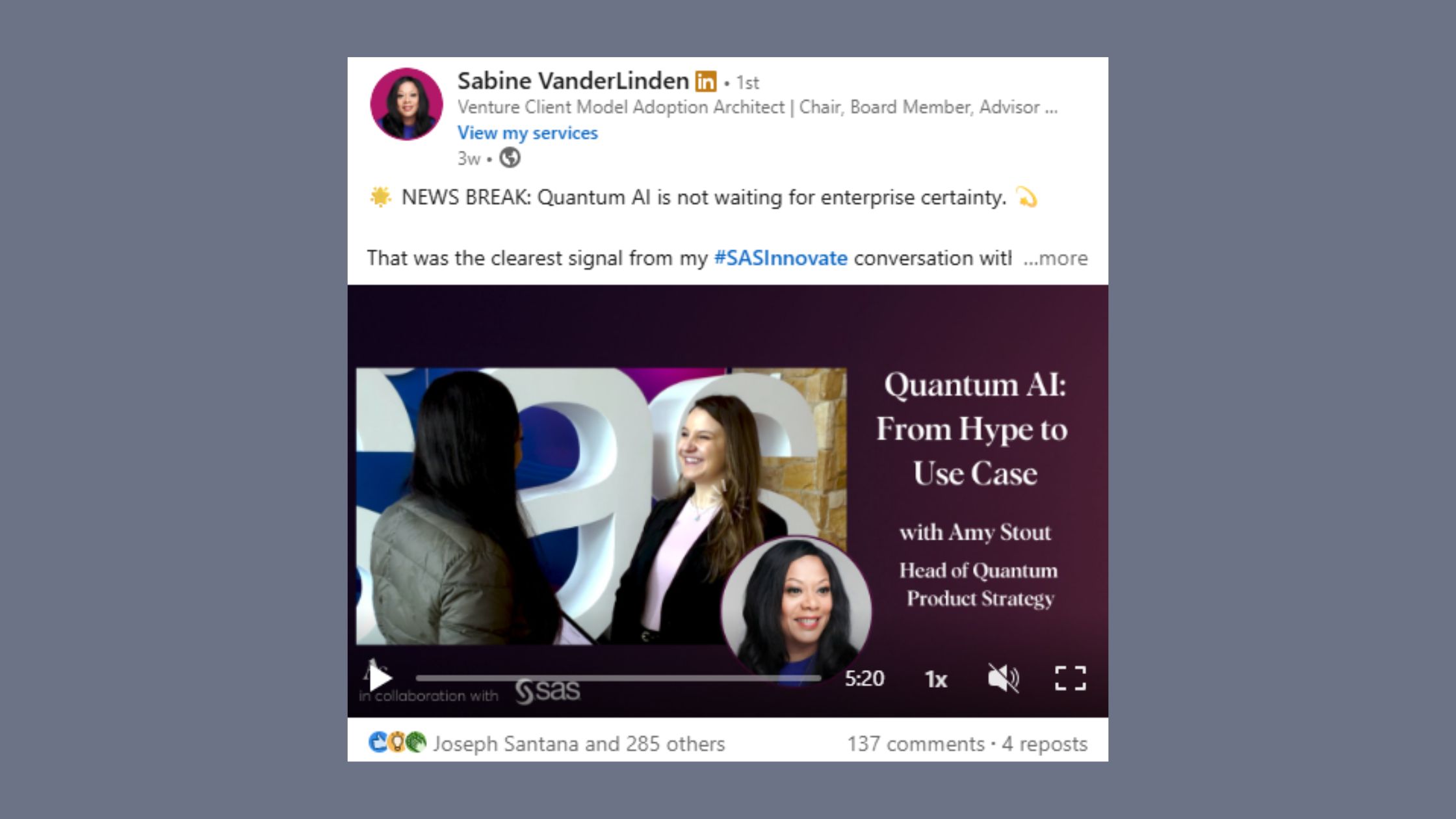
The most instructive way to study viral LinkedIn post examples is not to copy their format — it is to reverse-engineer what each one triggered emotionally and algorithmically. Below are four reconstructed high-performing post types, each representing a pattern observed consistently across accounts that generate inbound leads.
LinkedIn Storytelling Posts That Boosted Sales for Consultants and Founders
Example 1 — The Founder Failure Post: A B2B SaaS founder shared a three-paragraph post opening with: "I lost a $120k contract last year because of a single line in our proposal." No image. No carousel. Just raw narrative that ended with a lesson about scope clarity — and a soft CTA: "If you're in the same boat, my DMs are open." Estimated outcome: 47,000 impressions, 340 comments, 18 inbound DMs in 48 hours. The mechanism: the hook created an open loop that forced readers to continue.
Example 2 — The Consultant Lessons List: A marketing consultant posted a 10-item list titled "10 things I wish I knew before taking on agency clients." Each item was one sentence of genuine, hard-won insight — not generic advice. Result: 22,000 impressions and 6 booked discovery calls within a week. The specific lead outcome came from a closing line: "I help founders avoid these mistakes. One conversation, no pitch."
LinkedIn Posts That Went Viral in B2B: SaaS, Agencies, and Sales Professionals
Example 3 — The Contrarian Take: A SaaS growth lead published a post arguing that "cold outreach on LinkedIn is dead — and here's what replaced it." The post attracted 31,000 impressions because it challenged a widely held belief, triggering both agreement and debate in the comments. Comment depth extended algorithmic reach for four days. Social proof triggers — the visible pile-up of comments — made lurkers click through to read.
Example 4 — The Freelancer Before/After: A freelance copywriter shared a side-by-side screenshot of two email subject lines — one that got 4% open rate, one that got 61% — with a single question: "Can you spot the difference?" The interactive format generated 280 comments (guesses and explanations), 14,000 impressions, and a waiting list for her newsletter. LinkedIn posts that went viral and got leads almost always contain this participatory element.
Once you have a post worth sharing, the format you choose determines how far it travels and who it reaches.
Best LinkedIn Post Formats for Engagement and Lead Generation in 2026?
Teams that test multiple post formats consistently find that LinkedIn carousel and document posts outperform plain text for B2B lead generation — not because they look better, but because they force scroll behaviour, dramatically increasing dwell time. The LinkedIn algorithm interprets dwell time as a quality signal. A 10-slide carousel that takes 45 seconds to read outperforms a 30-word text post in reach almost every time.
Carousel, Document, and Text Post Examples With High Impressions
- Text posts with hooks: Highest reach potential when the hook lands — zero production friction, but fully dependent on writing quality
- Document/carousel posts: Consistently strong for LinkedIn B2B lead generation content — saves and reshares signal quality to the algorithm
- Native video: Underused and rewarded — LinkedIn's algorithm currently favours native video uploads over embedded YouTube links
- LinkedIn newsletters: Index on Google and build a subscriber base, but generate less immediate feed reach than posts
LinkedIn posts vs. LinkedIn articles for visibility: Articles rank in search but rarely generate feed-level engagement. For inbound leads, posts win. Use articles for SEO and deep thought leadership; use posts for reach and conversion.
LinkedIn Post CTAs That Actually Convert Readers Into Leads
The most effective CTAs in high-performing LinkedIn posts follow one rule: remove friction. "Comment 'GUIDE' and I'll send it over" outperforms "Click the link in my bio" because it keeps the interaction inside LinkedIn, which the algorithm rewards. Accounts that replace external links in post bodies with comment-triggered CTAs typically see a 2–3x increase in reach on identical content.
Knowing the right format is only useful when paired with a reliable method for writing the post itself.
How to Write a Viral LinkedIn Post for Business: A Practical Framework?
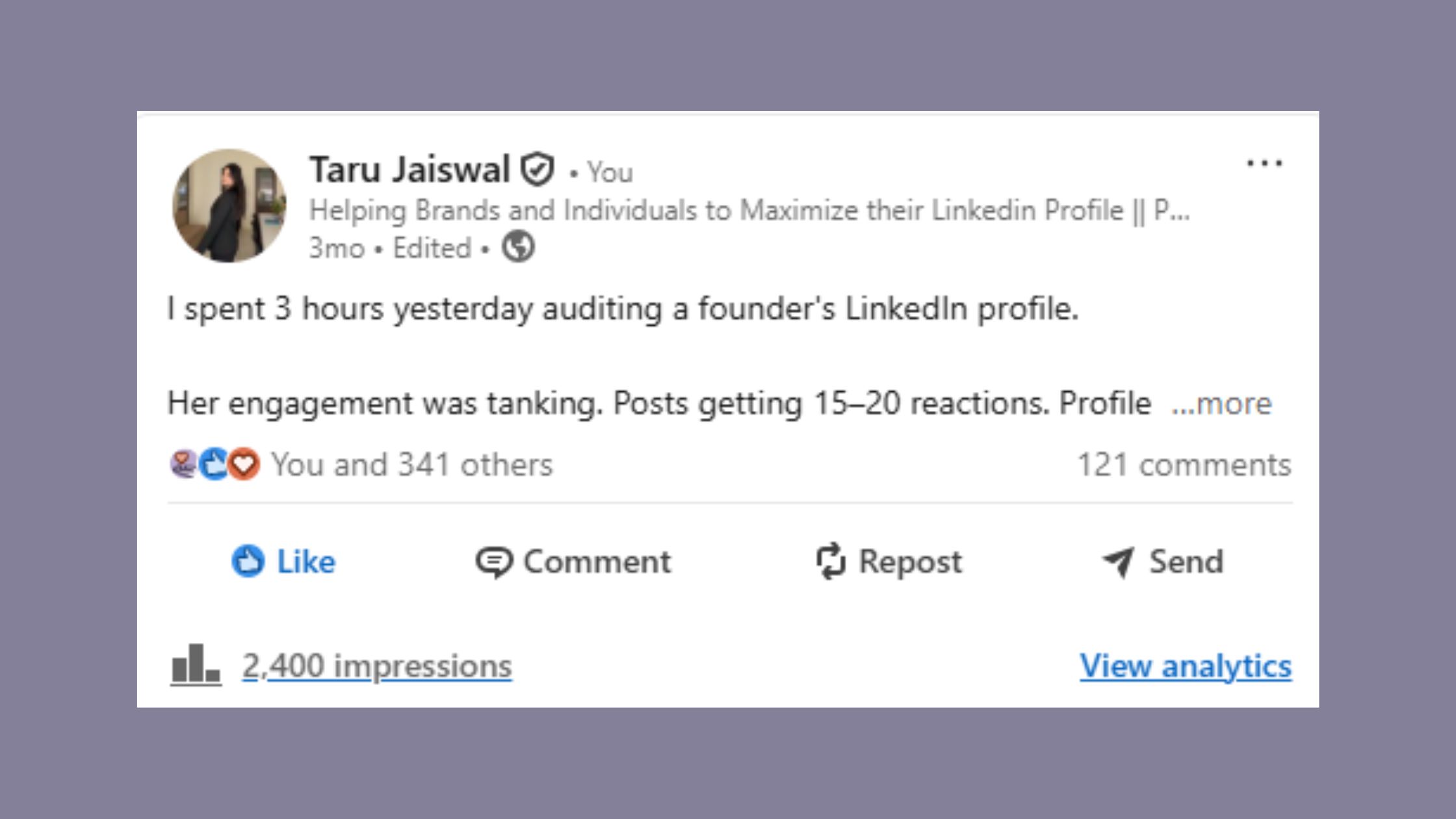
After observing what separates posts that generate inbound leads from posts that disappear, a clear repeatable structure emerges. Call it The 5-Part LinkedIn Lead Post Framework:
- Hook (1 line): Open loop, counterintuitive claim, or "this is exactly my situation" trigger — 30 seconds to write, 80% of your reach depends on it
- Context (2–3 lines): Why this matters now — establish stakes without preamble
- Insight or Story (3–5 lines): The specific experience, lesson, or data point — no generic advice
- Proof or Data (1–2 lines): A result, a number, or a client outcome that makes the claim credible
- CTA (1 line): One ask — comment, DM, or tag. Never two asks in one post.
Content hook architecture — the deliberate engineering of your first line to create tension — is the skill that separates creators who consistently get reach from those who plateau. Mine your own experience ruthlessly: client wins, failed experiments, contrarian opinions, and process reveals all outperform generic advice posts in the LinkedIn feed.
LinkedIn Post Ideas for Visibility by Audience Type
- Founders and CEOs: Decision moments, hiring mistakes, fundraising realities — personal stakes create emotional engagement
- Coaches and consultants: Before/after client stories, unpopular truths about your industry, myth-busting frameworks
- Sales professionals: Objection stories, deal post-mortems, specific conversation techniques that worked
- Freelancers: Pricing experiments, client red flags, behind-the-scenes process reveals
- B2B marketers: Campaign data, channel comparisons, surprising metrics from real campaigns
Using Comments and Outreach to Maximize Post Visibility After Publishing
Creators who skip the post-publish engagement ritual typically find their reach decays within 2 hours regardless of content quality. The fix is structured: in the first 30 minutes after publishing, respond to every comment with a substantive reply (not just "thanks!"), leave a pinned first comment adding value or placing your link, and personally notify 3–5 relevant connections who would genuinely find the post useful. This manufactured early velocity signals quality to the algorithm before it decides on wider distribution. For a deeper breakdown of how this distribution decision works, the mechanics are worth understanding in full.
Why Your LinkedIn Posts Get No Reach — Common Mistakes Killing Your Visibility?
The most damaging mistakes are structural, not stylistic. Professionals posting without leads typically share at least two of these four failure patterns:
- External links in post body: Suppresses algorithmic reach immediately — move all URLs to the first comment
- Writing for peers, not buyers: Attracts followers who will never purchase, polluting your audience and reducing future relevance signals
- Corporate language: Kills authentic engagement — "We are pleased to announce..." generates friction; "We almost didn't launch this." generates comments
- No follow-up comment strategy: Posting and logging off is the most common visibility killer — the algorithm expects continued engagement from the author
LinkedIn profile invisibility to your target audience is almost always a content positioning problem, not a frequency problem. Posting three times a week of the wrong content trains both the algorithm and your audience to ignore you faster.
LinkedIn vs. Twitter and Instagram for B2B Lead Generation: Honest Comparison
According to LinkedIn's own marketing solutions data, LinkedIn generates 3x higher conversion rates for B2B content than Twitter or Instagram. The reason is audience context: LinkedIn users are in a professional mindset when they scroll, making them 4x more likely to act on a relevant business offer. Instagram and Twitter can build brand awareness, but for direct LinkedIn engagement and lead generation, no other platform currently competes in B2B contexts.
Fixing your mistakes unlocks reach — but a sustained system is what converts that reach into a predictable lead channel.
LinkedIn Content Strategy for Lead Generation: Tools, Services, and Building Your Brand?
A viral LinkedIn content strategy built for 2026 has five components that work together: clear audience definition (job title + pain point, not "everyone"), 3 content pillars (expertise, experience, perspective), a posting cadence of 3–4x per week, an engagement ritual for the first 90 minutes after each post, and a conversion pathway that moves interested readers from comment to DM to call.
How to Turn LinkedIn Content Into Business Opportunities Consistently
For those asking whether to hire a LinkedIn ghostwriter or build the skill in-house: the answer depends on whether your bottleneck is ideas or execution. Ghostwriters excel when the subject matter expert (you) has the insights but not the writing habit. What to look for: ghostwriters who ask for your stories, not your bullet points — anyone who writes purely from a brief will produce generic content that performs generically. For LinkedIn company pages specifically, the practices that build visibility and trust differ meaningfully from personal profiles.
The best LinkedIn content tools for marketers fall into three categories:
- Scheduling: Buffer, Taplio, or Shield — each offers native LinkedIn posting with analytics
- Analytics: Shield App for individual creators; LinkedIn Analytics natively for company pages
- Engagement tools: Platforms like Hyperclapper that surface early engagement signals and amplify post velocity — critical for beating the 60-minute distribution window

For executives exploring LinkedIn personal branding packages, the honest caveat is this: packages accelerate results only when the content is genuinely differentiated. A polished post with nothing original to say reaches no one. A raw, specific post from a credible voice reaches everyone it needs to. See how engagement tools and content strategy interact in 2026's algorithm environment for the full picture.
✓ The LinkedIn Lead Post Publishing Checklist
- ☐First line creates an open loop, counterintuitive claim, or recognition trigger
- ☐No external URL in post body — link moved to first comment
- ☐Post ends with exactly one CTA (comment keyword, DM, or tag — not all three)
- ☐First 90 minutes blocked in calendar to respond to every comment
- ☐3–5 relevant connections personally notified after publishing
- ☐Post is written for a buyer, not a peer — check your target reader before hitting publish
- ☐Posting time is within your audience's active window (typically Tuesday–Thursday, 7–9am local)
What consistently separates accounts that turn LinkedIn content into business opportunities from those that just accumulate followers is not any single tactic — it is the systematic combination of hook engineering, early engagement velocity, and a conversion pathway that makes the next step obvious to interested readers.
Frequently Asked Questions About Viral LinkedIn Posts and Lead Generation
What is the most viral post on LinkedIn?
The most widely cited viral LinkedIn post is Brené Brown's 2019 share about vulnerability in leadership, which accumulated millions of impressions. What it teaches: emotional honesty from a credible voice, zero corporate language, and a message that readers felt compelled to share with specific colleagues. The lesson generalises — specificity and emotional resonance beat polish every time.
What kind of posts go viral on LinkedIn?
Posts that go viral on LinkedIn in 2026 share four traits: a hook that creates an information gap, a relatable professional struggle, a specific insight or data point, and a CTA that removes friction. Storytelling posts, contrarian takes, and before/after reveals consistently outperform promotional content and generic industry news.
How to write a viral LinkedIn post?
Write the hook last, after you know your core insight. Open with a tension-creating first line, deliver a specific experience or lesson in 3–5 lines, support it with one proof point, and close with a single low-friction CTA. Then spend the first 90 minutes after publishing actively responding to every comment to fuel algorithmic distribution.
Can a LinkedIn post really generate B2B leads — or is it just vanity metrics?
Yes — when the post is written for buyers, not peers. Vanity metrics (likes from competitors) come from generic content. Inbound leads come from posts that surface a specific problem your ideal client recognises in themselves, followed by a CTA that makes contacting you the obvious next step. The audience composition of your network determines lead quality.
Why do some LinkedIn posts get way more reach than others?
Engagement velocity in the first 60–90 minutes is the primary differentiator. Posts that collect substantive comments early get distributed beyond the immediate network. The hook quality determines whether connections engage; the creator's comment responses determine whether that engagement continues. A slow first hour means permanent suppression — the algorithm does not revisit posts.
LinkedIn newsletter vs. post: which is better for lead generation?
Posts win for immediate lead generation — they reach your feed audience and trigger algorithmic amplification. Newsletters win for long-term relationship building and Google SEO. The strongest LinkedIn lead generation for SaaS companies and consultants combines both: posts drive awareness and inbound DMs; newsletters convert interested followers into warm leads over time.



