
A pattern observed across hundreds of LinkedIn profiles is this: the professionals most frustrated with b2b lead generation linkedin results are almost always self-taught — they've stitched together tactics from disconnected blog posts and never seen how the full system connects. LinkedIn generates 80% of all B2B social media leads, according to Martal Group (2026) — yet most people treating it as a guessing game see almost none of that pipeline. The real question isn't whether LinkedIn works. It's whether trial and error is worth the cost compared to a structured approach.
- For B2B marketers and founders deciding whether to take a LinkedIn B2B lead generation course or go it alone
- Trial and error has a hidden cost: burned prospect lists, wasted InMail credits, and 3–6 months of stalled pipeline
- A structured course compresses the learning curve — profile optimization, outreach sequencing, and Sales Navigator use — into weeks
- Most counterintuitive finding: LinkedIn personal brand content converts cold outreach at 2–3x the rate of a dormant profile — visibility is your best outreach tool
- LinkedIn Lead Gen Forms average a 13% conversion rate vs. 2–4% for standard landing pages
- The right answer for you depends on your timeline, deal size, and how much guessing you can afford
- What Is LinkedIn B2B Lead Generation
- Structured Course vs. Self-Taught
- How to Generate B2B Leads on LinkedIn: Step-by-Step
- LinkedIn Outreach Mistakes to Avoid
- Metrics, Course Reviews, and Tracking What Works
- FAQ: LinkedIn B2B Lead Generation
What Is LinkedIn B2B Lead Generation (and Why So Many People Question Whether It Actually Works)
LinkedIn b2b lead generation is the process of identifying, attracting, and converting decision-makers into sales conversations using LinkedIn's organic content, direct outreach, and paid advertising tools. The doubt many professionals feel — "is this actually delivering pipeline or just vanity metrics?" — is almost always a strategy problem, not a platform problem.
According to Digital Applied (2026), LinkedIn's targeting precision makes it 28% cheaper than paid search per qualified lead. Four in five LinkedIn members drive business decisions at their organisations. No other social platform comes close for professional targeting depth.
Three mechanisms drive LinkedIn lead generation results:
- Social Selling Index (SSI) — LinkedIn's score (0–100) measuring profile completeness, network quality, engagement, and relationship building. Higher SSI correlates directly with LinkedIn algorithm visibility and organic reach.

Social Selling Index - Content-driven pipeline building — Publishing posts that educate or challenge assumptions warms cold prospects before any outreach occurs.
- Direct outreach and paid tools — Connection requests, InMail, and Lead Gen Form ads for accelerated, targeted prospecting.
How LinkedIn Lead Generation Actually Works: Organic vs. Paid Paths
Organic lead generation on LinkedIn relies on profile authority, consistent content, and manual or semi-automated outreach. It's slower to start but compounds over time. Paid paths — Sponsored Content, Message Ads, and Lead Gen Forms — produce faster volume but require budget and creative testing. Most strong strategies use both: organic content builds trust; paid ads capture intent.
LinkedIn Sales Navigator vs. Organic Lead Gen: When Each Makes Sense
LinkedIn Sales Navigator is LinkedIn's premium prospecting tool — it enables advanced filtering by job title, company size, seniority, and buying signals like job changes. For teams running high-volume, targeted outreach at scale, it's a significant multiplier. For individual founders or early-stage creators still building their audience, organic lead gen via content and connection requests often delivers better ROI first. Our deep-dive guide on LinkedIn Sales Navigator lead generation covers when to make the upgrade.
The professionals who get the most from LinkedIn Sales Navigator aren't the ones with the biggest budgets — they're the ones who already have a credible content presence so that prospects who receive their outreach can immediately verify they're worth talking to.
Structured Course vs. Self-Taught: What You Actually Learn (and What Trial & Error Costs You)
Teams that commit to a structured LinkedIn B2B lead generation course consistently see results 2–3 months earlier than peers who self-teach — not because the information is secret, but because courses sequence the learning correctly. Here's what the comparison actually looks like:
| Approach | Time to First Results | What You Learn | Hidden Cost |
|---|---|---|---|
| Structured Course | 3–6 weeks | Full system: profile → content → outreach → CRM | Course fee ($200–$1,500 typically) |
| Trial & Error | 3–9 months | Fragmented tactics, no system | Burned lists, wasted InMail, missed deals |
Is a LinkedIn Lead Generation Course Worth It? Cost vs. ROI Breakdown
Is a LinkedIn lead generation course worth it? For most B2B professionals, yes — particularly when the alternative is months of low-conversion outreach. The cost of LinkedIn B2B lead generation course programs ranges from roughly $200 for self-paced Udemy-style courses to $1,500+ for cohort-based programs with live coaching. A single closed deal from one qualified LinkedIn conversation typically covers that cost entirely. The real ROI question is: how long can you afford to run at 1–2% outreach conversion rates before fixing the system?
Can You Learn LinkedIn Lead Gen Without a Course? (Honest Answer)
Yes — but the LinkedIn lead gen self-taught vs structured training gap is real and measurable. Self-teaching works best for people who already understand sales fundamentals and have 6+ months to iterate. The specific knowledge that rarely surfaces through self-study: how SSI score affects your content's organic reach, InMail response rate optimization by message length and send time, and how to sequence connection → content engagement → outreach without triggering LinkedIn's spam filters. You can learn all of this eventually. A course just front-loads the expensive lessons.
How to Generate B2B Leads on LinkedIn: A Step-by-Step Strategy That Works in 2026
The end-to-end LinkedIn lead generation strategy for B2B follows a clear sequence. Skipping steps doesn't save time — it resets your results.
- Optimize your profile as a buyer landing page — Headline, About section, and Featured section should speak to your buyer's problem, not your CV. (~30 minutes)
- Build a targeted connection list — Use Sales Navigator filters or basic LinkedIn search to identify your ICP by title, company size, and geography. Start with 20–30 new connections per week. (ongoing)
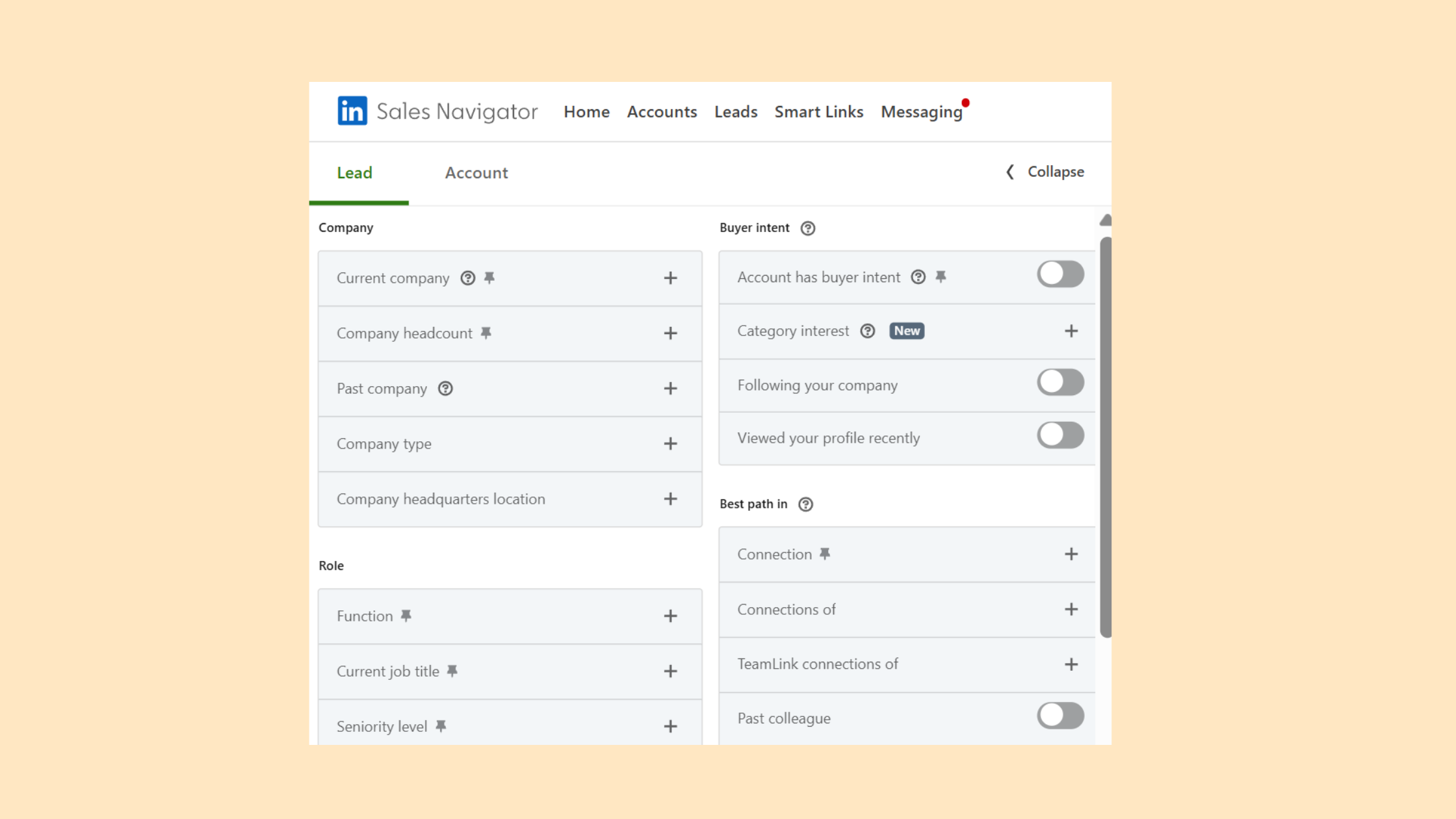
Sales Navigator filters - Warm prospects with content — Post 3x per week minimum. Content-driven pipeline building is non-negotiable: posts that share case studies, challenge assumptions, or teach something specific generate inbound DMs that make cold outreach feel warm. (ongoing)
- Send personalized outreach — Decision-maker outreach works when you reference something specific: a post they wrote, a company milestone, a shared connection. Generic messages get deleted. (per prospect)
- Qualify and route to CRM — Use a simple scoring framework before passing a lead to sales: confirmed ICP fit, budget indicator, and timeline signal. A lead without all three wastes sales capacity. (per conversation)
Decision-Maker Outreach: Personalization, Sequencing, and InMail That Gets Replies
InMail response rate optimization comes down to three variables: length (under 150 words outperforms longer messages), specificity (one concrete reference beats five generic compliments), and timing (Tuesday–Thursday mornings typically see higher response rates). A three-touch sequence — connection request with context → value-add comment on their content → brief outreach message — consistently outperforms a cold InMail to a stranger.
How to Qualify, Score, and Nurture LinkedIn Leads Before They Hit Your CRM
Lead qualification on LinkedIn happens in the conversation — before any CRM entry. Score on three signals: ICP fit (title, company, size match), problem acknowledgment (they've confirmed the pain you solve exists), and timing (they're actively evaluating options or have a relevant event like a new role or funding). Leads that don't meet all three should be nurtured via content engagement, not fast-tracked to sales. This is where CRM integration earns its keep — tag and track LinkedIn-sourced contacts separately so you can measure pipeline attribution accurately. For more on this, see our guide to LinkedIn lead generation on autopilot.
According to Warmly (2026), 94% of B2B marketers use LinkedIn for sales and lead generation — which means standing out requires more than just showing up. This means your content and profile need to do the pre-qualification work before outreach even begins. In practice, the profiles that convert outreach at the highest rates are the ones where a prospect can scroll three posts and immediately understand what you do, who you help, and why you're credible.
Get Real Engagement Behind Every LinkedIn Post You Publish
HyperClapper connects your posts to real engagement channels — so your content gets the early visibility that LinkedIn's algorithm rewards.
Boost Your LinkedIn Reach →LinkedIn Outreach Mistakes to Avoid (and Why Your Messages Aren't Getting Responses)
The most common failure mode isn't poor writing — it's a profile that doesn't back up the outreach. A decision-maker who receives your message will click your profile within seconds. If it looks dormant, generic, or purely self-promotional, your message is deleted regardless of how well it was written.
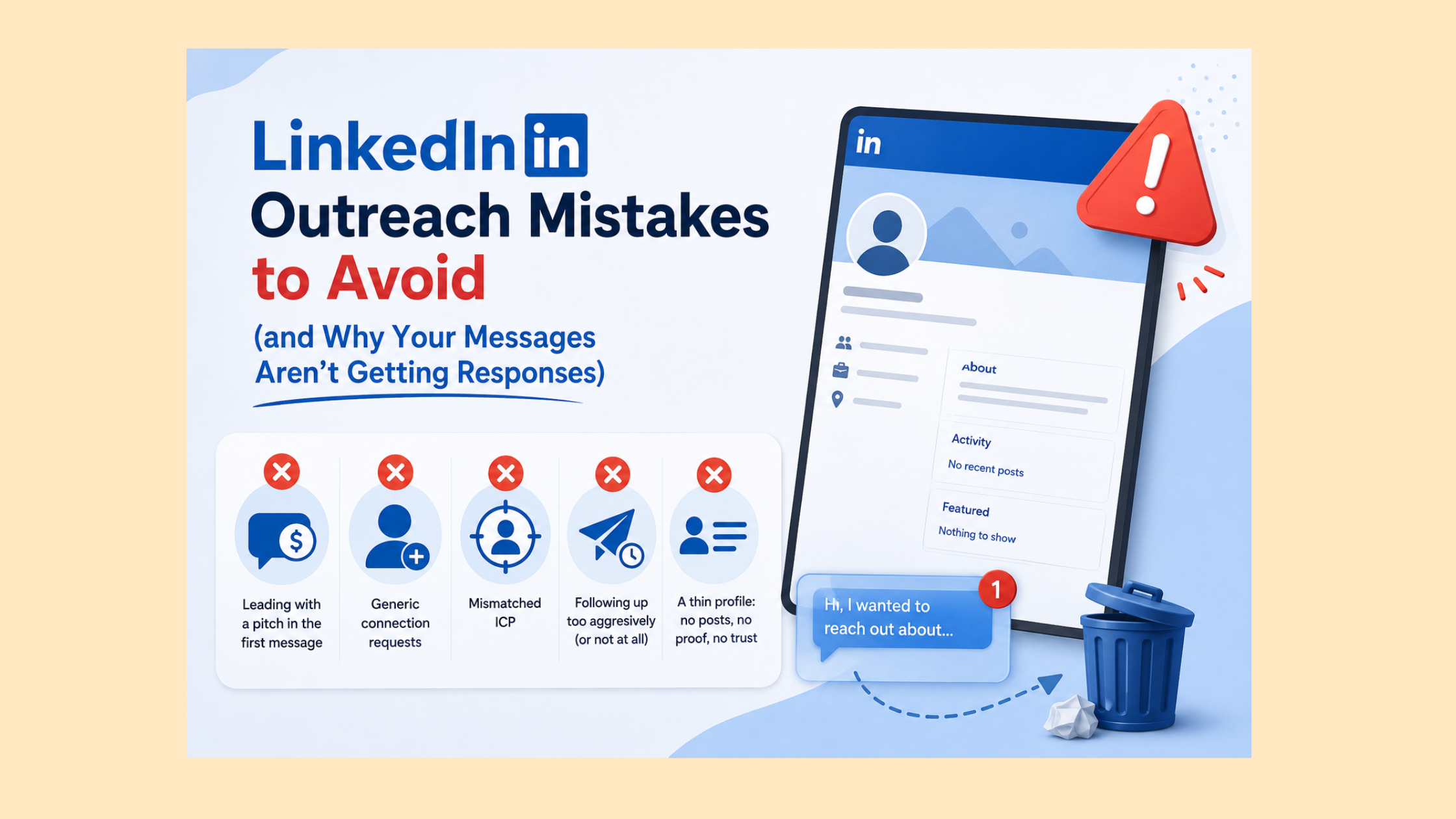
Why is my LinkedIn outreach not getting responses? The usual culprits:
- Leading with a pitch in the first message (near-total delete rate among senior buyers)
- Generic connection requests with no context or reason to connect
- Mismatched ICP — messaging people who have no budget authority or buying role
- Following up too aggressively (3 messages in 5 days) or not at all after initial contact
- A thin profile: no recent posts, no recommendations, no Featured section with proof
How Boosting Post Visibility Reduces Outreach Resistance
What separates top performers in LinkedIn lead generation from average practitioners is using content visibility as an outreach pre-warmer. When a prospect has seen your posts in their feed — especially posts that taught them something useful — your outreach message lands in a completely different psychological context. It's no longer cold. Tools like HyperClapper help by connecting your posts to real engagement channels, giving content the early traction that triggers LinkedIn's algorithm to distribute it further. More reach on your posts means more prospects see your name before you ever message them — and that directly improves connection acceptance and reply rates. For proven outreach techniques that pair well with this approach, see our guide to generating leads on LinkedIn with proven outreach techniques.
LinkedIn Lead Generation Metrics, Course Reviews, and How to Track What's Actually Working
Measuring how to use linkedin for b2b lead generation effectively starts with tracking the right KPIs — not vanity metrics like follower count or post impressions alone. The metrics that actually predict pipeline:
- Connection acceptance rate — benchmark: 25–40%. Below 20% signals ICP mismatch or a weak request message.
- InMail response rate — benchmark: 10–25%. Dropping below 10% means your messaging or targeting needs revision.
- Profile-to-conversation rate — what percentage of profile visitors start a conversation. Under 1% usually means your About section isn't speaking to a specific buyer problem.
- Lead Gen Form conversion rate — benchmark: 13% average; top performers hit 20%+.
- Pipeline value attributed to LinkedIn — the only metric that ultimately matters for justifying the time and budget investment.
Measure your Social Selling Index weekly — it's a leading indicator of LinkedIn algorithm visibility. A falling SSI score often predicts reduced post reach and outreach effectiveness before it shows up in pipeline numbers. Check it at LinkedIn's SSI dashboard.
LinkedIn lead gen course review checklist — before enrolling, verify the course:
- Covers 2025–2026 algorithm changes (not outdated 2022 tactics)
- Includes Sales Navigator training with real filter walkthroughs
- Provides outreach templates with actual response rate data attached
- Addresses content strategy, not just connection requests
Advanced content strategies that compound lead gen results over time: LinkedIn newsletters build a subscriber list you own outright; short-form video outperforms text in reach by a significant margin; document carousels drive the highest save rates and return visits of any format. For a content-focused approach to using LinkedIn polls to generate B2B leads, that guide covers the interactive format most marketers ignore.
Turn LinkedIn Content Into a Lead Generation Engine
HyperClapper's real engagement channels and AI-powered replies give your posts the visibility boost that makes outreach feel warm — not cold.
Try HyperClapper Free →Frequently Asked Questions About LinkedIn B2B Lead Generation
Should I take a LinkedIn lead generation course or figure it out myself?
Take the course if you're operating with a short timeline or high deal values — the structured path compresses 6 months of self-taught iteration into 4–6 weeks. Figure it out yourself only if you already have strong sales fundamentals and can afford to iterate slowly. Most professionals underestimate how long the self-taught path actually takes.
What are the fastest ways to generate B2B leads on LinkedIn without paid ads?
The fastest organic methods are: optimizing your profile headline to speak to buyer pain (immediate impact on profile-to-conversation rate), publishing 3 content posts per week, and sending 10–15 personalized connection requests daily to ICP-matched prospects. Combining content visibility with direct outreach — rather than using either alone — cuts time-to-conversation by roughly half.
How long does it take to see results from LinkedIn lead gen?
Most professionals see initial conversations within 3–6 weeks of consistent activity. Meaningful pipeline — qualified leads in active conversations — typically appears at weeks 6–10. Accounts that already have a content presence and warm network see faster results; cold-starting from a dormant profile adds 3–4 weeks. Consistency matters more than volume at the start.
How much time does trial and error waste compared to a structured LinkedIn course?
In practice, self-taught professionals average 4–6 months before establishing a repeatable outreach system that converts. A structured course typically gets there in 4–6 weeks. That gap represents real pipeline: at average B2B deal sizes, 3–4 months of stalled conversion is often worth 2–5x the course fee in missed revenue.
What is the ROI of investing in a LinkedIn B2B sales training program?
ROI depends on deal size, but the math is usually straightforward. A course costing $500–$1,500 that accelerates one mid-market close by 90 days pays back immediately. The less-visible ROI is strategic: professionals who complete structured LinkedIn training build systems that compound — the outreach and content habits generate pipeline for years, not just the month they finished the course.
Why is my LinkedIn outreach not getting responses — and how do I fix it?
The most common cause is a credibility gap: your message arrives, the prospect checks your profile, and nothing there builds trust. Fix it by publishing 2–3 credibility posts before running outreach, adding recommendations, and updating your headline to speak to their problem. Then audit your message — if it mentions your product in the first sentence, rewrite it entirely.
What do you learn in a LinkedIn B2B sales course?
A quality course covers: profile optimization for buyer trust, ICP targeting and list-building, content strategy for pipeline warming, outreach sequencing and follow-up cadences, Sales Navigator workflows, InMail response rate optimization, Lead Gen Form ad setup, and lead qualification frameworks. The best programs include real outreach templates with response data, not just theory.
After seeing this pattern across thousands of LinkedIn profiles and campaigns, the clearest conclusion is that the course-vs-trial-and-error debate is really a question about how much your time costs. Professionals whose time is worth more than a few hundred dollars per day almost always win by investing in structure early — and the accounts that combine a solid strategic foundation with genuine content visibility are the ones that build self-sustaining lead generation pipelines, not ones that stall every time a tactic stops working.



