How to Find B2B Leads Outside LinkedIn Without Wasting Budget
Discover the best B2B leads sources outside LinkedIn — with data freshness audits, channel benchmarks, and free strategies that work for any budget in 2026.
📅 ⏱ 30 min read📝 ~5900 words
The most successful B2B sales teams in 2026 are not abandoning LinkedIn — they are treating it as one node in a multi-channel system rather than the whole network. A pattern observed consistently across high-performing revenue teams is that reliance on a single prospecting channel, no matter how dominant, creates pipeline fragility: when that channel gets expensive, saturated, or algorithmically unpredictable, the entire funnel stalls. B2B leads sources have diversified dramatically, and teams that map that diversification strategically outperform single-channel competitors by a measurable margin. This guide covers which alternative channels actually convert, how to audit data quality before spending budget, and how to build a multi-source pipeline that does not collapse when any one channel underperforms.
Key Takeaways
Who this is for: B2B founders, marketers, SDRs, and agencies who need leads beyond LinkedIn's shrinking organic reach and rising ad costs.
What you'll learn: The best non-LinkedIn lead sources ranked by channel type, a data-freshness audit framework, and multi-source CRM integration workflows.
The data freshness problem is underrated: Contact databases decay at 22–30% annually — most teams buy lists without auditing them first and burn their sender reputation within weeks.
Cold email + community + content is the highest-ROI stack for teams under $5K/month in prospecting budget.
Counterintuitive finding: Reddit and Slack communities generate higher-intent leads than most cold database records — because those prospects are actively signaling buying intent in real time.
LinkedIn still matters as social proof: Even when prospecting elsewhere, a credible LinkedIn presence increases reply rates on every other channel.
of marketers say email is the most effective B2B lead channel
30%
annual decay rate for most contact databases
50%
average accuracy rate for most B2B data providers
Why LinkedIn Alone Is No Longer Enough for B2B Lead Generation in 2026
Why LinkedIn Alone Is No Longer Enough for B2B Lead Generation
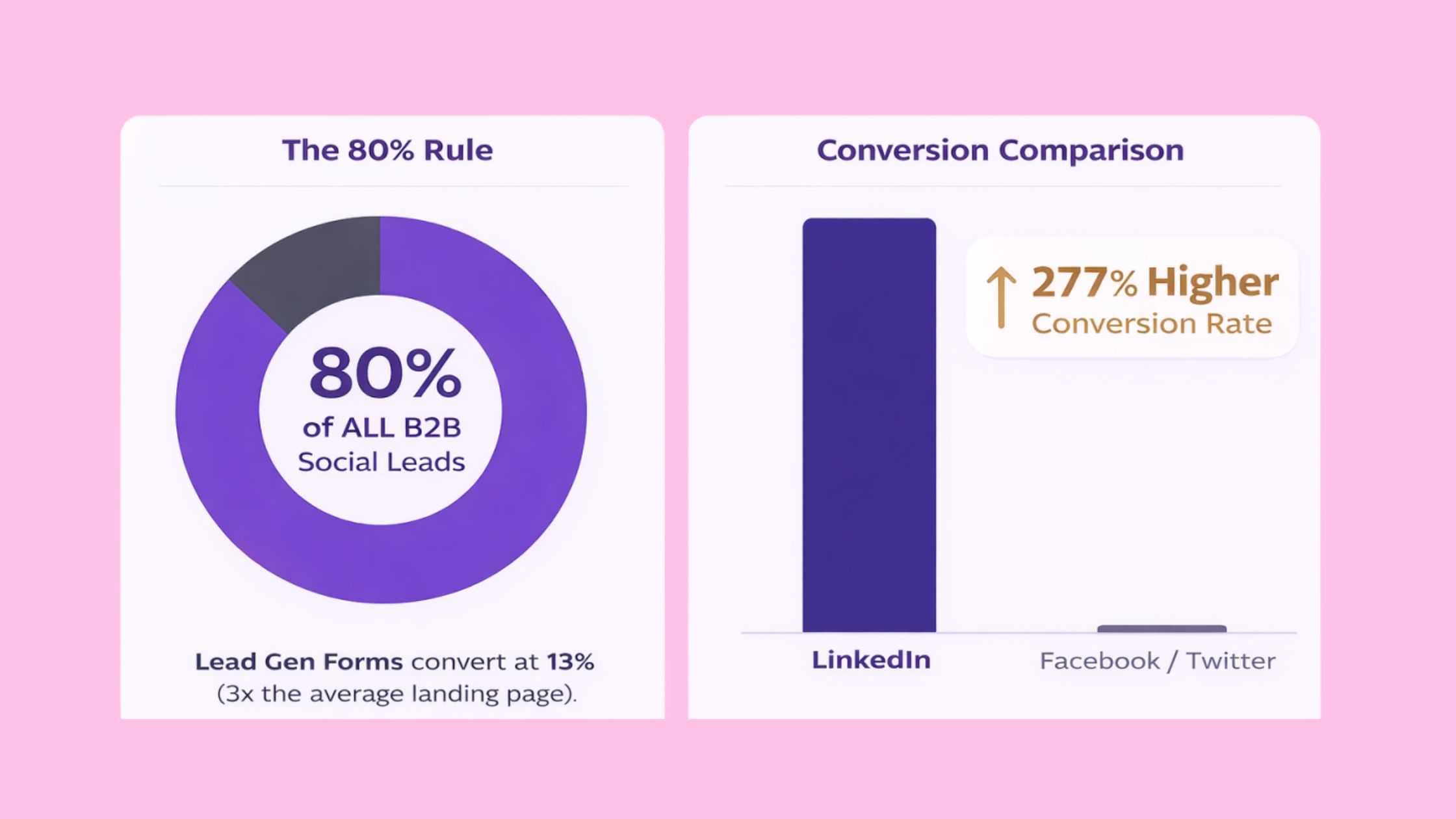
LinkedIn remains the dominant B2B network — SalesHandy's 2026 lead generation statistics report that 89% of B2B marketers use it for lead generation and it produces leads at over 2x the rate of the next-highest social channel. But dominant does not mean sufficient. The platform's efficiency has eroded significantly for teams relying on it as their only prospecting engine.
Why LinkedIn Ads Are Too Expensive for Many B2B Teams
Average LinkedIn ad CPCs now run $12–$20 per click for competitive B2B audiences — a figure that prices out early-stage startups and SMBs who cannot absorb $5,000–$15,000/month ad spend to generate meaningful pipeline volume. For context, the same click costs $1–$3 on Google Display and $0.50–$2 on Meta for comparable B2B audiences. This cost gap is why B2B lead generation without LinkedIn has become a genuine strategic priority rather than a fallback option. Small teams running on $2K/month marketing budgets simply cannot make LinkedIn Ads pencil out at those CPCs.
⚠️
Warning:Teams that scale LinkedIn Ads before establishing baseline conversion data on landing pages regularly spend $10K+ before realising their CPL is 4–5x higher than budget supports. Validate conversion rates on cheaper traffic first, then scale on LinkedIn.
The LinkedIn Organic Reach Problem — and How Content Strategy Partially Fixes It
Organic reach on LinkedIn has compressed sharply over the past two years. Posts from accounts without established engagement momentum — consistent likes, comments, and early interaction within the first 60–90 minutes — increasingly receive algorithmic throttling rather than broad distribution. The platform rewards LinkedIn organic reach for lead attraction when posts demonstrate engagement velocity early, but generating that velocity without an existing audience is a chicken-and-egg problem for new accounts.
Content strategy partially resolves this: educational posts, data-backed insights, and conversational hooks consistently outperform promotional content in organic reach. But even great content hits a ceiling when InMail and connection request response rates are declining due to message fatigue. The practical conclusion is that B2B prospecting channels beyond LinkedIn are not a hedge — they are a necessary diversification for any team that wants pipeline resilience.
Understanding why the platform alone is insufficient makes the rest of this guide clearer — the question becomes which complementary channels to add, and in what order of priority.
The Data Freshness Problem: Why Most B2B Lead Databases Go Stale (and How to Audit Before You Buy)
The single most repeated frustration in B2B prospecting communities — across Reddit, Quora, and industry Slack groups — is not "which tool is best?" It is "how do I know this data is actually accurate?" That question keeps resurfacing because most articles never answer it. They list platforms and move on.
Contact Database Decay Rate: What It Is and Why It Matters
Contact database decay rate is the percentage of records in a contact list that become inaccurate within a given period — typically measured annually. Industry estimates consistently place this at 22–30% per year, meaning nearly a third of any static list is outdated within 12 months. According to Landbase's B2B database statistics report, most B2B data providers average only 50% accuracy at any given point. This is the number that should stop every sales leader before they buy a list — half the records may already be wrong.
50%
Average accuracy rate of most B2B data providers at any given time — meaning half the records you buy may already be wrong
This means that a 2,000-record list purchased today may contain 600–900 contacts who have changed jobs, email addresses, or company roles since the data was collected. In practice, this translates to bounced emails, damaged sender domain reputation, and wasted SDR time on dead leads. The pipeline enrichment workflow must begin with verification — not outreach.
How to Validate a Lead Source Before Spending Budget
Most vendors will provide a sample of records before a full purchase. Use that sample as a quality gate. The process takes about 30 minutes and can save thousands in wasted outreach costs:
Request 50–100 sample records — any reputable vendor will provide this without requiring full payment upfront.
Run them through an email verifier (NeverBounce, ZeroBounce, or Bouncer) — acceptable bounce rate on a fresh sample should be under 5%. Above 10% is a red flag for the whole database.
Cross-reference 20 records on LinkedIn — manually check whether the listed role and company match current LinkedIn profiles. A mismatch rate above 15% signals stale data.
Check email domain health — verify that the domains are active and not catch-all configurations, which will return a "valid" result from verifiers but still bounce in real sends.
Compare against your bounce rate threshold — set a firm rule: if the sample exceeds 5% hard bounces, do not purchase this database at full scale.
💡
Pro Tip:Ask the vendor what their "verification frequency" is — tools that refresh data quarterly are meaningfully better than those with annual or static exports. The phrase "real-time verification" typically means the tool pings the email server at the moment of export, which is the gold standard for prospect data verification.
With a reliable audit habit in place, the next step is understanding which channels offer the freshest, most actionable data by default — and which ones require the most verification work before they are safe to contact.
The Best B2B Lead Sources Outside LinkedIn: A Ranked Overview by Channel Type
The Best B2B Lead Sources Outside LinkedIn
Not all alternative channels suit all industries, budgets, or ICPs. The clearest way to prioritize is to group them by type and compare on three dimensions: cost-per-lead (CPL), average response rate, and data freshness rating. Here is how the five main categories stack up:
Channel Type
Est. CPL Range
Avg. Response Rate
Data Freshness
Best For
Outbound Databases (Apollo, ZoomInfo)
$5–$40
3–8%
Medium (varies by tool)
SaaS, tech, professional services
Intent Data Platforms (Bombora, G2)
$20–$80
8–18%
High (signal-based)
Mid-market, enterprise SaaS
Cold Email (clean data + sequences)
$3–$15
5–15%
High (if verified)
Most B2B verticals — best CPL at scale
Community Channels (Reddit, Slack)
Near zero
High (warm, intent-driven)
Real-time
SMB, startup, niche verticals
Content / Inbound (SEO, blog, case studies)
$10–$60 (amortized)
Varies by asset quality
High (self-submitted)
Long-term brand builders
Which Industries Get the Best Results from Non-LinkedIn B2B Lead Sources
Teams that achieve the highest returns from non-LinkedIn channels tend to fall into specific verticals. SaaS and tech companies benefit most from cold email + intent data combinations because their buyers are digitally reachable and research-driven. Professional services (consulting, accounting, legal) convert well through content marketing and community engagement because trust is the primary purchase driver. Manufacturing and industrial buyers are best reached through trade publication directories, industry association lists, and event targeting — LinkedIn is often genuinely irrelevant in these sectors. Agency and marketing services see strong results from Reddit and niche community engagement, where potential clients are actively asking for vendor recommendations.
The highest-converting pipelines in 2026 combine 2–3 complementary sources — not because any single channel is insufficient, but because buyers rarely make decisions after contact from only one direction.
Best B2B Lead Generation Tools Not on LinkedIn: Databases, Intent Platforms, and LinkedIn Sales Navigator Alternatives
Roughly 41% of B2B marketers report difficulty aligning marketing-generated leads with sales expectations, according to G2's lead generation statistics. In most cases, the root cause is tool selection without clear criteria for data quality, compliance posture, or workflow fit. Here is an honest breakdown of the platforms worth evaluating.
B2B Prospecting Tools Comparison 2026: What to Look for Beyond the Feature List
Apollo.io — Freemium tier with 50 free monthly exports makes it the go-to starting point for small teams. Data coverage is strong for North American SaaS and tech. Verification quality is solid but not best-in-class; pair with a dedicated email verifier for high-volume sends. Best for: startups and SDR teams building their first outbound stack.
ZoomInfo — The largest B2B contact database by coverage, with real-time data refresh and deep firmographic filtering. Pricing starts at several hundred dollars per month for small teams, which positions it as a mid-market and enterprise tool. Best for: teams that need depth of data and can justify the subscription cost with volume.
Cognism — The strongest GDPR-first option for EU-facing outreach. Mobile-verified phone data and a legal compliance layer that most alternatives lack. Best for: teams prospecting into European markets where GDPR compliance is non-negotiable.
Lusha — SMB-friendly pricing with browser extension that surfaces contact data from LinkedIn profiles without a Sales Navigator subscription. Best for: individual reps and small teams who need quick contact enrichment without a full platform commitment.
Hunter.io — Specialises in email finding and verification rather than full contact databases. Free tier offers 25 searches/month. Best for: teams building targeted lists manually who need reliable email discovery.
Clearbit (now Breeze via HubSpot) — Strongest for CRM enrichment and firmographic data layering rather than prospecting from scratch. Best for: teams who already have a lead list and want to enrich it with company data before outreach.
For anyone evaluating LinkedIn Sales Navigator alternatives, the practical comparison comes down to three variables: verification frequency, compliance posture, and CRM integration depth. Apollo wins on price-to-features for most SMBs; Cognism wins on compliance for EU teams; ZoomInfo wins on data depth for enterprise volumes.
Free and Low-Cost Tools for Finding B2B Leads Without Paid Subscriptions
The pipeline enrichment workflow does not require expensive subscriptions at its foundation. A functional free-tier stack looks like this:
Apollo.io free plan — 50 exports/month, email sequences, basic filtering
Hunter.io free tier — 25 domain searches and email verification per month
Google boolean search — manual but powerful: site:linkedin.com/in "VP of Marketing" "SaaS" "San Francisco"
LinkedIn free search — limited but functional for building targeted prospect lists before investing in Sales Navigator
NeverBounce or ZeroBounce — free tier for email verification before sending
apollo.io
AI Sales Platform | Apollo.io - Outbound, Inbound & Automation
Accelerate B2B sales with Apollo.io—an AI sales platform for prospecting, lead gen, and deal automation. Close more deals, faster, with smart data.
If you are already running organic LinkedIn content as part of your strategy, tools like HyperClapper's LinkedIn marketing tools can amplify that content's reach through real engagement channels — meaning your LinkedIn profile converts better as a trust signal even when your active prospecting is happening on other platforms.
Keep Your LinkedIn Credible While You Prospect Elsewhere
HyperClapper boosts your LinkedIn posts with real engagement — so prospects who find you via cold email or communities see an active, credible profile when they check you out.
Cold Email Prospecting for B2B Leads: How to Build Sequences That Actually Get Replies
Cold email remains one of the highest-ROI channels in any B2B lead generation strategies for small budgets — not because it is easy, but because the cost-per-contact is among the lowest of any outbound channel when executed correctly. According to Snov.io's 2026 lead generation statistics, 32% of marketers name email as the most effective channel for generating B2B leads. Average reply rates of 5–15% are achievable with well-tuned sequences on clean, verified data — compared to 1–3% on poorly targeted blasts.
Response Rate Benchmarks by Outbound Channel in 2026
Understanding realistic benchmarks prevents both overconfidence and premature channel abandonment. Here is what well-optimised outreach typically achieves:
LinkedIn InMail (personalised): 10–25% open rate, 3–10% reply rate (declining due to saturation)
Cold calling (decision-maker direct dials): 2–8% connect rate, 15–30% conversation-to-meeting rate when connected
Community/forum outreach (warm, contribution-first): 20–40% reply rate — but volume is inherently lower
What separates top performers in cold email is not template quality alone — it is data hygiene. Teams that skip verification before sending typically see bounce rates above 8%, which triggers spam filters and degrades deliverability for all subsequent sends from that domain. Recovery takes 4–8 weeks of careful warm-up cadence.
GDPR, CAN-SPAM, and Compliance Considerations for B2B Outreach
Data privacy compliance is non-negotiable for any outbound channel. Two frameworks govern most B2B outreach:
CAN-SPAM (US): Requires a physical mailing address in every commercial email, a functional unsubscribe mechanism, and accurate sender identification. Violations carry penalties up to $50,120 per email.
GDPR (EU/UK): Requires a lawful basis for processing contact data — for B2B cold email, "legitimate interest" is the most commonly used basis, but it requires a genuine business relevance test: would a reasonable person in this role expect to receive this kind of outreach? Random cold emails to EU contacts without any targeting rationale fail this test.
🔴
Avoid:Purchasing EU contact lists from vendors who cannot demonstrate GDPR compliance in their data collection methodology. "The vendor said it was compliant" is not a legal defence — your organisation bears the responsibility for how you use the data.
The cold email prospecting for B2B leads framework that holds up across compliance regimes: use a dedicated sending domain (not your primary domain), warm it up gradually over 2–4 weeks, keep bounce rate under 2%, maintain unsubscribe rate below 0.3%, and personalise the first line of every email to signal genuine intent rather than mass automation.
How Reddit, Slack, and Niche Communities Generate Real B2B Leads (Without Being Spammy)
Reddit, Slack communities, Discord servers, and industry forums are among the most underused channels in B2B prospecting — and the most misused when teams do discover them. The misuse pattern is consistent: a rep joins a subreddit or Slack group, immediately posts a promotional message, gets banned within 48 hours, and concludes that "Reddit doesn't work for B2B." That conclusion is backwards. How effective is Reddit for B2B lead generation depends almost entirely on whether you lead with value or with pitch.
Step-by-Step: Turning Community Engagement Into a Predictable Lead Source
The right approach converts community participation into a quiet but consistent pipeline source. Here is the framework that works:
Identify the right communities — look for subreddits, Slack groups, or Discord servers with 5K–50K active members, engaged moderation (low spam tolerance signals quality), and question-based posts where your solution is a natural fit. Example: r/SaaS, r/startups, or industry-specific Slack communities like "RevOps Co-op" for revenue operations professionals.
Contribute for 2–4 weeks before any promotion — answer questions with genuine expertise, share non-promotional resources, and build a recognisable name in the community. Profile credibility is the currency here.
Monitor buyer intent signals actively — posts like "we need a replacement for [tool X]", "looking for recommendations on [category]", or "frustrated with [competitor]" are real-time, high-intent signals. Respond helpfully in the thread, then follow up via DM only if the thread's tone allows it.
Use profile/signature links strategically — a well-placed link in a forum signature or Reddit profile converts curious readers who want to learn more without interrupting the conversation.
Track and qualify — note which communities produce the highest-quality conversations and double down on those. Not every community will yield pipeline; most will yield 1–3 high-quality contacts per month when worked consistently.
Buyer intent signals — the real-time expressions of active buying behaviour — are the core reason community channels punch above their weight. A prospect posting "we're evaluating alternatives to [tool]" is further down the buying journey than almost any cold database contact. Volume is lower, but conversion rates from these warm signals can be 3–5x higher than cold database outreach.
Community channels generate lower volume but higher intent than almost any cold outbound method. One warm lead from Reddit who has publicly stated their problem is worth more pipeline time than 50 cold database contacts who have never expressed a buying signal.
B2B Lead Generation with Content Marketing: How Inbound Attracts Prospects You Don't Have to Chase
Content marketing is the only B2B lead generation with content marketing channel that compounds over time — every other channel on this list costs money or time every single month to maintain. A well-optimised comparison article or original data report continues attracting leads 18 months after publication, long after the team that produced it has moved on to other campaigns.
Using LinkedIn Content as a Lead Attraction Tool (Even When Your Budget Is Zero)
LinkedIn organic content plays a dual role in B2B lead generation without LinkedIn as the primary prospecting engine: it builds credibility with existing connections AND functions as a lead attraction channel for cold-to-warm prospects who discover the content via search or shared posts. The distinction matters because it changes how you measure it — organic LinkedIn content is not just a brand play, it is a LinkedIn organic reach for lead attraction engine that generates inbound signals without paid amplification.
The highest-converting B2B content types in 2026 share one characteristic: they are specific enough to attract pre-qualified readers. Generic "10 tips for marketing" content attracts everyone and converts no one. Content like "How SaaS companies with 10–50 employees can reduce CAC by 30% through outbound sequencing" attracts exactly the reader who is already experiencing that problem. Specificity is the conversion lever.
Distribute it in relevant communities and via email to your existing list
Gate a deeper asset — a template, audit framework, or benchmark report — behind a lightweight form
Capture the lead into your CRM with source tracking
Nurture with a short email sequence that deepens the problem diagnosis before introducing a solution
For teams managing LinkedIn content alongside multi-channel prospecting, maintaining consistent post visibility is the bottleneck — not content quality. Tools like HyperClapper handle the engagement momentum that determines whether a post reaches a broad audience or dies in limited impressions. Real engagement from relevant audiences in HyperClapper's channels gives content the early velocity that triggers broader algorithmic distribution.
For more on building this inbound flywheel using LinkedIn specifically, see the guide on using LinkedIn polls to generate B2B leads — a low-effort, high-visibility tactic that surfaces interested prospects directly through content interaction.
Intent Data and Buyer Signals: Finding Prospects Who Are Already Looking
Intent data platforms are the closest thing B2B sales has to a buying signal radar. Intent data is aggregated behavioral data — review site visits, content consumption patterns, competitor research, job posting signals — that indicates a company is actively evaluating solutions in a specific category. Instead of cold-contacting a full ICP list, intent data lets you prioritise the 10–15% of accounts that are in an active buying window right now.
Free and Low-Cost Ways to Spot Buyer Intent Without Enterprise Tools
Enterprise intent platforms (Bombora, Demandbase, G2 Buyer Intent) carry significant price tags. But buyer intent signals are available through free and near-free sources that most teams overlook:
G2 Buyer Intent (free tier) — shows which companies are viewing your G2 profile or competitor profiles
Job posting monitoring — a company hiring a "Director of Revenue Operations" is likely investing in a CRM or sales stack; a company posting "Growth Marketing Manager, Paid Social" is scaling paid acquisition. These are buying signals for relevant vendors.
LinkedIn post engagement — users who engage with your LinkedIn content are warm signals; they have self-selected into your awareness funnel. Tracking post engagement and following up with highly engaged accounts is a free intent-data play.
Competitor review activity — monitor G2 and Capterra for recent reviews of direct competitors; reviewers are active buyers in the market and often list switching considerations in their reviews.
Community posts (as covered above) — real-time, zero-cost, and highest-intent when buyers publicly state their problem.
The critical limitation: intent data has a freshness window of roughly 2–4 weeks. A company that was actively researching a solution category three months ago may have already made a purchase decision or paused the evaluation. Stale intent data is nearly as useless as stale contact data — recency of signal matters as much as strength of signal. This makes the pipeline enrichment workflow time-sensitive: act on intent signals within days, not weeks.
How to Find B2B Leads for Free: Strategies That Work on a Zero or Minimal Budget
Free B2B lead generation without LinkedIn paid tools is real — but the honest trade-off is time. Every hour spent on manual prospecting is an hour not spent on other activities, and that cost is real even when the dollar spend is zero. Teams that choose free channels should do so intentionally, matching the channel to their available time resource rather than just the absence of budget.
B2B Lead Generation Strategies for Small Budgets: Prioritization Framework
The most common failure mode for small-budget B2B teams is trying to work every free channel simultaneously, spreading effort too thin to see results on any of them. A recurring pattern among early-stage founders trying to generate leads on minimal budget is launching five tactics at once, getting mediocre results on all five, concluding that none work, and pivoting to paid — which they cannot sustain either.
A more durable approach: pick one free channel and one low-cost tool, and run them in parallel for 60 days before evaluating.
The most practical stack for zero-to-minimal budget:
Google boolean search for manual prospecting:site:linkedin.com/in "Head of Marketing" "B2B SaaS" "Series A" surfaces LinkedIn profiles without Sales Navigator. Combine with Hunter.io free tier to find email addresses.
Apollo.io free plan: 50 quality-filtered exports per month with email sequencing. Enough to run a focused 50-person campaign per month and test messaging before scaling.
Community engagement (Reddit/Slack): Zero cost, requires 30–45 minutes daily, generates 3–8 warm conversations per month in active communities when done consistently.
LinkedIn free search: Limited by weekly commercial search limits, but still useful for identifying target accounts and researching prospects before outreach.
Industry association directories: Membership directories for associations in your target vertical (manufacturing associations, marketing associations, trade bodies) often include company names, roles, and contact details — at zero marginal cost.
Realistic expectations from this stack: 5–15 meaningful prospect conversations per month — lower volume than paid channels, but relationship quality is typically higher because each contact involves some degree of personalisation or warm context. For a guide on finding prospects within LinkedIn itself at no cost, see how to use boolean search in Sales Navigator to find high-quality leads — the techniques transfer directly to free search as well.
Lead Scoring, Qualification, and CRM Integration Across Multiple Non-LinkedIn Sources
When pulling leads from three or four sources simultaneously, the most common breakdown is not data quality — it is organisational chaos in the CRM. Unscored records from Apollo mix with warm community contacts, manual boolean prospects, and content-sourced inbound leads, and the SDR team burns hours working cold-database contacts while genuinely warm opportunities sit unidentified in the same queue.
Step-by-Step: Building a Multi-Source B2B Lead Pipeline Without CRM Chaos
The solution is a lightweight qualification framework applied consistently across every source before records enter the CRM. Here is how to integrate leads from multiple non-LinkedIn sources into a single workflow:
Define your ICP scoring matrix — score each incoming lead on four dimensions: industry fit (0–3), company size fit (0–3), role/seniority fit (0–3), and intent signal strength (0–3). Maximum score of 12. Set a threshold (typically 7+) for immediate SDR action; below that threshold, leads go into a nurture sequence.
Use a data enrichment middleware layer — tools like Clay or Clearbit normalize records from different sources before they hit your CRM, adding missing firmographic data and standardizing field formats so Apollo exports, manual prospecting, and inbound form submissions all arrive in the same structure.
Tag source on every record — CRM fields for "lead source" and "lead sub-source" (e.g., Source: Cold Email, Sub-source: Apollo) enable attribution analysis after 90 days. Without this, you cannot identify which channels produce the best conversion rates.
Apply freshness scoring — add a "data verified date" field and flag any record where the verified date is more than 90 days old for re-verification before outreach. Contact database decay rate makes this non-negotiable at scale.
Segment by intent tier — community-sourced and intent-data-sourced leads go into a "warm intent" sequence; database-sourced cold contacts go into a separate "cold outreach" sequence with different messaging, different frequency, and different conversion expectations.
✓ The Multi-Source B2B Lead Pipeline Checklist
☐Define ICP scoring matrix with 4 dimensions (industry, company size, role, intent signal) before importing any leads
☐Run all new records through email verifier before adding to CRM (target: under 5% hard bounce rate)
☐Tag every lead with source and sub-source for attribution analysis after 90 days
☐Use enrichment middleware (Clay or Clearbit) to normalize records from different sources
☐Segment warm-intent leads (community, intent data) into a separate CRM sequence from cold-database leads
☐Flag any record with a data-verified date over 90 days old for re-verification before outreach
☐Review source attribution at 90 days and reallocate time/budget to top-converting channels
Common B2B Lead Generation Mistakes to Avoid When Going Beyond LinkedIn
Four mistakes account for the majority of failed non-LinkedIn prospecting attempts. Each one has a clear failure signature that makes it identifiable before too much budget is burned.
The Channel Mismatch Mistake: Why Copying LinkedIn Tactics Elsewhere Backfires
Each channel has different norms, timing expectations, and buyer psychology. Mistake 1: treating all lead sources as interchangeable. A cold email sequence copy-pasted into a Reddit DM fails immediately — not because the message is wrong, but because the medium has different social contracts. Reddit users expect value before any commercial intent. Cold email recipients expect a clear, brief value proposition with an easy opt-out. LinkedIn connections expect context about why you're connecting. Copying one channel's tactics into another is the fastest way to get banned, ignored, and reputation-damaged simultaneously.
Mistake 2: Skipping data verification. Buying a list and launching outreach without a verification step damages sender domain reputation within 2–3 sends. Recovery requires 4–8 weeks of domain warm-up — during which outreach volume must be minimal. The verification step costs $30–$50 on a 1,000-record list and prevents weeks of pipeline inactivity.
Mistake 3: Over-automating community channels. Reddit and Slack channels that feel automated — identical message structures, no engagement history, no community familiarity — get flagged, reported, and banned. These channels require genuine human presence. There is no shortcut here.
Mistake 4: Ignoring compliance. GDPR and CAN-SPAM violations are not hypothetical risks. A single spam complaint to an email hosting provider can trigger a domain review. For EU outreach specifically, documenting the legitimate interest basis for each campaign segment is not bureaucracy — it is protection against the kind of regulatory action that can suspend entire sending infrastructure.
🔴
Avoid:Launching outreach from your primary business domain before warming a dedicated sending domain. If your primary domain gets blacklisted from a bad cold email campaign, all legitimate business email from that domain — including customer communication — is affected.
For a complete guide to safe, sustainable LinkedIn outreach that avoids account restrictions while building pipeline, see how to generate leads on LinkedIn without getting banned in 2026 — the compliance principles covered there apply to multi-channel outreach as well.
How HyperClapper Supports Your LinkedIn Presence While You Prospect Elsewhere
HyperClapper
Here is a dynamic that most multi-channel prospecting guides miss entirely: when you send a cold email to a prospect, the first thing a significant percentage of them do is Google your name and check your LinkedIn profile. That profile — its content freshness, engagement signals, follower count, and recent post activity — functions as your trust verification layer. A LinkedIn profile with no recent activity or posts with zero engagement communicates either inactivity or irrelevance. Both kill reply rates on every other channel.
Using LinkedIn Content as Social Proof While Prospecting Off-Platform
The flywheel that high-performing multi-channel teams have built looks like this: consistent LinkedIn content creates visible, credible social proof → prospects who receive cold emails, community DMs, or referrals see an active, engaged profile → reply rates on those off-platform channels improve because the LinkedIn presence validates credibility → more replies generate more conversations and more pipeline across every channel, not just LinkedIn.
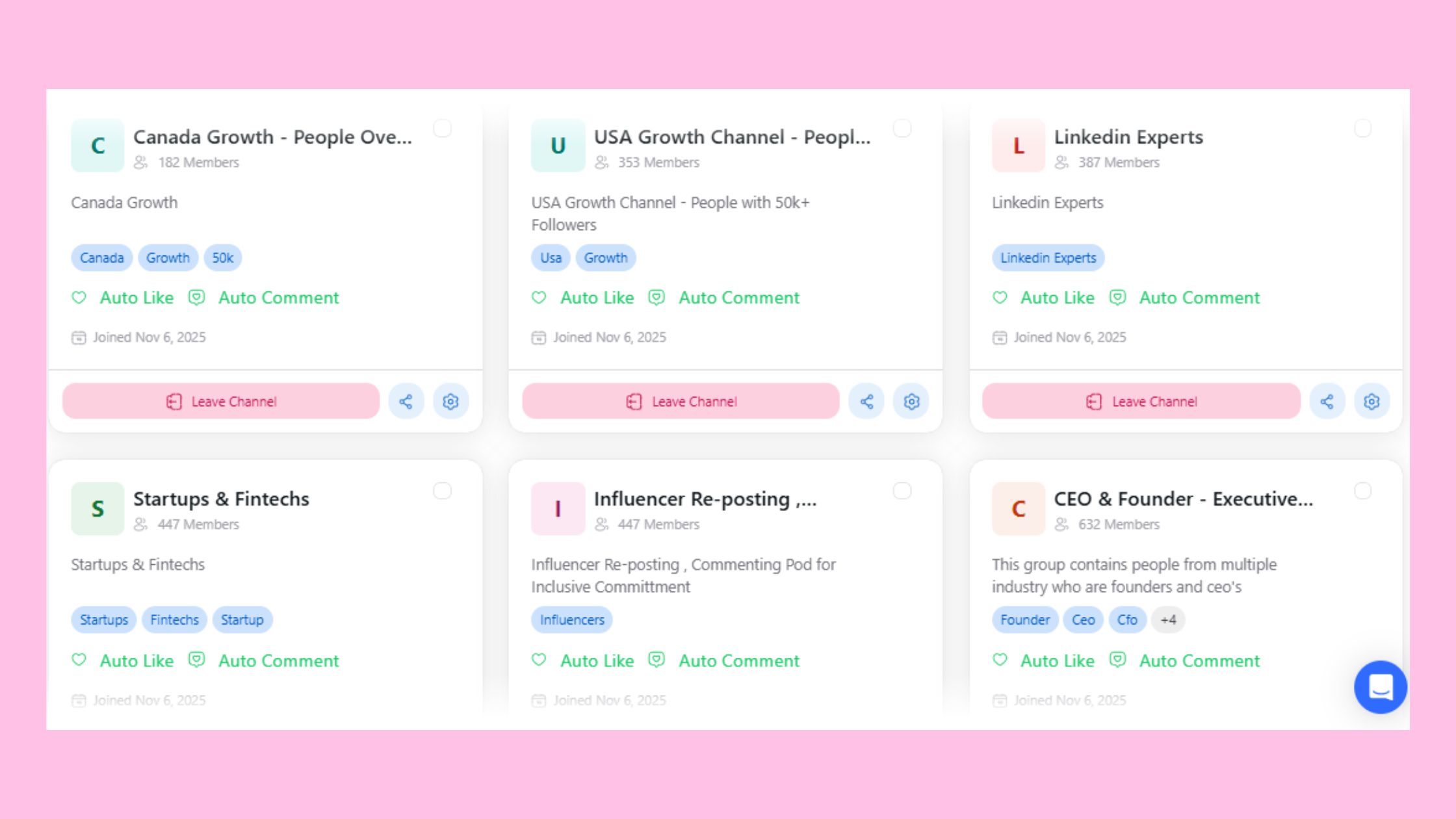
The bottleneck in this flywheel is post visibility. Even well-written LinkedIn content fails to build this social proof layer if it receives low engagement and limited reach. HyperClapper addresses this directly: by connecting posts with real engagement channels (*channels* in HyperClapper's terminology — groups of relevant professionals who like and comment on posts), content gets the early engagement velocity that LinkedIn's algorithm uses to decide whether to distribute broadly or limit reach.
AI-powered replies from HyperClapper keep posts active for days after publication, which means a prospect checking your profile on a Tuesday still sees a lively, current conversation thread — not a post with 3 likes from last week. Company page boosting extends this to brand-level credibility, not just individual profiles, which matters for agencies, sales teams, and companies where multiple team members are outbound prospecting simultaneously.
For teams looking to export and manage their LinkedIn prospects alongside this engagement strategy, the guide on how to export leads from LinkedIn Sales Navigator to Excel covers the workflow for keeping LinkedIn-sourced contacts organized while the broader multi-channel system runs in parallel.
Turn Your LinkedIn Into a Lead Magnet — Even When You're Prospecting Elsewhere
HyperClapper helps founders, marketers, and sales teams keep LinkedIn posts visible with real engagement from relevant professionals — no bots, no fake activity, no risk to your account.
Frequently Asked Questions About B2B Lead Generation Outside LinkedIn
What are the most cost-effective ways to generate B2B leads without using LinkedIn?
Cold email with verified data, community engagement on Reddit and Slack, and SEO-driven content marketing offer the best cost-per-lead outside LinkedIn. Cold email typically costs $3–$15 per lead when executed on clean data. Community channels cost near zero but require daily time investment. Content marketing has higher upfront costs but compounds over months with no ongoing spend per lead.
Can you generate quality B2B leads from communities like Reddit or Slack?
Yes — Reddit and Slack consistently generate higher-intent leads than cold database outreach because community members actively signal buying needs in real time. The approach must be contribution-first: provide genuine expertise for 2–4 weeks before any commercial intent. Overt pitching in communities results in bans and permanent brand damage. Quality is high; volume is modest at 3–8 warm leads per community per month.
How should a B2B startup find leads when LinkedIn ads are too expensive?
Start with a three-channel stack: Apollo.io free plan (50 exports/month) for cold email prospecting, one active community (a relevant Slack group or subreddit) for warm engagement, and LinkedIn organic content for inbound attraction. This combination typically generates 10–25 qualified conversations per month at near-zero direct cost — replacing paid LinkedIn ads entirely until revenue justifies the ad spend.
What channels do B2B sales teams use besides LinkedIn for outbound prospecting?
The most commonly used outbound channels beyond LinkedIn are: cold email (highest volume, lowest CPL), direct phone outreach via verified mobile data, industry event and trade show follow-up lists, community-sourced warm outreach (Reddit, Slack, Discord), and intent-data-triggered outreach to accounts showing active buying signals. Most high-performing teams use 2–3 of these in parallel rather than relying on any single alternative.
How do I know if a B2B lead database has accurate, up-to-date data?
Request a 50–100 record sample before purchasing. Run it through an email verifier and set a 5% hard-bounce threshold — above this, the full database carries unacceptable data quality risk. Cross-reference 20 records manually on LinkedIn to check role and company accuracy. Ask the vendor for their verification frequency: quarterly refresh is the acceptable minimum; real-time verification at export is the standard to aim for.
What response rate benchmarks should I expect from non-LinkedIn B2B outreach channels?
Realistic benchmarks for well-executed outreach: cold email 5–15% reply rate (1–3% meeting booked), LinkedIn InMail 3–10% reply rate (declining due to message fatigue), cold calling 2–8% connect rate on direct dials, and community/warm outreach 20–40% reply rate with lower volume. These figures assume clean data, personalised messaging, and compliant sending practices — generic blasts perform significantly below these ranges.
What are the best alternatives to LinkedIn for B2B leads in 2026?
The strongest LinkedIn Sales Navigator alternatives for prospecting are Apollo.io (best price-to-features for SMBs), Cognism (best for GDPR-compliant EU outreach), and Lusha (best for individual reps needing quick contact enrichment). For channel alternatives rather than tool alternatives, cold email, Reddit/Slack communities, and SEO-driven inbound consistently deliver the highest-quality leads at the lowest sustainable cost.
After seeing this across many B2B go-to-market strategies, the pattern is clear: teams that diversify their b2b leads sources across two or three complementary channels do not just reduce their dependency on LinkedIn — they build a pipeline that improves compoundingly over time, while single-channel teams spend every quarter fighting the same saturation and cost inflation problems that made them look for alternatives in the first place.
👋
⚡ Free plan
Leaving already?
Grab 3 free boosts on your next LinkedIn post — real likes & comments from 5,000+ creators. No card, cancel anytime.