B2b lead gen linkedin works — but only when it runs as a system, not a series of one-off actions. A pattern observed across hundreds of B2B founders and sales teams is that LinkedIn success isn't about posting more or connecting with everyone: it's about targeting the right decision-makers, warming them with content, and converting conversations at exactly the right moment. According to ConnectSafely (2026), LinkedIn generates 75–85% of all B2B leads from social channels — a figure no other platform comes close to matching. The 30-day framework below turns that potential into an actual pipeline.
- Who this is for: Founders, sales teams, and marketers who want qualified B2B clients from LinkedIn in 30 days or fewer.
- What you'll learn: A week-by-week system covering profile setup, outreach scripts, content strategy, and lead qualification.
- Why it matters: LinkedIn generates up to 85% of B2B social leads — the platform works, but only with a deliberate system behind it.
- Counterintuitive finding: You don't need thousands of connections — a targeted list of 50–100 well-chosen prospects outperforms mass connection blasts every time.
- Biggest mistake to avoid: Treating LinkedIn like a cold-call channel from day one, before your profile and content have done any warming work.
- Free vs. paid: A fully organic strategy can generate 5–15 qualified conversations in 30 days — no ads required, though tools like Sales Navigator accelerate targeting speed.
- What Is B2B Lead Gen on LinkedIn and Does It Actually Work?
- LinkedIn Profile Optimization for Lead Gen: Your 30-Minute Setup
- The 30-Day B2B Lead Generation Strategy on LinkedIn
- LinkedIn Content Strategy to Attract B2B Clients Organically
- Tools, Costs, and ROI: Automation vs. Hiring an Agency
- Frequently Asked Questions About B2B Lead Gen on LinkedIn
What Is B2B Lead Gen on LinkedIn and Does It Actually Work?
LinkedIn lead generation for B2B is the process of turning profile visibility, content reach, and direct outreach into a repeatable pipeline of qualified prospects — not just a growing list of connections. The most common failure mode here is conflating activity with progress: posting daily and connecting widely without a defined ideal customer profile (ICP) produces noise, not pipeline.
What Does B2B Lead Gen Mean in 2026?
B2B lead gen — business-to-business lead generation — means identifying, attracting, and qualifying companies or decision-makers who have a genuine need for your product or service, then moving them toward a sales conversation. On LinkedIn in 2026, this happens through three overlapping motions: content that attracts inbound interest, outreach that opens cold relationships, and engagement that warms prospects between both.
The community pain point is real: many founders and sales professionals try LinkedIn for 4–6 weeks, see inconsistent results, and conclude the platform doesn't work. The actual cause, observed consistently across struggling accounts, is the absence of system — random posting combined with untargeted connection requests, with no follow-up sequence and no content designed for a specific buyer.
Is LinkedIn the Most Effective Platform for B2B Lead Generation?
For most B2B use cases — yes, with meaningful caveats. According to Genroe, B2B marketers report that 80% of their social media leads come from LinkedIn, and HubSpot data shows it is 277% more effective for lead generation than Facebook. In practice, this advantage is driven by one structural fact: LinkedIn's audience is already in a professional, decision-making mindset when they open the app — something no other social platform replicates.
The honest limitation: LinkedIn lead generation for B2B is slower than paid ads, requires 2–4 weeks of consistent activity before momentum builds, and delivers almost nothing without a clearly defined ICP. Set that expectation before day one.
LinkedIn's edge over every other social channel isn't reach — it's intent. The people scrolling LinkedIn are already thinking about business problems. Every other platform requires interrupting them from something else.
LinkedIn Profile Optimization for Lead Gen: Your 30-Minute Setup
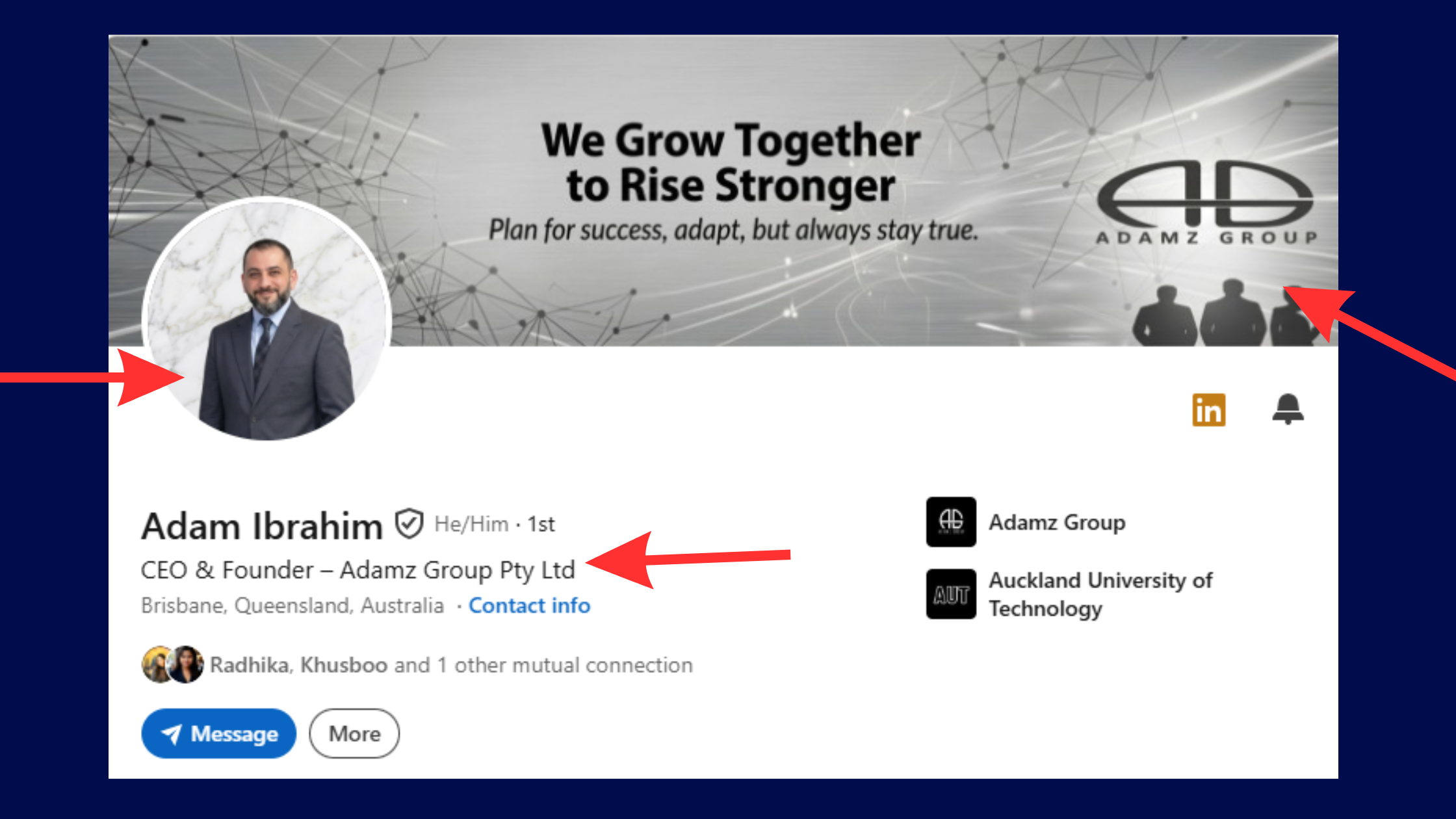
Your LinkedIn profile is a landing page, not a résumé. The five profile elements that directly affect lead gen outcomes are:
- Headline: Outcome-specific language your ICP searches for — not your job title.
- About section: Social proof, a clear problem statement, and one soft CTA (e.g. "DM me 'strategy' for a free 15-minute audit").
- Featured section: A lead magnet, case study PDF, or booking link — one click, high intent.
- Experience section: Results, not responsibilities. Quantify outcomes wherever possible.
- Banner image: Your value proposition in a single readable line — most visitors see this before reading anything else.
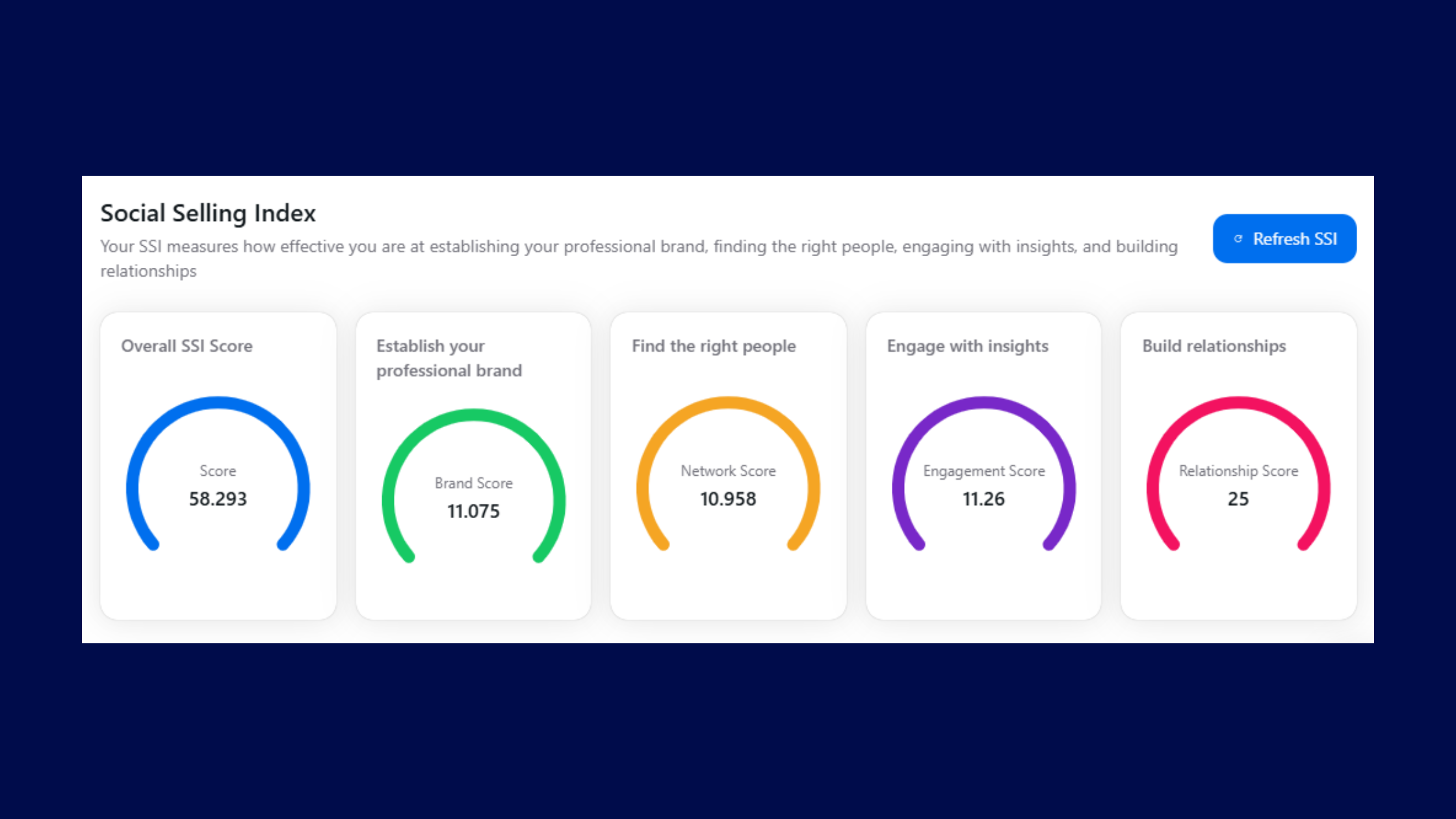
LinkedIn profile optimization for lead gen also means optimizing your Social Selling Index (SSI) — LinkedIn's own 0–100 score measuring profile strength, prospecting activity, engagement quality, and relationship building. A higher SSI directly correlates with expanded organic reach to decision-makers. Check yours at linkedin.com/sales/ssi.
How Many LinkedIn Connections Do You Need to Generate Leads?
Fewer than most people assume. Teams that prioritize a targeted list of 50–100 well-chosen prospects consistently outperform accounts with 5,000+ generic connections. What matters is connection quality and ICP alignment — a 500-connection network full of your exact buyers will outperform a 10,000-connection network of random professionals every time. Focus on depth over breadth, especially in the first 30 days.
The 30-Day B2B Lead Generation Strategy on LinkedIn (Step by Step)
This is the B2B lead generation strategy 30 days framework that produces 5–15 qualified conversations when executed consistently. Each week builds on the last.
- Week 1 — Foundation (Days 1–7): Complete your profile optimization (30 minutes). Define your ICP with specifics: industry, company size, job title, and the one pain point you solve. Build a prospect list of 50–100 targets using LinkedIn's free People search filters (title, location, industry, company size).
- Week 2 — Outreach (Days 8–14): Send 10–15 personalized connection requests per day. No pitch in the request. On day 3 after acceptance, send a value-first message — a relevant resource, a specific observation about their business, or a genuine question. Track responses in a simple spreadsheet.
- Week 3 — Content (Days 15–21): Publish 3 posts targeting your ICP's top pain points (more on format below). Engage authentically on prospects' posts — meaningful comments, not emoji reactions. This warms cold contacts before direct outreach.
- Week 4 — Conversion (Days 22–30): Move warm conversations to a 15-minute discovery call using a soft CTA: "Would it make sense to spend 15 minutes seeing if there's a fit?" Pre-qualify with 3 simple questions before the call. Segment responders into your pipeline: ready now, follow up in 30 days, or not a fit.
LinkedIn Outreach Strategy for B2B Sales: What to Say in a Cold Message
The question of what should I say in a LinkedIn cold message has one consistent answer across high-performing outreach campaigns: lead with specificity, not with yourself. The message template that converts best follows a simple structure:
- Line 1 — Specific observation: "Noticed you just raised a Series A — congrats on the milestone."
- Line 2 — Relevant connection: "I work with SaaS founders at your stage on building outbound sales without growing headcount."
- Line 3 — Soft question (not a pitch): "Is that something on your radar for the next quarter?"
This is your LinkedIn outreach strategy for B2B sales in its simplest form. Keep it under 75 words. Why it works: it signals you did homework, it's relevant to their current situation, and it asks a question rather than demanding a meeting. Messages that open with "I help companies like yours…" or pitch a product immediately see response rates under 5% in most observed cases.
How to Find B2B Prospects on LinkedIn for Free vs. With Sales Navigator
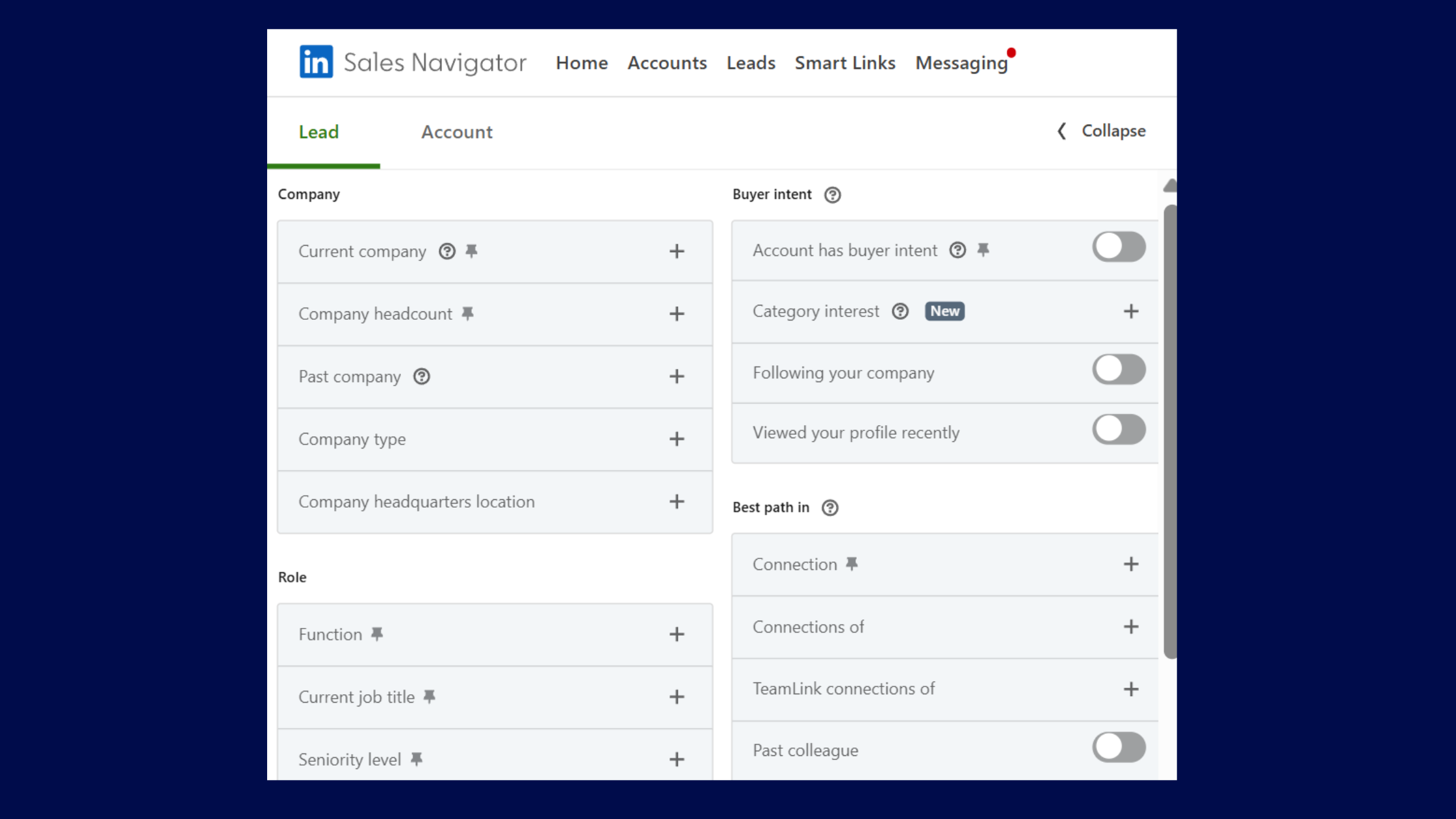
Knowing how to find B2B prospects on LinkedIn for free is a real skill. LinkedIn's free search lets you filter by job title, company, location, and industry — enough to build a solid 100-person prospect list. The limitation: free accounts can only view about 100 profiles per month before hitting search limits, and you can't filter by company size or department headcount.
LinkedIn Sales Navigator for prospecting removes these limits and adds powerful filters: seniority level, years in role, company growth rate, and recent job changes (a trigger event that signals buying readiness). At ~$100/month, it's worth the cost once you're sending 20+ outreach messages per week — the targeting precision alone reduces wasted time significantly. See the full LinkedIn Sales Navigator vs free LinkedIn prospecting comparison in the Tools section below.
For a deeper walkthrough of proven outreach techniques, the HyperClapper outreach guide covers sequencing and follow-up timing in detail.
LinkedIn Content Strategy to Attract B2B Clients Organically
Content-driven pipeline works by making cold outreach unnecessary for a growing segment of your prospects. Every post that resonates with your ICP is a buyer raising their hand — they engage, they follow, and they arrive in your DMs already warmed up. This is the core of founder-led growth on LinkedIn, and it's what separates accounts generating inbound from accounts that rely entirely on outreach volume.
The three post types that consistently generate B2B inbound are:
- Problem-awareness posts: Name a specific pain your ICP experiences and explain why it happens — without selling the solution in the post itself.
- Contrarian takes backed by data: Challenge a widely-held belief in your industry with a specific counterpoint. These drive comments from both agreers and disagreers — both expand your reach.
- Short case study storytelling: Real results, real numbers, client context without naming names. "We helped a 12-person SaaS company go from 0 to 8 enterprise trials in 6 weeks. Here's what we did differently."
How to Boost LinkedIn Post Visibility With Engagement Channels
LinkedIn's algorithm rewards posts that accumulate engagement in the first 60–90 minutes after publishing. What consistently separates high-reach posts from identical posts that disappear is early engagement velocity — engagement velocity being the speed at which a post receives likes and comments after going live.
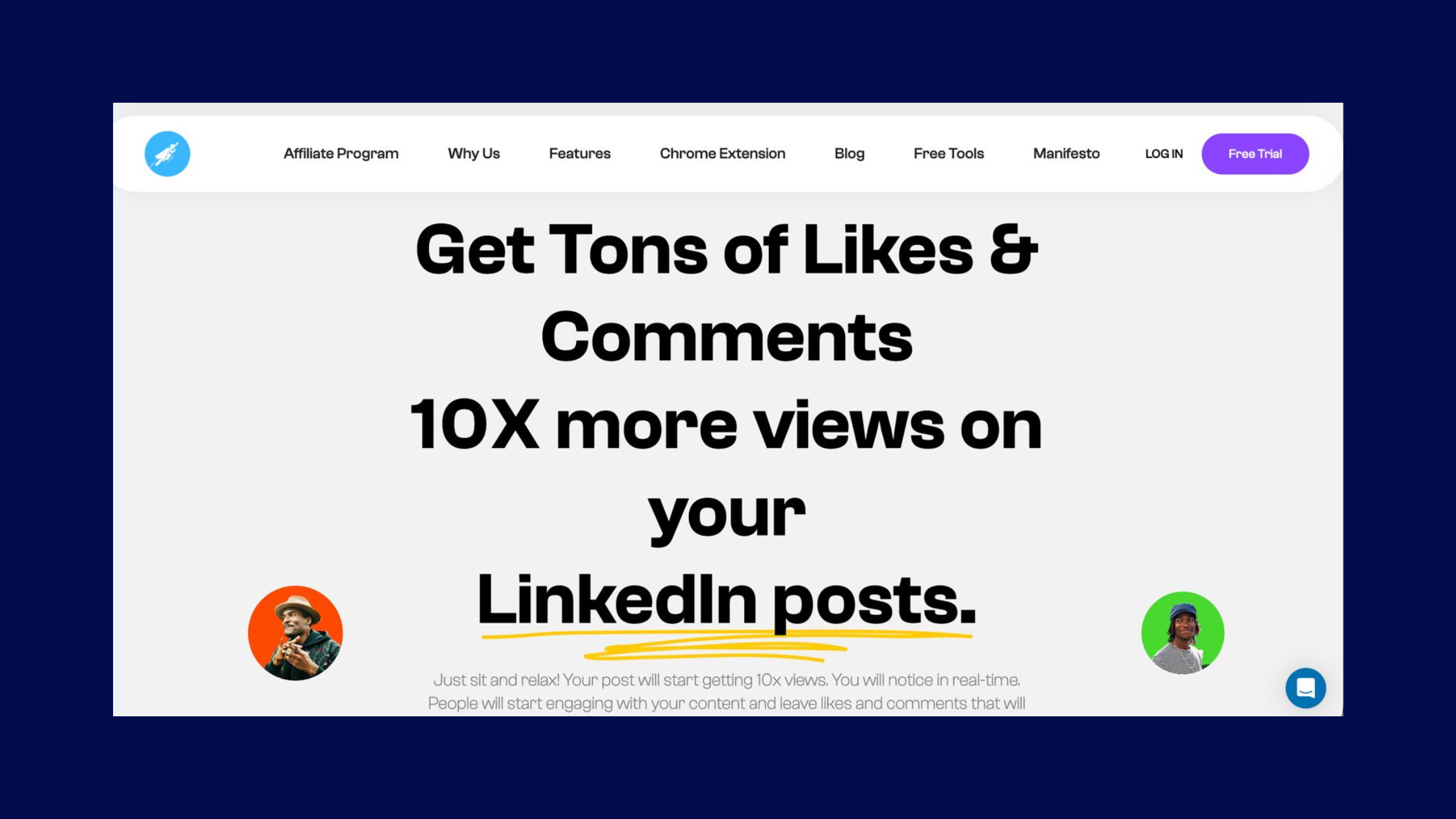
This is where tools like HyperClapper directly support a LinkedIn content strategy to attract clients: users add their post to real engagement channels filled with relevant professionals, generating genuine early likes and comments that signal quality to LinkedIn's distribution system. One channel delivers roughly 50 possible engagements; two channels push closer to 100. That early surge triggers the algorithm to show the post to 2nd and 3rd-degree decision-makers — the exact audience you're trying to reach.
LinkedIn Groups, Account-Based Marketing, and Community Engagement for Leads
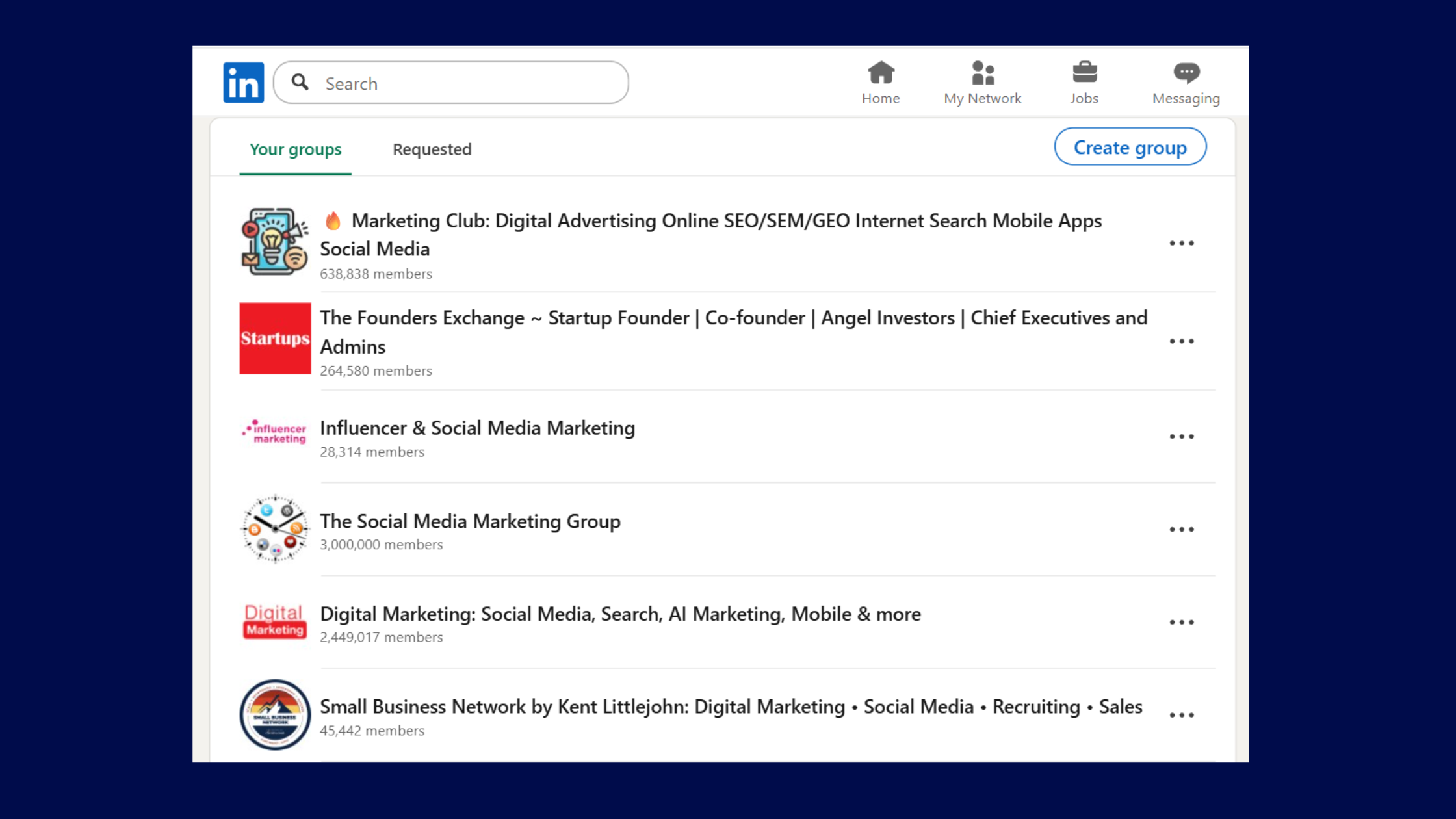
LinkedIn Groups are underused in most LinkedIn lead generation for B2B playbooks. Active groups in your niche are ready-made collections of your ICP — join 3–5 relevant groups, contribute genuinely for two weeks, and you'll find outreach there converts at a higher rate than cold connection requests, because you already share context. For account-based marketing (ABM) on LinkedIn — targeting specific named accounts rather than individual personas — follow the company page, engage with their posts, and then reach out to multiple stakeholders at the same company in a coordinated sequence. This signals you're familiar with their business rather than carpet-bombing a list.
For more on building an end-to-end pipeline, see the LinkedIn lead generation funnel guide — it covers how to move cold prospects from first touch to signed contract.
Want your LinkedIn posts to reach decision-makers in your ICP?
HyperClapper connects your posts to real engagement channels, driving early visibility and algorithmic reach — without bots or fake activity.
Boost Your First Post FreeTools, Costs, and ROI: Best LinkedIn Automation Tools vs. Hiring an Agency
49% of B2B marketers say generating more leads is their biggest priority, according to Martal Group (2026) — yet most underestimate what it actually costs across different approaches. Here's an honest breakdown.
LinkedIn Sales Navigator vs. Free LinkedIn Prospecting: Which Is Worth It?
| Option | Cost | Best For | Key Limit |
|---|---|---|---|
| Free LinkedIn Search | $0 | Founders starting out, <20 outreach/week | ~100 profile views/month; limited filters |
| Sales Navigator | ~$100/mo | Teams sending 20+ messages/week | Monthly cost; requires volume to justify |
| LinkedIn Lead Gen Ads | $10+/day; CPL $50–$150 | Scale and speed; brand awareness | High CPL; needs creative and budget testing |
| HyperClapper (Engagement) | Affordable monthly | Content-driven pipeline; organic reach | Complements outreach, not a standalone |
| LinkedIn Lead Gen Agency | $2,000–$8,000+/mo | Revenue targets above $20K/mo; time-constrained founders | High cost; slower institutional learning |
According to Digital Applied (2026), LinkedIn B2B lead generation costs 28% less than paid search despite LinkedIn's higher per-click cost — the targeting precision and lead quality make the economics work. In practice, a single closed B2B deal from LinkedIn typically delivers 10–50x ROI on tool costs alone, which reframes what "expensive" actually means.
Hire LinkedIn lead generation agency vs. DIY: Agencies make sense above $20K/month revenue targets or when founder time is genuinely constrained. Below that threshold, DIY with the right stack builds institutional knowledge, produces lower CPL over time, and keeps the founder's voice authentic — something no agency can fully replicate.
The best LinkedIn automation tools for lead generation are ones that stay within LinkedIn's behavioral patterns — gradual connection volume, human-paced messaging, no scraping. Tools that ignore these boundaries trigger account restrictions in most observed cases within 30–60 days of aggressive use.
For founders evaluating the full tool landscape, the LinkedIn automation tools comparison breaks down the tradeoffs across the major options in plain terms.
✓ The 30-Day LinkedIn Lead Gen Checklist
- ☐Rewrite LinkedIn headline with outcome-specific language (not job title)
- ☐Add a lead magnet or booking link to the Featured section
- ☐Define ICP: industry, company size, job title, one core pain point
- ☐Build a prospect list of 50–100 targets using LinkedIn search filters
- ☐Send 10–15 personalized, no-pitch connection requests per day (Week 2)
- ☐Publish 3 posts targeting ICP pain points in Week 3; boost first 90 minutes
- ☐Send value-first follow-up message 3 days after connection acceptance
- ☐Pre-qualify warm leads with 3 questions before booking a discovery call
- ☐Check your SSI score at linkedin.com/sales/ssi and track it weekly
Turn your LinkedIn content into a consistent B2B pipeline
HyperClapper's real engagement channels and AI replies help your posts reach the decision-makers on your prospect list — without bots, without risk.
Start Free on HyperClapperFrequently Asked Questions About B2B Lead Gen on LinkedIn
How to generate B2B leads on LinkedIn?
Generate B2B leads on LinkedIn by combining three motions: optimize your profile to speak to your buyer's problem, send 10–15 personalized (no-pitch) connection requests daily to your ICP, and publish 2–3 content pieces per week that address their pain points. Warm prospects with content before outreach — response rates typically double when prospects have already seen your posts.
Is LinkedIn the most effective platform for B2B lead generation?
Yes — for most B2B use cases, LinkedIn outperforms every other social channel. It generates 75–85% of all B2B social media leads and is 277% more effective for lead generation than Facebook, according to widely cited HubSpot data. The key differentiator is professional intent: LinkedIn users are in a business mindset when they engage, which no consumer social platform can replicate.
What does B2B lead gen mean?
B2B lead gen — business-to-business lead generation — means identifying and attracting companies or decision-makers who have a genuine need for your product or service, then qualifying them into a sales pipeline. On LinkedIn, this involves content that attracts inbound interest, outreach that opens new relationships, and follow-up sequences that move prospects toward a buying conversation.
What is the fastest way to get B2B clients using LinkedIn in 30 days?
The fastest path is a parallel strategy: optimize your profile on Day 1, start personalized outreach on Day 8, and publish content from Day 15 onward to warm prospects simultaneously. Accounts that run outreach and content in parallel — rather than sequentially — consistently reach 5–15 qualified conversations within 30 days. Skipping the content layer and doing outreach only typically halves response rates.
Can you realistically generate B2B leads on LinkedIn without paid ads?
Yes — a fully organic LinkedIn strategy can generate qualified conversations within 30 days at zero ad spend. The tradeoffs are time (10–15 hours per week) and slower scale. Paid linkedin lead gen ads accelerate volume and reach but cost $50–$150 per lead for B2B. Organic builds relationships that convert at higher rates; paid builds pipeline faster. Most successful B2B operations run both.
What LinkedIn outreach message templates work best for B2B sales?
The highest-converting template follows three lines: a specific observation about the prospect, a relevant connection to what you do, and a soft question — never a pitch. Keep it under 75 words. Messages that open with "I help companies like yours" or immediately pitch a product see response rates below 5% in most observed cases. Specificity and genuine curiosity are what drive replies.
Why is my LinkedIn outreach not getting responses?
The most common reasons for poor response rates are: pitching in the connection request, sending generic messages with no personalisation, reaching out before any content has warmed the prospect, and messaging people outside your ICP. Also check your profile — if your headline and About section don't clearly communicate value to your buyer, prospects who click through before replying will immediately disengage. Fix the profile first, then re-evaluate outreach.
How do I build a B2B lead generation system on LinkedIn step by step?
Build it in four layers: (1) a buyer-focused profile that converts visitors into followers, (2) a weekly content cadence of 2–3 ICP-targeted posts, (3) a daily outreach routine of 10–15 personalized messages to a defined prospect list, and (4) a simple CRM or spreadsheet to track conversations and follow-ups. The full step-by-step system is in the LinkedIn lead generation funnel guide. Consistency across all four layers is what creates compounding pipeline — any layer missing and the system underperforms.
What consistently separates LinkedIn accounts that generate real B2B pipeline from accounts that just accumulate connections is not any single tactic — it's the combination of a buyer-focused profile, consistent content, and disciplined outreach running simultaneously. Accounts that get all three right see compounding results. Accounts that skip any one typically plateau regardless of how hard they work on the remaining two.



