Twitter was rebranded to X in July 2023 — specifically, the domain switch and bird logo removal happened on July 24, 2023. That answers the search query most people arrive here with. But what month was twitter rebranded to x is the easy part. The harder question is why engagement has felt broken ever since — and what a working strategy on X actually looks like in 2026. A pattern observed across accounts that survived the transition is that the ones still getting traction stopped treating X like Twitter the moment the logo changed.
- When Did Twitter Become X? The Rebrand Timeline, Explained
- Why the Twitter Rebrand Hit Reach and Revenue Hard
- How the X Algorithm Works in 2026 — and Why Your Engagement Dropped
- How to Actually Increase Impressions on X: A Practical Strategy for 2026
- Frequently Asked Questions About X (Formerly Twitter)
- Twitter officially became X on July 24, 2023 — domain, logo, and branding changed overnight
- The "X, formerly known as Twitter" label stuck because the Twitter brand was culturally embedded over 17 years
- Ad revenue fell sharply post-rebrand; X's engaged professional user base has partially shifted to LinkedIn
- The X algorithm now rewards early engagement velocity and reply depth — follower count matters far less than it did on Twitter
- X Premium subscribers get measurably more reach; free accounts face a structural disadvantage in feed distribution
- For B2B and thought leadership, pairing X with LinkedIn yields better compounded results than either platform alone
When Did Twitter Become X? The Rebrand Timeline, Explained
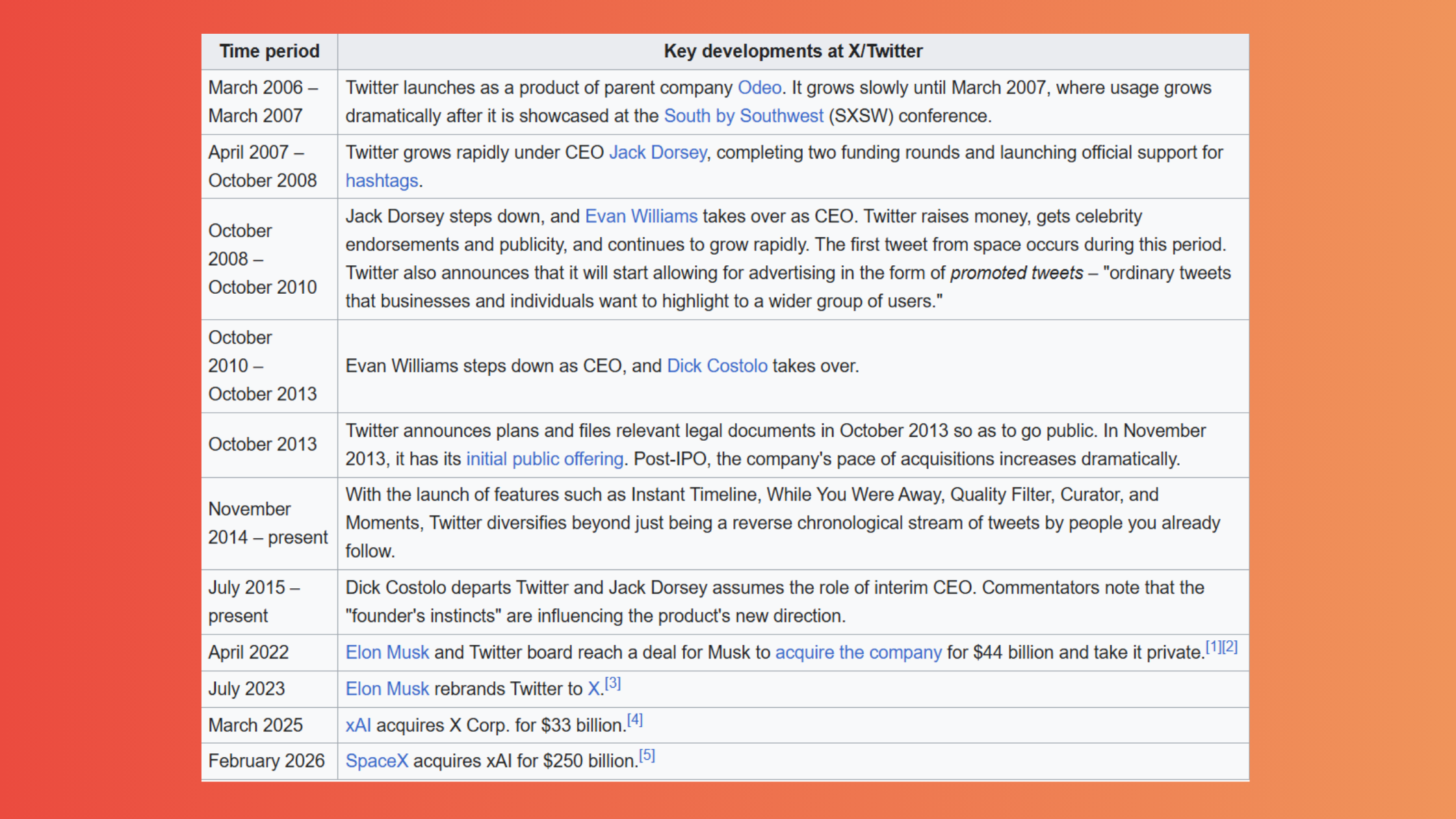
Twitter rebranded to X on July 24, 2023. That is the date twitter.com began redirecting to x.com and the iconic blue bird logo was replaced — one of the most abrupt identity pivots in social media history. According to Search Logistics (2026), Elon Musk replaced Twitter's domain, branding, and logos across its digital and physical properties on that date.
The path there had four clear milestones:
- October 2022: Musk completes acquisition for $44 billion
- November 2022: Mass layoffs (roughly 50% of staff); Twitter Blue relaunched with paid verification
- July 24, 2023: Bird logo removed, twitter.com redirects to x.com, "X" branding goes live
- 2024–2025: X Premium tier rollout, advertiser fallout deepens, xAI merger announced
The phrase "X, formerly known as Twitter" persisted in media and everyday conversation well into 2025 for a simple reason: the Twitter brand had 17 years of cultural embedding. People named tweets, not posts. The verb "tweet" was in the dictionary. Rebranding a platform used by hundreds of millions is not like relaunching a product — it is closer to renaming a country. The identity gap between the legal rebrand and the cultural rebrand explains exactly why the sticky label frustrated so many users.
What Changed on Twitter After It Became X
The rebrand was cosmetic on day one but substantive over the following 18 months. What actually changed:
- Blue checkmarks became purchasable via X Premium — breaking their function as a trust signal
- Algorithmic feed became the default, replacing the chronological option most power users preferred
- External link posts were deprioritized in reach — X's distribution model began favouring content that kept users on-platform
- Long-form posts and video were elevated, pushing the platform toward a hybrid Twitter/YouTube model
- X Payments (peer-to-peer money transfer) was announced as part of the "everything app" vision, though rollout remained limited through 2025
What was promised versus what launched: Musk's vision of an everything app — payments, encrypted messaging, creator monetization, long-form content — has partially materialised. Payments and full creator monetization remain incomplete relative to the original roadmap.
Why the Twitter Rebrand Hit Reach and Revenue Hard
The Twitter rebrand impact on reach was immediate and measurable. Advertisers including Apple, Disney, and IBM paused or pulled spending following content moderation controversies. According to Pew Research Center (2023), 60% of U.S. adults who had used Twitter in the past year said they had taken a break from the platform. That advertiser hesitance directly affects content reach — a platform with lower ad revenue has less financial incentive to maximise organic post distribution.
Is X growing or losing users? According to Backlinko (2025), X had an estimated 561 million monthly active users as of July 2025 — down from 586 million reported in July 2024. Demand Sage (2026) puts the figure at 557 million MAU. The raw user number looks stable, but the engaged, high-value professional segment has fragmented — many have redistributed their attention toward LinkedIn, Threads, and Bluesky.
X Premium vs Free: What the Engagement Difference Actually Looks Like
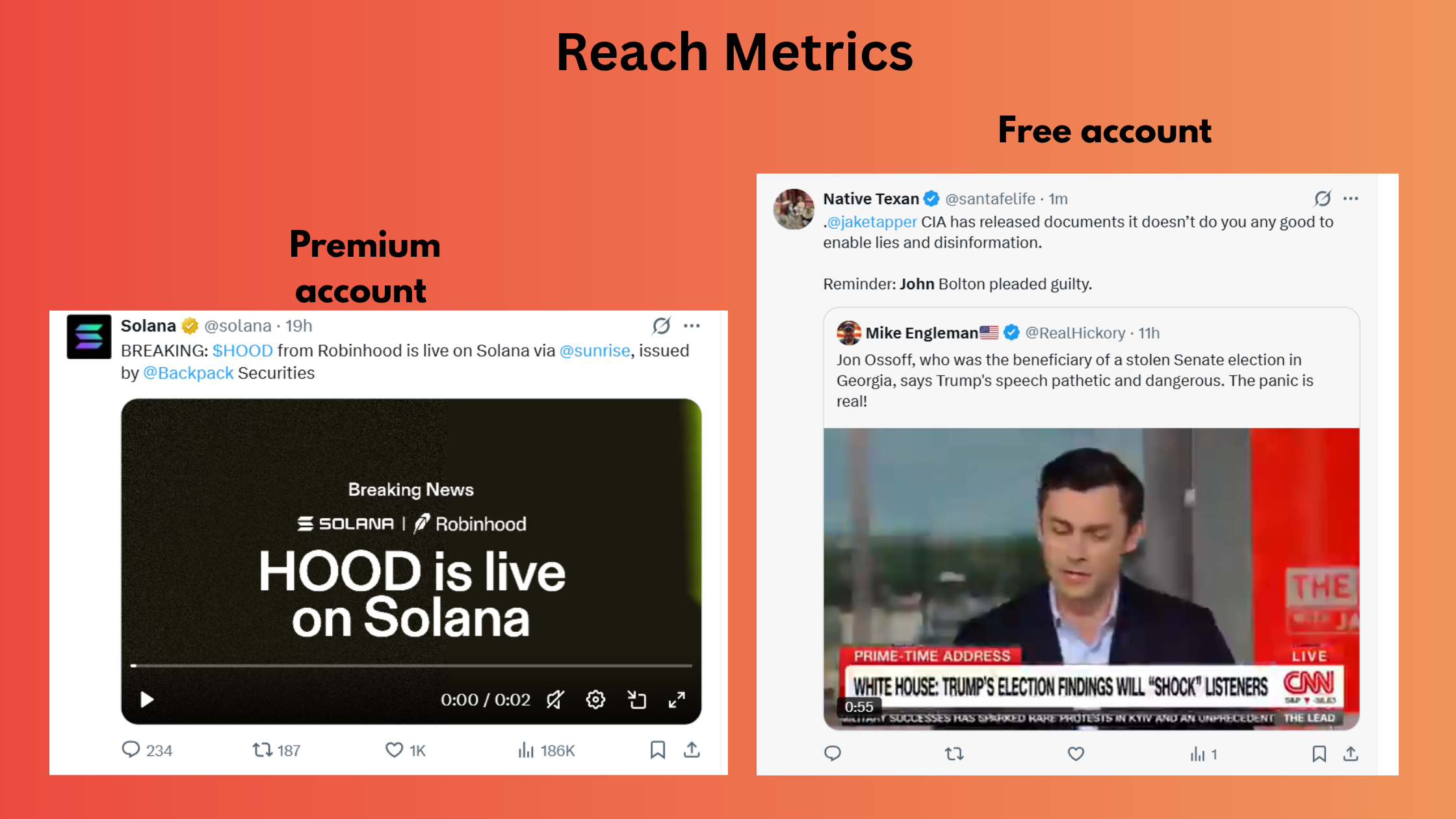
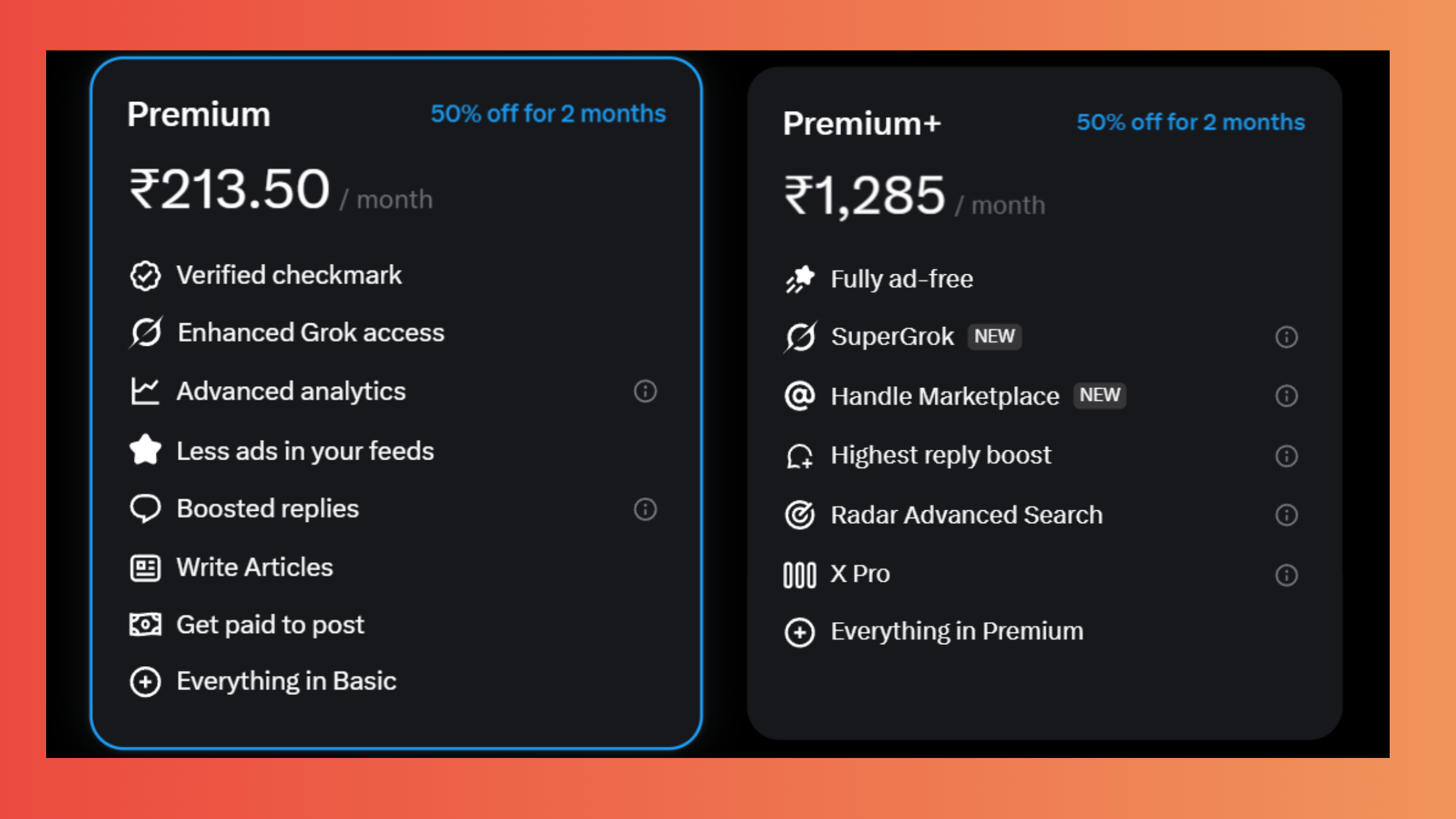
X Premium vs free engagement difference is real and structural, not marginal. X Premium subscribers receive prioritised placement in replies and feeds — their content is surfaced to a wider audience even at equivalent engagement levels. Free accounts operate at a distribution disadvantage that compounds over time. Teams that upgrade key posting accounts to Premium consistently see reply reach improve in the first 30 days. For brands deciding whether does posting on X still work, the honest answer is: it depends heavily on whether you are paying for the reach advantage.
How the X Algorithm Works in 2026 — and Why Your Engagement Dropped
The X algorithm prioritises three signals above all others: early engagement velocity, reply depth, and time-on-post. A post that collects fast likes and multi-turn replies in the first 30–60 minutes gets pushed to a broader audience. One that stalls in that window gets buried — and recovery is slow.
If you are asking why is my X engagement so low, the most common culprits are:
- Posting with an external link in the body (X suppresses link-out posts in the feed)
- Posting at off-peak times without a warm audience to generate early velocity
- Low reply activity on your own posts — the algorithm reads your silence as disengagement
- Operating a free account without Premium distribution support
Why has my Twitter engagement dropped is a question legacy accounts ask constantly. The answer is that the algorithm shifted from follower-based reach to interest-graph reach. Large accounts built on Twitter's old model — where follower count drove distribution — often find their X reach is a fraction of what it was. The platform now surfaces content based on what a user engages with, not who they follow.
Posting frequency on X for engagement: three to five high-engagement posts per week outperform daily low-engagement content under the current model. Consistency still signals relevance. But volume without engagement depth actively hurts distribution scores.
The most common failure mode among brands on X is treating volume as a substitute for engagement depth — posting daily at low resonance trains the algorithm to limit distribution, not expand it.
Common Mistakes Killing Your X Engagement Strategy
Creators who skip the pre-publish engagement step typically find their posts plateau quickly. The X Twitter engagement strategy that holds up in 2026 is built on one non-obvious rule: engage before you publish. Spend 10–15 minutes replying to relevant posts in your niche before your own post goes live. This places your profile in front of interested audiences and primes the algorithm before your content even enters the feed.
How to Actually Increase Impressions on X: A Practical Strategy for 2026
After seeing this pattern across accounts in multiple industries, the formula for how to increase impressions on X comes down to four moves applied consistently:
- Hook in line one. X truncates previews — if the first sentence does not earn the click, nothing else matters. Write the hook as a standalone statement or a tension-setting question.
- Use native media. Images, video, and polls outperform text-only posts in feed distribution. External embeds (YouTube links, article cards) perform worst.
- Reply actively on your own posts. Adding value in your own reply thread signals ongoing engagement to the algorithm and keeps the post alive beyond the initial velocity window.
- Engage your niche before publishing. Five to ten quality replies on relevant posts before you post sets up a warmer distribution context for your own content.
X platform content strategy tips that travel well across account sizes: threads still outperform single posts for depth-driven content, polls drive reply engagement efficiently, and short-form video is the highest-reach format on the platform right now.
Is X worth it for marketing anymore? For real-time topics, cultural moments, and news-adjacent content — yes. For B2B lead generation and professional authority-building — LinkedIn consistently delivers better return on content investment. The two platforms are not interchangeable. The smartest approach is using X for reach and cultural positioning while building substantive professional relationships on LinkedIn.
Where LinkedIn Fits When X Falls Short
The accounts that manage this dual-platform approach well treat X and LinkedIn as complementary, not competing. X surfaces ideas to a broad, reactive audience. LinkedIn converts those ideas into professional credibility and inbound leads. If you are investing time in content strategy but not building your LinkedIn presence in parallel, you are leaving the higher-value half of the equation on the table.
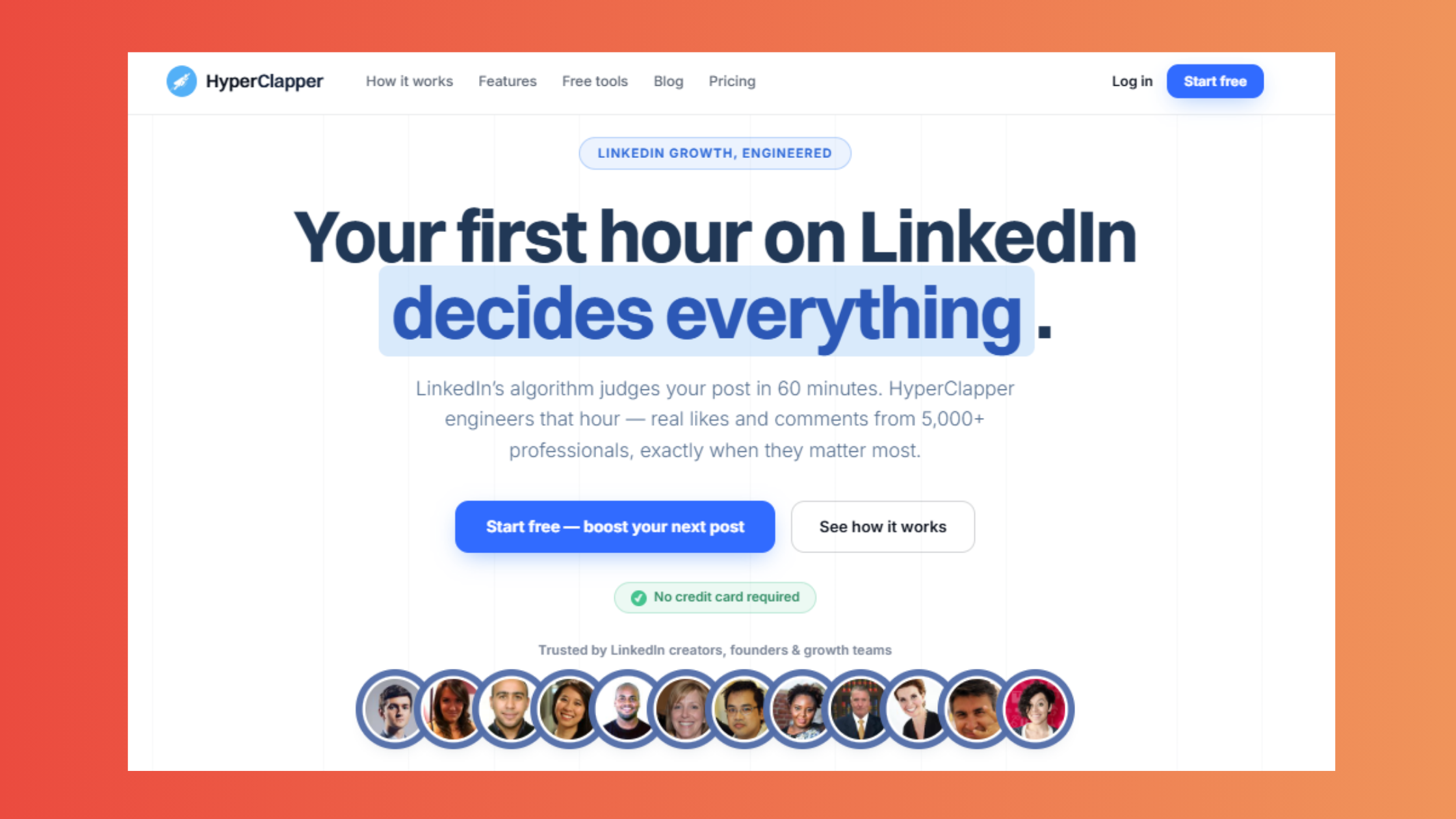
For professionals serious about LinkedIn growth, platforms like HyperClapper handle the engagement layer — real community engagement through channels, AI-powered replies, and post boosting — so your content gets the early signal it needs to enter LinkedIn's distribution cycle. The same logic that applies to X's early-velocity window applies on LinkedIn: posts that get fast, substantive engagement in the first hour reach dramatically more people.
For a broader look at what is working across social platforms right now, the B2B social media marketing guide for 2026 covers the cross-platform picture in full.
✓ The X Engagement Recovery Checklist
- ☐Move all external links out of the post body and into the first reply
- ☐Spend 10–15 minutes engaging in your niche before posting
- ☐Reply to every comment on your post within the first hour
- ☐Use native images or video — no external embeds in the post itself
- ☐Post 3–5 times per week — not daily low-quality volume
- ☐Evaluate X Premium for key posting accounts — the distribution gap is structural
Get the LinkedIn engagement your content deserves
HyperClapper connects your posts to real engagement channels — likes, replies, and visibility from real professionals, not bots.
See How HyperClapper WorksFrequently Asked Questions About X (Formerly Twitter)
When did Twitter start getting called X?
Twitter started being called X on July 24, 2023, when Elon Musk officially replaced the Twitter branding, domain, and bird logo with the X identity. The rebrand was announced days earlier but went live that date. The "formerly Twitter" label persisted in media well into 2025 because the Twitter name had 17 years of cultural recognition.
When was Twitter sold to X?
Twitter was acquired by Elon Musk in October 2022 for approximately $44 billion. The sale completed on October 27, 2022. The platform was not rebranded to X until July 2023 — there was roughly a nine-month gap between the acquisition and the public identity change, during which Musk restructured the company and relaunched paid verification.
Why did my engagement drop when Twitter became X?
Engagement dropped because the algorithm shifted from follower-based reach to interest-graph reach, and X began deprioritising posts with external links. Legacy accounts built on Twitter's old distribution model lost reach almost immediately. X Premium subscribers also gained a structural feed advantage, widening the gap between paid and free account performance.
What is the best engagement strategy for X in 2026?
The best engagement strategy for X in 2026 is: strong hook in line one, native media over external links, active replies on your own posts within the first hour, and pre-publish engagement in your niche. Posting 3–5 times weekly at consistent times outperforms daily volume. X Premium meaningfully improves distribution for accounts serious about reach.
Has the Twitter to X rebrand hurt brand marketing performance?
Yes, for most brands. Ad revenue fell sharply after major advertisers paused spending in 2023, and the platform's engaged professional user base has partially migrated to LinkedIn and Threads. For news-adjacent and culturally reactive content, X still performs. For B2B, thought leadership, and lead generation, most brands now see better ROI on LinkedIn.
How does the X algorithm decide what content to show?
The X algorithm scores content primarily on early engagement velocity — how fast a post gets likes and replies in its first 30–60 minutes — plus reply depth and time-on-post signals. Interest-graph relevance (what topics a viewer engages with) matters more than follower connections. X Premium posts receive an additional distribution boost in reply and feed placement.
Is X still worth using for B2B marketing?
X is worth using for B2B marketing when the goal is brand awareness, real-time commentary, or reaching a broad audience fast. It is less effective for lead generation and professional relationship-building, where LinkedIn consistently outperforms it. The strongest B2B approach treats X and LinkedIn as complementary — X for visibility, LinkedIn for conversion and authority.
What consistently separates accounts that maintained traction through the Twitter-to-X transition from those that stalled is not the platform itself — it is whether they updated their strategy to match the new algorithm, or kept running the old Twitter playbook and wondered why nothing was working.



