A pattern observed across high-performing B2B LinkedIn campaigns is that the accounts generating real pipeline aren't running a single automation tool — they're running a linkedin automation strategy built from two complementary layers: one that handles outreach sequencing and one that builds the social proof those sequences depend on. Waalaxy handles prospecting (connection requests, follow-up messages, multichannel sequences). HyperClapper handles engagement visibility — real likes, comments, and AI-powered replies that make your profile look active and credible before a cold prospect ever sees it. Together, they close the trust gap that kills most single-tool setups.
- Who this is for: B2B founders, sales teams, recruiters, and marketers who want scalable LinkedIn lead generation without fake activity or bots.
- What you'll learn: How to build a Waalaxy + HyperClapper workflow step by step, including warm-up, sequencing, and content timing.
- The safety answer you've been missing: LinkedIn's detection is behavioral, not tool-based — specific daily thresholds (not vague warnings) are what separate safe accounts from banned ones.
- The counterintuitive finding: Boosting your posts before sending connection requests raises acceptance rates — prospects accept from profiles with visible authority, not empty ones.
- Tool comparison covered: Waalaxy vs. Expandi, and where HyperClapper outperforms legacy engagement pods like Lempod and Podawaa.
- Biggest mistake to avoid: Launching Waalaxy sequences on a cold, unengaged profile — the single fastest way to tank acceptance rates and trigger account flags.
- Why the Waalaxy + HyperClapper Stack Works in 2026
- How to Build the Automated LinkedIn Outreach Workflow
- Account Safety: Does LinkedIn Automation Risk a Ban?
- Waalaxy vs. Expandi and the Best LinkedIn Automation Tools for B2B
- Common Mistakes That Kill LinkedIn Automation Campaigns
- Frequently Asked Questions
Why the Waalaxy + HyperClapper LinkedIn Outreach Stack Works in 2026
Most LinkedIn automation setups fail for a simple reason: they send cold outreach to prospects who land on a ghost-town profile. No recent posts. No comments. No signs of life. The connection request gets ignored — not because the targeting was wrong, but because there was no social proof to support the ask.
The Waalaxy HyperClapper LinkedIn outreach combination solves this by separating the problem into two distinct jobs. Waalaxy runs your prospecting sequences — connection requests, follow-up messages, and multichannel outreach across LinkedIn and email. HyperClapper builds the visibility layer — real engagement from community channels that makes your posts appear active, credible, and worth a prospect's time.
The core mechanism is social selling signal amplification: HyperClapper boosts your post engagement before Waalaxy sends connection requests, so every prospect who checks your profile sees evidence of an active, trusted professional — not an empty account blasting connection requests into the void.
According to Overloop's LinkedIn Automation Guide (2026), the right automation setup keeps teams under LinkedIn's activity caps while saving 10+ hours per week on prospecting. In practice, the teams extracting that efficiency are the ones pairing outreach tools with a credibility layer — not running outreach in isolation.
According to ConnectSafely's LinkedIn Statistics 2026, the LinkedIn automation tools market has reached an estimated $850 million annually, growing 42% year-over-year. This means you are competing in a crowded field — and the difference between accounts that win pipeline and accounts that blend in is the quality of the stack, not just the volume of messages sent.
Can you use Waalaxy and HyperClapper together? Yes — they operate in entirely complementary lanes. Waalaxy requires LinkedIn session access to run sequences. HyperClapper works as an engagement platform that doesn't conflict with Waalaxy's permissions. There is no technical overlap that creates risk.
How Each Tool Plays Its Role in the Workflow
- Waalaxy: Prospecting, connection requests, multichannel outreach sequencing (LinkedIn + email), follow-up automation.
- HyperClapper: Post boosting via real community channels, AI-powered replies, company page engagement, content guard moderation, and analytics.
- The handoff: HyperClapper builds the credibility that makes Waalaxy's outreach land. One tool fills the funnel; the other makes the funnel believable.
How to Automate LinkedIn Outreach Workflow Step by Step
Teams that build this workflow in the right sequence — engagement first, outreach second — consistently see higher connection request acceptance rates than teams that flip the order or skip the warm-up entirely. Here is how to automate LinkedIn outreach workflow for maximum impact.
Waalaxy Sequence Best Practices for Higher Acceptance Rates
- Step 1 — Warm up with HyperClapper (weeks 1–2): Before activating any Waalaxy sequence, boost 2–3 posts per week using HyperClapper channels. This raises your Social Selling Index score and establishes an activity baseline that LinkedIn's algorithm reads as normal human behaviour. Estimated time: 5 minutes per post submission.
- Step 2 — Build your Waalaxy sequence with best practices: Start with a personalised connection request — no pitch, no ask, just a genuine reason to connect. Follow up with a value-add message on day 3. Trigger a third touch only for non-responders on day 7. This is multichannel outreach sequencing done correctly. Warning: sequences that open with a pitch see acceptance rates roughly half those of relationship-first openers.
- Step 3 — Sync your content and outreach calendars: Publish a relevant post on HyperClapper the day before a Waalaxy campaign goes live. Prospects who check your profile after receiving a connection request see fresh, actively-commented content — not a feed silent for three weeks.
- Step 4 — Feed AI Replies to keep posts alive during campaigns: HyperClapper's Feed More AI Replies feature lets you add additional replies to a post days after publishing. LinkedIn rewards meaningful, ongoing conversations — a post with 12 comments spread over 5 days reaches new audiences organically while your Waalaxy campaign runs in the background.
How HyperClapper Boosts LinkedIn Visibility to Support Outreach
Social selling signal amplification is the mechanism at work here: every real like and comment HyperClapper channels deliver feeds LinkedIn's distribution algorithm, pushing your post to second and third-degree connections who may appear in your Waalaxy prospect lists later. The result is a compound effect — your outreach and your content work the same audience simultaneously, from two directions.
Account Safety: Does LinkedIn Automation Risk Account Ban — and How to Stay Safe
LinkedIn's detection system is behavioral, not tool-based. It does not flag accounts for using Waalaxy or HyperClapper by name — it flags accounts exhibiting patterns that no human could produce: inhuman action timing, overnight activity spikes, volume levels that exceed normal professional behaviour, and mismatched activity ratios (e.g., 200 connection requests with zero posts or comments).
LinkedIn algorithm detection thresholds are the real line to watch. The specific limits that separate safe accounts from restricted ones in 2026:
- Cap connection requests at 20–25 per day (LinkedIn's soft limit sits around 80/day, but accounts that stay under 25 see dramatically fewer flags, per patterns observed across agency-managed profiles).
- Keep direct message sends under 50 per day.
- Run sequences during working-hours windows only — not 24/7. A 9am–6pm local-time window mimics human behaviour convincingly.
- Never run two tools simultaneously that both require LinkedIn session cookies — this creates conflicting signals LinkedIn's system detects immediately.
How to warm up a LinkedIn account before outreach: Spend 2–3 weeks posting regularly and engaging with others' content manually — or by running HyperClapper's safer engagement system — before activating any Waalaxy sequences. This establishes the baseline activity pattern LinkedIn reads as legitimate. Behavioral mimicry in sales automation is not about fooling the system; it is about matching the natural cadence a real professional would exhibit.
What to Automate, What to Keep Manual
- Automate: Connection request sends, initial follow-up messages, post engagement (via HyperClapper channels), AI reply generation for post comments.
- Keep manual: Responses once a conversation starts, meeting booking, any message that requires genuine personalisation beyond a first name or company name, and anything that could be mistaken for a scripted pitch if read by a sharp prospect.
HyperClapper's Content Guard adds protection at the content layer — its moderation system filters out risky or sensitive content before it reaches your channels, reducing the chance of a post triggering LinkedIn's community policy flags while your outreach campaign is active.
Waalaxy vs. Expandi and the Best LinkedIn Automation Tools for B2B Sales in 2026
Three tools dominate honest conversations about the best LinkedIn automation tools for B2B sales in 2026: Waalaxy, Expandi, and the emerging category of engagement-layer platforms like HyperClapper. Here is how they actually stack up.
| Tool | Best For | Key Strength | Limitation |
|---|---|---|---|
| Waalaxy | SMB and mid-market prospecting | Ease of use, LinkedIn + email multichannel, lower entry price | Less granular campaign logic than Expandi |
| Expandi | Advanced agency or enterprise sequences | Hyper-personalisation, deeper campaign logic | Steeper learning curve, higher price point |
| HyperClapper | Engagement and visibility layer for any stack | Real community channels, AI replies, Content Guard, safer engagement | Not an outreach/sequencing tool — pairs with Waalaxy or Expandi |
| Lempod / Podawaa | Legacy engagement pods | Established user base | Weaker safety controls, less AI functionality — see HyperClapper vs. Lempod comparison |
The Waalaxy vs Expandi LinkedIn automation question comes down to campaign complexity. For most B2B founders and sales teams running under 500 prospects per month, Waalaxy's simplicity and multichannel capability is the right call. For agencies managing multiple client sequences with dynamic branching, Expandi earns its price. For the engagement layer in either setup, HyperClapper edges out legacy pods like Lempod and Podawaa with real community engagement and better content safety controls — see the full breakdown in the HyperClapper vs Lempod comparison and the HyperClapper vs LinkBoost breakdown.
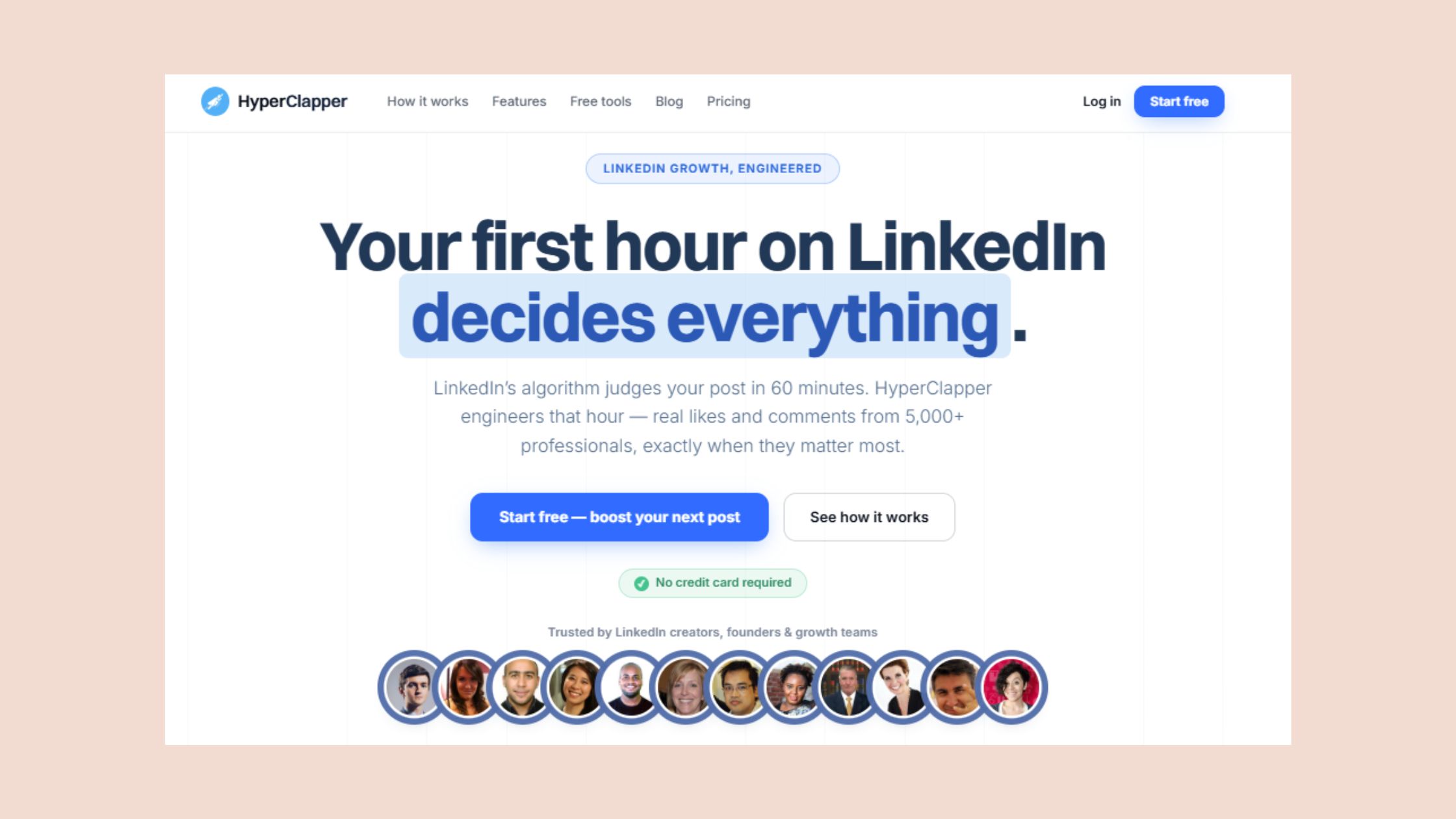
Is HyperClapper pricing worth it? A single high-visibility post — boosted through HyperClapper channels while a Waalaxy sequence runs in parallel — can warm up hundreds of prospects passively. Teams that have run this combined approach consistently report higher connection request acceptance rates compared to outreach without the engagement layer, making the combined spend one of the more defensible line items in a B2B lead generation budget.
Build the credibility layer your Waalaxy sequences need
HyperClapper connects your posts with real engagement channels — so every prospect you reach out to already sees a trusted, active profile.
Try HyperClapper FreeCommon Mistakes That Kill LinkedIn Automation Campaigns
What separates top performers in LinkedIn outreach from accounts that plateau or get restricted isn't tool selection — it's avoiding a handful of consistent failure modes that show up across almost every failed campaign.
- Mistake #1 — Skipping the HyperClapper warm-up: Prospects who receive a connection request and click through to an inactive profile with no recent posts reject or ignore the request. Acceptance rates on cold profiles are roughly half those of profiles with visible, recent engagement. LinkedIn also flags the sudden activity spike from a previously dormant account.
- Mistake #2 — Ignoring the content-to-outreach ratio: Sending 100 connection requests a week while posting nothing creates an unnatural signal profile. The best B2B LinkedIn lead generation strategy pairs consistent content output (2–3 posts/week minimum) with measured outreach volume — not one without the other.
- Mistake #3 — Over-automating the full conversation: Using AI to handle the entire reply thread removes the human moment that converts a connection into a booked call. Let Waalaxy and HyperClapper do the top-of-funnel heavy lifting — when a prospect engages, step in personally. The tool stack earns the conversation; a human closes it.
- Mistake #4 — Treating engagement pods as vanity metrics: HyperClapper channels drive real engagement that signals LinkedIn's algorithm to increase post reach. But only posts genuinely relevant to your ideal customer profile will convert that visibility into inbound leads. Content quality still decides whether the reach becomes pipeline.
Creators who skip the content-outreach sync — treating HyperClapper engagement and Waalaxy sequences as independent tracks rather than a coordinated system — consistently find their campaigns underperform despite technically correct setups. The sequencing of when you boost versus when you outreach is as important as the tools themselves.
✓ The Waalaxy + HyperClapper Pre-Launch Checklist
- ☐Boost at least 4 posts through HyperClapper channels before activating any Waalaxy sequence
- ☐Set Waalaxy daily limits to 20–25 connection requests max
- ☐Configure Waalaxy to run during working hours only (e.g. 9am–6pm local time)
- ☐Schedule a new LinkedIn post for the day before each Waalaxy campaign launch
- ☐Enable HyperClapper's Content Guard to screen posts before boosting
- ☐Write your first Waalaxy connection request message with no pitch — relationship-first only
- ☐Add Feed More AI Replies to active posts mid-campaign to sustain algorithmic reach
- ☐Plan to respond manually to any Waalaxy-initiated conversation that crosses two exchanges
Ready to increase LinkedIn post engagement with automation that actually works?
HyperClapper's real engagement channels, AI replies, and Content Guard make it the safest visibility layer for any LinkedIn outreach stack. See how it compares to the alternatives in our HyperClapper vs AlcaPod breakdown.
Start Boosting Your PostsFrequently Asked Questions About Waalaxy, HyperClapper, and LinkedIn Automation
What is the best way to combine Waalaxy and HyperClapper for LinkedIn outreach?
Use HyperClapper to boost 2–3 posts per week for at least two weeks before launching any Waalaxy sequence. Then sync your content calendar so a freshly-engaged post is live the day Waalaxy starts sending connection requests. Prospects click through to a credible, active profile — and acceptance rates follow. This Waalaxy HyperClapper LinkedIn outreach approach closes the trust gap that single-tool setups miss.
How does LinkedIn automation work — and what does LinkedIn actually detect?
LinkedIn automation works by using third-party software to perform actions — connection requests, messages, post engagement — on your behalf, either through a browser extension or cloud-based session. LinkedIn detects behavioral anomalies: overnight activity, inhuman action timing, and volume spikes inconsistent with normal professional use. It does not flag specific tool names — it flags the patterns those tools create when misconfigured.
Is it safe to use LinkedIn automation tools like Waalaxy together with engagement pods?
Yes, when run correctly. Waalaxy and HyperClapper operate in separate lanes — outreach sequencing versus post engagement — and don't conflict at the session level. The risk isn't using both; it's exceeding behavioral thresholds. Stay under 25 connection requests per day, run during business hours only, and warm up your profile before launching sequences to minimise any risk of account restriction.
Can HyperClapper increase the reach of my Waalaxy outreach campaigns?
Yes — indirectly but measurably. HyperClapper increases LinkedIn post engagement, which raises your Social Selling Index and signals account health to LinkedIn's algorithm. A higher SSI score improves profile visibility in search results and feeds, meaning prospects you haven't yet messaged via Waalaxy may discover you organically. The engagement layer makes the outreach layer more effective across the full funnel.
How do I build an automated LinkedIn lead generation system using multiple tools?
Stack tools by function: use HyperClapper for the engagement and credibility layer (post boosting, AI replies, analytics), Waalaxy for outreach sequencing (connection requests, multichannel follow-ups), and handle all actual conversations manually once a prospect engages. This three-layer approach — visibility, outreach, conversion — is the B2B LinkedIn lead generation strategy that consistently outperforms single-tool setups.
What is the best LinkedIn outreach sequence for B2B lead generation in 2026?
The best LinkedIn outreach sequence follows a three-touch structure: (1) a personalised connection request with no pitch, (2) a value-add message 3 days after connecting, and (3) a third message only for non-responders on day 7 that introduces a specific, relevant insight or offer. Waalaxy sequence best practices recommend keeping sequences under 4 steps — beyond that, response rates drop and spam signals increase.
Is HyperClapper pricing worth it for B2B teams?
For teams running active outreach campaigns, yes. The core value is indirect: HyperClapper raises connection request acceptance rates by making your profile look credible before a prospect receives your Waalaxy message. A modest improvement in acceptance rate across 200–300 monthly connection requests typically generates enough incremental pipeline to justify the spend in the first month of combined use.
What consistently separates LinkedIn automation stacks that generate real pipeline from those that generate only activity metrics is not the sophistication of the outreach tool — it is whether the profile behind the outreach looks like someone worth knowing. Run HyperClapper first. Then let Waalaxy scale.



