Twitter growth tools — software platforms designed to increase followers, engagement, and content visibility on X (formerly Twitter) — have never been more consequential or more risky to misuse. A pattern observed across thousands of business accounts is that the gap between accounts that grow strategically and those that stall comes down to one thing: tool selection aligned with platform rules. According to SocialPilot (2026), X's adoption rate has grown for five consecutive quarters through early 2026. That growing audience means more competition for attention — and more reason to use the right tools to cut through it.
- Who this is for: Business owners, founders, marketers, and creators trying to grow on X/Twitter without getting flagged or banned.
- What you'll learn: Which Twitter growth tools are legitimate, how X's API limits affect tool compliance in 2026, and how to build real followers safely.
- Why it matters: X's tightened API rules have wiped out most low-quality bot tools — the playing field now favors businesses using compliant, strategy-led growth.
- Counterintuitive finding: Buying followers actively reduces your algorithmic reach — a smaller, engaged audience consistently outperforms a large, fake one on X.
- Platform reality: Average X users now spend 32 minutes per day on the platform — the audience is active, but only quality engagement signals drive distribution.
- Safe growth path: Scheduling + analytics + manual engagement outperforms any automation shortcut for sustainable business growth on Twitter in 2026.
- What Are Twitter Growth Tools and How Do They Work in 2026?
- Best Twitter Growth Tools for Businesses in 2026
- Twitter Automation Rules, API Limits, and What X Actually Allows
- How to Grow Your Twitter Account Safely
- Benefits and Real Business Use Cases
- Common Mistakes to Avoid When Using Twitter Growth Tools
- Frequently Asked Questions About Twitter Growth Tools
What Are Twitter Growth Tools and How Do They Work in 2026?
Twitter growth tools are apps, platforms, or automation systems built to increase followers, engagement, and content visibility on X (formerly Twitter). They work by either amplifying content distribution through scheduling and repurposing, surfacing audience insights through analytics, or (in riskier cases) automating follow/unfollow cycles and engagement signals. The core premise is that the X algorithm rewards consistent engagement — replies, retweets, and likes signal relevance, and growth tools are engineered to help accounts generate those signals at scale.
According to Blankspaces (2026), the average X user now spends 32 minutes per day on the platform — up from 24 minutes in mid-2024. That 33% increase in daily engagement means your content has more surface area to land on active users. But it also means more creators and businesses are competing for those 32 minutes.
What changed significantly in 2026: X tightened its API access dramatically. The free API tier is now nearly useless for growth tools; the Basic tier ($100/month) offers limited read/write functionality; and the Pro and Enterprise tiers — costing $5,000–$42,000/month — are required for any meaningful automation. This pricing structure has effectively eliminated most low-quality bot tools from the market. What remains are the legitimate platforms built on official API access.
Categories of Twitter Growth Tools: Schedulers, Analytics, and Engagement Apps
Twitter growth tools fall into three functional categories:
- Content schedulers: Tools like Buffer, Hypefury, and Typefully that let you plan, draft, and auto-publish tweets and threads at optimal times.
- Analytics platforms: Tools like Followerwonk and Sprout Social that surface audience data, engagement trends, and content performance metrics.
- Engagement and follower-targeting tools: Tools like Tweetfull that identify and engage with relevant audiences to drive organic follower growth — when operating within API rules.
The most effective Twitter growth tools for business typically combine at least two of these categories — content scheduling paired with analytics gives you both consistency and feedback loops. Standalone follower-acquisition tools are the riskiest category and require the most due diligence on compliance.
Best Twitter Growth Tools for Businesses in 2026
The strongest performing tools in 2026 cluster into clear lanes based on business need. Here is an objective breakdown of the leading options — with pricing reality included, because most competitor reviews skip that entirely.
| Tool | Best For | Compliance Risk | Price/Month |
|---|---|---|---|
| Hypefury | Content scheduling, thread automation, repurposing | Low | $19–$49 |
| Buffer | Multi-platform scheduling, small teams | Low | $6–$120 |
| Followerwonk | Audience analytics, competitor research | Low | $29–$79 |
| Tweetfull | Follower targeting, engagement automation | Medium | $15–$49 |
| Typefully | Thread writing, content drafting, analytics | Low | $12.50–$29 |
Tweetfull vs Hypefury for Business Growth
Tweetfull vs Hypefury represents the clearest choice architecture in this space: Hypefury is a content-first tool built for creators who want consistency and repurposing — it excels at turning one idea into a scheduled thread, an automated retweet to evening audiences, and a newsletter plug. Tweetfull is a follower-acquisition tool that works by liking and following accounts in your target niche to generate reciprocal attention. Hypefury's compliance risk is minimal; Tweetfull sits in a grayer zone depending on how aggressively it is configured.
For most businesses, Hypefury wins on ROI because it improves the quality and consistency of content — which is what actually drives durable follower growth. Tweetfull can accelerate early account momentum but requires careful rate-limit configuration to stay compliant.
Twitter Growth Tool Alternatives to Automation Bots
The most credible Twitter growth tool alternatives to automation bots are platform-native features combined with compliant third-party schedulers. X's own Creator Monetization analytics, combined with a tool like Typefully for content drafting and Buffer for scheduling, delivers a fully compliant, zero-ban-risk stack. For businesses wanting follower-targeting capabilities without the automation risk, Followerwonk's audience analysis helps you identify and manually engage the highest-value accounts in your niche — slower, but permanent.
Twitter Automation Rules, API Limits, and What X Actually Allows
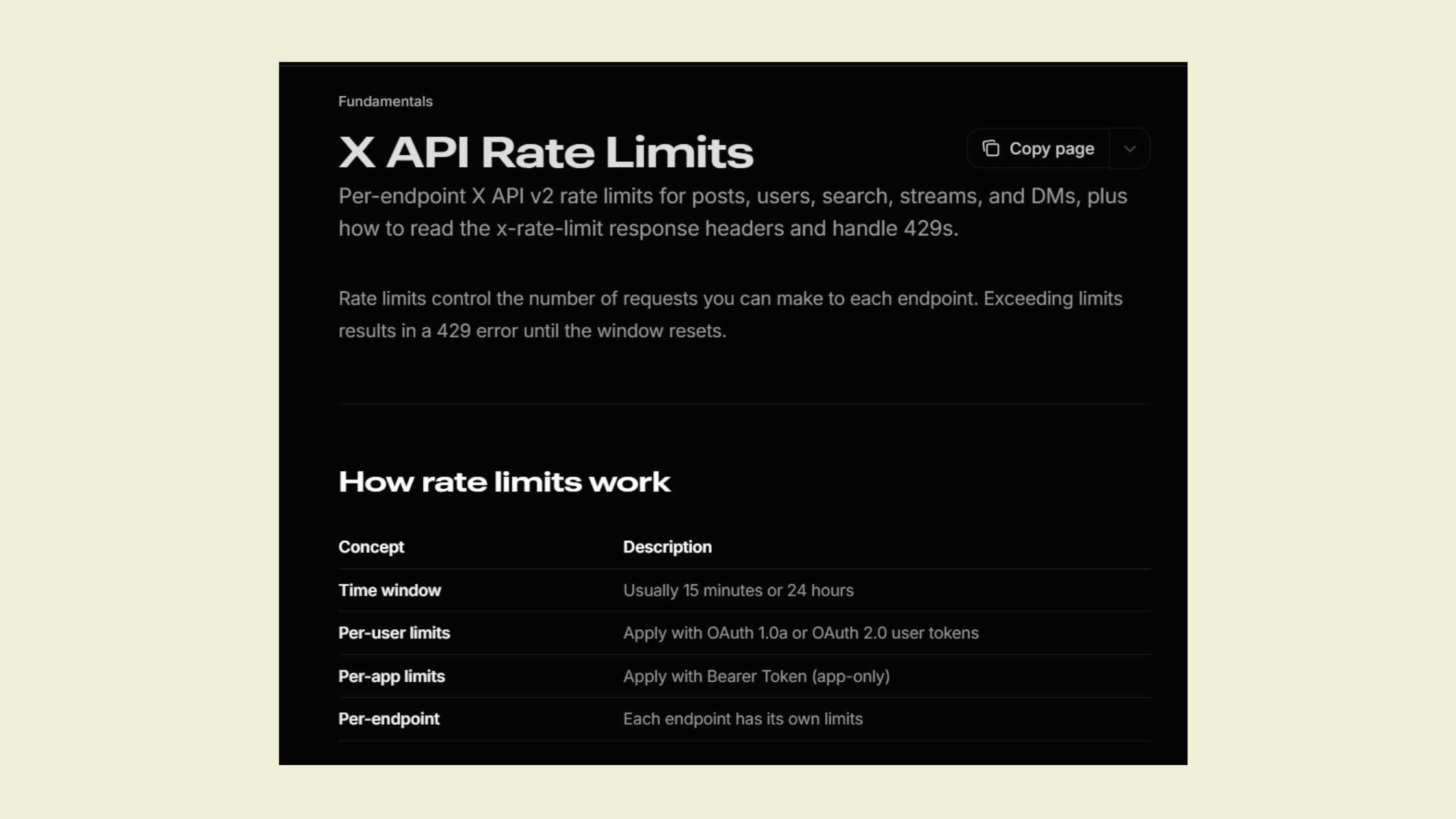
X's automation policy is more restrictive in 2026 than at any point in the platform's history — and the gap between compliant tools and policy-violating ones has never been wider. Understanding Twitter API limits for growth tools is not optional for business users; it is the single most important factor in choosing a safe tool stack.
Here is what X explicitly prohibits:
- Bulk follows or unfollows triggered automatically
- Unsolicited DM campaigns at scale
- Artificially amplifying engagement through coordinated inauthentic behavior
- Using third-party tools that do not operate through the official X API
What is explicitly allowed under X's current Terms of Service:
- Scheduled posting via official API-connected tools
- Read-based analytics and audience research
- Engagement notifications and alerts from third-party apps
- Posting on behalf of an account with the account owner's explicit authorization
As for Twitter automation rules and risks in the API tier structure: the free API tier is effectively capped to 1,500 tweets/month read access and minimal write functionality — useless for serious growth. The Basic tier ($100/month) allows limited posting. Tools offering "unlimited automation" on cheap plans are almost certainly violating X's terms or using unofficial scraping methods, which creates direct account risk.
The tools that survived X's 2023–2025 API crackdowns are the ones that were already building on official access. That survival filter is now your compliance checklist — if a tool existed before 2023 and still operates, it likely operates legitimately.
Can You Get Banned for Using Twitter Bots or Growth Tools?
Can you get banned for using Twitter bots? Yes — and the enforcement has become more automated and faster in 2026. X's detection systems now flag accounts that exhibit non-human engagement patterns: following hundreds of accounts in a 24-hour window, liking at mechanical intervals, or sending templated DMs at scale. The consequences range from temporary read-only lockouts (72 hours) to permanent account suspension with no appeal path for repeat violations.
The most common failure mode is using a tool that stopped updating its API access tier after X's 2023 policy changes. These tools often still "work" on the surface — posting and following — but do so through deprecated endpoints or scraping. Accounts using them are detected within 30–90 days in most cases.
How to Grow Your Twitter Account Safely: A Practical Strategy for 2026
Teams that combine content scheduling with manual engagement consistently see better long-term follower quality than those relying on automation alone. Here is a step-by-step framework for how to grow Twitter account safely in 2026 — built around what X's algorithm actually rewards.
- Define your niche clearly (Day 1–3): Write a bio that answers "who I help and how" in under 160 characters. Pin a tweet that showcases your best idea or offer — this is the first thing new visitors see. Time: 30 minutes.
- Set up a compliant scheduler (Day 3–5): Connect Buffer or Hypefury via official OAuth — never paste your password into a third-party tool. Configure 3–5 posts per week minimum. Time: 1 hour.
- Build a content calendar focused on high-signal formats (Week 1–2): Threads, data-led observations, and contrarian takes consistently generate more replies than promotional posts. Replies are the highest engagement signal X's algorithm weighs. Time: 2 hours/week.
- Engage manually for 15 minutes daily (Ongoing): Reply thoughtfully to 5–10 accounts in your target niche. According to Teract AI (2026), the 70/30 rule — spending 70% of your X time on strategic replies to high-follower accounts and 30% on original posts — drives significantly faster organic growth than posting alone. Time: 15 min/day.
- Review analytics weekly and double down on what works (Weekly): Use native X analytics or Followerwonk to identify which content types drove the most profile visits and follows — then produce more of those. Time: 30 minutes/week.
✓ Twitter Safe Growth Checklist
- ☐Bio clearly states who you help and what you offer
- ☐Pinned tweet is your strongest idea or lead magnet
- ☐Scheduler connected via official X OAuth (not username/password)
- ☐Posting at least 3x per week consistently
- ☐Daily 15-minute manual engagement block in calendar
- ☐No mass-follow or auto-DM tools in your stack
- ☐Weekly analytics review to double down on top-performing content
- ☐Cross-promoting Twitter content on LinkedIn or email to jumpstart initial reach
Twitter Engagement Strategy in 2026: Signals That Actually Move the Algorithm
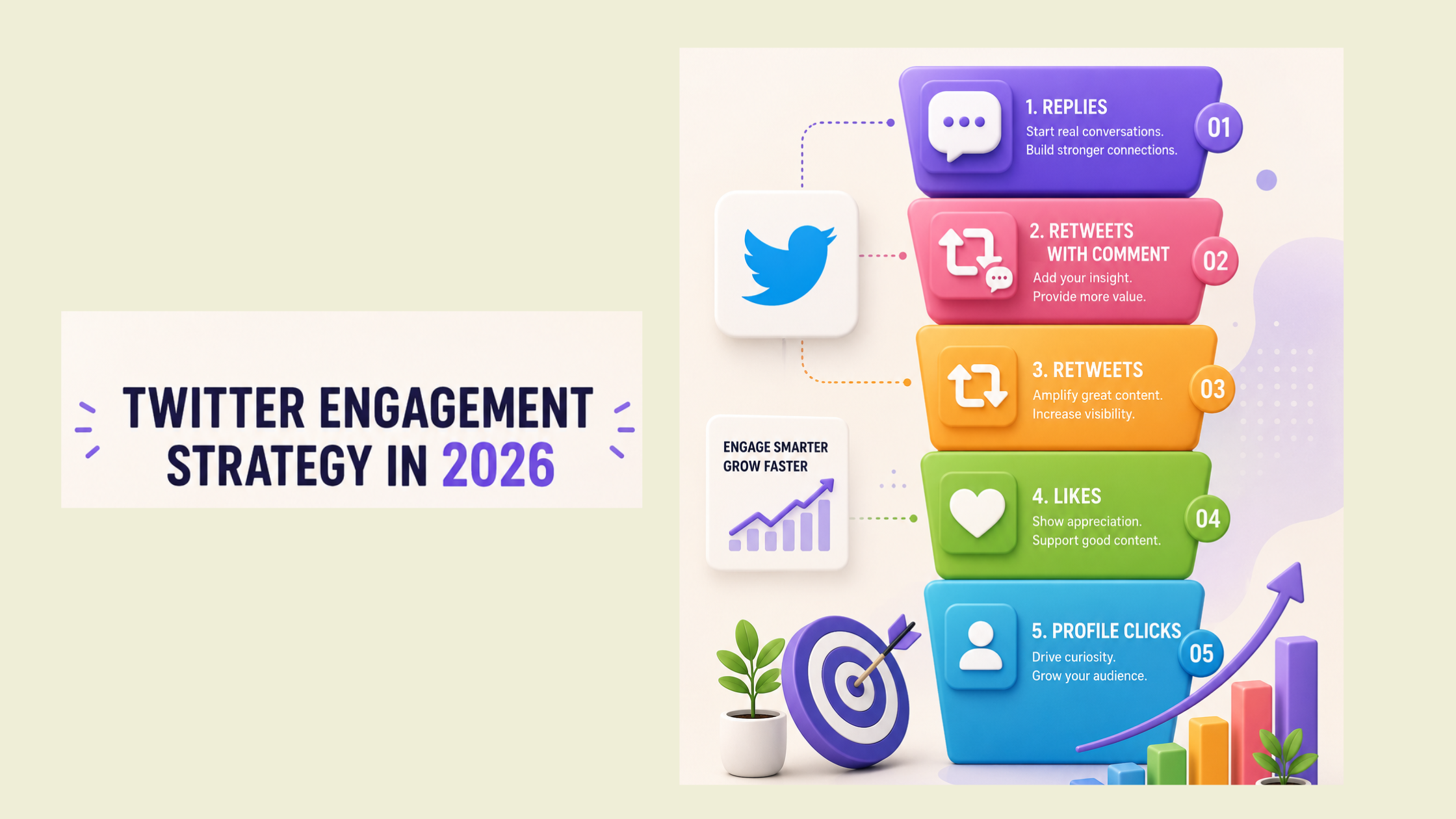
X's algorithm in 2026 weights engagement signals in roughly this order of influence: replies > retweets with comment > retweets > likes > profile clicks. This hierarchy is important because most automation tools optimize for the lowest-value signal (likes) while ignoring what actually expands reach (replies). A post that generates 20 genuine replies from relevant accounts will consistently outperform a post with 200 bot likes — both in algorithmic distribution and in real follower acquisition.
The Twitter engagement strategy 2026 that works for business accounts focuses on three content categories:
- Opinion threads: Contrarian or data-backed takes in your niche generate reply volume from people who agree or disagree — both expand your reach.
- Practical how-to content: Step-by-step threads with real specifics get bookmarked and retweeted — two signals X weights heavily in its "For You" feed distribution.
- Engagement questions: Ending posts with a direct question to your audience increases reply rates by 30–50% on average, based on engagement patterns consistently observed across high-performing accounts.
On the topic of increase Twitter followers for business: the accounts that scale fastest are cross-promoting consistently. Mentioning your Twitter profile in your email newsletter, LinkedIn posts, or YouTube descriptions delivers warm traffic — people who already trust you — which converts to followers at a much higher rate than cold discovery. This is also zero-risk. No API, no tool, no policy exposure.
Benefits and Real Business Use Cases for Twitter Growth Tools
38% of X's user base holds college degrees and earns above-median income, according to Brenton Way (2026) — making it one of the highest-value professional audiences in social media. For B2B and professional services businesses, that audience composition matters enormously. Twitter marketing tools are most valuable precisely because the audience is disproportionately made up of decision-makers, early adopters, and high-income professionals.
Concrete business benefits of using the right growth tools:
- Time savings: A scheduling tool cuts manual posting time from 45–60 minutes/day to under 15 minutes — reclaimed time that goes into genuine engagement instead.
- Brand consistency: Automated scheduling means your account stays active during evenings, weekends, and holidays without requiring live attention.
- Data-driven content decisions: Analytics tools surface which post types, formats, and topics drive follows versus just impressions — removing guesswork from content strategy.
- Audience building for new accounts: Follower-targeting tools (when compliant) can compress the early-stage growth curve significantly for accounts under 1,000 followers.
Use case examples by business type:
- A B2B SaaS company uses Hypefury to build a consistent thought-leadership presence, scheduling 5 threads per week that demonstrate product expertise — converting Twitter followers into demo requests via a pinned tweet CTA.
- A recruiter uses Followerwonk to identify niche talent communities in software engineering, then manually engages those conversations to build a reputation as an industry insider before ever posting a job listing.
- A business coach uses Typefully to draft and schedule thread content that builds an email list — Twitter becomes the top-of-funnel, with each thread ending in a newsletter opt-in link.
What separates top performers here is that they treat growth tools as content amplifiers, not content replacements. A scheduling tool posting mediocre content on a perfect schedule produces nothing. The same tool posting genuinely useful content compounds over 6–12 months into significant audience influence. The tool creates the conditions; the content creates the growth.
Serious About Growing Your Professional Presence?
If LinkedIn is part of your business growth strategy too, HyperClapper helps you build real engagement through community-powered post boosting and AI-assisted replies — without the bot risk that plagues Twitter automation.
Try HyperClapper FreeCommon Mistakes to Avoid When Using Twitter Growth Tools
Most businesses that stall on X — or worse, get suspended — make one of five identifiable mistakes. Each one is avoidable with a single decision change.

Mistake #1: Choosing follower count over follower quality. The instinct to buy Twitter followers is understandable but reliably counterproductive. Purchased followers are inactive accounts or bots — they generate zero engagement, which collapses your engagement rate. A lower engagement rate signals low-quality content to X's algorithm, which then reduces your organic distribution. In practice, an account with 2,000 real followers consistently outperforms one with 20,000 bought followers on every measurable metric. Also worth noting: looking for free followers Twitter services carries the same risk as buying them — the followers are low-quality, the methods typically violate X's terms, and the account risk is identical. There is no shortcut to twitter followers free 1000 that does not come with a compliance cost.
Mistake #2: Using tools that exceed Twitter API limits. Tools that ignore rate limits trigger automated account flags within days. Always verify that a tool publicly discloses which API tier it uses. If a tool's pricing page makes no mention of X API access at all, that is a serious warning sign.
Mistake #3: Setting and forgetting automation. Scheduling tools work best when paired with daily manual engagement. Accounts that post on a schedule but never reply look inauthentic — to X's algorithm and to real users. The most common failure mode among businesses using scheduling-only stacks is seeing impressions plateau at 3–4 months because replies never kick in to trigger algorithmic amplification.
Mistake #4: Using one-size-fits-all growth strategies. A personal brand coach and an enterprise SaaS company need fundamentally different tool stacks. Solopreneurs benefit most from scheduling plus analytics; agencies managing multiple client accounts need multi-account support and team collaboration features. Applying the wrong tool to the wrong use case wastes budget and produces no meaningful results.
Mistake #5: Ignoring content moderation risks in automation. Some growth tools have zero content guardrails — meaning they will happily auto-engage with or auto-like politically charged, brand-damaging, or controversial content if it matches your keyword triggers. Choose platforms that include content safety controls. This is an area where platforms built with moderation in mind — like tools designed for safer engagement — demonstrate a meaningful architectural advantage over unmoderated alternatives.
If you are building an audience on LinkedIn in parallel, the same principles apply — and safe LinkedIn automation tools have solved the compliance challenge with real engagement models that do not rely on bots or fake signals.
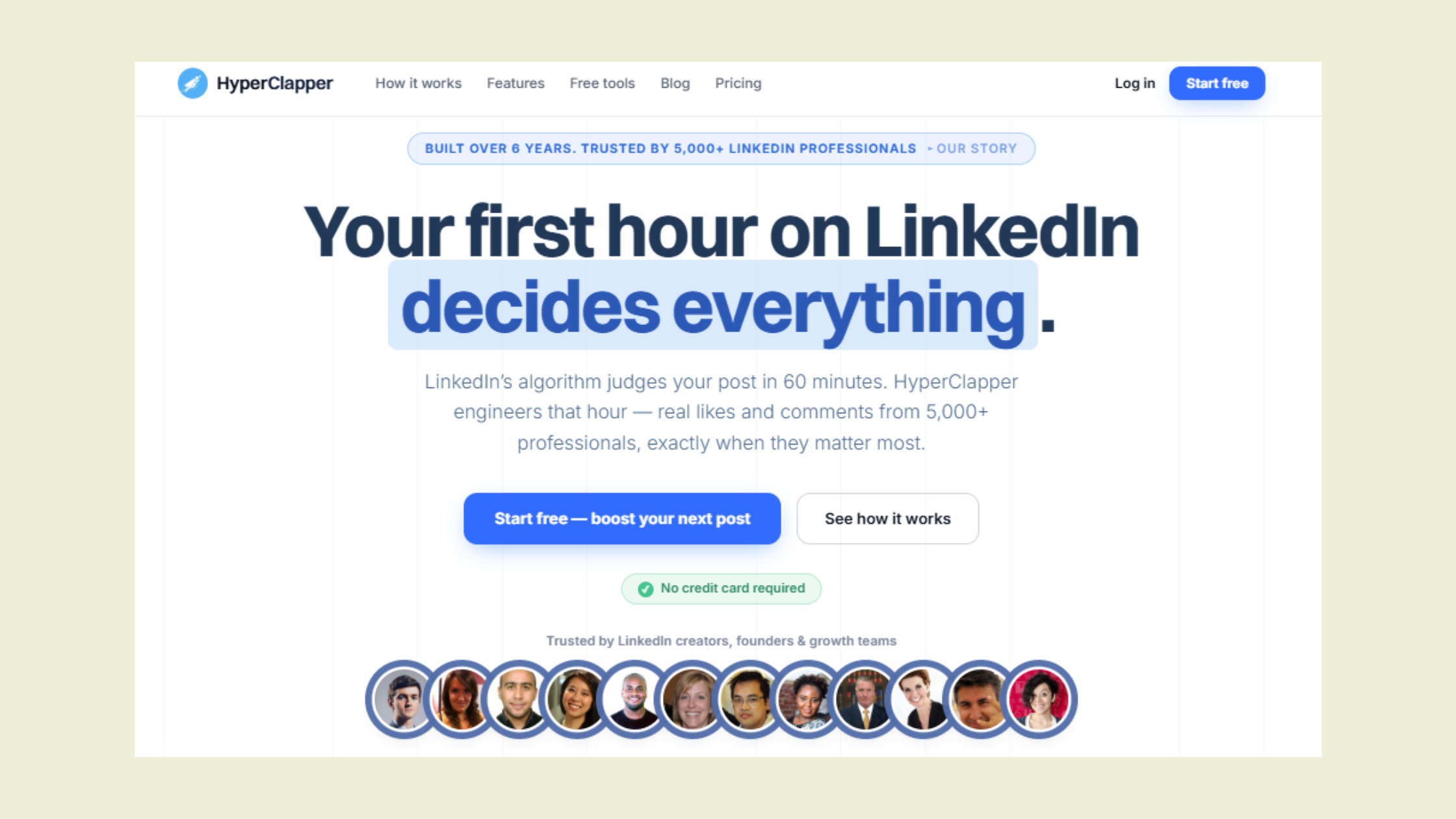
Build Real LinkedIn Visibility Alongside Your Twitter Strategy
HyperClapper is built specifically for professionals who want genuine post reach on LinkedIn — real engagement from real people, with built-in content moderation and no bot risk. It is the LinkedIn equivalent of the compliant, content-first approach that works on X.
See How HyperClapper WorksFrequently Asked Questions About Twitter Growth Tools
What are the best Twitter tools for businesses in 2026?
The best Twitter growth tools in 2026 are Hypefury (content scheduling and threads), Buffer (multi-platform scheduling), Followerwonk (audience analytics and competitor research), and Typefully (thread drafting and publishing). For most businesses, a scheduler plus an analytics tool is the optimal, low-risk combination.
What is the safest way to grow a Twitter following for a business without getting banned?
The safest way to grow a Twitter following for a business is to use an official API-connected scheduler (like Buffer or Hypefury) for consistent posting, combine it with daily manual engagement — replying to relevant accounts — and cross-promote your profile on LinkedIn, email, or YouTube. This approach carries zero policy risk and produces followers with genuine interest in your content.
Which Twitter growth tools are compliant with X platform terms of service in 2026?
Tools compliant with X's Terms of Service in 2026 include Buffer, Hypefury, Typefully, Followerwonk, and Sprout Social — all of which operate through the official X API and do not automate bulk follows, unfollows, or unsolicited DMs. Verify any tool's API tier publicly before connecting it to your account.
What happens to your Twitter account if a growth tool violates the API rules?
If a growth tool violates X's API rules, your account faces a tiered enforcement response: first a temporary read-only lockout (typically 72 hours), then a longer suspension on repeat violations, and ultimately permanent account termination for serious or repeated breaches. The account owner — not the tool — is held responsible under X's Terms of Service.
Can small businesses realistically grow on Twitter without paid ads using tools?
Yes — small businesses can grow meaningfully on Twitter without paid ads by using compliant scheduling tools and a consistent manual engagement strategy. According to Supabird (2026), accounts under 1,000 followers can realistically achieve 10–30% monthly follower growth through consistent organic activity — no ad spend required.
How long does it take to grow on Twitter organically with growth tools?
Organic growth with compliant growth tools typically produces 500–2,000 quality followers in the first 3–6 months for a business account posting 4–5 times per week. Early-stage growth (0–1,000 followers) is fastest on a relative basis; growth compounds after the 1,000-follower threshold as algorithmic distribution improves. Viral moments can accelerate this but are not reliably engineered.
Are Twitter growth tools safe to use for business accounts?
Compliant Twitter growth tools — those operating through official X API access and avoiding bulk automation — are safe for business accounts. The risk comes from tools using unofficial access, scraping, or guaranteed follower packages. Always verify a tool's API tier and read its Terms of Service before connecting it to a business account with established brand equity.
The broader lesson across every account type is consistent: what consistently separates accounts with real reach from accounts with impressive follower numbers is not any single tool — it is a combination of compliant scheduling, genuine daily engagement, and content that earns replies. Accounts that get all three right see compounding reach over 6–12 months. Accounts that substitute any one of those three with a shortcut — bought followers, bot engagement, or set-and-forget automation — typically plateau or lose ground regardless of how sophisticated their tool stack looks on paper.



