How to Switch From Buffer and Double Your LinkedIn Engagement
Discover why Buffer underperforms as a LinkedIn scheduling tool, how to migrate without losing posts, and which tools actually increase LinkedIn engagement in 2026.
📅 ⏱ 12 min read📝 ~2300 words
A pattern observed across thousands of LinkedIn accounts is this: creators who switch from a generalist linkedin scheduling tool to one built specifically for LinkedIn see engagement lift within the first two weeks — not because they post more, but because the new tool works with the LinkedIn algorithm instead of ignoring it. Buffer schedules posts. It does not move them. If your engagement rate has plateaued, the tool is likely part of the problem.
Key Takeaways
Buffer treats LinkedIn like every other network — missing @mention support, carousel scheduling, and LinkedIn article scheduling.
The LinkedIn algorithm rewards early comment depth, not just likes — generalist schedulers don't factor this in.
Migrating from Buffer takes four steps and under 30 minutes if you export your queue first.
The best time to post on LinkedIn is Tuesday–Thursday, 8–10 AM or 5–6 PM in your audience's timezone.
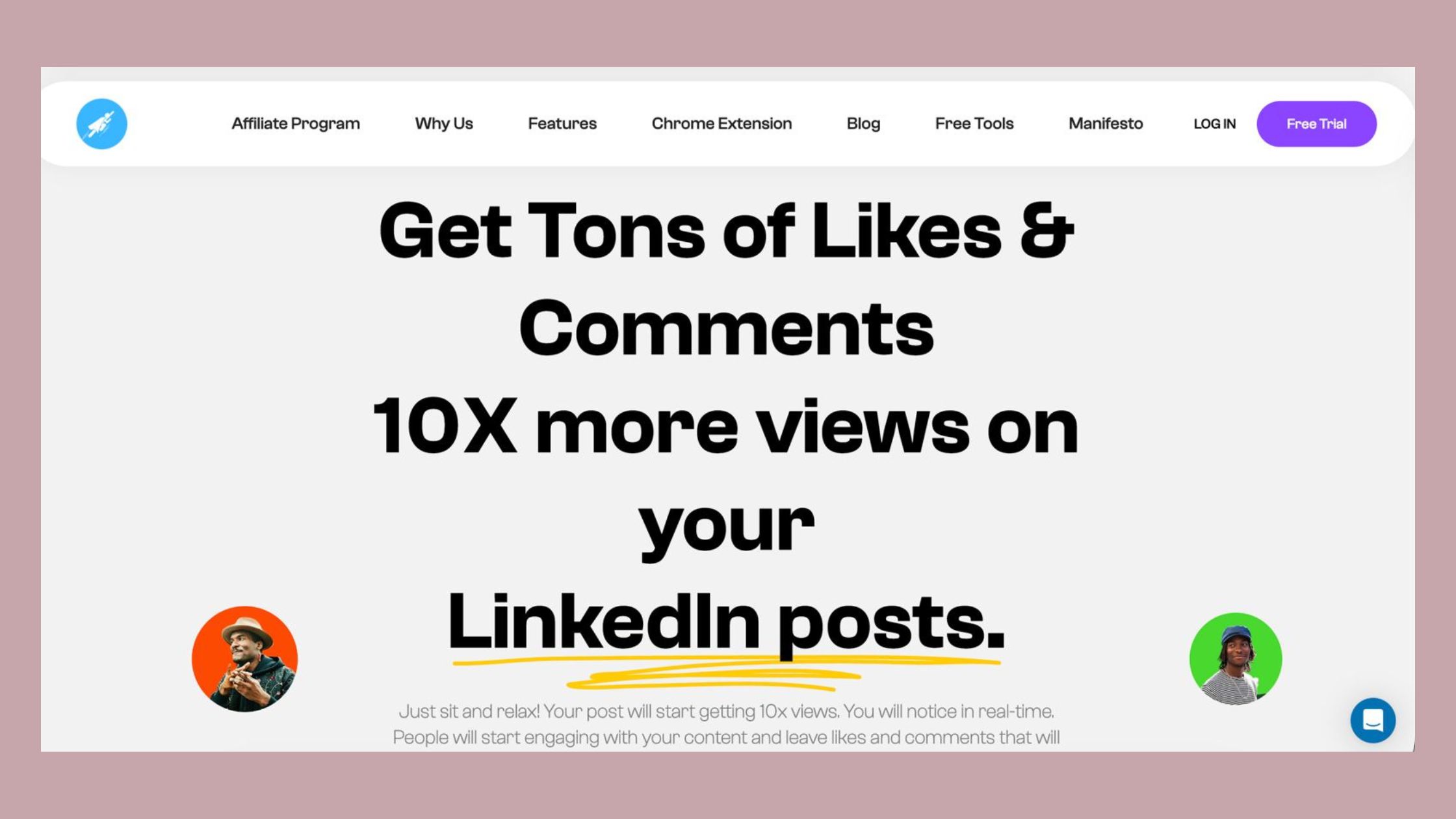
Tools like HyperClapper combine scheduling with real engagement channels — something no generalist tool offers.
The single most counterintuitive finding: scheduling posts at the "right time" matters far less than what happens in the first 60 minutes after you publish.
Why Buffer Falls Short as a LinkedIn Scheduling Tool
Why Buffer Falls Short as a LinkedIn Scheduling Tool
Buffer is a scheduling tool built for breadth — it covers Instagram, Facebook, X, and LinkedIn from a single queue. That generalist design is exactly why it underperforms on LinkedIn specifically. The platform has unique content mechanics — carousels, LinkedIn articles, @mention tagging in scheduled posts, and algorithm signals tied to comment depth — that Buffer simply doesn't support.
What LinkedIn Features Does Buffer Lack in 2026
The gap between "technically schedules LinkedIn posts" and "actually supports LinkedIn growth" is wide. Buffer's missing features matter most for creators who collaborate:
@Mention tagging in scheduled posts — Buffer strips or fails to render @mentions correctly, cutting off a key trigger for early engagement from tagged collaborators
LinkedIn article scheduling — Buffer handles link posts but not native LinkedIn articles, leaving long-form creators without a scheduling path
Carousel post support — document/carousel posts require native upload; Buffer can't replicate this format
Engagement timing intelligence — Buffer queues posts by clock time with no awareness of your audience's active windows or LinkedIn algorithm visibility patterns
Company page replies — no mechanism to respond or drive engagement from a brand page
The most common failure mode among Buffer users is discovering that @mention tagging doesn't work after a post goes live — meaning collaborators never get notified, early engagement never arrives, and the algorithmic window closes cold.
⚠️
Warning:Does Buffer support LinkedIn scheduling well? Technically yes — but posts scheduled through Buffer miss the @mention notification chain entirely, which eliminates one of LinkedIn's most reliable early-engagement triggers. Your collaborators won't be notified, and the algorithm will see a cold post.
Best Buffer Alternatives for LinkedIn: An Honest Comparison
The best Buffer alternative for LinkedIn depends on whether you need scheduling alone or scheduling plus engagement momentum. Most alternatives solve the first problem. Very few solve both.
Buffer vs Taplio for LinkedIn: Taplio adds AI content generation and a creator-focused content calendar, which makes it a meaningful upgrade for solo creators. But it still doesn't address real-time engagement boosting, company page support, or the first-60-minutes engagement window that determines algorithmic distribution.
Buffer vs Hootsuite LinkedIn features: Hootsuite adds team workflows and deeper analytics at a significantly higher price point (starting at $99/month). For LinkedIn-specific growth, the added cost rarely translates to proportionally better results — it's enterprise infrastructure, not engagement intelligence.
According to ConnectSafely (2026), the LinkedIn automation tools market has reached an estimated $850 million annually, growing 42% year-over-year. In practice, that growth is driven by creators who realise scheduling alone doesn't move the needle — engagement infrastructure does.
42%
Year-over-year growth in the LinkedIn automation tools market — creators are moving fast away from generalist schedulers
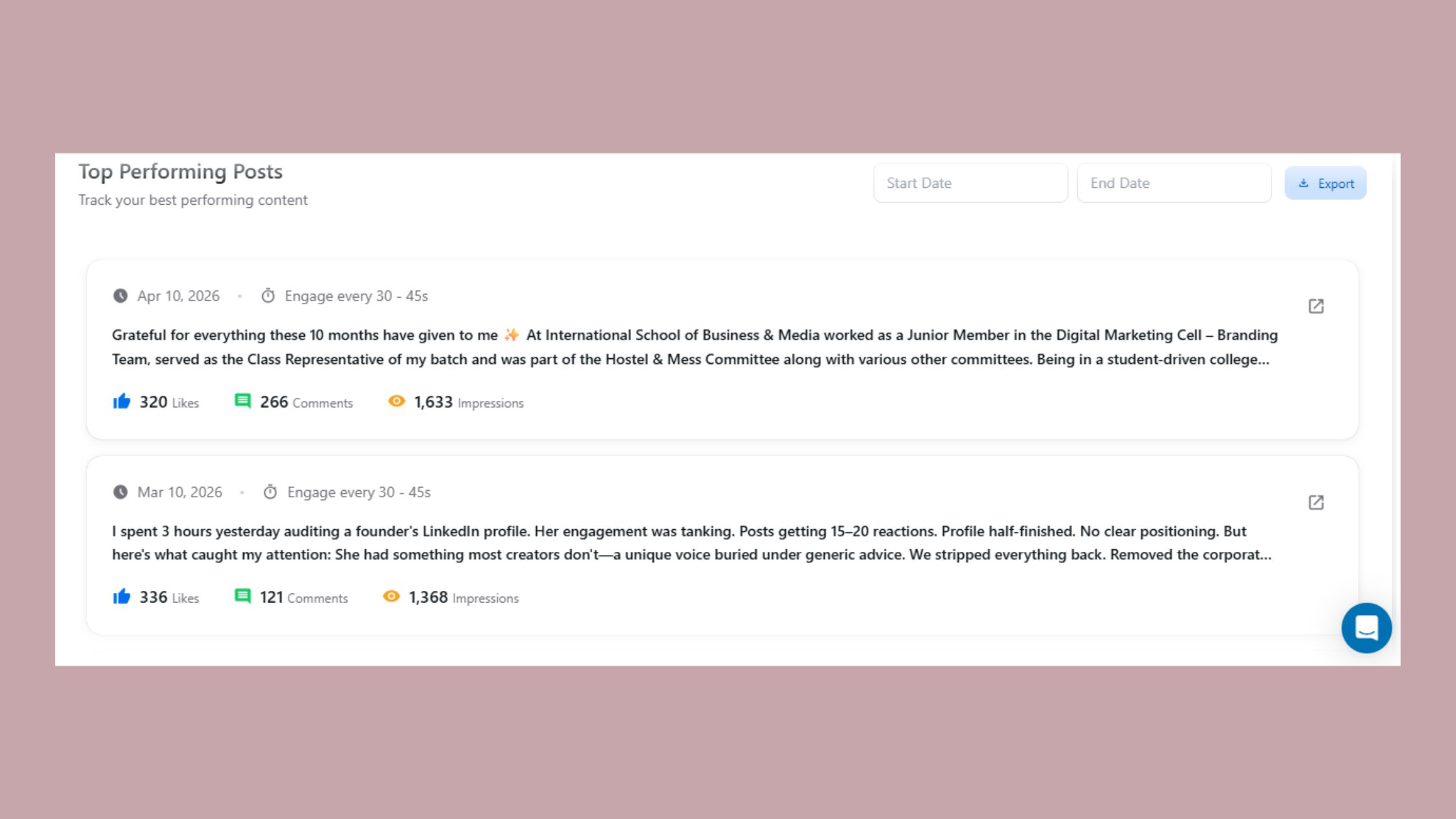
For content creators focused on LinkedIn visibility, HyperClapper is the strongest choice because it combines a LinkedIn scheduling tool with real community channels — groups of real users who engage with your posts. One channel delivers roughly 50 genuine engagements; three channels deliver around 150. No other scheduling alternative pairs post timing with this kind of engagement infrastructure.
Risks and Limitations to Know Before You Switch
No LinkedIn posting tool is risk-free. LinkedIn's Terms of Service restrict aggressive automation, so the key distinction is between tools that mimic natural engagement and those that simulate bot behaviour. HyperClapper uses real community members — not bots — and includes a Content Guard moderation system to avoid sensitive or policy-adjacent topics. Still, any third-party tool carries some degree of platform risk; the mitigation is using tools designed for compliance, not raw volume.
💡
Pro Tip:Review the HyperClapper vs Podawaa comparison before choosing an engagement pod — safety controls and content moderation vary significantly between platforms.
How to Migrate From Buffer Without Losing Your Scheduled Posts
HyperClapper
How to migrate from Buffer is simpler than most people expect. The entire process takes under 30 minutes if you follow these steps in order.
How to Switch From Buffer to a LinkedIn Tool: Step-by-Step
Export your Buffer queue (2 minutes) — Go to Buffer's dashboard, navigate to your LinkedIn channel, and download your scheduled post list as a CSV. Every post, caption, and scheduled time is preserved.
Audit your LinkedIn content calendar (10 minutes) — Use the migration as a reset. Cut post types that consistently underperform (generic reshares, link-only posts) and rebuild around formats LinkedIn rewards in 2026: carousels, conversational text posts, and short video.
Re-enter posts with LinkedIn-specific scheduling logic (10 minutes) — According to Sprout Social (2026), the best time to post on LinkedIn is Tuesdays from 11 AM–5 PM, with strong engagement windows also on Wednesdays and Thursdays. Use this as your default starting point, then refine with your own analytics.
Layer in engagement boosting from day one (5 minutes) — Submit your first post to HyperClapper channels immediately after publishing. Early engagement signals — likes and comments within the first 60 minutes — are the primary lever LinkedIn's algorithm uses to decide how broadly to distribute a post.
🔴
Avoid:Don't delete your Buffer account until your new LinkedIn scheduling tool is fully configured and your first week of posts is queued. Running both in parallel for 72 hours eliminates any gap in your LinkedIn content calendar.
Stop scheduling into silence — start posting with real engagement behind every post
HyperClapper connects your LinkedIn posts to real community channels that deliver genuine likes, comments, and visibility from day one.
LinkedIn Content Strategy to Increase Engagement Rate Organically
Three issues explain the vast majority of low-engagement accounts: posting at the wrong time, writing for a broad audience instead of a specific niche, and generating likes without triggering comment depth. Fix any one of these and engagement lifts. Fix all three and it compounds.
Why is my LinkedIn engagement so low? In most cases, it's not the content — it's the distribution conditions. A well-written post that goes live at 2 PM on a Friday with no early engagement signal will reach roughly 3–5% of your followers. The same post, published Tuesday morning with 10 comments in the first hour, can reach 10–20x that audience. Building that early engagement momentum is what separates visible accounts from invisible ones.
The LinkedIn algorithm doesn't reward good content. It rewards content that already has engagement — then shows it to more people. The first 60 minutes after publishing aren't a nice-to-have; they're the entire game.
To increase LinkedIn engagement rate organically, the single highest-leverage tactic is ending every post with a direct question. LinkedIn's algorithm visibility model treats replies-to-comments as deeper engagement signals than first-level comments alone. A post with 8 threaded replies outperforms a post with 20 standalone likes in terms of reach distribution — consistently.
For how to increase LinkedIn post reach organically, use @mention tagging in scheduled posts to notify collaborators at the moment of publishing. Tagged connections receive a notification, visit the post, and engage — triggering the algorithm's early-engagement window organically without any third-party tool involved. This is the feature Buffer silently breaks.
Common LinkedIn Scheduling Mistakes That Kill Reach
Posting more than once per day — LinkedIn suppresses the second post's distribution when two go live within 18 hours
Adding external links in the post body — LinkedIn's algorithm deprioritises posts that push users off-platform; move links to the first comment instead
Ignoring the LinkedIn content calendar cadence — Teams that drop below 3 posts per week see reach decay within 10–14 days, typically needing 3–4 weeks of consistent posting to recover
Scheduling without a LinkedIn scheduling tool comparison review — most teams default to the tool they already use for Instagram, not the one optimised for LinkedIn's specific algorithm
✓ LinkedIn Post-Publish Checklist
☐Post goes live Tuesday–Thursday between 8–10 AM or 5–6 PM (audience timezone)
☐Post ends with a direct question to drive comment depth
☐External links moved to the first comment, not the post body
☐@mention tagging applied to collaborators directly in the post
☐Post submitted to HyperClapper channels within 5 minutes of publishing
☐Engagement monitored for first 60 minutes — reply to every comment to deepen thread signals
Your LinkedIn content strategy needs more than a scheduler — it needs an engagement layer
HyperClapper's real community channels, AI replies, and analytics give you everything Buffer leaves out — built specifically for LinkedIn.
Frequently Asked Questions About Switching From Buffer and Boosting LinkedIn Engagement
What is the free scheduling tool for LinkedIn?
LinkedIn's native scheduler is the best free LinkedIn scheduling tool — it's built directly into the platform, supports all post formats, and carries no third-party risk. Access it by clicking the clock icon when composing a post. For engagement boosting beyond scheduling, HyperClapper offers a free entry tier on top of native scheduling.
How to use LinkedIn scheduler?
LinkedIn's built-in scheduler works by clicking the clock icon in the post composer before hitting publish. Select your date and time, confirm, and the post queues automatically. To edit scheduled posts on LinkedIn, go to your profile's Activity section, find the scheduled post, and select "Edit" or "Reschedule" — changes take effect immediately.
How to edit scheduled posts on LinkedIn?
To edit scheduled posts on LinkedIn, navigate to your profile, click "Posts" in the Activity section, and filter by "Scheduled." Select the post and choose "Edit post" to update copy, or "Reschedule" to change the time. To delete a scheduled post on LinkedIn, select the post from the same view and choose "Delete" — it's removed immediately with no published trace.
Does scheduling posts on LinkedIn hurt engagement?
Scheduling itself does not hurt engagement — but how you handle the first 60 minutes after publishing does. Posts scheduled through third-party tools that don't support @mention tagging miss early notification triggers. Schedule natively or via LinkedIn-optimised tools, then manually engage with every comment in the first hour to protect reach.
Why does LinkedIn engagement drop when using third-party schedulers like Buffer?
LinkedIn engagement drops with Buffer primarily because Buffer's @mention tagging fails silently — tagged collaborators never receive notifications, so the natural first-wave engagement never arrives. Without that early signal, the LinkedIn algorithm classifies the post as low-interest and limits distribution. Switching to a LinkedIn-native or LinkedIn-first tool restores this trigger immediately.
What is the best social media tool specifically for growing LinkedIn engagement?
HyperClapper is the strongest option for LinkedIn engagement growth because it combines post boosting with real community channels and AI-powered replies — the two levers the LinkedIn algorithm responds to most. Unlike general schedulers, it's built exclusively around LinkedIn's distribution model. See how it compares in the HyperClapper vs Podawaa breakdown.
How do I switch from Buffer to another tool without losing my scheduled posts?
Export your Buffer queue as a CSV first — Buffer's dashboard allows this under each channel's settings. That file preserves every caption, link, and scheduled time. Re-import into your new tool manually or use the CSV as a reference while rebuilding your LinkedIn content calendar with platform-specific timing and format adjustments.
Which LinkedIn scheduling tools actually improve organic reach?
Only tools that combine scheduling with early-engagement infrastructure meaningfully improve organic reach. Native LinkedIn scheduling is safest for pure scheduling. HyperClapper adds real community channels that deliver genuine engagement in the critical first-hour window — the factor that determines how broadly LinkedIn distributes a post to second and third-degree connections.
What consistently separates accounts with compounding LinkedIn reach from accounts stuck in single-digit engagement rates is not the posting frequency, the content format, or even the copy quality — it is whether genuine engagement arrives in the first hour after publishing. Accounts that solve that problem see the algorithm work for them. Accounts that don't, keep asking why their posts underperform.
👋
⚡ Free plan
Leaving already?
Grab 3 free boosts on your next LinkedIn post — real likes & comments from 5,000+ creators. No card, cancel anytime.