
Before you spend hours crafting the perfect post only to watch it disappear into the feed, you need a system for knowing what actually stops the scroll. Most people guess, tweak blindly, and wonder why their engagement stays flat — but there's a smarter approach that takes the guesswork out entirely. The real secret is treating your hooks like hypotheses, testing small variations with intention, and paying close attention to the data LinkedIn already hands you for free. Once you start reading those signals correctly, you'll stop writing into the void and start engineering posts that pull people in from the very first line.
A pattern observed consistently across high-performing LinkedIn accounts is that the hook — the first one or two lines visible before the "see more" cutoff — determines roughly 90% of whether a post gets read at all. Posts with genuinely engaging opening lines receive 2–3 times more interactions than those with generic openers, and the difference compounds fast through LinkedIn's distribution model. Most creators already know their hooks need work. What they don't know is how to test LinkedIn post hooks safely without tanking their reach or confusing their audience in the process. This guide fixes that.
- The hook is the first 1–2 lines before "see more" — it controls whether the algorithm distributes your post or buries it.
- LinkedIn hook best practices include keeping hooks under 220 characters, using concrete numbers, and rotating hook types to prevent audience fatigue.
- Safe testing means changing one variable at a time, spacing tests across 2–3 weeks, and never posting two versions of the same post on the same day.
- The most counterintuitive finding: question-format hooks consistently underperform number-led hooks in engagement rate across large post samples.
- Early engagement (first 60–90 minutes) is disproportionately important — your hook must convert quickly or the algorithm cuts distribution.
- Tools like HyperClapper create a controlled environment for hook testing by seeding real early engagement before organic reach kicks in.
- What Makes a Good LinkedIn Post Hook
- How to Write LinkedIn Hooks That Convert
- How to Safely Test LinkedIn Post Hooks
- How to Measure LinkedIn Post Performance
- Frequently Asked Questions About Testing LinkedIn Post Hooks
What Makes a Good LinkedIn Post Hook (And Why Most Fail)

A LinkedIn hook is the first 1–2 lines of your post visible in the feed before a reader clicks "see more" — it is the single decision point that determines whether your content gets read or skipped. What separates high-performing hooks from average ones is not cleverness. It is specificity combined with pattern interruption copywriting — breaking the reader's visual scanning pattern with something unexpected enough to force a pause.
Three mechanisms consistently drive hook performance:
- Cognitive curiosity gap — creating an information gap the reader feels compelled to close ("I turned down a $500K offer. Here's why it was the best decision I ever made.")
- Social proof trigger phrases — anchoring credibility immediately ("After interviewing 200 CMOs, one pattern kept appearing.")
- Pattern interruption copywriting — opening with something structurally different from the surrounding feed ("Stop. Before you write your next post, read this.")
According to data analysed across 1.2 million LinkedIn posts by MagicPost, number-led hooks achieved a 35% engagement rate versus 26% for other formats — and question-format openers actually cost reach, performing 34% below average. Most creators assume questions are engaging. The data says otherwise.
The most common failure mode is opening with a statement of intent: "I am excited to share…", "Today I want to talk about…", or "In this post I will…" These openers destroy LinkedIn algorithm dwell time — the measure of how long a viewer lingers on a post before scrolling — because they signal nothing worth waiting for.
The Anatomy of a High-Converting LinkedIn Opening Line
High-converting hooks share a tight structure: a tension trigger (something is wrong, surprising, or at stake) + a specificity signal (a number, name, or concrete detail) + an implicit promise (the reader will gain something by continuing). "I lost 3 clients in one week. Here's the email that caused it." hits all three in under 15 words. See more hook structure examples here.
Industry-Specific Hook Angles B2B Creators Actually Use
The community gap that most hook guides miss is industry specificity. A hook that works for a career coach ("Nobody tells you this about getting promoted") falls flat for a SaaS founder's audience. LinkedIn content strategy for B2B audiences responds best to hooks built around counterintuitive data, operational failures, or revenue-specific outcomes — not personal growth narratives. Recruiters, by contrast, see strong performance from social proof hooks tied to hiring volume or candidate outcomes. Matching hook style to audience intent is not optional — it is what converts impressions into profile clicks.
What makes a good LinkedIn post hook is not how creative it sounds — it is how precisely it names the tension your specific audience already feels.
How to Write LinkedIn Hooks That Convert: Best Practices for 2026

LinkedIn hook best practices in 2026 come down to four non-negotiable principles. First, lead with the reader's frustration — not your story. Second, keep the hook under 220 characters so it is fully visible before the cutoff on mobile. Third, use first-person narrative authority sparingly but powerfully — "I" hooks work when backed by a specific outcome, not a vague experience. Fourth, rotate hook types across your posting schedule to prevent audience pattern fatigue.
The four hook types worth rotating:
- Story opener — "I made $0 in my first 6 months as a freelancer. Here's what changed."
- Stat hook — "87% of LinkedIn posts get fewer than 10 comments. Here's why yours might be one of them."
- Bold claim — "Cold outreach is dead. What replaced it is simpler and converts better."
- Provocative question — used sparingly, only when the question itself contains a surprising premise.
Common Mistakes That Kill LinkedIn Hook Performance
Teams that audit their post history consistently find the same failure patterns:
- Opening with "I" followed by a positive emotion ("I'm thrilled to announce…") — signals corporate PR, not a person worth following
- Burying the tension in sentence three or four instead of leading with it
- Using the same hook format for every post — audiences learn to skip patterns they've seen before
- Writing for the algorithm instead of a specific person — hooks that try to "game" reach without addressing a real pain point generate impressions but not engagement
The way to learn how to write LinkedIn hooks that convert is not by memorising formulas — it is by testing them with real feedback. That's where a deliberate testing strategy becomes essential.
How to Safely Test LinkedIn Post Hooks Without Losing Followers or Reach
The safest approach to testing is sequential, not simultaneous. LinkedIn post A/B testing strategy does not mean publishing two versions of the same post on the same day — that confuses your audience, looks inauthentic, and can trigger algorithmic suppression for repetitive content. Instead, it means running structured sequential tests: one hook style per post, consistent posting cadence, controlled timing.
Here is how to test content hooks without losing followers:
- Change one variable at a time — hook style only. Keep the post body, posting time, and topic consistent across the test cycle.
- Run each hook type for 3 posts minimum — one post is not a data point. Three posts per style give you a pattern.
- Space tests across 2–3 weeks — this prevents audience fatigue and gives the algorithm enough distribution cycles per variation.
- Log results immediately — impressions, engagement rate, and comment quality within 48 hours of posting.
How Often Should You Change Your LinkedIn Hook Style
Changing your hook style too frequently is as damaging as never changing it. A recurring pattern among creators trying to grow on LinkedIn is cycling through hook formats weekly, then wondering why their analytics look noisy. The answer: consistency within a test window matters. Change hook style every 3–4 weeks — enough variation to learn from the data, enough consistency to build audience recognition within each style.
How HyperClapper Creates a Safe Testing Environment for LinkedIn Hooks
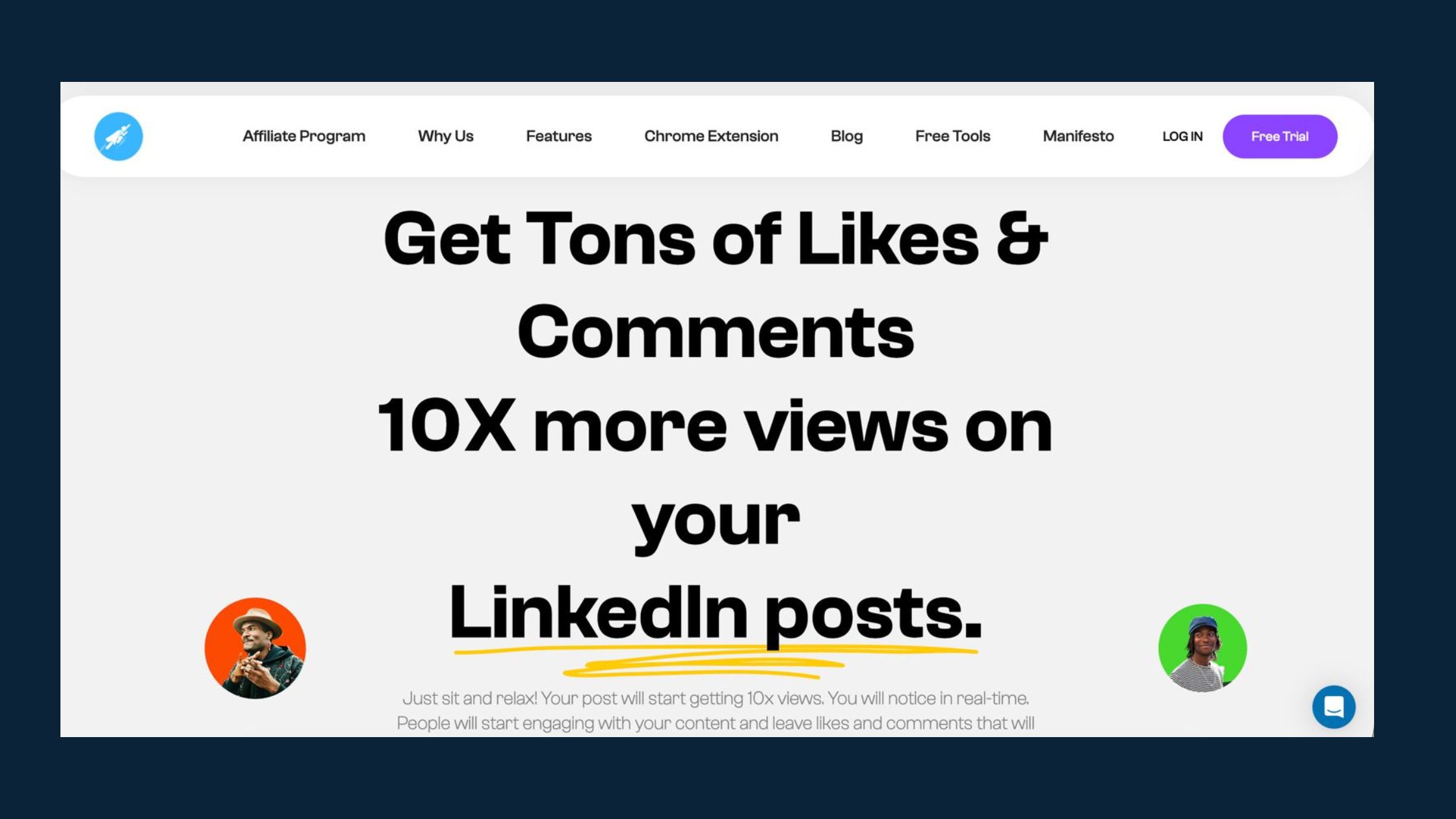
One of the structural problems with hook testing is the cold-start problem: a post with a great hook still gets suppressed if it receives no early engagement. This skews your results — you can't tell if a hook failed because it was weak or because it never got the initial distribution boost it needed.
Tools like HyperClapper solve this by connecting posts to real engagement channels — groups of real users who engage with your content early, giving the algorithm the signal it needs to distribute your post to a wider audience. This means each hook variation gets a fair test under similar conditions, rather than having results distorted by cold-start variance. It is closer to a controlled experiment than posting and hoping. For a deeper comparison of engagement tools available for this kind of testing, see HyperClapper vs Podawaa.
✓ The LinkedIn Hook Testing Checklist
- ☐Identify the one hook type you're testing this cycle (story, stat, bold claim, or question)
- ☐Keep post body, topic, and publishing time consistent across the test period
- ☐Schedule at least 3 posts using the same hook style before drawing conclusions
- ☐Log impressions, engagement rate, and comments within 48 hours of each post
- ☐Seed early engagement using a platform like HyperClapper to avoid cold-start distortion
- ☐Wait 3–4 weeks before switching hook style and starting the next test cycle
Give Your Hook Tests a Fair Starting Signal
HyperClapper connects your posts to real engagement channels so each test variation gets early traction — not cold-start silence that skews your data.
Try HyperClapper FreeHow to Measure LinkedIn Post Performance and Increase Engagement
If you're asking why your LinkedIn posts are not getting engagement, the answer is almost always one of three things: the hook failed to stop the scroll, the post was published outside the optimal engagement window, or there was no early traction signal to prompt algorithmic distribution. Each of these is diagnosable — but only if you are tracking the right metrics.
Key metrics to track per hook test:
- Impressions — total reach; tells you if the algorithm distributed the post at all
- Engagement rate — (likes + comments + shares) ÷ impressions; the true performance signal
- Substantive comments — comments longer than three words signal real resonance, not polite engagement
- Profile clicks — the ultimate conversion metric; a great hook drives profile visits even on posts with moderate likes
To increase LinkedIn post engagement, the single highest-leverage move is engineering the first 60–90 minutes after publishing. LinkedIn's algorithm amplifies posts that gain early traction fast — a post that gets 10 comments in the first hour reaches a dramatically wider audience than one that gets 10 comments spread across 24 hours. This means your hook must convert quickly, and your early engagement must be real and substantive (likes alone are a weaker signal than comments).
Best Tools to Schedule and Test LinkedIn Posts in 2026
LinkedIn analytics tools for content creators have improved significantly. The most useful stack for hook testing in 2026 combines three layers:
- Native LinkedIn Analytics — free, updated in near real-time, gives impressions, clicks, and engagement per post
- Third-party schedulers (Buffer, Taplio, Shield) — add posting-time optimisation and historical trend comparisons
- HyperClapper — adds post-level engagement performance across channels, AI-powered replies to sustain post depth, and early engagement seeding that makes test results more statistically reliable
For anyone running a deliberate LinkedIn post A/B testing strategy, the combination of a scheduler (for timing control) and HyperClapper (for early engagement normalisation) gives results that are actually comparable across test cycles. Without normalising early engagement, you are comparing posts that started from different conditions — and drawing conclusions that may not hold.
The best tools to schedule and test LinkedIn posts are not the ones with the most features — they are the ones that give each post an equal starting condition, so your hook data reflects the hook, not the algorithm's cold-start lottery.
Frequently Asked Questions About Testing LinkedIn Post Hooks
How do you write a good hook on LinkedIn?
A good LinkedIn hook leads with specific tension in under 220 characters — a surprising outcome, a concrete number, or a counterintuitive claim. Avoid opening with your emotion ("I'm excited to share…") or a statement of intent. The first line must give the reader a reason to click "see more" immediately. Specificity always outperforms vagueness.
How do you write a catchy LinkedIn post?
A catchy LinkedIn post starts with a hook that names your audience's exact frustration, follows with a clear and structured body, and ends with one specific call to action or question. The hook earns the read; the structure keeps it. Posts that feel like they were written for one specific person consistently outperform posts written for everyone.
What is the safest way to test different LinkedIn hooks without hurting my reach?
The safest method is sequential testing: run one hook style across 3 posts over 2–3 weeks, then switch. Never post two versions of the same content in the same day — that signals low-quality duplicate content. Use a platform like HyperClapper to seed early engagement on each test post so cold-start variance doesn't distort your results.
How can I tell which LinkedIn hook drove more clicks or engagement?
Compare profile clicks and engagement rate (not just likes) per post in LinkedIn's native analytics or a third-party tool like Shield or Taplio. Track substantive comment count as a secondary signal — it reflects genuine resonance. To get clean comparisons, keep posting time and post body consistent, changing only the hook between test cycles.
Is it bad to post multiple versions of the same LinkedIn content to test hooks?
Yes — posting near-identical content within a short window can trigger LinkedIn's duplicate-content suppression and confuses your followers. Run sequential tests instead: one hook variation per posting cycle. Give each version at least 3 posts and 2–3 weeks before drawing conclusions. Sequential testing is slower but produces cleaner, more reliable data.
What are examples of high-converting LinkedIn post opening lines?
High-converting opening lines share three traits: a concrete detail, a tension trigger, and an implicit promise. Examples: "I turned down a $200K job offer. Here's the spreadsheet that made the decision easy." / "We lost our biggest client in 48 hours. This is what we did wrong." / "41% of B2B marketers are running the same playbook from 2019. It's not working anymore."
How often should you change your LinkedIn hook style?
Change hook style every 3–4 weeks — after running at least 3 posts per variation. Switching too frequently produces noisy data; staying with one style too long risks audience pattern fatigue. The goal is enough consistency to detect a real pattern, with enough rotation to keep your feed presence fresh and prevent predictability.
What consistently separates accounts with compounding LinkedIn reach from accounts that plateau despite regular posting is not better content — it is a disciplined feedback loop between hook, early engagement, and measurement. Creators who skip the testing structure typically find themselves guessing what works long after their peers have already moved on to optimising the next variable.



