Podawaa review 2026: honest breakdown of features, pricing plans, safety risks, and how it compares to HyperClapper and Lempod for LinkedIn engagement.
📅 ⏱ 11 min read📝 ~2100 words
Podawaa is a LinkedIn engagement pod tool — software that places your posts inside groups of users who agree to like and comment on each other's content, triggering LinkedIn's algorithm visibility signals. A pattern observed across LinkedIn creators testing pod tools is that the initial lift is real, but the risk profile varies sharply depending on how the tool is used. This review covers Podawaa's features, pricing, safety record, and how it stacks up against newer alternatives in 2026 — so you can decide whether it fits your growth strategy or whether a different approach serves you better.
Key Takeaways
Podawaa uses a credit-based pod system to boost LinkedIn post engagement — real mechanism, real risk.
The free plan is a viable test, but the credit ceiling makes it impractical for consistent content publishing.
Engagement pod tools technically violate LinkedIn's ToS — account restriction risk scales with volume and pod size.
AI-generated comments in Podawaa can read as hollow — a known weak point that affects comment quality and perceived authenticity.
Newer tools like HyperClapper combine real community engagement with AI replies and content moderation, reducing risk compared to first-generation pod mechanics.
Best fit for: solo creators testing engagement pods for the first time; less suitable for agencies or founders running multiple active profiles.
What is Podawaa? It is a LinkedIn engagement pod tool — a platform that connects users in coordinated groups who like and comment on each other's posts to simulate organic comment velocity patterns that LinkedIn's algorithm rewards. When you submit a post, Podawaa queues it through your chosen pods, and members engage within a defined time window. The platform runs on a credit system: engage with others' posts to earn credits, then spend them to get engagement back.
The key difference from manual engagement groups on Slack or WhatsApp is that Podawaa automates the coordination entirely. That reduces effort — but it also reduces control over who engages and how the comments read.
How to Use Podawaa: Setup and First Post Boost
Create an account at Podawaa.com and connect your LinkedIn profile via browser extension. (~2 minutes)
Join pods relevant to your industry — niche pods produce more relevant engagement than generic ones. (~5 minutes to browse and join)
Submit your post URL to the queue, set your engagement timing window, and choose whether to enable auto-comments.
Earn credits by engaging with other members' posts in your feed — this funds future boosts.
Monitor results via the analytics dashboard to see reach lift and engagement trends.
⚠️
Warning:Connecting your LinkedIn account to any third-party tool grants that tool access to your profile activity. Read Podawaa's data permissions carefully before authorising — and never connect a primary account you cannot afford to lose access to.
Podawaa Features Breakdown: What You Actually Get
Podawaa's core is pod-based engagement — join niche pods, earn credits by engaging, and distribute those credits to boost your own posts with configurable timing windows. That core still works in 2026. Around it, the platform has added a handful of features that are worth evaluating on their own terms.
Podawaa features at a glance:
Pod-based engagement system — the foundational mechanic; niche pods outperform generic ones for relevance.
Automated comment generation — Podawaa posts comments on your behalf using templated or AI-assisted replies. AI-generated reply authenticity is a known weak point here — generic comments can read as hollow and may draw scrutiny from your actual network.
Scheduling and post queuing — plan boosts in advance, useful for content calendars and consistent publishing cadences.
Analytics dashboard — engagement trends, pod performance, and post reach lift over time.
Does Podawaa Increase LinkedIn Reach in 2026?
It does — with qualifications. According to Social Insider's LinkedIn Organic Benchmarks 2026, LinkedIn's average engagement rate sits at 5.20%, up 8% year-over-year. Posts that hit early engagement signals get pushed further by the algorithm. Podawaa's timing windows are designed to manufacture exactly that early signal.
5.20%
LinkedIn's average engagement rate in 2026 — up 8% YoY, rewarding posts that hit early signals fast
What this tells you is that the underlying logic is sound — early engagement does move posts. The question is whether coordinated pod engagement counts as the kind of signal LinkedIn rewards or the kind it penalises. Creators who skip comment variation and flood large generic pods typically find their reach lift plateaus within weeks, with diminishing returns on each submission.
💡
Pro Tip:Use Podawaa's smallest, most niche-specific pods rather than the largest generic ones. Relevant engagement from 20 people in your actual industry reads more authentically to LinkedIn's algorithm than 100 engagements from a mixed-industry pod.
Podawaa Pricing Plans: How Much Does It Cost and Is the Free Plan Worth It?
Podawaa Pricing Plans
Podawaa offers a tiered model — a free plan plus paid tiers scaling by credits and pod access. Here is a clear breakdown:
Plan
Approx. Cost
Best For
Key Limit
Free
€0
First-time pod testers
Limited credits, small pods only
Starter
~€10/mo
Solo creators, occasional boosts
Limited daily submissions
Pro
~€20–30/mo
Active founders, marketers
Unlocks niche pods + scheduling
Is the Podawaa free plan worth it? For a solo creator testing engagement pods for the first time, yes — it is a low-risk entry point with no credit card required. For agencies or founders publishing daily, the credit ceiling hits within a week. How much does Podawaa cost in real terms? For consistent use across even a moderate content calendar, budget €20–30/month minimum — and compare that against alternatives before committing.
Is Podawaa Safe for LinkedIn? Risks, TOS, and What Users Get Wrong
The community fear is real and well-founded. Users across forums consistently report anxiety about the blurry line between boosted engagement and spam-flagged automation — and Podawaa lives right in that gray zone.
Is Podawaa against LinkedIn terms of service? Yes. LinkedIn's ToS prohibits artificial amplification of content, and engagement pods — automated or manual — technically fall into this category. LinkedIn has increased enforcement through 2025–2026, and the pattern is consistent: high-volume, generic-pod users face the highest restriction risk.
The most common failure mode is not using a pod tool — it is using one without understanding that LinkedIn's algorithm reads engagement patterns, not just engagement volume. Coordinated, same-time, same-source activity is exactly the signal it is trained to catch.
Engagement pod safety thresholds matter here. The behaviors most likely to trigger LinkedIn account restriction risk are:
Submitting multiple posts per day through large, generic pods
Enabling auto-comments at high velocity with minimal variation
Using pods where members are from entirely unrelated industries
Running pod activity alongside other automation tools simultaneously
Teams that reduce pod size, enforce comment variation, and space submission timing consistently see lower flag rates. The mistake most users make is treating Podawaa as a fire-and-forget growth hack rather than a careful supplement to genuine content strategy.
🔴
Avoid:Running Podawaa alongside LinkedIn outreach automation tools. Stacking multiple automation signals on the same account multiplies restriction risk significantly — LinkedIn's detection is behavioral, not tool-specific.
✓ LinkedIn Pod Safety Checklist
☐Use niche-specific pods — not the largest generic ones available
☐Enable comment variation — never use identical templated replies
☐Limit submissions to 1 post per day maximum
☐Space your engagement timing window to 2–4 hours, not instant
☐Do not run alongside other LinkedIn automation tools simultaneously
☐Monitor LinkedIn notifications for any unusual account prompts or warnings
Podawaa vs Lempod, HyperClapper, and the Best LinkedIn Engagement Pod Tools in 2026
Podawaa vs Lempod, HyperClapper
The best LinkedIn engagement pod tools 2026 field has matured well past first-generation mechanics. Here is where the main options sit:
Podawaa vs Lempod: Both are pod-based, but Lempod skews toward B2B sales teams and charges per pod — which gets expensive fast for multi-community users. Podawaa's credit system is more flexible for creators managing one or two posts per week.
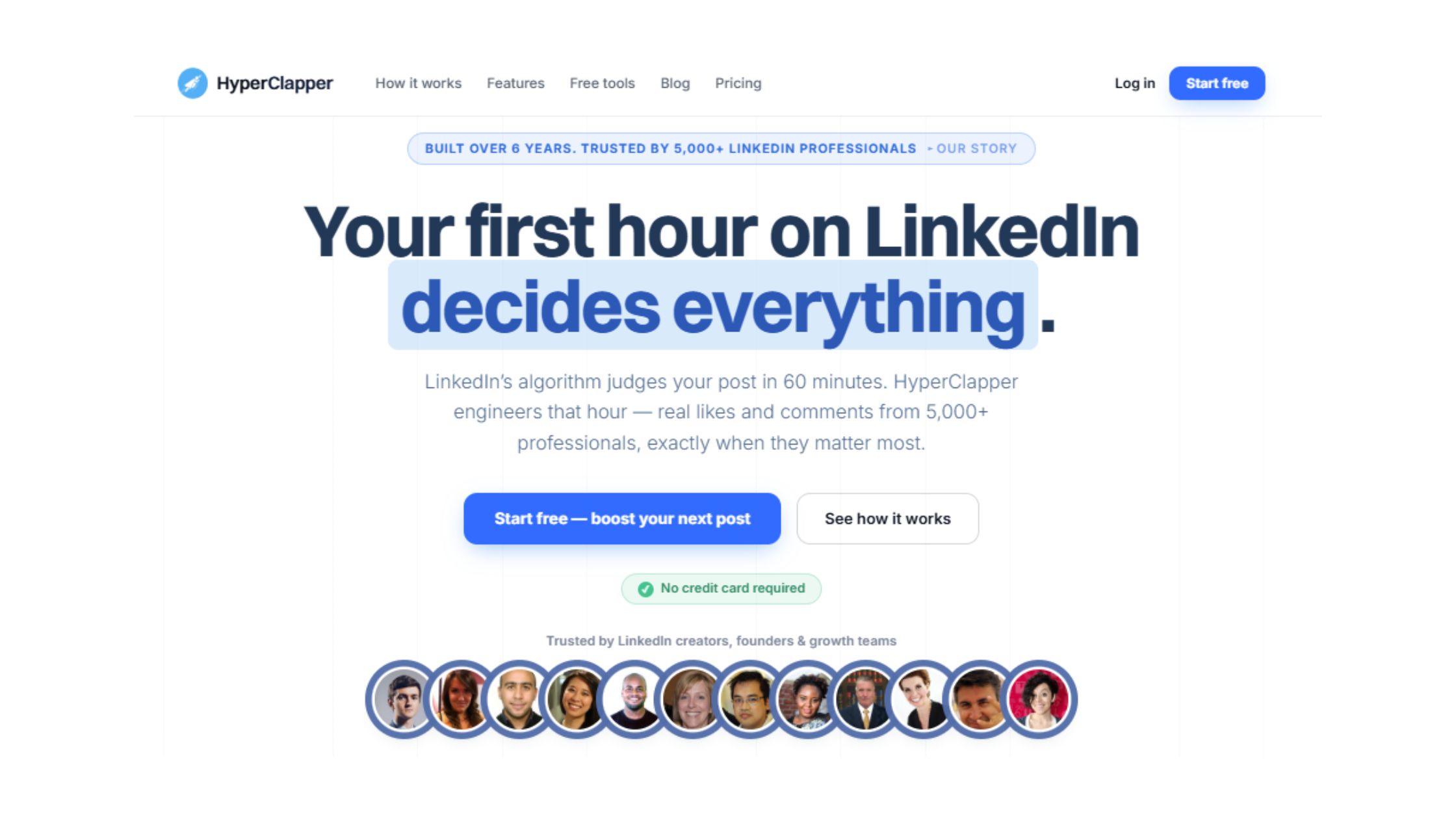
What separates top performers here is moving past raw pod mechanics entirely. HyperClapper combines real community engagement channels with AI-powered replies, company page boosting, and a Content Guard moderation system — making it a meaningfully safer LinkedIn engagement pod tool than first-generation options. For content creators focused on visibility without stacking automation risk, HyperClapper is the stronger choice because it uses real users in structured channels rather than anonymous pod members, and its AI replies are filtered for safety rather than generated from generic templates.
Podawaa alternatives worth evaluating based on your use case:
HyperClapper — for safer AI-assisted engagement with real community channels
Taplio — for content creation workflows combined with engagement tools
Shield Analytics — for analytics-first users who want to measure performance before amplifying
LinkBoost — another pod-based option worth reviewing against Podawaa on features and pricing
Also worth reviewing: Alfred for outreach-focused workflows, and Growbots if your goal extends into lead generation rather than pure visibility.
Get Real LinkedIn Engagement — Without the Automation Risk
HyperClapper connects your posts with real people in structured engagement channels — plus AI replies with safety filtering built in.
Is Podawaa still a good tool for growing LinkedIn engagement in 2026?
Podawaa still works for early engagement signals, but its effectiveness has narrowed. According to Social Insider (2026), LinkedIn engagement rates are up 8% YoY — meaning the algorithm is more active, and coordinated pod patterns are more detectable. It remains useful for solo creators testing pods at low volume, less so for scaling.
What are the risks of using LinkedIn engagement pods like Podawaa?
The primary risks are account restriction and declining content credibility. LinkedIn's detection targets behavioral patterns — coordinated timing, generic comments, high-volume pod submissions. Accounts that rely heavily on large pods without comment variation face the highest restriction exposure. Reputation risk with your actual audience is secondary but real if comments read as obviously automated.
Is Podawaa against LinkedIn's terms of service?
Yes. LinkedIn's ToS prohibits artificial amplification of content, which includes automated engagement pods. Podawaa is not LinkedIn-approved. LinkedIn enforcement has increased through 2025–2026, with account warnings and temporary restrictions reported by heavy users. Lower-volume, niche-pod usage carries materially less risk than high-frequency generic-pod submissions.
What does Podawaa's free plan include and is it enough?
Podawaa's free plan includes limited credits and access to smaller pods — enough to submit roughly 1–2 posts and see how the mechanic works. It is sufficient for a proof-of-concept test but not for a consistent content strategy. Most active users hit the credit ceiling within the first week and need a paid plan to maintain any regular publishing cadence.
How does Podawaa compare to manually building LinkedIn engagement?
Manual engagement — genuine commenting, reciprocal interactions, community-building — carries zero ToS risk and builds authentic relationships that compound over time. Podawaa is faster in the short term but creates dependency and risks that manual effort does not. Teams that combine manual relationship-building with a safer engagement tool see more durable reach than pod-only approaches.
What is the best Podawaa alternative for safer LinkedIn engagement in 2026?
HyperClapper is the strongest alternative for users who want engagement lift without the raw automation risk. It uses real users in structured channels, AI-powered replies with content moderation filtering, and company page boosting — a more complete and safer system than Podawaa's credit-based pod mechanic. For linkedin tools for lead generation, Alfred or Growbots serve that intent better.
After seeing this pattern across engagement tool comparisons, the consistent finding is that first-generation pod tools like Podawaa delivered genuine value in a less-enforced era — but the accounts growing sustainably in 2026 are the ones that paired engagement mechanics with real content quality and safer, more controlled platforms. The tool is only as durable as the strategy around it.
👋
⚡ Free plan
Leaving already?
Grab 3 free boosts on your next LinkedIn post — real likes & comments from 5,000+ creators. No card, cancel anytime.