
LinkedIn engagement pods are organized groups where members agree to like and comment on each other's posts — typically within the first 30–60 minutes of publishing — to manufacture early momentum. The idea is logical: spike early signals, trigger LinkedIn's algorithm, reach more people. A pattern observed across thousands of accounts, however, tells a different story. Pods consistently inflate vanity metrics while quietly suppressing the deeper behavioral signals LinkedIn actually uses to decide whether your content is worth pushing to cold audiences. The short-term number boost masks a long-term reach penalty most creators don't notice until the damage is done.
- What are LinkedIn engagement pods: groups of members who artificially exchange likes and comments to boost early post visibility
- Pods spike surface numbers but fail to generate the dwell time, saves, and second-degree spread LinkedIn's algorithm rewards most
- LinkedIn's User Agreement explicitly prohibits coordinated inauthentic engagement — enforcement ranges from post suppression to account restriction
- Recovery after stopping pod usage typically takes 4–12 weeks, not days
- Real engagement from relevant communities — not reciprocal strangers — is what drives lasting LinkedIn creator economy growth
- The most counterintuitive finding: accounts with fewer pod-inflated comments but higher dwell time consistently outrank pod-heavy posts in long-term reach
What Are LinkedIn Engagement Pods and How Do They Work?
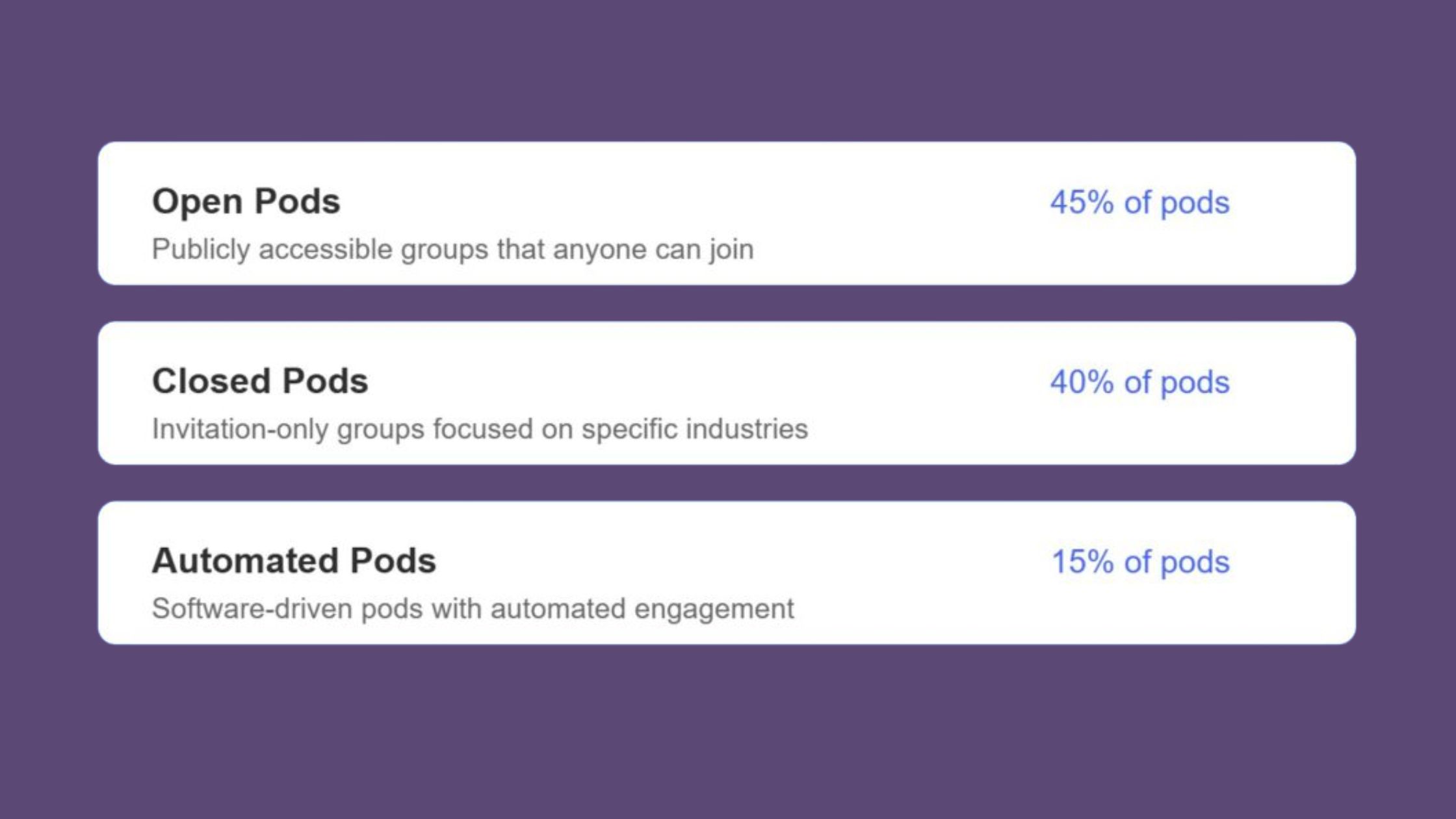
LinkedIn engagement pods are coordinated groups — typically organised on Telegram, Slack, or inside LinkedIn itself — where members commit to engaging with each other's posts on a reciprocal basis. The mechanic is simple: post goes live, pod members are notified, they rush to like and comment within the first 30–60 minutes to exploit LinkedIn's early-velocity window, then the favor rotates.
The spectrum of pod types matters here:
- Manual peer pods — small groups of 10–30 colleagues coordinating via group chat
- Semi-automated tools — platforms like Lempod, Podawaa, and LinkBoost that automate the notification and engagement queue
- AI-assisted variants — newer tools that generate comments automatically, escalating both the scale and the detection risk
Each step up that ladder increases the promise of faster growth — and the probability of algorithmic detection. According to Digital Applied (2026), LinkedIn's current algorithm actively penalizes engagement bait, with coordinated inauthentic behavior flagged at scale.
The Appeal: Why Creators and Founders Tried Pods in the First Place
Organic reach on LinkedIn got harder — fast. Impressions have fallen 50–65% for many creators in recent years, according to industry benchmark data circulating on LinkedIn (2026). Pods felt like a low-risk shortcut: real people, real comments, no bots. That framing made them feel legitimate. The community still debates their effectiveness heading into 2026 — but the data has started to settle the argument.
Do LinkedIn Pods Work — Or Do They Just Inflate Vanity Metrics?
Pods can spike likes and comments in the short term. They cannot fake the signals LinkedIn weights most: dwell time (how long a reader stays on a post), saves, shares, profile clicks, and second-degree spread. Those behaviors require genuine interest — and pod members engaging out of obligation don't produce them.
The average LinkedIn engagement rate hit 3.85% in 2026, up 44% year-over-year, according to ConnectSafely (2026). In practice, this means the platform's overall engagement health is rising — but that lift is driven by genuine interaction, not coordinated pods. If your posts consistently fall below this benchmark despite active pod use, that gap is the algorithm telling you something.
Engagement Velocity vs. Engagement Quality: Why the Algorithm Sees the Difference
Engagement velocity is the speed at which a post receives reactions and comments after publishing. Engagement quality is whether those interactions come from readers who actually consumed the content. LinkedIn's algorithm engagement signals now weight quality signals — scroll depth, dwell time, click-through to profiles — far more than raw comment count. Pods can manufacture velocity. They cannot manufacture quality. That structural gap is why do LinkedIn pods work is the wrong question — the better question is: who are those pod engagements actually reaching?
Pods don't just fail to deliver reach — they actively teach the algorithm that your audience doesn't find your content worth reading. That's a harder problem to fix than starting from zero.
Teams that rely on pods for LinkedIn algorithm engagement signals typically see a sharp early spike followed by algorithmic suppression — once LinkedIn's distribution engine detects low dwell time and zero second-degree spread, it stops extending the post's reach. The spike is real. The plateau that follows is permanent until the pattern changes.
Why LinkedIn Pods Are Hurting Your Reach — And Could Hurt Your Account
LinkedIn's detection of coordinated inauthentic behavior has grown significantly through 2024–2026. The platform flags patterns like the same accounts engaging the same poster repeatedly, within seconds of each other — classic pod signatures. The practical penalty is reach throttling: LinkedIn quietly reduces distribution to second- and third-degree networks.
This directly explains why is my LinkedIn engagement dropping for many pod users. They didn't post worse content. The algorithm downgraded their distribution based on engagement pattern data.
Are LinkedIn pods against the rules? Yes. LinkedIn's User Agreement explicitly prohibits "artificial engagement" and "coordinated inauthentic behavior." Enforcement ranges from post suppression to account restriction. High-volume automated pod tools carry the steepest risk — but even manual pods violate the same policy.
Does fake LinkedIn engagement hurt your profile beyond just posts? The damage compounds. Industries where harm is most visible include B2B SaaS founders, executive coaches, and recruiters — audiences sophisticated enough to notice that "Great post! 🔥" comments don't reflect the post's actual content. Credibility damage layers on top of algorithmic damage.
How LinkedIn's Algorithm Detects Pod Patterns in 2026
How does LinkedIn algorithm detect pods? The platform's AI looks for three primary signals:
- Timing clusters — multiple accounts engaging within seconds of each other, consistently
- Reciprocal engagement graphs — the same accounts engaging each other's posts repeatedly across weeks
- Dwell time mismatch — high comment counts on posts where aggregate read time is abnormally low
Each signal alone might pass unnoticed. All three together trigger a LinkedIn pod fake engagement penalty — typically silent reach throttling that's easy to misread as "my content isn't resonating."
How to Audit and Begin Recovering from Pod-Damaged Account Authority
If you suspect pod-related suppression, the LinkedIn algorithm recovery process follows a clear pattern:
- Stop all pod activity immediately
- Audit the last 30 days of post analytics — look for dwell time vs. engagement rate mismatches
- Shift to commenting meaningfully on others' posts before publishing your own
- Post at reduced frequency (3x/week) with higher content quality for 4–6 weeks
- Monitor second-degree impressions as your leading recovery indicator
✓ LinkedIn Pod Recovery Checklist
- ☐Exit all pod groups (Telegram, Slack, and in-platform)
- ☐Disconnect any automated pod tools from your LinkedIn account
- ☐Review post analytics: flag posts where comments far outpaced dwell time
- ☐Drop to 3 posts/week with tighter niche focus for the first 4 weeks
- ☐Spend 15 minutes/day leaving genuine, substantive comments on others' posts
- ☐Track second-degree impressions weekly — this is your recovery signal
How to Grow LinkedIn Organically: What Actually Works in 2026
The most reliable LinkedIn reach strategy observed across high-performing accounts isn't a clever hack — it's authentic community engagement that produces the quality signals LinkedIn rewards. Comment meaningfully on others' posts before you publish your own. That seeds real reciprocal engagement from relevant audiences — people who actually care about your topic.
Content momentum through LinkedIn creator economy growth compounds when you combine:
- Format variety — documents, newsletters, native video, and carousels each reach different audience segments
- Niche specificity — the tighter your topic focus, the more your followers save and share rather than just react
- Posting consistency — dropping below 3x/week triggers algorithmic reach decay; recovery typically requires 3–4 weeks of consistent activity to restore prior distribution levels
Engagement velocity and content momentum work together: the first 60 minutes after posting still matter, but only when that early engagement comes from people who genuinely read the post. Comparing the major LinkedIn pod tools makes this structural difference clear — platforms built on reciprocal stranger engagement cannot replicate the dwell time that real community interest produces.
Choosing the Right LinkedIn Visibility Tool: Pods vs. Real Engagement Platforms
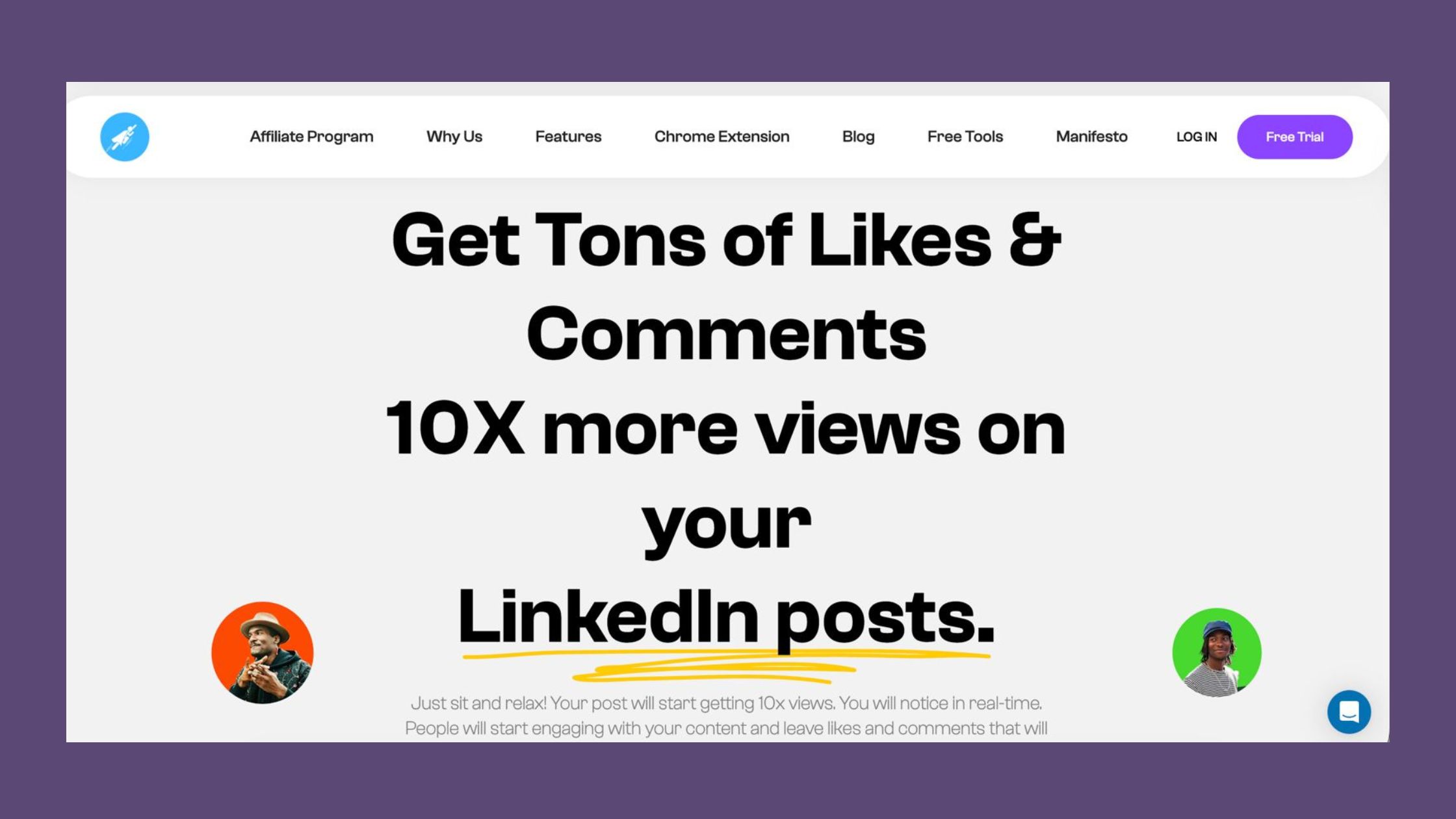
What separates top performers here is not the size of their pod — it's whether their engagement comes from people who share genuine interest in their content. Tools like Lempod and Podawaa operate on quid-pro-quo reciprocal engagement with strangers: you engage theirs, they engage yours, regardless of relevance. The comment looks real. The signal it sends LinkedIn does not.
For creators focused on visibility without the ToS risk, HyperClapper's channel model takes a structurally different approach: it connects you with real community members through topically relevant channels, adds AI-powered replies to generate conversation depth, and includes content moderation to avoid policy exposure. One channel delivers roughly 50 possible engagements from real people — not obligation-driven strangers. That difference in engagement source is exactly what LinkedIn's algorithm is now designed to detect and reward. See a direct comparison of HyperClapper vs. LinkBoost for a side-by-side breakdown.
Get Real LinkedIn Engagement — Without the Algorithm Risk
HyperClapper connects your posts with real community members who engage because your content is relevant to them — not because of a reciprocal obligation.
Try HyperClapper FreeEngagement Pods Instagram
The same mechanics play out on Instagram — and the same failure modes apply. Engagement pods instagram-style groups coordinate likes and comments within the first hour of posting, targeting the Instagram algorithm's early-velocity window. Instagram's detection systems have evolved in parallel with LinkedIn's, flagging repetitive engagement from the same account clusters. The key difference: Instagram's Reels algorithm places even greater weight on watch time and saves than LinkedIn does on dwell time, making pod comments even less effective as a quality signal on that platform. Creators who migrate from Instagram pods to LinkedIn pods typically carry the same mistaken belief — that comment count drives distribution. On both platforms in 2026, it doesn't.
Frequently Asked Questions About LinkedIn Engagement Pods
Do LinkedIn engagement pods actually increase real reach or just vanity metrics?
Pods increase vanity metrics — likes and comment counts — but not real reach. LinkedIn's algorithm measures dwell time, saves, shares, and second-degree spread to determine distribution. Pod members engaging out of obligation don't produce those signals, so algorithmic reach beyond your existing network stays flat or declines.
Are LinkedIn engagement pods against LinkedIn's Terms of Service?
Yes. LinkedIn's User Agreement explicitly prohibits "artificial engagement" and "coordinated inauthentic behavior." Enforcement ranges from silent post suppression to full account restriction. Automated pod tools carry the highest risk, but even manual reciprocal pods violate the same policy terms.
Why does LinkedIn suppress posts with high comments but low dwell time?
LinkedIn interprets low dwell time as evidence that the content didn't hold readers' attention — regardless of comment count. When its algorithm detects a mismatch between comment volume and actual read behavior, it treats that as an inauthentic engagement signal and reduces the post's distribution to wider audiences.
What are the long-term effects of using LinkedIn pods on your personal brand?
Beyond algorithmic penalties, the long-term brand damage is reputational. Sophisticated audiences — particularly in B2B, recruiting, and executive circles — recognize generic pod comments. Over time, an inflated engagement history with low-quality comments signals inauthenticity to both the algorithm and the humans who visit your profile.
How long does it take to recover organic reach after stopping pod usage?
Recovery of organic LinkedIn reach after stopping pod usage typically takes 4–12 weeks, depending on account age and the intensity of prior pod activity. Consistent posting at 3x/week with genuine community engagement accelerates recovery — but there is no quick reset. Monitoring second-degree impressions is the most reliable recovery indicator.
Is it worth joining a LinkedIn pod to grow your audience in 2026?
No — not with LinkedIn's current algorithm. The risk-to-reward ratio has inverted: pods offer a short-term comment spike with a real risk of long-term reach suppression and ToS enforcement. Authentic community platforms that connect you with genuinely interested readers deliver better compounding results without the account risk.
What are the best alternatives to LinkedIn pods for growing reach in 2026?
Consistent niche posting, meaningful commenting on others' content before publishing, and engagement tools that connect you with topically relevant audiences all outperform pods. Real engagement channels — where members share genuine interest in your topic — produce the dwell time and saves that extend LinkedIn reach organically.
What consistently separates accounts with compounding LinkedIn reach from accounts stuck at a follower plateau is not any single tactic — it is whether their engagement comes from people who genuinely wanted to read what they wrote. Pods can fake the count. They cannot fake the curiosity. And in 2026, LinkedIn's algorithm is very good at telling the difference.



