
Finding the right lemlist alternative for LinkedIn is harder than it looks — not because the options are few, but because most tools are solving the wrong problem. Lemlist is a capable cold email outreach software platform, but its LinkedIn features were bolted on after the fact. Teams that rely primarily on LinkedIn keep hitting the same wall: email deliverability settings that don't translate, automation speeds calibrated for inboxes rather than LinkedIn's algorithm, and account safety logic built for SMTP, not social profiles. The pattern observed across hundreds of LinkedIn-first outreach teams is that the right tool choice depends almost entirely on whether your primary channel is LinkedIn or email — and most comparison guides skip that question entirely.
- Lemlist is an email-first tool — its LinkedIn capabilities are secondary features, not a core architecture.
- LinkedIn's algorithm punishes over-automation differently than email spam filters do; tool safety logic must account for this.
- The best lemlist alternative LinkedIn outreach depends on your goal: cold DMs, post visibility, or both.
- Tools like Waalaxy and Expandi are LinkedIn-native but still DM-centric; HyperClapper targets engagement and visibility instead.
- Counterintuitive finding: for many founders and creators, growing LinkedIn reach through engagement is more effective than increasing DM volume.
- Account safety is the most underrated selection criterion — most buyers focus on features and price, not risk.
- Why LinkedIn Outreach Needs a Different Kind of Tool
- What Features Should a LinkedIn Outreach Tool Actually Have in 2026
- Lemlist vs. LinkedIn-Focused Alternatives: A Practical Comparison
- How to Choose LinkedIn Prospecting Software Without Getting It Wrong
- How HyperClapper Works as a LinkedIn-First Alternative
- Frequently Asked Questions About Lemlist Alternatives for LinkedIn
Why LinkedIn Outreach Needs a Different Kind of Tool
Lemlist was architected around cold email — sequences, deliverability, inbox rotation, sender reputation management. Everything about its design optimises for getting emails into inboxes. The LinkedIn features it offers (automated connection requests, DM sequences) are functional, but they sit on top of an email-first infrastructure rather than being built from the ground up for how LinkedIn actually works.
Does Lemlist Work Well with LinkedIn? An Honest Assessment
Does lemlist work well with LinkedIn for most users? Partially — and that partial is the problem. Lemlist can trigger LinkedIn actions within a multi-channel prospecting sequence, but it doesn't natively understand LinkedIn's engagement signals, content algorithm, or account health thresholds. LinkedIn monitors behavioural patterns — connection request velocity, message volume, profile view rates — and responds to automation differently than email spam filters do. A tool tuned for email deliverability rates has no direct equivalent for LinkedIn's account health signals.
The honest answer from teams that have tried it: Lemlist works well for email and tolerably for LinkedIn DMs at low volume. At higher volume, or when LinkedIn is the primary channel, the lack of LinkedIn-native safety logic becomes a real risk. That brings us to the question most comparison guides avoid: what does a LinkedIn-first tool actually need to do?
The most common failure mode in LinkedIn outreach tool selection is choosing based on feature lists rather than channel architecture — a tool built for email will always treat LinkedIn as a secondary integration, no matter how many LinkedIn checkboxes it adds.
What Features Should a LinkedIn Outreach Tool Actually Have in 2026
Three layers define a genuinely useful LinkedIn outreach tool — and most tools only cover one or two of them.
- Discovery and prospecting: Finding the right profiles to target, filtering by role, company size, activity level
- Engagement and visibility: Warming prospects through comments and reactions before a connection request; boosting your own content so prospects see you first
- Safety controls: Human-paced daily action limits, content moderation, account health monitoring
Outreach personalization at scale on LinkedIn means something different than it does in email. Mail-merge first names work in an inbox. On LinkedIn, the equivalent is contextual engagement — commenting meaningfully on a prospect's post before connecting, reacting to their content, appearing in their notifications as a real person before your message lands. That's a feature set most email-first tools don't even attempt.
LinkedIn-Safe Outreach Automation: What 'Safe' Really Means
LinkedIn safe outreach automation refers to automation that mimics natural human behaviour patterns closely enough that LinkedIn's detection systems treat it as organic activity. In practice, that means:
- Daily connection request caps (typically under 20–30/day for new accounts)
- Randomised delays between actions rather than metronomic intervals
- Content moderation to avoid triggering LinkedIn's policy flags
- No bulk profile scraping in patterns LinkedIn's systems flag as bot behaviour
LinkedIn Engagement vs. Cold Outreach: Two Different Strategies
Cold outreach tools focus on volume: sending connection requests and DMs to people who don't know you. LinkedIn engagement tools focus on visibility: making your content and profile appear credible and active so prospects come to you. These are genuinely different strategies, not just different features of the same strategy. According to data shared on LinkedIn (2026), 61% of decision-makers still prefer email outreach — which suggests that for LinkedIn specifically, standing out through content and engagement may outperform cold DM volume in many B2B contexts.
Lemlist vs. LinkedIn-Focused Alternatives: A Practical Comparison for 2026
The most frequently compared tools when teams search for a best lemlist alternative LinkedIn outreach are Waalaxy, Expandi, and engagement-focused platforms like HyperClapper. Here's how they actually differ.
| Tool | Best For | LinkedIn Approach | Risk Level | Starting Price |
|---|---|---|---|---|
| Lemlist | Email-first multi-channel | Add-on integration | Medium–High | ~$59/mo |
| Waalaxy | LinkedIn DMs + email sequences | LinkedIn-native, DM-centric | Medium | ~$40/mo |
| Expandi | LinkedIn outreach at scale | LinkedIn-native, cloud-based | Medium | ~$99/mo |
| HyperClapper | LinkedIn visibility + engagement | Content reach, real engagement | Lower | Flexible plans |
Lemlist vs Waalaxy for LinkedIn Outreach
The lemlist vs waalaxy LinkedIn comparison comes down to channel priority. Waalaxy is built natively for LinkedIn — its connection request and DM sequencing logic is tuned to LinkedIn's rate limits from the ground up. Lemlist brings more sophisticated email infrastructure and better email personalization. If you're running true multi-channel prospecting sequences where email is equally important, Lemlist has an edge. If LinkedIn is your primary channel and email is secondary, Waalaxy is the more purpose-fit choice. Neither tool addresses post visibility or content engagement — they both sit firmly in the cold outreach camp.
Teams evaluating Waalaxy alternatives for LinkedIn automation often find that their core need isn't more DMs — it's more inbound interest driven by stronger content visibility.
Lemlist vs Expandi and Where HyperClapper Fits
The lemlist vs expandi comparison is closer: both handle multi-channel sequences, and Expandi's cloud-based architecture (which doesn't require a Chrome extension running locally) is a meaningful safety advantage over browser-based tools. Expandi's dynamic personalisation for LinkedIn image-based messages is genuinely differentiated. But the lemlist alternatives pricing comparison tells an important story — Expandi at ~$99/month and Lemlist at ~$59/month both charge for infrastructure primarily useful for high-volume cold messaging. For a founder or recruiter whose LinkedIn goal is building authority and attracting inbound, that's paying for the wrong architecture entirely. That's the gap HyperClapper is built to fill.
How to Choose LinkedIn Prospecting Software Without Getting It Wrong
Start with your primary goal — not your feature wishlist. Teams that skip this step consistently end up paying for capabilities they don't use while lacking the ones they actually need. The goal question cuts through most tool comparison noise immediately:
- More messages sent: Waalaxy, Expandi, or Lemlist (email-heavy)
- More profile views and post reach: HyperClapper, or LinkedIn's own paid promotion tools
- Both: You likely need two tools, not one "does everything" solution
Best LinkedIn Automation Tool for Sales Teams vs. Individual Creators
What makes the best LinkedIn automation tool for sales teams is almost the opposite of what works for an individual creator or recruiter. Sales teams need CRM integration, team-level sequence management, reply detection, and A/B testing on message copy. Individual creators need post boosting, comment engagement to build credibility, and analytics that show reach growth — not reply rates.
A recurring pattern among LinkedIn-first B2B SaaS teams is choosing a tool based on a colleague's recommendation without checking whether that colleague's use case matches theirs. A tool that drives 15% reply rate improvements for an SDR running 200 messages a week may be completely irrelevant for a founder posting twice a week trying to grow inbound leads.
✓ LinkedIn Outreach Tool Evaluation Checklist
- ☐Confirm whether the tool is LinkedIn-native or email-first with LinkedIn as an add-on
- ☐Check daily action limits and whether they're configurable for your account age
- ☐Verify whether the tool offers engagement features beyond DMs (post boosting, comment tools)
- ☐Confirm pricing transparency — are email infrastructure costs bundled in that you won't use?
- ☐Look for real user case studies matching your business model (B2B SaaS, agency, solo founder)
- ☐Test the tool's account safety record — search "[tool name] LinkedIn ban" before committing
How HyperClapper Works as a LinkedIn-First Alternative
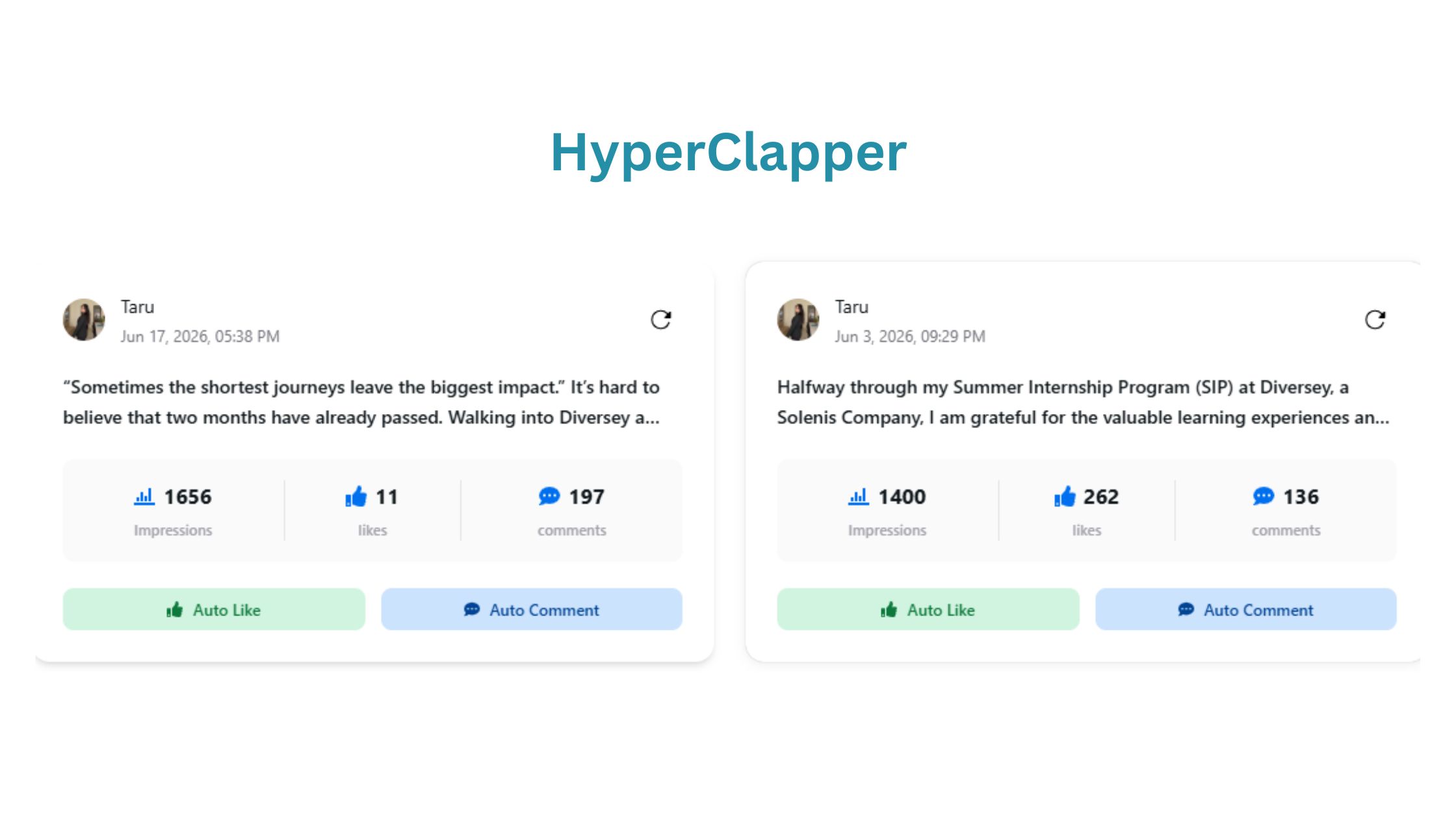
HyperClapper approaches LinkedIn entirely differently from cold email outreach software — it doesn't send cold messages at all. Instead, it's built around a LinkedIn engagement platform model: users submit a post, select engagement channels (each channel connects to roughly 50 real people inside the platform), and receive genuine likes and comments from real accounts. No bots. No fake engagement signals.
What Makes HyperClapper Safer Than Typical LinkedIn Automation
Most LinkedIn outreach automation tools risk accounts by triggering LinkedIn's bot-detection through unnatural action velocities. HyperClapper sidesteps this entirely: it doesn't automate actions from your account in the way connection-request and DM tools do. Engagement comes to your post from real platform members. The AI-powered replies feature generates contextually relevant comments that keep conversation threads active — because LinkedIn's algorithm rewards ongoing discussion depth, not just initial engagement volume. The Feed More AI Replies feature extends this over multiple days, which is particularly effective for posts that gain initial traction but would otherwise decay.
For teams exploring alternatives to DM-heavy LinkedIn automation tools like Dripify, HyperClapper represents a meaningfully different category. It's the right fit when the goal is inbound authority — prospects seeing your content, recognising your name, and reaching out — rather than high-volume cold outreach.
Grow LinkedIn Reach Without Cold Messaging
HyperClapper boosts your posts with real community engagement and AI replies — no bots, no account risk.
See How HyperClapper WorksFrequently Asked Questions About Lemlist Alternatives for LinkedIn
Which lemlist alternative is best for LinkedIn prospecting in 2026?
It depends on your goal. For cold DMs and connection sequences, Waalaxy and Expandi are the most LinkedIn-native options. For content visibility, post reach, and engagement-driven inbound — where prospects find you rather than you cold-messaging them — HyperClapper addresses a gap that cold outreach tools don't cover at all.
What are the main differences between Lemlist and LinkedIn-native outreach tools?
Lemlist is built around email deliverability infrastructure — inbox rotation, sender reputation management, email personalization at scale. LinkedIn-native tools like Waalaxy and Expandi are architected around LinkedIn's rate limits and safety signals from the start. The core difference is which channel's constraints shaped the tool's underlying design.
Can I use Lemlist safely for LinkedIn without getting banned?
At low volume — under 20 connection requests per day — the risk is manageable. At higher volume, Lemlist's LinkedIn actions lack the account-health monitoring that LinkedIn-native tools build in. LinkedIn account restrictions typically escalate from reduced reach to temporary restriction to permanent ban, and most users notice too late. Conservative action limits matter more than any feature.
How do I pick the right outreach tool if I rely heavily on LinkedIn?
Start by separating two goals: sending cold messages, and building visible authority through content. Most tools only handle one. If you rely on LinkedIn, check whether the tool is LinkedIn-native (not email-first with LinkedIn bolted on), verify its daily action limits are configurable, and confirm it has features beyond DMs — post engagement matters as much as message volume for serious LinkedIn-first strategies.
Is Lemlist worth it for LinkedIn prospecting?
Lemlist is worth it if email is your primary channel and LinkedIn is secondary. For teams where LinkedIn drives the majority of pipeline, paying for Lemlist's email infrastructure while using only its LinkedIn add-on is an inefficient fit. A LinkedIn-native tool will perform better at lower cost in that scenario.
What is a good alternative to lemlist for LinkedIn?
The answer depends on what you need. What is a good alternative to lemlist for LinkedIn if you need cold DMs? Waalaxy or Expandi. If you need post visibility and engagement so prospects recognise you before you reach out? HyperClapper operates in a different category entirely — real engagement channels, AI replies, and content reach rather than cold messaging volume.
How do LinkedIn outreach tools compare on pricing in 2026?
Lemlist starts around $59/month, Waalaxy around $40/month, and Expandi around $99/month — all primarily charging for cold messaging infrastructure. According to Amplemarket's 2026 cold email tool analysis, feature depth varies significantly across tools at similar price points. The key buyer question is whether the pricing model includes email infrastructure you won't use if LinkedIn is your primary channel.
What consistently separates LinkedIn accounts that generate real inbound pipeline from accounts with impressive follower numbers is not the volume of connection requests sent — it's the combination of visible, credible content and targeted outreach working together. Teams that treat LinkedIn as a cold email inbox with a different UI tend to plateau. Teams that invest in both their content visibility and their outreach targeting consistently see compounding results, regardless of which specific tool they choose to get there.
For anyone evaluating their full LinkedIn stack, exploring LinkedIn automation alternatives across different use cases is a useful starting point before committing to any single platform.



