The indeed vs linkedin debate comes down to one structural difference that most comparisons miss: Indeed is a job board that connects you to listings; LinkedIn is a professional network that connects you to people. A pattern observed across thousands of job searches is that candidates who understand this distinction get results from both platforms — and those who don't end up with identical, underperforming profiles on each. According to Breezy HR, Indeed delivers 76% of hires versus LinkedIn's 14% — but LinkedIn consistently produces higher-quality matches for professional and senior roles. The right answer is rarely one or the other. It's knowing which tool to use when.
- Indeed vs LinkedIn for job seekers: Indeed wins on volume and speed; LinkedIn wins on quality, networking, and senior roles.
- Recruiters use both — but for different purposes. LinkedIn dominates executive and technical search; Indeed dominates high-volume, cost-efficient hiring.
- The biggest mistake on either platform is treating them identically. Each has a completely different optimization strategy.
- Using both together — Indeed for active listings, LinkedIn for networking and inbound visibility — consistently outperforms relying on either alone.
- LinkedIn's value compounds over time; Indeed's value is immediate but transactional. Long-term career builders should invest more in LinkedIn.
- Counterintuitive finding: Indeed generates far more raw applications, but LinkedIn applications get 30% higher response rates for white-collar roles.
- What Each Platform Actually Is
- Indeed vs LinkedIn for Job Seekers
- Which Platform Recruiters Prefer
- Risks, Limitations, and Common Mistakes
- How to Use Both Platforms Together
- Frequently Asked Questions
Indeed vs LinkedIn: What Each Platform Actually Is (and How They Work)
Indeed is a job board aggregator — a platform that scrapes and hosts millions of job listings globally, optimized for high-volume, fast-apply searching with minimal friction. LinkedIn is a professional social network first and a job board second — profiles function as living resumes, and networking, content, and employer branding visibility are core to how it drives hiring outcomes.
The fundamental difference shapes everything. Indeed connects applicants to job posts. LinkedIn connects people to people. This is why recruiter sourcing effectiveness and passive candidate reach differ so sharply between the two — and why users expecting identical results from both are consistently disappointed.
| Feature | Indeed | |
|---|---|---|
| Primary purpose | Job board aggregator | Professional social network |
| Job listings | 40M+ (aggregated from across the web) | 22M+ (directly posted) |
| Networking | None | Core feature |
| Recruiter tools | Resume database, sponsored posts | LinkedIn Recruiter, InMail, sourcing filters |
| Profile depth | Basic resume upload | Rich: endorsements, activity, recommendations |
| Best for | Volume, speed, local/blue-collar roles | Professional, senior, and niche roles |
| Free tier usefulness | High — full search and apply at no cost | Good — limited InMail and recruiter visibility |
| ATS integration | Strong (direct integrations with major ATS) | Moderate (via LinkedIn Apply or manual) |
How Indeed Works: Search, Apply, and ATS Integration
Indeed aggregates listings from company career pages, staffing agencies, and direct postings — giving it breadth that no single-source board can match. According to OutX (2026), Indeed hosts 40M+ open roles compared to LinkedIn's 22M+. Its Indeed Apply feature passes applicant data directly into employer Applicant Tracking Systems (ATS) — software companies use to sort and filter incoming applications — making the apply flow frictionless. That frictionless experience is a double-edged sword: it makes applying fast, but it also means every listing attracts hundreds of applicants.
How LinkedIn Works: Network-Driven Discovery and Profile Visibility
LinkedIn's job discovery works differently. Your profile's keyword density, connection graph, and activity signal the algorithm to surface you to recruiters searching for passive candidates. Passive candidates are professionals not actively job hunting who still appear in recruiter searches. InMail — LinkedIn's direct messaging tool for reaching people outside your network — is how most recruiter outreach actually happens. This means using LinkedIn for job search isn't just about applying to listings; it's about building a profile that gets found without you doing anything.
Understanding this distinction is why the differences between Indeed and LinkedIn matter so much before you decide where to invest your time.
Indeed vs LinkedIn for Job Seekers: Which Platform Gets You Hired?
According to Resumely AI's response rate analysis, LinkedIn applications get 30% higher response rates for white-collar jobs — but Indeed has 5x more total listings. What this tells you is that the right platform depends entirely on what you're applying for, not which platform is "better" in the abstract. In practice, this means most professionals should be active on both, but for completely different reasons.
For high-volume job searches — entry-level roles, hourly work, or career changers exploring a new field — Indeed's breadth and simple apply flow generates more raw interview volume faster. For professional, managerial, or specialized roles, LinkedIn's network effect and recruiter inbound activity consistently produce higher-quality matches.
Using LinkedIn for Job Search: Networking, InMail, and Passive Discovery
The most underused feature in using LinkedIn for job search isn't the job board — it's the network itself. Connecting with hiring managers, commenting meaningfully on industry posts, and publishing your own content signals expertise and availability without broadcasting that you're job hunting. What separates top performers here is that they treat LinkedIn as a relationship channel, not an application portal. Candidates who engage regularly report receiving recruiter InMail at significantly higher rates than those who simply apply to listings.
Check out these LinkedIn hacks that can boost your job search for specific profile and engagement tactics that improve recruiter discoverability.
Is Indeed or LinkedIn Better for Career Changers and Niche Roles?
Career changers face a specific challenge: their past job titles don't match the roles they're targeting. Indeed's keyword-matching algorithm surfaces you based on job title history — which disadvantages career changers immediately. LinkedIn's profile structure allows you to highlight skills, projects, and recommendations that bridge the gap in ways a traditional resume cannot. For best job boards for career changers, LinkedIn's ability to tell a narrative through profile sections, featured posts, and skill endorsements makes it structurally better for anyone pivoting industries or levels.
The platform that wins for job seekers isn't the one with more listings — it's the one that lets recruiters find you based on what you can do, not just where you've been.
Which Platform Do Recruiters Prefer — Indeed vs LinkedIn for Hiring Teams
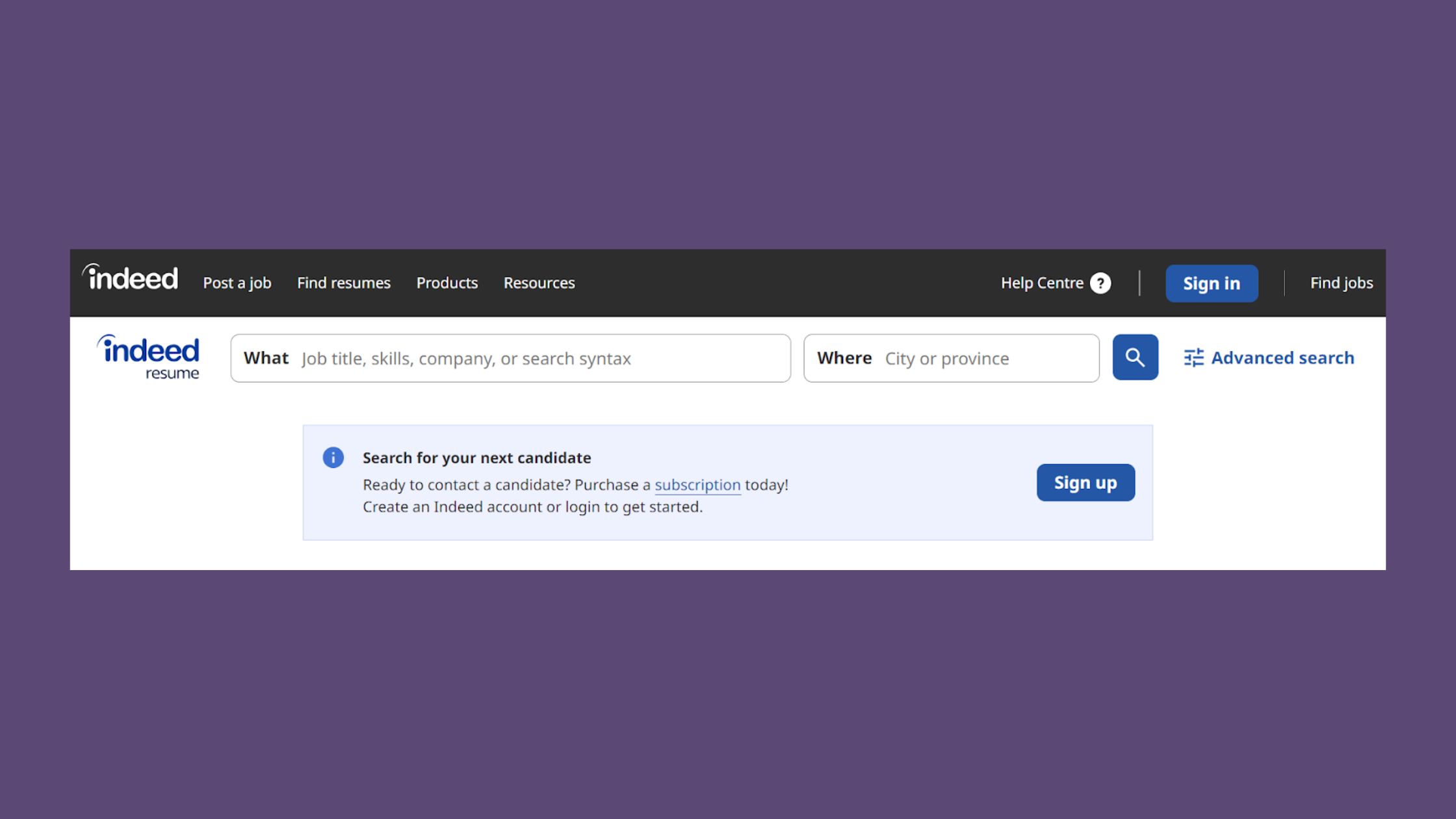
Recruiters use both, but for entirely different stages of the funnel. Teams that separate their sourcing strategy by platform — Indeed for top-of-funnel volume, LinkedIn for relationship-driven and passive candidate sourcing — consistently achieve lower cost-per-hire across the full pipeline.
Cost-per-hire benchmarking (the metric that measures total recruiting spend divided by number of hires) differs significantly between the two platforms. Indeed charges per click or per application via sponsored posts, making it cost-efficient at scale for high-turnover roles. LinkedIn Recruiter seat licenses — the premium sourcing tool used by most in-house teams — run from approximately $8,000 to $12,000+ annually, positioning LinkedIn as a higher-investment, higher-intent channel suited to roles where hire quality justifies the cost.
According to ConnectSafely's 2026 comparison, Indeed generated 66% of total applications in Breezy HR's sample compared to LinkedIn's 13%. In practice, that volume advantage makes Indeed the default for high-turnover, local, or entry-level hiring — while LinkedIn's applicant quality signals (endorsements, tenure patterns, activity levels, recommendations) make it the preferred sourcing tool for senior hires where screening efficiency matters more than raw volume.
LinkedIn Premium vs Indeed Paid Features: What Employers and Job Seekers Actually Get
LinkedIn Premium for job seekers (Career tier, approximately $29–$40/month) includes InMail credits, who-viewed-your-profile data, applicant insights, and access to LinkedIn Learning. For a detailed cost breakdown, see this guide on how much LinkedIn Premium costs. Indeed's paid features for job seekers are minimal — the platform is largely free to use on the candidate side, with employers absorbing the sponsored listing costs. For recruiters comparing LinkedIn Premium vs Indeed paid features, LinkedIn's sourcing tools are meaningfully more powerful for professional hiring; Indeed's sponsored posts offer better ROI for volume roles at lower cost.
Employer Branding, Global Reach, and ATS Compatibility
Employer branding visibility — how prominently a company's culture, values, and employee stories appear to potential candidates — is fundamentally a LinkedIn advantage. Company pages, employee advocacy, sponsored content, and organic post reach all contribute to a brand's talent magnetism on LinkedIn in ways Indeed's format cannot replicate. For global reach, LinkedIn's 1B+ member base across 200+ countries gives it structural advantages for international hiring; Indeed operates in 60+ countries but with uneven penetration outside English-speaking markets. On ATS compatibility, Indeed's direct integrations with major systems like Greenhouse, Lever, and Workday are tighter and more standardized than LinkedIn's, making Indeed the operationally simpler choice for companies with rigid HR tech stacks.
Want More Eyes on Your LinkedIn Posts During Your Job Search?
HyperClapper helps professionals boost LinkedIn post visibility with real engagement from relevant communities — so recruiters actually see your content.
Boost Your LinkedIn Visibility →Risks, Limitations, and Common Mistakes to Avoid on Both Platforms
The most common failure mode on both platforms isn't using the wrong one — it's using the right one incorrectly. Creators who skip the platform-specific optimization step typically find their applications disappear into silence, regardless of how qualified they are.
What Are Indeed's Biggest Disadvantages?
Indeed's disadvantages are structural, not incidental:
- Ghost job listings: Roles left active after they've been filled, or posted speculatively, create a significant application black hole. A recurring pattern among active job seekers is applying to 50+ Indeed listings with minimal response — often because a large percentage of listings are stale.
- Signal-to-noise problem: Indeed's frictionless apply flow means every listing attracts hundreds of submissions. Standing out structurally is difficult when every applicant looks identical on a plain resume.
- Minimal networking features: Indeed has no meaningful way to reach hiring managers directly, research team culture organically, or build relationships that create referral pathways.
- Does Indeed have networking features like LinkedIn? No — indeed has no networking, messaging, or social features. This is the core functional gap.
What Is LinkedIn's Downside?
LinkedIn's downsides are real but often fixable:
- Algorithm dependency: Visibility on LinkedIn is not passive. The platform rewards consistency — accounts that drop below regular activity see organic reach decay within 2–3 weeks, meaning a dormant profile delivers a fraction of the value of an active one.
- Premium cost vs. ROI for junior roles: LinkedIn Premium is difficult to justify for entry-level candidates where Indeed's free tier delivers comparable or better results.
- Data privacy and profile visibility controls: By default, LinkedIn shares profile data broadly. Adjusting visibility settings — blocking profile views from specific companies, limiting who sees your activity — requires deliberate management that most users skip.
- Unwanted outreach: A strong LinkedIn profile attracts not just recruiters but also salespeople, spammers, and connection request floods. Filtering signal from noise becomes its own time cost.
Mobile App Experience, Privacy Controls, and Data Visibility
Both platforms have strong mobile apps, but with different strengths. Indeed's mobile app prioritizes job search speed — saved searches, instant apply, and alert notifications are all well-executed. LinkedIn's mobile app is more feature-rich but also more cluttered; the job search experience is secondary to the social feed. For pure job hunting on mobile, Indeed's app is faster and more focused. For relationship-building, networking, and content engagement on the go, LinkedIn's app is the only option. On privacy: Indeed stores and shares your resume data with employers who search their database — you can make your resume private, but it defaults to searchable. LinkedIn's privacy controls are more granular but require active configuration.
How to Use Indeed and LinkedIn Together for the Best Results in 2026
After seeing this across thousands of job search journeys, the pattern is consistent: professionals who use a deliberate dual-platform strategy outperform those who commit exclusively to one. The practical answer to "Should I use Indeed or LinkedIn to apply for jobs" is: use both, but differently.
Here's the workflow that produces the best outcomes:
- Build your LinkedIn profile first — optimize it with relevant keywords, a clear headline, and a summary that shows your expertise. This is the foundation. (30–60 minutes upfront)
- Identify 20–30 target companies on LinkedIn — research their culture, follow their company pages, connect with people in relevant departments. This is where LinkedIn's networking advantage lives. (Ongoing, 15 minutes/day)
- Track those companies' open roles on Indeed — use Indeed's job alert system to get notified when target companies post, then apply quickly via Indeed's faster apply flow. (5 minutes per alert)
- Simultaneously reach out on LinkedIn — send a brief, personalized note to a hiring manager or team member at the company where you just applied on Indeed. The dual-touch approach significantly increases response rates.
- Keep your LinkedIn content active — one post or meaningful comment per week signals availability and expertise to the algorithm. This keeps your profile surfaced in recruiter searches without explicitly broadcasting a job search.
For professionals building long-term career capital, LinkedIn is the higher-ROI investment. A strong profile compounds over time via recruiter inbound, while an Indeed resume only works when you're actively searching. Think of LinkedIn as career infrastructure and Indeed as a job search tool — one you build permanently, one you use when needed.
Maximizing LinkedIn Visibility: Engagement, Content, and Profile Signals
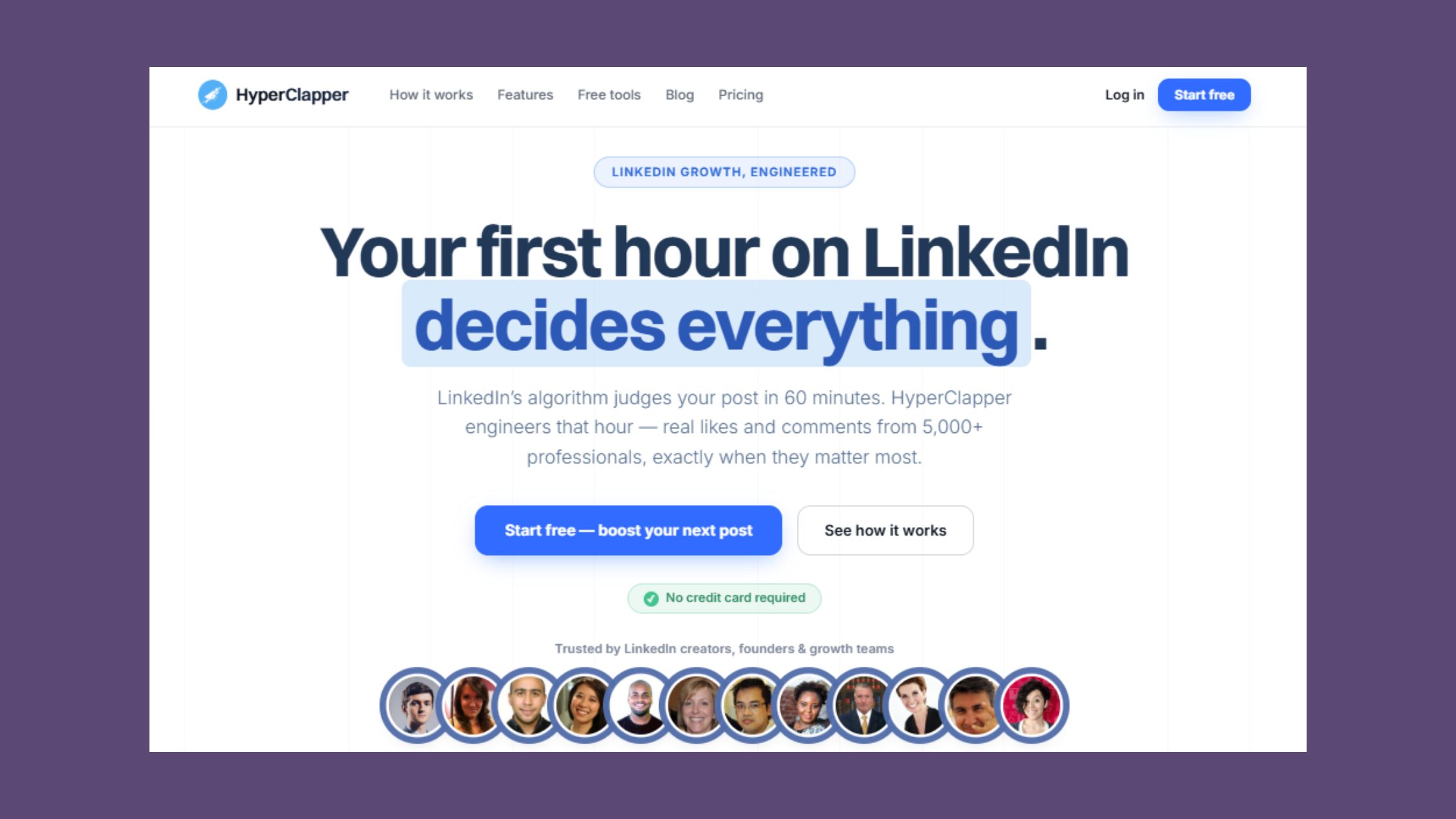
LinkedIn's distribution model rewards posts that generate early engagement — the first 60–90 minutes after publishing determine whether content gets broad reach or stays limited to your direct connections. Tools like HyperClapper help professionals boost post visibility by connecting them with real engagement communities, driving the early interaction signals that expand a post's organic reach. For job seekers publishing thought leadership content during a search, this kind of visibility directly increases recruiter discovery. You can also explore how LinkedIn search can transform your job hunt for more on optimizing profile discoverability.
Also worth exploring: our full LinkedIn vs Indeed platform comparison for deeper data on which platform performs better by role type and industry.
✓ The Dual-Platform Job Search Checklist
- ☐LinkedIn profile: keyword-rich headline, full experience section, 500+ connections target
- ☐Indeed resume: uploaded, set to public, tailored to target role type
- ☐Indeed job alerts: set up for 5–10 target companies and 3–5 role titles
- ☐LinkedIn: follow 20–30 target companies, connect with relevant hiring managers
- ☐Publish or comment on LinkedIn at least once per week to maintain algorithm visibility
- ☐After every Indeed application, send a LinkedIn connection request to someone at that company
- ☐Review LinkedIn privacy settings — control who sees your open-to-work status
- ☐Audit Indeed listings weekly for ghost jobs — if a role has been posted 30+ days with no activity, deprioritize it
Make Your LinkedIn Profile Work While You Sleep
HyperClapper's real engagement communities keep your LinkedIn posts active and visible — the exact signal that moves you up in recruiter searches.
Try HyperClapper Free →Frequently Asked Questions About Indeed vs LinkedIn
What is the difference between Indeed and LinkedIn for job searching?
Indeed is a job board aggregator focused on fast, high-volume job applications with 40M+ listings. LinkedIn is a professional network where job search happens through both direct applications and recruiter discovery. Indeed wins on breadth and speed; LinkedIn wins on professional networking, passive candidate visibility, and role quality for white-collar positions.
Should I create profiles on both Indeed and LinkedIn, or just one?
Create profiles on both — but optimize them differently. Use Indeed for active searches and fast-apply volume. Use LinkedIn as your long-term professional presence, networking channel, and inbound recruiter tool. Professionals who maintain only one platform consistently miss opportunities that exist exclusively on the other.
Which is more effective for getting hired — Indeed or LinkedIn?
It depends on role level. According to Breezy HR, Indeed drives 76% of total hires by volume, making it the raw numbers winner. But LinkedIn applications receive 30% higher response rates for white-collar roles, making it more effective per application for professional and senior positions. Use Indeed for volume, LinkedIn for quality.
How does LinkedIn networking help with job searching compared to Indeed?
LinkedIn networking creates referral pathways, recruiter visibility, and direct access to hiring managers — none of which exist on Indeed. A warm LinkedIn connection at a company increases your application's chance of being seen by a human by a significant margin compared to an anonymous Indeed submission competing with hundreds of identical resumes.
What are the disadvantages of using Indeed?
Indeed's main disadvantages are ghost job listings (roles left active after filling), high applicant competition per listing reducing individual visibility, minimal profile depth for standing out, and no networking features. It also defaults your resume to public, sharing it with any employer who searches the database unless you manually change the setting.
What is the downside of LinkedIn?
LinkedIn's biggest downside is that its value is algorithm-dependent. A dormant profile delivers far less than an active one — the platform penalizes inactivity in search visibility. Premium tiers are expensive (approximately $29–$40/month for job seekers) and difficult to justify for entry-level searches. Unwanted outreach from salespeople is a persistent noise issue.
Who is Indeed's biggest competitor?
LinkedIn is Indeed's primary competitor for professional roles, but Indeed vs ZipRecruiter is the more direct matchup for high-volume recruiting. ZipRecruiter uses AI-matching to suggest candidates to employers proactively, competing with Indeed's sponsored listings model. For the full indeed vs linkedin vs ziprecruiter picture: Indeed leads on listing volume, LinkedIn on professional networking, and ZipRecruiter on AI-assisted matching for employers.
LinkedIn vs Indeed — which is better according to real users on Reddit?
The indeed vs linkedin reddit consensus as of 2026 is mixed: many users report that both platforms feel slow in a competitive market, with one Reddit thread describing both as "ghost towns" for active applications. The strongest performing users on both platforms consistently invest in LinkedIn networking rather than relying solely on application volume — the referral and inbound channel consistently outperforms cold applications on either board.
Indeed vs LinkedIn vs Glassdoor — what's the difference?
Indeed vs LinkedIn vs Glassdoor: Indeed is your best tool for raw job volume and fast apply. LinkedIn is your best tool for professional networking, inbound recruiter activity, and senior roles. Glassdoor specializes in company reviews, salary data, and interview insights — it complements both rather than replacing them. Most effective job seekers use all three for distinct purposes: Glassdoor for research, LinkedIn for relationships, Indeed for applications.
What consistently separates candidates who get hired quickly from those who search for months is not which platform they choose — it's whether they use LinkedIn as a relationship channel rather than a second job board.
The platforms serve different functions, and the professionals who get results fastest are the ones who stop comparing them and start using each for what it genuinely does well. For content-active professionals, building LinkedIn visibility through consistent engagement — and using tools like real engagement platforms to amplify reach — creates an inbound channel that makes the job search shorter every time, not just this time.



