Twitter x monetization is not a single program — it is a layered set of revenue streams, and most small accounts are ignoring the ones that actually pay. A pattern observed consistently across creator accounts is that the creators earning real income below 50K followers are almost never relying on ad revenue share alone. They combine native features like Subscriptions and Tips with platform-agnostic income — digital products, affiliate links, and niche brand deals — turning modest audiences into meaningful monthly income. The ad share threshold is real, but it is not the gate it appears to be.
- X monetization covers 5+ distinct revenue streams — ad share is just one, and not the most accessible for small accounts.
- You need 500+ followers and 5M impressions in 90 days for ad revenue share — but Subscriptions and Tips have no impression floor.
- Most global creators earn $0.03–$0.08 per 1,000 impressions; US accounts in high-CPM niches can reach $0.15–$0.30.
- Stripe availability blocks payouts in dozens of countries — check eligibility before investing time in the ad share path.
- The highest-earning small accounts monetize through digital products and niche brand deals, not platform payouts.
- Counterintuitive finding: a 5,000-follower account with a loyal niche audience can out-earn a 50,000-follower generalist account.
- How X Twitter Monetization Actually Works in 2026
- X Twitter Monetization Requirements: What You Actually Need
- What X Twitter Actually Pays: Realistic Earnings and Payout Rates
- X Twitter Creator Revenue Streams Beyond Ad Share
- Common Mistakes That Kill Twitter Monetization
- Frequently Asked Questions About Making Money on X Twitter
How X Twitter Monetization Actually Works in 2026
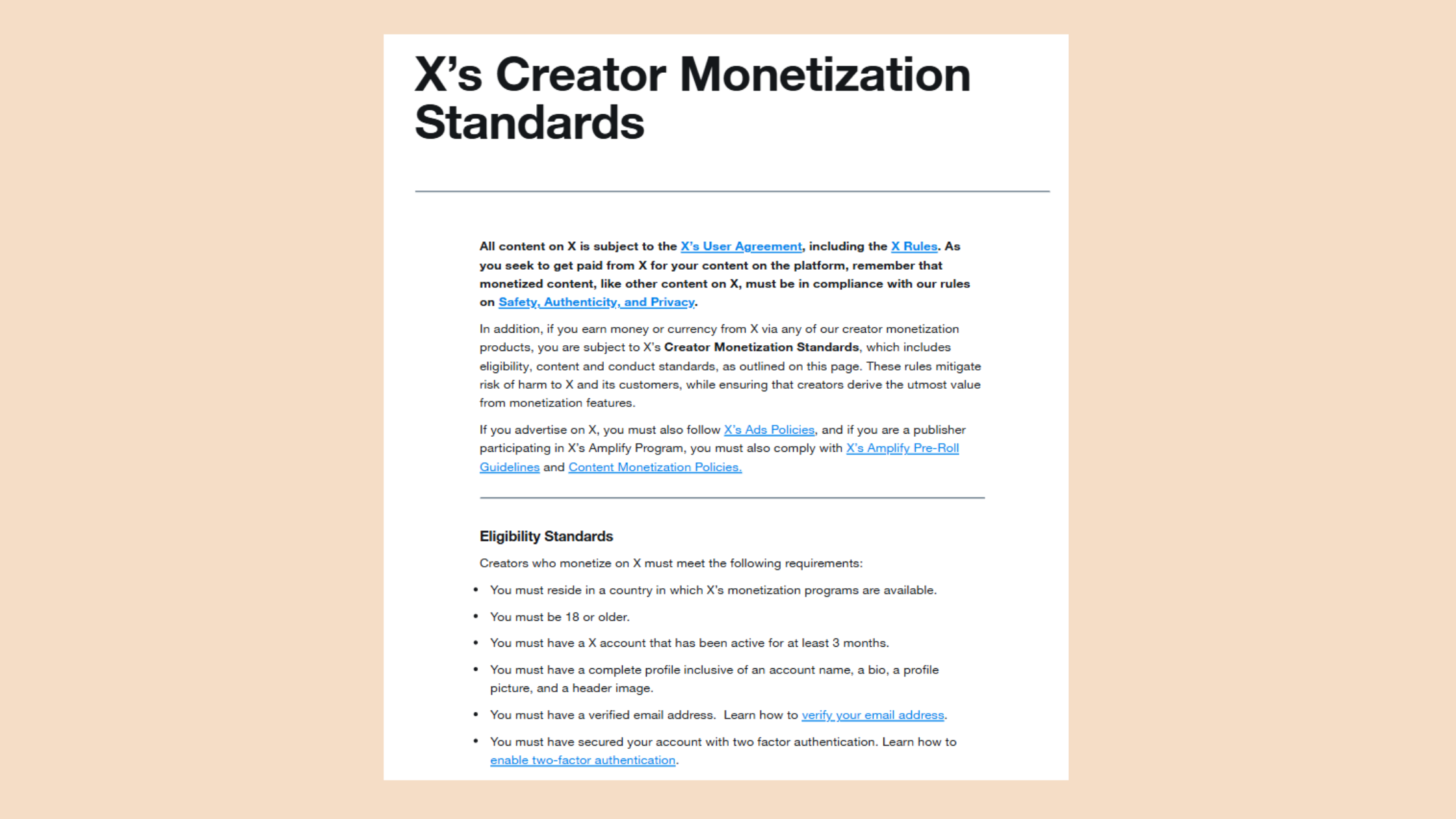
X Twitter monetization is an umbrella term covering ad revenue sharing, Subscriptions, Tips, and third-party income streams — not a single toggle you flip on. Understanding how each channel works is the difference between a creator who earns steadily and one who waits months for an ad share payout that barely covers a coffee.
X Creator Revenue Streams at a Glance
The core native features available to eligible creators are:
- Ad Revenue Sharing — a cut of ad revenue generated by Premium subscribers engaging with your reply threads
- Subscriptions — monthly recurring income from followers who pay for exclusive content access
- Tips — one-time payments sent directly from followers via Stripe, PayPal, or other supported methods
- Super Likes (limited rollout) — a newer engagement feature tied to creator earnings in select markets
Beyond native features, the X Twitter creator revenue streams that consistently generate the most income for sub-100K accounts are external: digital products, affiliate marketing, and sponsored content. These require zero platform approval and no impression threshold.
Ad revenue sharing works on an impressions-to-earnings ratio — the speed and volume at which Premium subscribers engage with your content in reply threads. X pools a portion of Premium subscription revenue and distributes it to eligible creators based on verified impressions. Raw follower count does not determine your share. Engagement quality from paying users does.
Payments are issued monthly with a minimum threshold of $10. The timeline from approval to first payout typically runs 30–60 days. Losing eligibility mid-cycle — through a policy strike, lapsed X Premium subscription, or a drop below impression thresholds — can delay or void a pending payout entirely.
How the X Algorithm Affects Monetization Eligibility
X's distribution model rewards content that generates replies and re-engagement from Premium subscribers specifically. A thread sparking 200 genuine replies from paying users contributes more to your ad share pool than a viral post with 5,000 passive likes from free accounts. This means optimising for conversation depth — not just reach — is the lever most creators underuse.
X Twitter Monetization Requirements: What You Actually Need
The verified creator requirements for ad revenue sharing are more specific than most guides state. You need all four simultaneously:
- An active X Premium subscription
- 500+ followers
- 5 million+ organic impressions in the past 3 months
- Account age of at least 3 months
That 5M impression floor is the real blocker. For context, a creator posting 5 times per week averaging 2,000 impressions per post accumulates roughly 520,000 impressions in 90 days — about one-tenth of the threshold. Twitter monetization for small accounts through ad share alone is genuinely difficult at sub-50K follower sizes unless you are posting extremely high-reach content consistently.
The follower count question is a distraction. The real question is whether your content generates 5 million verified impressions in 90 days — and for most creators, the honest answer is not yet.
X Monetization Countries: Who Has Access and Who Doesn't
Geographic restrictions are the gap almost every guide ignores. Ad revenue sharing and Stripe payouts are unavailable in a significant number of countries. Creator payout rates also vary substantially by country even where the feature is live — non-US creators consistently report lower effective CPMs, reflecting the advertiser demand in each market. A creator in Germany or Japan will see different effective rates than one in the US, and creators in many parts of Africa, Southeast Asia, and Latin America face Stripe availability issues that block payouts entirely regardless of eligibility.
Check the X Help Center's monetization eligibility page for the current country list before investing time in building toward the ad share threshold.
How Long Does Approval Take and What to Do While You Wait
Approval typically takes 1–4 weeks after submitting an application. During that window, the most productive use of time is setting up the income streams that require no approval at all: a digital product on Gumroad or Stan Store, an affiliate link in your bio, or a Subscription offering for your most engaged followers. These can generate income before your first ad share payout ever arrives.
What X Twitter Actually Pays: Realistic Earnings and Payout Rates
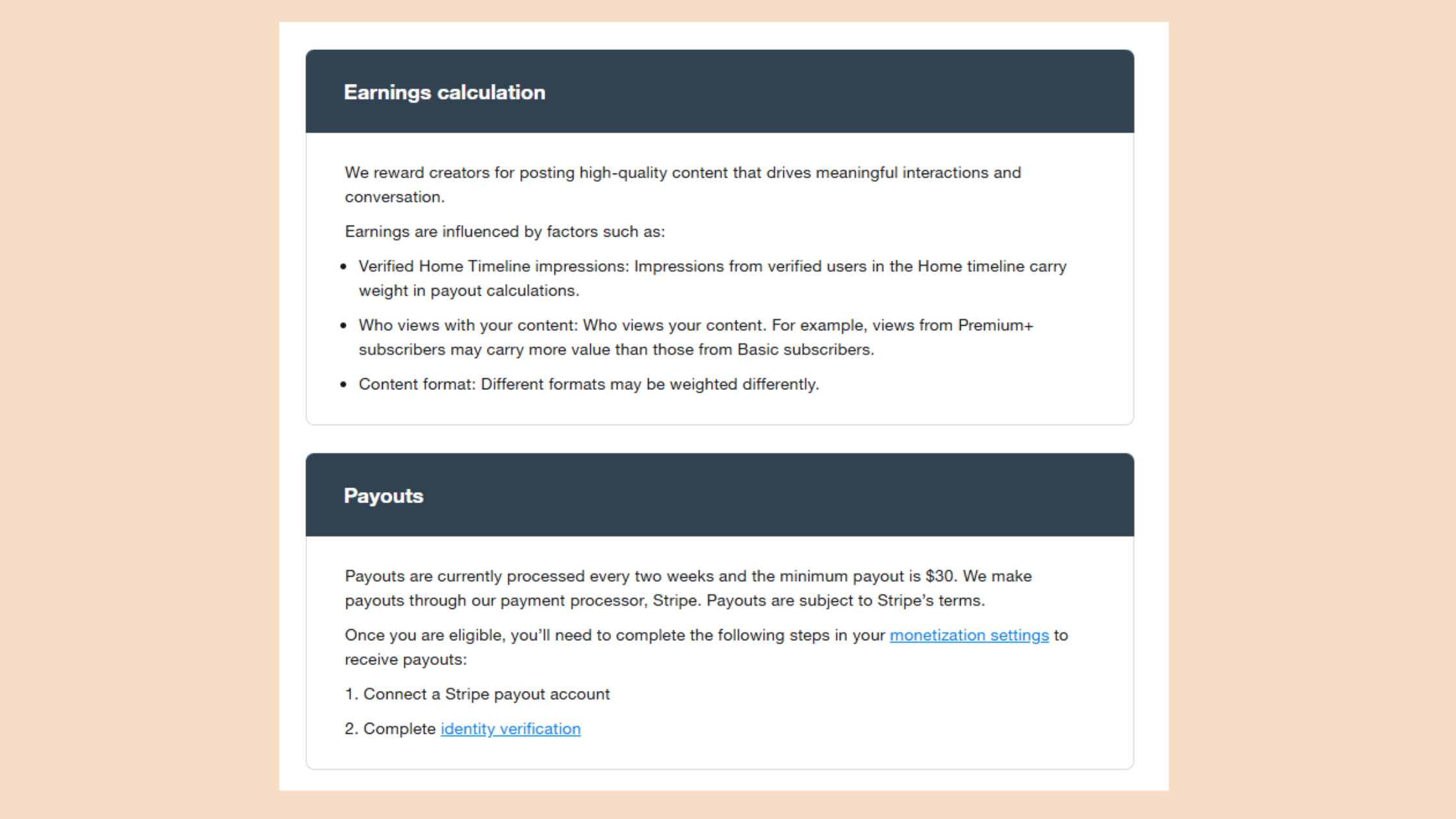
Most creators report earning $0.03–$0.08 per 1,000 impressions through ad revenue sharing. US-based accounts in high-CPM niches — finance, tech, B2B — can reach $0.15–$0.30. X does not publish official per-impression rates, so these figures come from creator-reported data across community threads and third-party analyses.
According to PostEverywhere's creator earnings analysis, X discloses no official revenue split, with reputable third-party estimates placing the creator's share at approximately 50–55% of the ad revenue generated by their content. In practice, the effective global rate hovers around $0.04–$0.06 per 1,000 impressions. This makes ad share a supplemental income stream, not a primary one, for most accounts under 100K followers.
For comparison: YouTube's ad share runs $1–$5 CPM for most creators. X's rates are structurally lower because the pool is funded exclusively by Premium subscriber revenue — not the broader open ad market. According to Business of Apps (2026), X generated $2.5 billion in revenue in 2024, with 68% coming from advertising. That overall revenue base is still rebuilding, which directly constrains the creator pool size.
The good news: according to SQ Magazine (2026), creator monetization payouts expanded to $100 million in 2026 versus approximately $45 million in earlier periods, with Q1 2026 showing a 17% year-over-year increase. The pool is growing — it is just not large enough yet to make ad share the primary income source for most creators.
How to Get Paid on Twitter With a Small Audience: The Numbers
Teams that diversify beyond ad share consistently see higher monthly income. A realistic breakdown for a 5,000–15,000 follower account with a defined niche looks like this:
- Ad share: $20–$80/month (if eligible — often not at this size)
- Subscriptions: 30 subscribers × $4.99 = ~$120/month after X's cut
- Digital product sales: 5 sales/month × $29 = $145/month
- One affiliate placement/month: $50–$200 depending on niche and product
- One micro-sponsorship/month: $150–$500 for a highly engaged niche account
Combined, a creator at this size doing all five can realistically hit $400–$900/month. That number scales faster with audience loyalty than with raw follower growth.
Building your audience on LinkedIn too?
Tools like HyperClapper help creators get real engagement on LinkedIn posts — boosting visibility with genuine community interactions and AI-powered replies, not bots.
See How It Works
X Twitter Creator Revenue Streams Beyond Ad Share
Creators who skip ad share entirely and focus on direct monetization often out-earn those grinding toward the impression threshold. Here are the streams worth building in parallel.
Gumroad vs Stan Store for Twitter Creators
Both platforms let you sell digital products on Twitter through a link in bio, but they serve different creator types. Stan Store is an all-in-one link-in-bio tool that consolidates products, bookings, email capture, and a storefront in one page — better suited for creators who want a single destination for their audience. Gumroad is more marketplace-oriented, with a built-in discovery layer that can drive sales from buyers who find you on Gumroad directly, not just through your X bio.
For most small X accounts, Stan Store's simplicity and conversion-optimised layout make it the stronger starting point. Gumroad becomes more valuable once you have a catalog and want marketplace visibility.
Twitter Affiliate Marketing Strategy
X's thread format is well-suited for educational content with embedded affiliate links. The Twitter affiliate marketing strategy that works consistently: write a thread that solves a specific problem your audience has, recommend the tool or product that solves it, and embed your affiliate link at the end of the thread rather than at the top. FTC disclosure rules require a clear statement — "this contains affiliate links" — and X's own policies apply. Track clicks with UTM parameters from the start; without tracking data, you cannot tell which posts convert.
X Premium Subscription Monetization and Tips
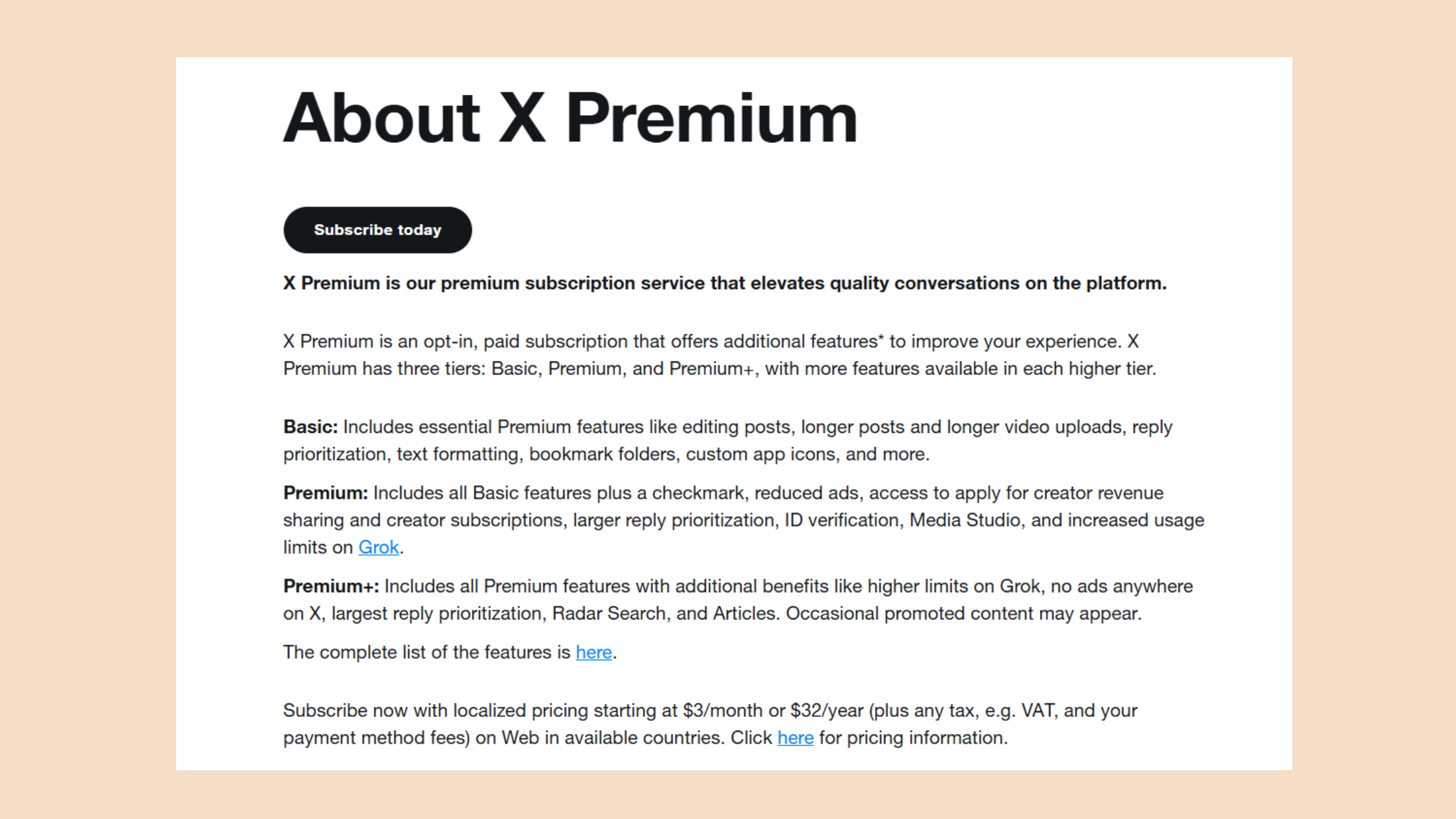
X Premium subscription monetization through the Subscriptions feature lets you set a monthly price ($2.99, $4.99, or $9.99) and offer subscriber-only content — threads, early access, community access, or direct replies. X takes a 20% cut after platform fees. Even 50 subscribers at $4.99 generates approximately $200/month passively. Tips require no recurring commitment from followers — they send one-time payments directly and are available to any monetization-eligible account.
✓ The X Monetization Setup Checklist
- ☐Confirm your country is eligible for ad revenue sharing and Stripe payouts
- ☐Subscribe to X Premium and keep billing active every cycle
- ☐Connect and verify your Stripe account before applying
- ☐Set up a digital product on Gumroad or Stan Store and add the link to your bio
- ☐Enable Subscriptions and Tips in Creator Studio settings
- ☐Add UTM tracking to every affiliate link before posting
- ☐Start building an email list now — before X is your only audience access point
Common Mistakes That Kill Twitter Monetization (And How to Avoid Them)
The most common failure mode is treating ad revenue share as the only path to income on X. Creators who spend months chasing the 5M impression threshold while ignoring Subscriptions, digital products, and affiliate revenue leave the most controllable income streams completely untouched.
Four mistakes that consistently stall monetization progress:
- Skipping the country and Stripe eligibility check early. Discovering your region is unsupported after months of effort is a frustrating and entirely avoidable outcome. Check first, then build your strategy around what is actually available to you.
- Chasing follower count over impression quality. X rewards content that generates replies from Premium users. A thread sparking 150 genuine replies outperforms a post with 3,000 passive likes in both reach and revenue share — the algorithm and the payout mechanism are aligned here.
- Can you make money on Twitter without monetization enabled? Yes — and this is the answer many small accounts overlook. Affiliate links, digital product sales through Gumroad or Stan Store, and paid newsletter referrals all generate income with zero platform approval required. The native monetization program is optional, not mandatory.
- No email list. X can de-amplify, restrict, or suspend accounts without warning. Creators who build an email list in parallel retain audience access regardless of what happens on-platform. It is the single most important off-platform asset for any X creator.
If you're building a multi-platform presence, the same principle applies on LinkedIn. The LinkedIn marketing strategy principles that drive algorithmic reach in 2026 share a common thread with X: depth of engagement consistently beats volume of impressions for long-term visibility.
What separates top performers here is not a single tactic — it is the combination of building on-platform credibility (through Subscriptions and quality content) while simultaneously building off-platform income (through products and affiliate revenue) that makes a creator's income resilient to any single platform's policy changes.
Frequently Asked Questions About Making Money on X Twitter
How much does X pay you per 1,000 views?
X pays approximately $0.03–$0.08 per 1,000 impressions on average globally, with US creators in high-CPM niches reporting up to $0.15–$0.30. X does not publish official rates, and the effective figure varies by country, niche, and the percentage of your audience on X Premium. Ad share is supplemental income for most accounts under 100K followers.
Can I earn money from X Twitter?
Yes — through multiple streams. Ad revenue sharing requires meeting eligibility thresholds, but Subscriptions, Tips, digital product sales, and affiliate marketing are available to creators at any audience size. Non-US creators face additional restrictions on Stripe availability and ad share access, making third-party income streams even more important for international accounts.
How many followers do you need to make $1,000 a month?
There is no fixed follower count. A 5,000-follower account with a loyal niche audience selling a $29 digital product and 50 Subscription members can realistically hit $400–$600/month. Reaching $1,000/month through ad share alone typically requires 500K+ impressions monthly in a high-CPM niche. Most creators combine streams rather than relying on one.
How much does Twitter pay for monetization?
X's monetization payout pool reached $100 million in 2026, up from approximately $45 million in earlier periods, according to SQ Magazine (2026). Individual payouts depend on impression volume, audience Premium-subscriber ratio, niche CPM, and country. The platform does not disclose a per-creator rate — actual earnings vary widely based on all four factors.
What are the best ways to make money on X Twitter with less than 1,000 followers?
Make money on X without followers at scale by focusing on three things: a digital product linked in your bio, affiliate content in threads, and Tips enabled for your most engaged readers. Ad share is not accessible below 500 followers, but all three of these require zero platform approval and can generate income from a small but loyal audience immediately.
Is it possible to earn income on Twitter without going viral or having brand deals?
Yes — and this is how most small accounts that earn money actually do it. Subscriptions, Tips, and digital product sales convert on audience trust, not reach. A creator with 2,000 highly engaged followers in a specific niche (finance, parenting, fitness, B2B) can generate consistent monthly income without a single viral post. Niche depth outperforms broad reach for direct monetisation.
Can you make money on Twitter without monetization enabled?
Yes. Affiliate links, Gumroad or Stan Store product sales, newsletter referrals, and paid consulting inquiries driven from X all generate income outside the native monetization program entirely. Native monetization (ad share, Subscriptions) requires platform approval; third-party income streams do not. Many creators earn more through external channels than through X's own payout system.
If you're also growing on LinkedIn, LinkedIn automation tools for creators and LinkedIn marketing tools for small businesses follow the same diversification logic — building visibility across platforms reduces reliance on any single channel's monetization terms.
The creators who treat X as one channel in a broader monetisation system — not as a complete business — are the ones still earning when platform policies shift. Platform dependency is the most underrated risk in creator income.
After seeing this pattern across hundreds of creator accounts, the consistent finding is that income resilience comes from owning at least one off-platform asset — an email list, a digital product, a community — before optimising any single platform's native monetization feature. Accounts that get this right early see compounding income. Accounts that wait until they hit the impression threshold typically find that by the time they qualify, the opportunity cost of not starting earlier is already months of missed revenue.



